In 2026, the line between a marketing growth team and a software engineering unit has all but vanished. As marketing technology stacks grow more complex, founders and growth leads are no longer just looking for "chatbots" to write copy; they are seeking autonomous agents capable of building data pipelines, refactoring SEO architectures, and deploying custom internal tools. The debate has shifted from simple prompt engineering to a high-stakes choice between two heavyweights: Claude Code vs Cursor. This decision isn't just about syntax highlighting—it's about how your team will scale its technical infrastructure over the next decade.
The Shift to "Action AI": Why 2026 is Different
Two years ago, we were impressed by LLMs that could write a simple Python script. In 2026, the industry has moved toward Action AI. This shift is led by Claude Code, Anthropic’s official agentic coding tool that operates directly through the Command Line Interface (CLI). Unlike traditional assistants, Claude Code doesn't just suggest code; it acts as an autonomous agent that reads entire codebases, runs terminal commands, and manages Git commits independently.
As of early 2026, approximately 42.8% of surveyed developers have integrated Claude or Claude Code into their daily workflows. This adoption is driven by a massive transition in how growth teams function. Instead of waiting for a central engineering team to build a custom dashboard, marketing heads are using these tools to build their own solutions in hours rather than weeks. This is the era of "Vibe Coding," where the vision is described, and the AI handles the execution across multiple files simultaneously.
"The transition from 'Chat AI' to 'Action AI' represents the most significant shift in productivity since the invention of the IDE. We are no longer just talking to machines; we are orchestrating them."Claude Code vs Cursor: A Feature Comparison
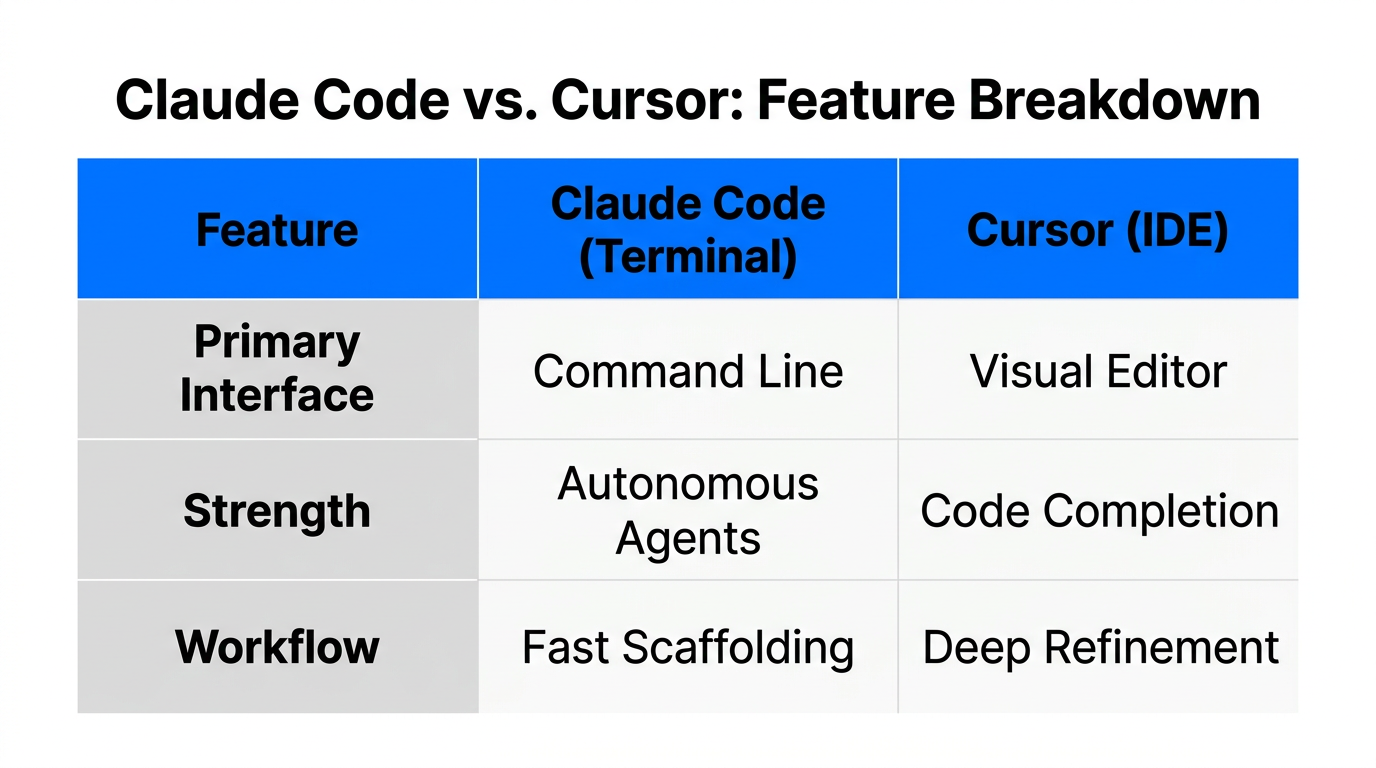
While both tools leverage powerful large language models (LLMs), they serve fundamentally different purposes within a marketing technology stack in 2026. Cursor is an AI-first IDE—a fork of VS Code that integrates AI directly into the visual editing experience. It is the gold standard for frontend work, UI/UX iterations, and real-time coding assistance.
On the other hand, Claude Code is a CLI-first power tool designed for deep backend automation. It excels at tasks that require codebase-wide context. While Cursor is excellent for "seeing" the code you are currently writing, experts suggest using Claude Code for complex refactoring and tasks that span dozens of files. For growth teams, this means using Cursor to design a landing page and Claude Code to build the automated data ingestion script that connects that page to your CRM. To further scale these efforts, growth teams often pair these tools with Stormy AI to manage the influencer marketing campaigns that drive traffic to those very pages.
| Feature | Cursor (IDE) | Claude Code (CLI/Agent) |
|---|---|---|
| Primary Interface | Visual Editor (GUI) | Terminal / Command Line |
| Best Use Case | Frontend, UI/UX, Rapid Prototyping | Backend, Data Pipelines, Refactoring |
| Autonomy Level | High (Predictive) | Very High (Agentic) |
| Git Management | Manual/Assisted | Fully Autonomous |
| 2026 Market Share | Leading AI-IDE | 29% Enterprise Share (Anthropic) |
The Hybrid Stack: The Growth Team's Secret Weapon
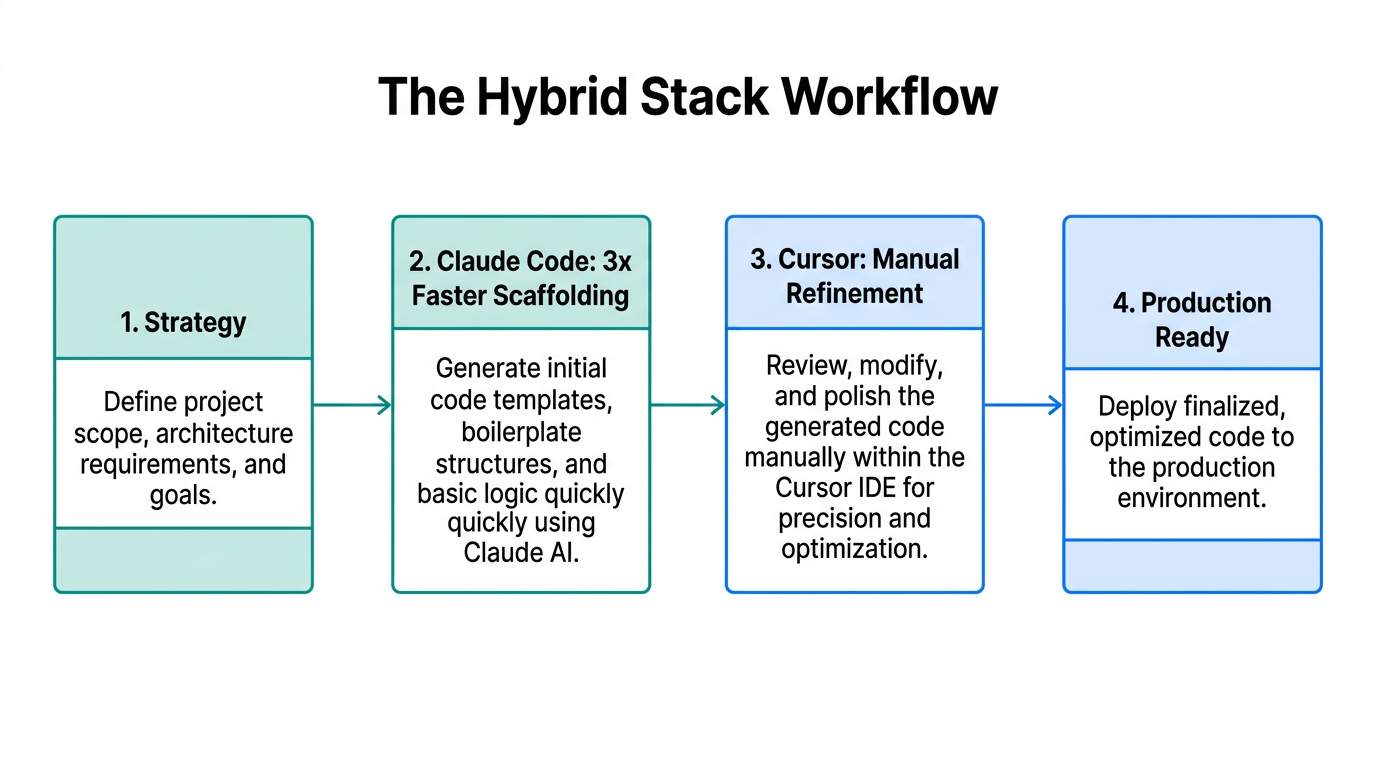
The most successful growth teams in 2026 aren't choosing one tool over the other. Instead, they are deploying a Hybrid Stack. This strategy uses Cursor for daily coding and visual tasks, while reserving Claude Code for autonomous "deep work" sessions. This allows teams to maintain a high velocity on user-facing features while letting AI agents handle the technical debt and architectural heavy lifting in the background.
According to recent rankings of AI coding tools, this combination has led to a reported 2x to 3x acceleration in project completion. For a startup, this means the ability to launch three times as many marketing experiments in a single quarter. Organizations using this agentic approach also report a 30% reduction in rework, as Claude's superior reasoning capabilities often catch architectural flaws that simpler tools might overlook.
Analyzing the 2026 Market Landscape
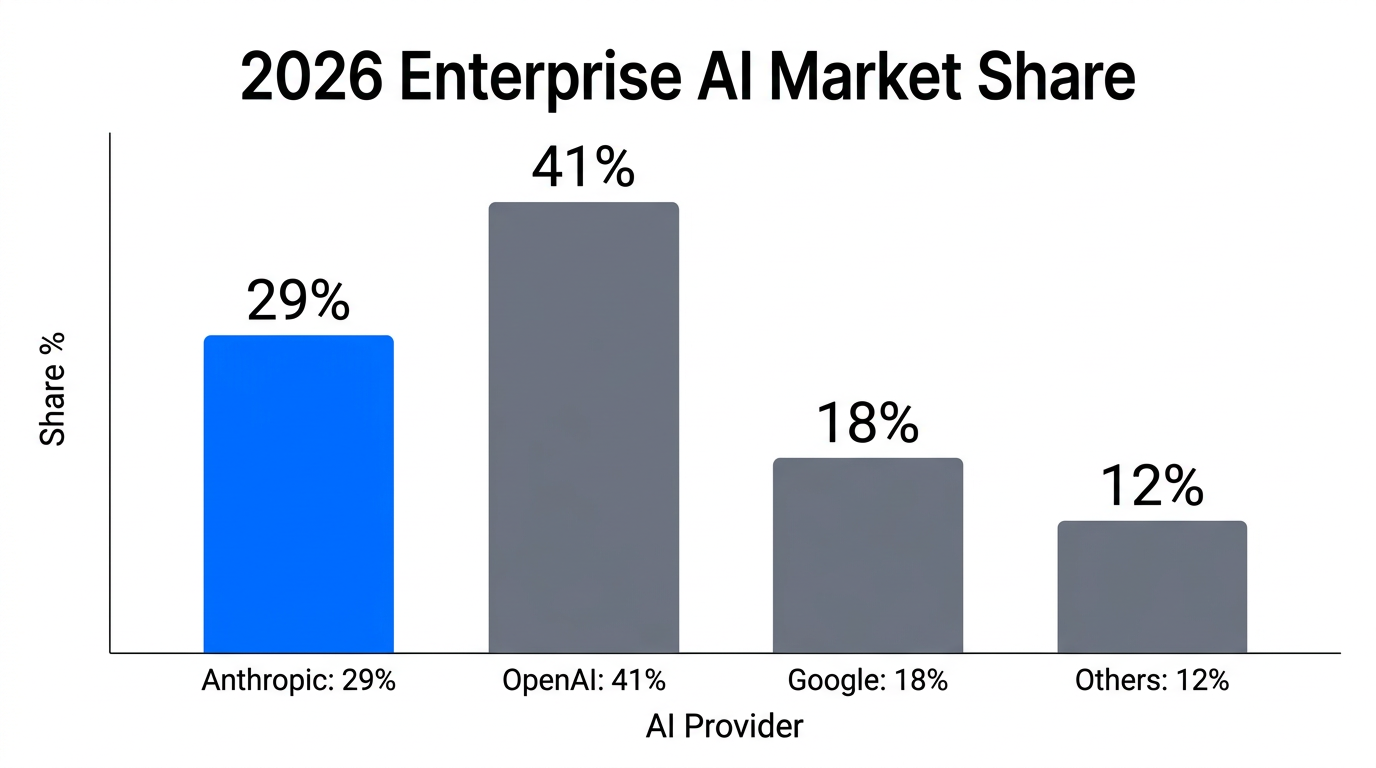
The rise of Claude Code is not just a trend; it's backed by massive enterprise adoption. Anthropic now holds a 29% enterprise market share in the AI assistant space, with over 70% of Fortune 100 companies utilizing the Claude ecosystem. This institutional trust is a key factor for founders deciding on AI coding tools for startups—you want to build on a platform that is robust enough for the world's largest companies.
The financial impact is equally staggering. Claude Code reached an estimated $2.5 billion run-rate revenue by early 2026, nearly doubling its footprint in just twelve months. This growth is reflected on GitHub, where approximately 4% of all public commits were authored or assisted by Claude Code in early 2026. Projections suggest this could hit 20% by year-end, signaling a future where AI is not just an assistant, but a primary contributor to the global codebase.
"With 29% enterprise market share, Anthropic has moved from a challenger to the primary architect of the modern AI-driven development environment."ROI of AI-Assisted Development for Marketing Teams
For marketing heads, the ROI of these tools is found in automation and speed. One of the most powerful features of the 2026 Claude ecosystem is the Model Context Protocol (MCP). This standard allows Claude to connect directly to external data sources like Google Search Console or Slack without custom API integrations. This enables growth teams to build a "Data Command Center" that automatically monitors SEO performance and suggests code changes to improve rankings.
Growth teams are now using Claude Code to build sophisticated Python scripts that pull data from GA4 and run "Paid-Organic Gap Analysis" in minutes. This type of work previously required a dedicated data engineer. By leveraging Claude's reasoning for marketing tasks, teams can ensure their tech stack is always optimized for the highest possible conversion rates. For instance, companies like Zapier have achieved 89% AI adoption by deploying hundreds of internal agents powered by Claude's reasoning.
Common Mistakes When Implementing AI Tools
Despite the power of these tools, implementation failures are common. Many founders treat Claude Code like a simple chatbot, which is a fundamental misunderstanding. It requires an agentic mindset—defining success criteria and providing the agent with the right tools rather than just "prompting" it. Furthermore, 10 common AI marketing mistakes often stem from a lack of human-in-the-loop (HITL) oversight.
Always ensure you are using Claude Enterprise or Pro tiers for any proprietary code to maintain data privacy. Relying on the free tier can lead to security gaps. Additionally, avoid measuring success by "lines of code written." In the era of AI, the only metrics that matter are tasks completed and technical debt reduced. As experts warn, failing to integrate these tools into a clear workflow often leads to vanity metrics rather than actual revenue growth.
The Verdict: Which Tool Wins for Your Growth Team?
In the battle of Claude Code vs Cursor, the winner is the team that uses both strategically. If you are focusing on rapid UI/UX iterations and frontend development, Cursor is your indispensable IDE. However, if your goal is to build a robust, automated marketing technology stack that handles complex data and backend logic, Claude Code is the superior choice. Platforms like Stormy AI complement this stack by automating the creator discovery and outreach process, allowing your developers to focus on the core infrastructure.
The data from 2026 is clear: the most efficient teams are those that transition from manual coding to agentic orchestration. By adopting a hybrid stack, your growth team can leverage the 3x project acceleration reported by industry leaders and ensure that your marketing technology remains a competitive advantage rather than a bottleneck. The future of marketing is built on code—make sure you're using the best tools to write it.