In the high-velocity world of social media, the distance between a viral trend and your brand's response is the difference between explosive growth and irrelevance. As TikTok is projected to reach 1.9 billion monthly active users by early 2026 according to DemandSage, the sheer scale of the platform has outpaced manual management. Enter Claude Code: Anthropic's agentic command-line interface (CLI) that is quietly revolutionizing programmatic marketing. This isn't just another chat interface; it is an "Action AI" capable of executing terminal commands, managing local files, and orchestrating complex AI social media distribution pipelines that once required a full team of developers.
The Shift to Action AI: Why the Terminal is Your New Dashboard
For years, marketers have lived in browser tabs. We jump from Canva to TikTok Ads Manager to Google Sheets, losing precious time to context switching. Claude Code changes the paradigm by moving the workflow into the terminal. By using the /init command, marketers can create a persistent context for their brand, allowing the AI to understand brand voice, target audience, and TikTok distribution strategy across every interaction.
This "Terminal Dashboard" approach is more than just a preference for developers; it is about efficiency. According to recent data, 34% of Claude users now utilize the tool for mathematical or computer-based tasks like automation rather than simple text generation, as noted by Stormy AI. When you operate from the CLI, you can orchestrate scrapers, video editors, and posting APIs simultaneously.
| Workflow Phase | Traditional Method | Claude Code Workflow |
|---|---|---|
| Trend Research | 4-6 hours of scrolling | 10 minutes (Scraped & Analyzed) |
| Content Editing | 2 hours per video | 30 seconds (FFmpeg automation) |
| Distribution | Manual login per account | Instant (Multi-account API) |
Building a Distribution App in Under 40 Minutes
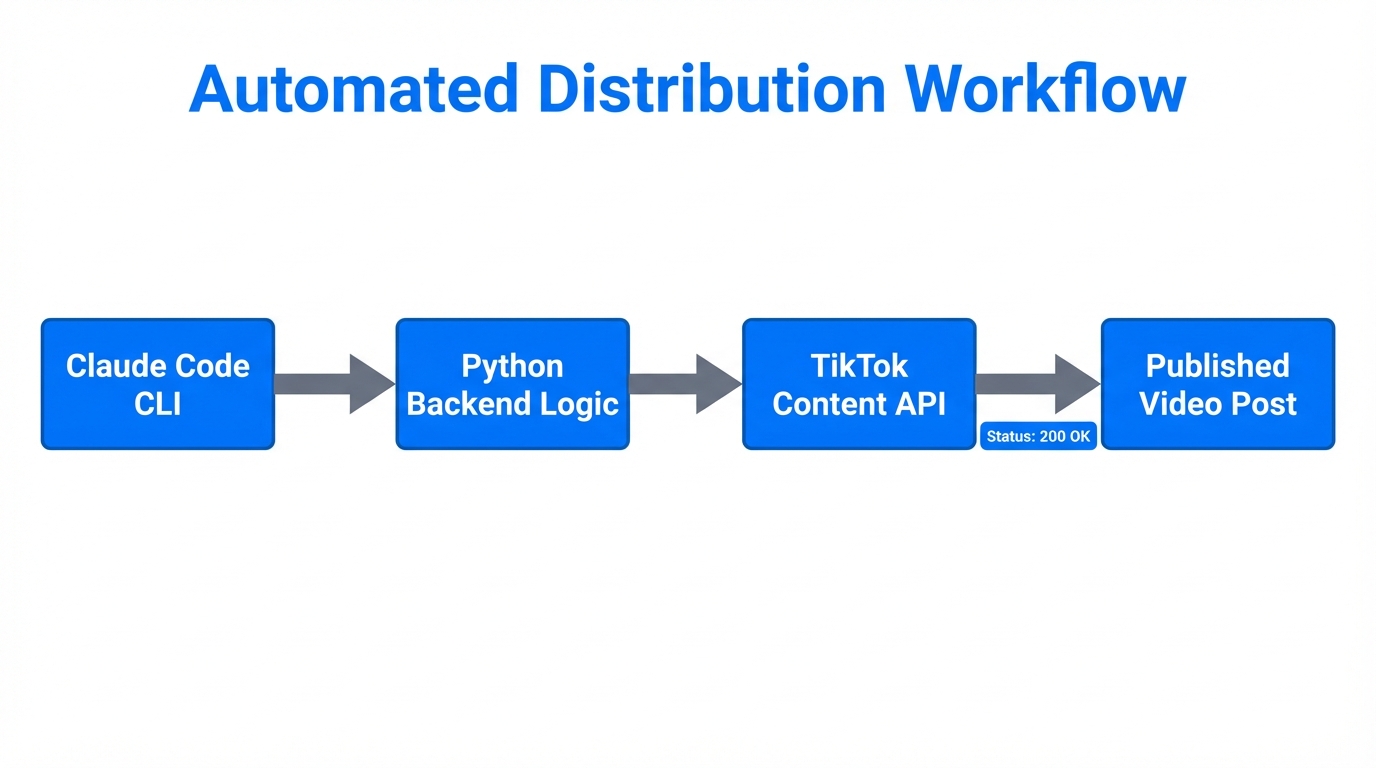
One of the most compelling proofs of Claude Code’s power is its ability to build custom marketing software on the fly. In a landmark case study, developer Mike Futia demonstrated how to build a full TikTok research and distribution SaaS in just 37 minutes using Claude Code. You can watch the full breakdown on YouTube, but the core lesson for marketers is clear: you no longer need a $100k engineering budget to build creator economy tools tailored to your specific niche.
"The key insight is that Claude Code doesn't just write code; it iterates on the entire product lifecycle—from scraping viral hooks to generating visual QA reports—in minutes, not weeks."
By leveraging specialized Model Context Protocol (MCP) servers, such as the TikTok Ads Library Fast MCP via Apify, Claude Code can automatically extract the top 20 videos in any category. It doesn't just give you the data; it can write the Python scripts to analyze transcripts for common pain points and immediately generate 50 high-converting hooks for your next campaign.
Programmatic Video Production: FFmpeg and Original Rendering
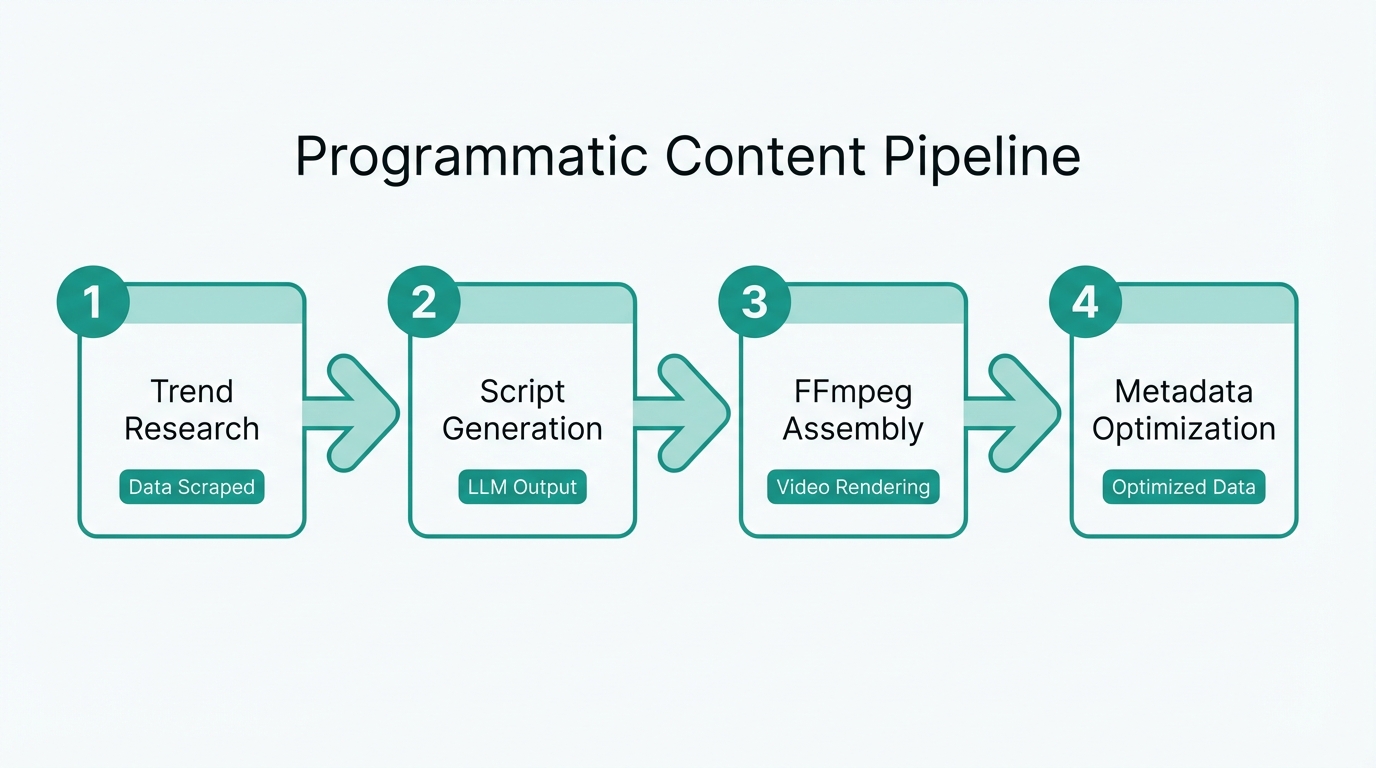
A major pitfall in modern TikTok distribution strategy is the use of watermarked content. Platforms like TikTok penalize videos that carry the branding of competitors like Instagram Reels. To solve this at scale, savvy marketers are using Claude Code to orchestrate FFmpeg, a powerful command-line tool for video processing.
Instead of manually editing every clip, you can instruct Claude Code to write a script that takes raw User Generated Content (UGC) and performs the following tasks automatically:
- Watermark Removal: Detecting and cropping/masking non-native watermarks.
- Original Rendering: Overlaying product images or dynamic text captions using Remotion to ensure the file metadata is fresh and unique.
- Audio Syncing: Automatically aligning video transitions to the BPM of a trending track using Descript's logic or custom scripts.
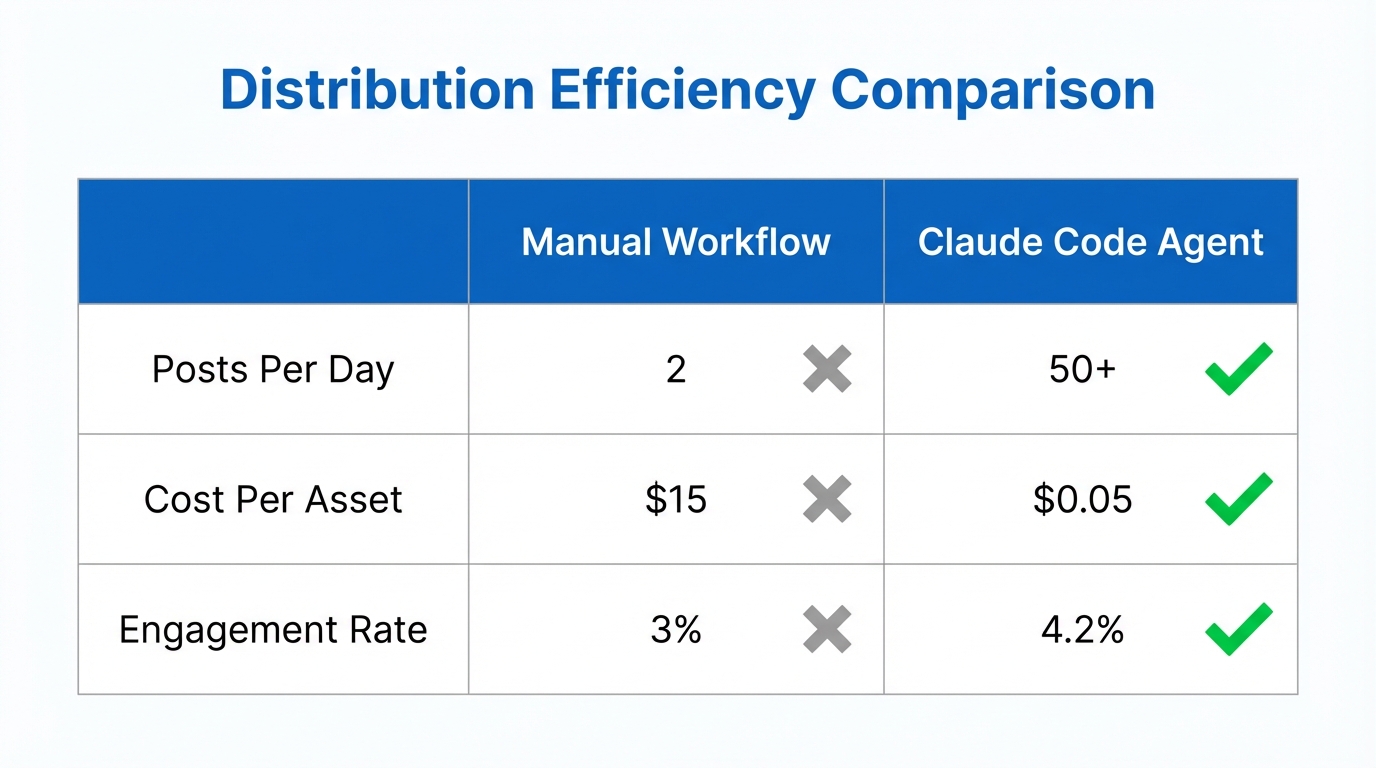
This level of programmatic marketing ensures that your content "factory" can produce hundreds of unique assets from a handful of raw creator videos, significantly lowering your cost-per-creative.
Scaling UGC: The API-First Distribution Model
Once your assets are rendered, the challenge shifts to distribution. Managing multiple brand accounts or a network of creator accounts manually is a recipe for burnout. The solution lies in connecting Claude Code to API-first distribution tools. By integrating with the Ayrshare API or Buffer, your Claude agent can schedule and post content across dozens of accounts simultaneously.
However, finding the right creators to fuel this engine is often the hardest part. While Claude Code handles the technical heavy lifting of distribution, tools like Stormy AI can help source and manage UGC creators at scale, providing the raw footage that your automated pipeline needs. Once you have a steady stream of creator content, you can use Claude to manage the entire lifecycle—from the initial brief to the final automated post.
The Future: Why 2026 Marketing Teams will be Agentic
We are moving toward a world where the creator economy tools we use are no longer passive. By 2026, the most successful marketing teams will be built around agentic workflows. These are self-correcting loops where an AI agent monitors performance and makes real-time adjustments. For example, using the TikTok Ads MCP Server on GitHub, you can instruct your Claude agent to: "Check my TikTok Ads performance; if any ad group has a CPA over $15, pause it and reallocate the budget to the top-performing creative."
"By 2026, marketing teams won't be measured by headcount, but by the number of agentic workflows they successfully orchestrate to drive growth."
This level of automation allows lean teams to behave like massive agencies. You can maintain a 24/7 presence on TikTok, responding to trends within minutes of their emergence, while your competitors are still in their Monday morning brainstorm. The integration of programmatic marketing with creative intuition is the new unfair advantage in the attention economy.
The Claude Code TikTok Playbook
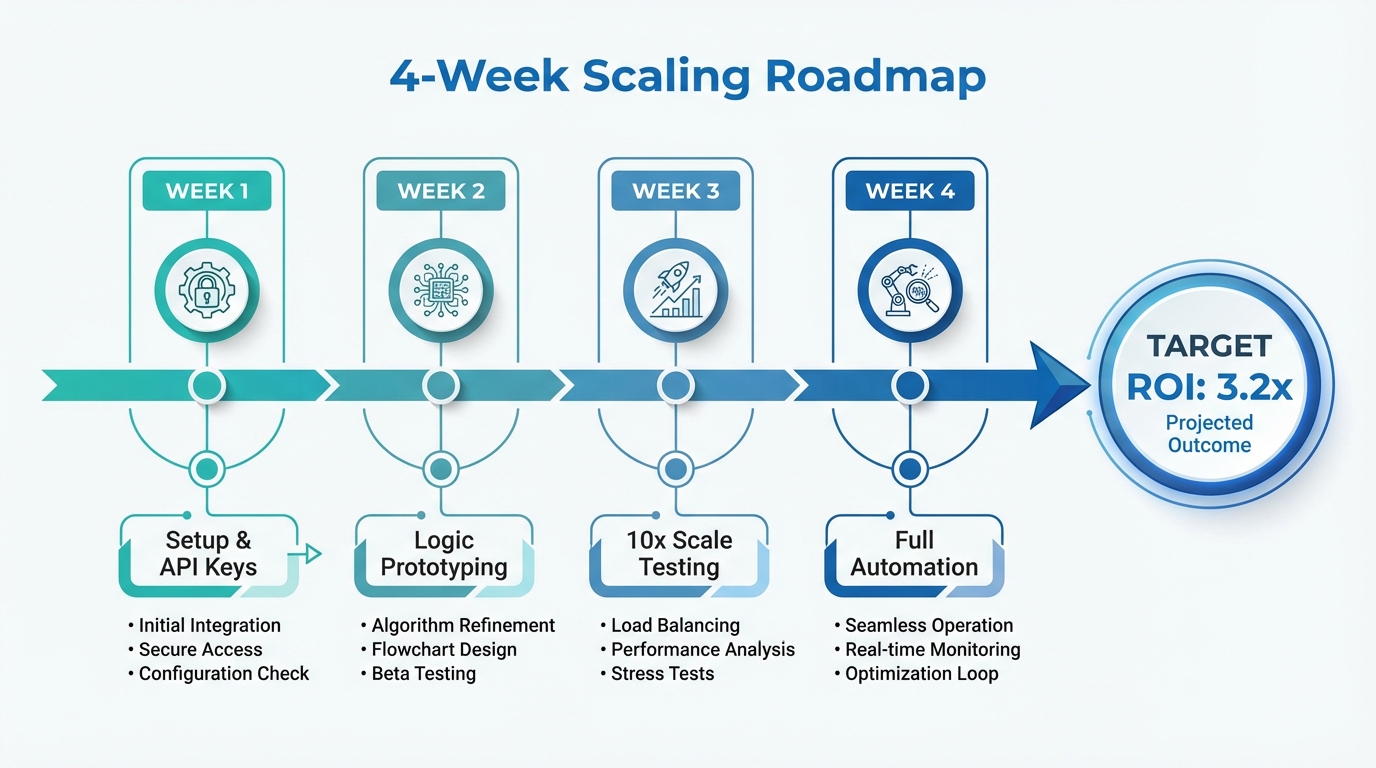
Ready to start? Follow this step-by-step Claude Code workflow to build your own distribution engine.
- Step 1: Environment Setup – Install Claude Code and run
/initto define your brand parameters and TikTok goals. - Step 2: Trend Discovery – Use the Apify or Simon’s TikTok MCP to scrape the top-performing videos in your niche.
- Step 3: Asset Preparation – Provide raw UGC footage and use Claude to write an FFmpeg script for batch editing, ensuring no watermarks remain.
- Step 4: API Integration – Connect your terminal to a posting API like Ayrshare to handle multi-account AI social media distribution.
- Step 5: Performance Optimization – Deploy a sub-agent to monitor TikTok Ads or organic views and adjust your posting frequency based on real-time data.
Conclusion: Automate or Be Outpaced
TikTok’s explosion—with US Shop sales reaching $15.82 billion in 2025 as reported by Charle Agency—proves that the platform is the primary engine of modern commerce. However, the manual approach to content distribution is no longer sustainable. By adopting Claude Code and programmatic marketing strategies, you can transform your social media presence from a chore into a scalable, automated engine of growth.
The future of the creator economy belongs to those who can bridge the gap between human creativity and agentic execution. Whether you are scaling UGC or managing a global brand, the terminal is your most powerful tool. Start building your agentic distribution pipeline today, and ensure your brand is ready for the 1.9 billion users waiting on the other side of the screen.