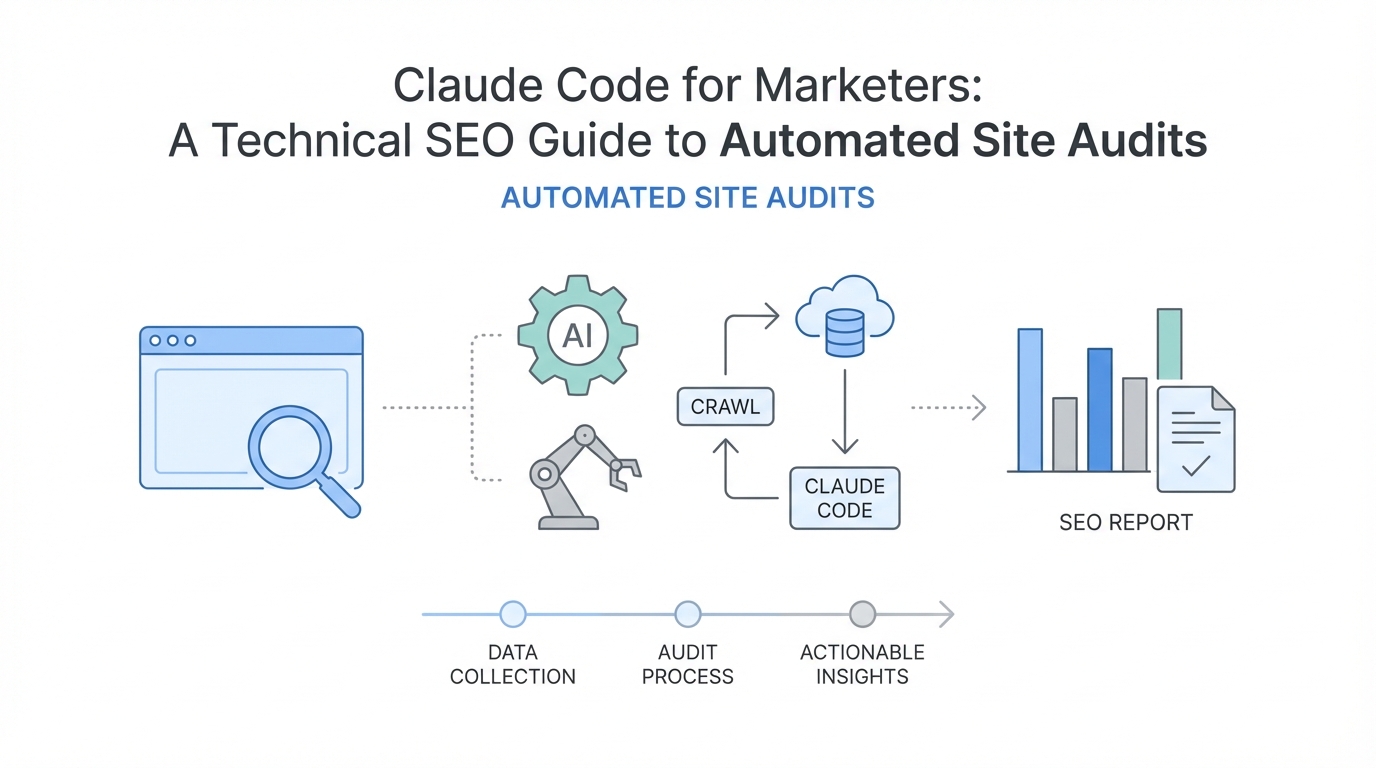
The era of the "non-technical marketer" is officially over. For years, SEO professionals have been stuck in a bottleneck: they can identify issues like crawl errors, missing schema, and slow page speeds, but they have to wait weeks for a developer to implement the fixes. Today, tools like Claude Code are changing that dynamic entirely. By bridging the gap between identifying a problem and executing code, marketers can now perform deep technical SEO audits and deploy fixes in minutes rather than months. Whether you are scaling a local service business or managing a global SaaS brand, learning to automate SEO with AI is no longer a luxury—it is a competitive necessity.
Step 1: Setting Up Your AI Development Environment
Before you can start vibe coding your way to the top of the search results, you need a foundation. Many marketers feel intimidated by the command line, but the setup is surprisingly straightforward. To begin your Claude Code tutorial, you first need to access the Terminal on your Mac. If you are on a PC, you can use a similar command-line interface. Once you have a Claude subscription, you can install the Claude Code package directly via your terminal. This gives the AI agent permission to interact with your local files, run commands, and even test code in real-time.
Version control is the next critical piece. You should always maintain a repository on GitHub for your website project. This allows you to track changes and, more importantly, roll back if the AI makes a mistake during the optimization process. Finally, for hosting and deployment, Vercel is the gold standard for modern web performance. By linking your GitHub repo to Vercel, every technical fix Claude Code makes will automatically trigger a new deployment, making the entire ai agent workflow for marketing seamless and hands-free.
Step 2: Using 'Ultra-Think' to Identify Technical Debt
Once your environment is live, the real work begins. Most SEO audits only scratch the surface, looking at meta titles and basic keywords. To truly dominate, you need to dig into technical debt. By using the 'Ultra-Think' command in Claude Code, you can instruct the AI to spend more compute cycles analyzing your entire codebase for bottlenecks that search engines hate. Use a prompt like: "Analyze this repository in extreme detail using Ultra-Think. Identify every technical SEO bottleneck, from rendering issues to missing headers, and prioritize them by impact."
Claude will go through your site and find issues that standard crawlers might miss, such as inefficient JavaScript execution or CSS files that are blocking the critical rendering path. Unlike a static technical SEO audit checklist, this AI-driven approach looks at the specific architecture of your site—whether you are using React, Next.js, or plain HTML—and provides tailored solutions. This deep-dive research is what allows a new site to outrank competitors who have been online for decades but are still running on 15-year-old, unoptimized code.
Step 3: Automating Robots.txt, Sitemaps, and Schema
Foundational files like Robots.txt and XML sitemaps are often set-and-forget, but they are vital for ensuring Google crawls your most important pages. Claude Code can automate the generation and updating of these files based on your actual site structure. Instead of manually updating a sitemap every time you add a new location page or blog post, you can have the AI agent scan your directory and rebuild the XML file instantly.
Even more powerful is the generation of Schema markup. Schema helps search engines understand the context of your content—whether it is a product, a local business, or a frequently asked question. You can ask Claude to "Generate JSON-LD Schema for every service page, ensuring it includes local business data and aggregate ratings." This level of detail used to require hours of manual JSON editing; now, it is a single command. By providing structured data, you increase your chances of appearing in Google's rich snippets, which significantly boosts click-through rates from the SERPs.
Step 4: The Google PageSpeed Insights Hack
One of the most effective ways to automate SEO with AI is through a process known as "vibe debugging" for performance. Google PageSpeed Insights provides a wealth of data, but the recommendations can be cryptic for non-developers. The hack is simple: run your URL through the PageSpeed tool, copy the specific error logs (like "Reduce unused JavaScript" or "Properly size images"), and paste them directly into Claude Code.
Claude will look at your actual code and implement the fix. This includes WebP conversion for images, minifying CSS, and setting up lazy loading for off-screen assets. When you are competing in a local market, Google PageSpeed optimization is a massive lever. Many local businesses have slow, bloated websites; if yours loads in under a second on mobile, Google's algorithm will prioritize you as a better user experience. Tools like Stormy AI can also help you manage the external side of this growth by sourcing high-quality UGC creators to build the visual assets that you’ll be optimizing for these pages.
Step 5: Deploying Sub-Agents for Content Audits
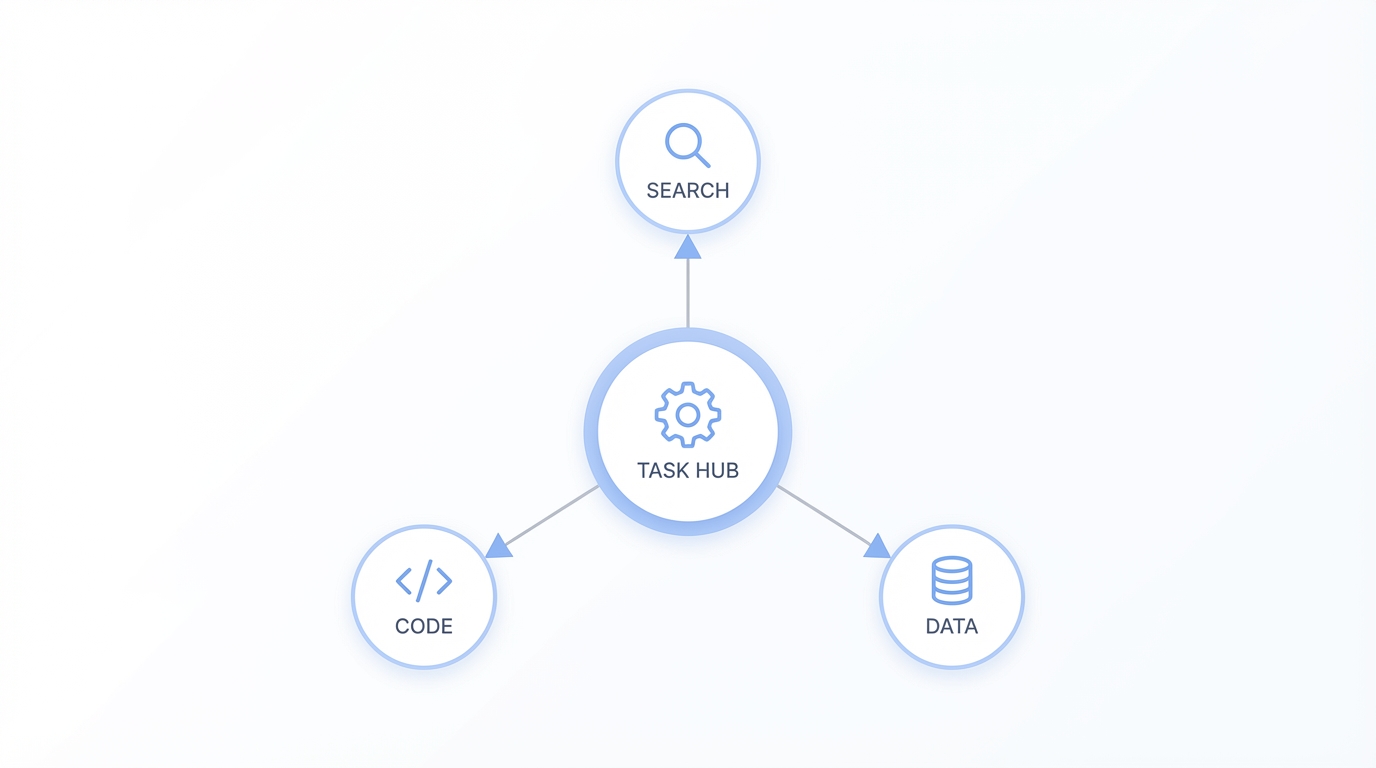

The beauty of the ai agent workflow for marketing is the ability to multitask. Claude Code allows you to spin up "sub-agents" that handle specific, repetitive tasks in the background while you focus on high-level strategy. You can deploy three different agents simultaneously to perform the following:
- Alt Text Agent: Scans all image tags and generates descriptive, keyword-rich alt text based on the image filenames and page context.
- Meta Description Agent: Audits every page for missing or duplicate meta descriptions and writes unique, high-conversion snippets for each.
- Internal Linking Agent: Analyzes your site's topical authority and automatically inserts internal links between related service pages and blog posts.
By automating these "boring" tasks, you ensure that your site remains technically perfect as it scales. For brands looking to augment this with influencer-driven traffic, using a platform like Stormy AI allows you to discover creators who can drive social signals back to these optimized pages, creating a powerful loop of organic and social growth. Once the agents find content opportunities, you can use those insights to brief your creators on specific keywords or "vibe" requirements.
Step 6: Future-Proofing for LLMs and AI Search
As search evolves into Generative Engine Optimization (GEO), the rules of the game are shifting, but the foundation remains the same. Whether a user is searching on Google or asking ChatGPT for a recommendation, the source of truth is still a well-structured, fast, and authoritative website. Doing good technical SEO is essentially an invitation for LLMs to crawl and understand your business.
To stay ahead, ensure your site has an llms.txt file, which acts as a permissions list for AI crawlers. Claude Code can help you generate this file to ensure that agents from Perplexity or OpenAI are prioritizing your most accurate and up-to-date information. Remember, the goal isn't just to rank for a keyword; it is to become the definitive "topical authority" in your niche. When your technical foundation is perfect, your content has the best chance to be cited as a primary source by AI browsers.
Conclusion: Building a Digital Real Estate Empire
Automating your SEO with Claude Code isn't just about saving time; it's about building a digital asset that works for you 24/7. By following this Claude Code tutorial and implementing a rigorous technical SEO audit checklist, you can achieve results that used to require a full-scale agency. Start by setting up your environment on GitHub and Vercel, use Ultra-Think to find the hidden leaks in your performance, and don't be afraid to "vibe debug" using PageSpeed Insights. The arbitrage opportunity in "boring" local businesses and technical niches is massive. While everyone else is busy chasing the next shiny object, use AI to perfect the fundamentals, and the revenue will follow.