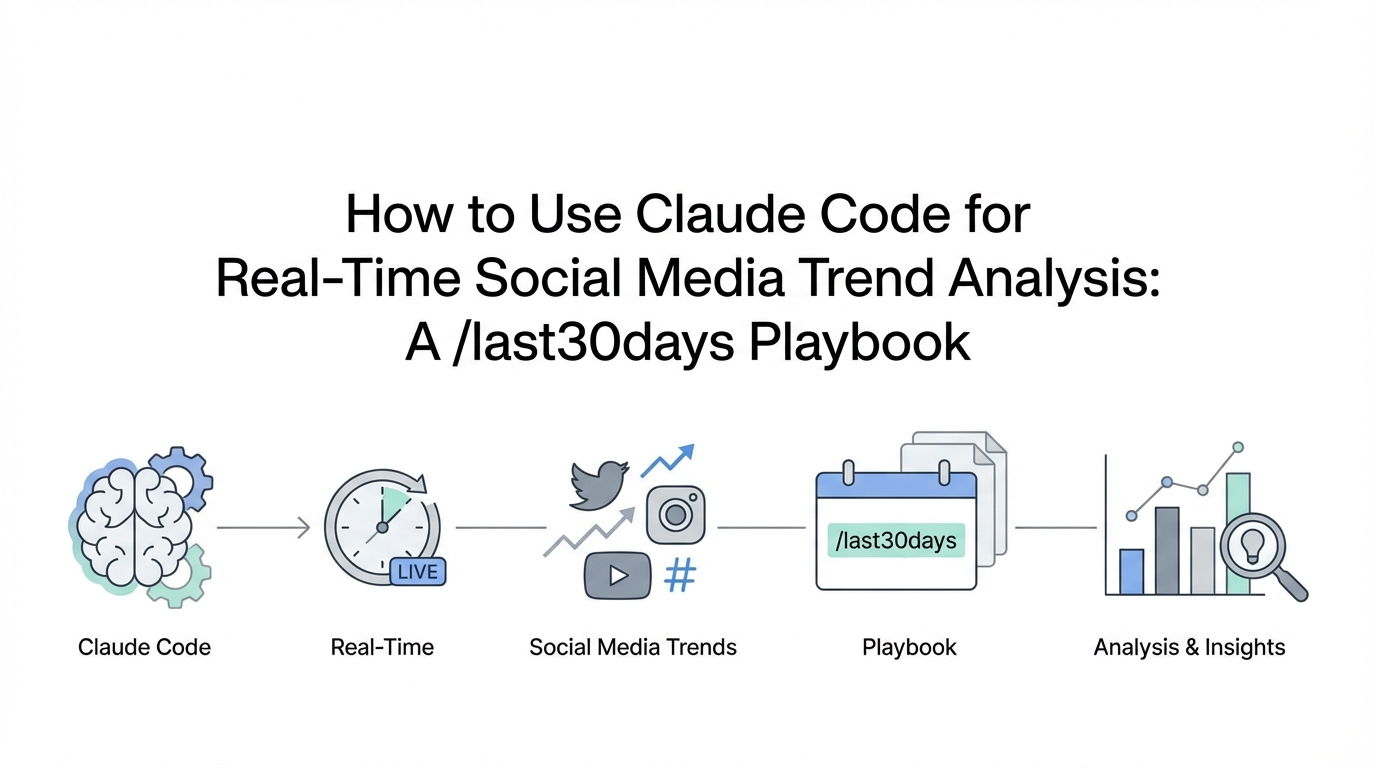
In the fast-moving world of digital marketing, a week is a lifetime and a month is an eternity. Traditional Large Language Models (LLMs) often struggle with this reality due to their knowledge cutoffs, which leave them blind to the viral meme that started yesterday or the aesthetic shift that happened this morning. For marketers, this gap between data and reality can mean the difference between a campaign that resonates and one that feels painfully outdated. However, a new superpower has emerged within Claude Code: a skill called /last30days. This tool allows strategists to bypass static training data and perform real-time social media trend analysis by scraping the most current conversations on platforms like X and Reddit.
Understanding Claude Code and the /last30days Skill
To understand why this is a game-changer for social media listening tools, we first have to look at the architecture of modern AI. Most AI models are trained on historical datasets. While they are brilliant at synthesis and reasoning, they are naturally "out of the loop" regarding today's news. Matt Van Horn, the founder behind the /last30days skill, describes it as a way to give Claude a "Matrix-style" upload of current cultural context. By typing a simple command, users can force the AI to research topics across the web, specifically focusing on the most recent 30 days of activity.
This isn't just a basic search; it is a deep dive into the "mind of the crowd." When you run a query through this skill, it doesn't just look at news articles; it reads what people are actually saying on Reddit threads and X timelines. This allows for a much more dialed and optimized prompting experience. Instead of asking an AI to "suggest a marketing strategy," you are asking it to "suggest a marketing strategy based on the specific discourse happening on GitHub and X over the last three weeks."
Bypassing Knowledge Cutoffs: The API Infrastructure
One of the most common frustrations with influencer marketing AI is the lack of live data. To make /last30days work, you have to bridge the gap between different AI ecosystems. This playbook requires a few specific keys to unlock the full potential of real-time social data:
- Claude Code Account: The base environment where you will be running your commands.
- OpenAI API Key: Crucial because OpenAI has a specific partnership with Reddit that facilitates high-quality data access.
- xAI API Key: To search the X (formerly Twitter) timeline effectively, you need access to the xAI infrastructure.
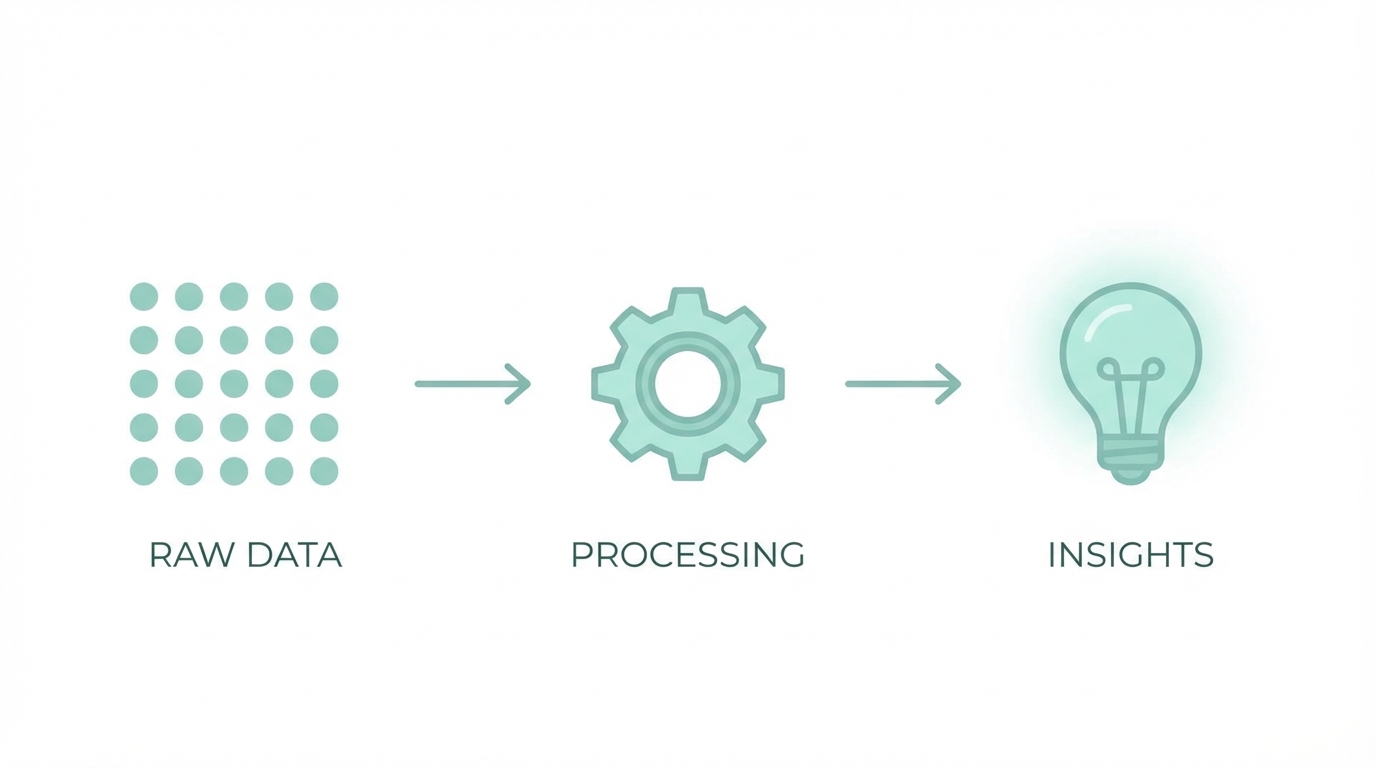
By pulling these APIs together, /last30days creates a unified research assistant. It can navigate HipHopHeads on Reddit to find the most popular rap songs of the month, or scan Tech Twitter to see which coding agents are gaining traction. For a marketer, this means you are no longer relying on "gut feelings" or delayed reports from expensive enterprise listening platforms; you are getting the raw data directly from the source where trends are born.
Step-by-Step: A Claude Code Tutorial for Trend Analysis
If you want to use this for your next campaign, follow this clear playbook to move from a blank terminal to a fully-fleshed strategy.
Step 1: Install and Initialize
First, ensure you have Claude Code installed. Once your environment is set up and your API keys for OpenAI and xAI are configured, you simply type the command /last30days followed by your research topic. For example: /last30days research current trending aesthetics in skincare marketing.
Step 2: Source Synthesis
The tool will immediately begin scanning. It typically pulls from Reddit threads, X posts, and recent web pages. Watch the terminal as it identifies specific subreddits or influential accounts. It doesn't just provide a summary; it identifies the highest-performing frameworks currently in use. If you are researching cold emails, it might find the "3Ps framework" (Praise, Picture, Push) or specific intention-based data triggers that are currently breaking through the noise.
Step 3: Refine with Context
Once the research is complete, you can use that context to generate assets. If the tool discovers that "reply guy" strategies are currently the most effective way to grow on X, you can immediately ask Claude to "write 10 thoughtful replies for these specific accounts based on the value-add trends we just identified."
Identifying Viral Aesthetics: The Shopify Winter Edition Case Study
Visual trends are notoriously difficult for AI to grasp, but the /last30days skill bridges this by analyzing the discourse around visuals. A prime example is the Shopify Winter Edition. When this design update launched, it sparked massive conversation across social media. By using real-time social data, marketers could see exactly what people loved: the "warm and human" feel, the asymmetrical hero sections, and the move away from rigid 12-column grids.
Using this data, you can prompt Claude to generate design briefs or even code that mimics these viral aesthetics. For instance, the research might show that "nature-distilled" palettes (warm cream backgrounds, charcoal text) are currently outperforming the "cold SaaS blue" look. You can then instruct the AI to "design a landing page that feels like the current trend: anti-grid composition, floating product screenshots, and hand-drawn accents." This ensures your brand looks like it belongs in 2024, not 2021.
Using Real-Time Insights for Influencer Marketing

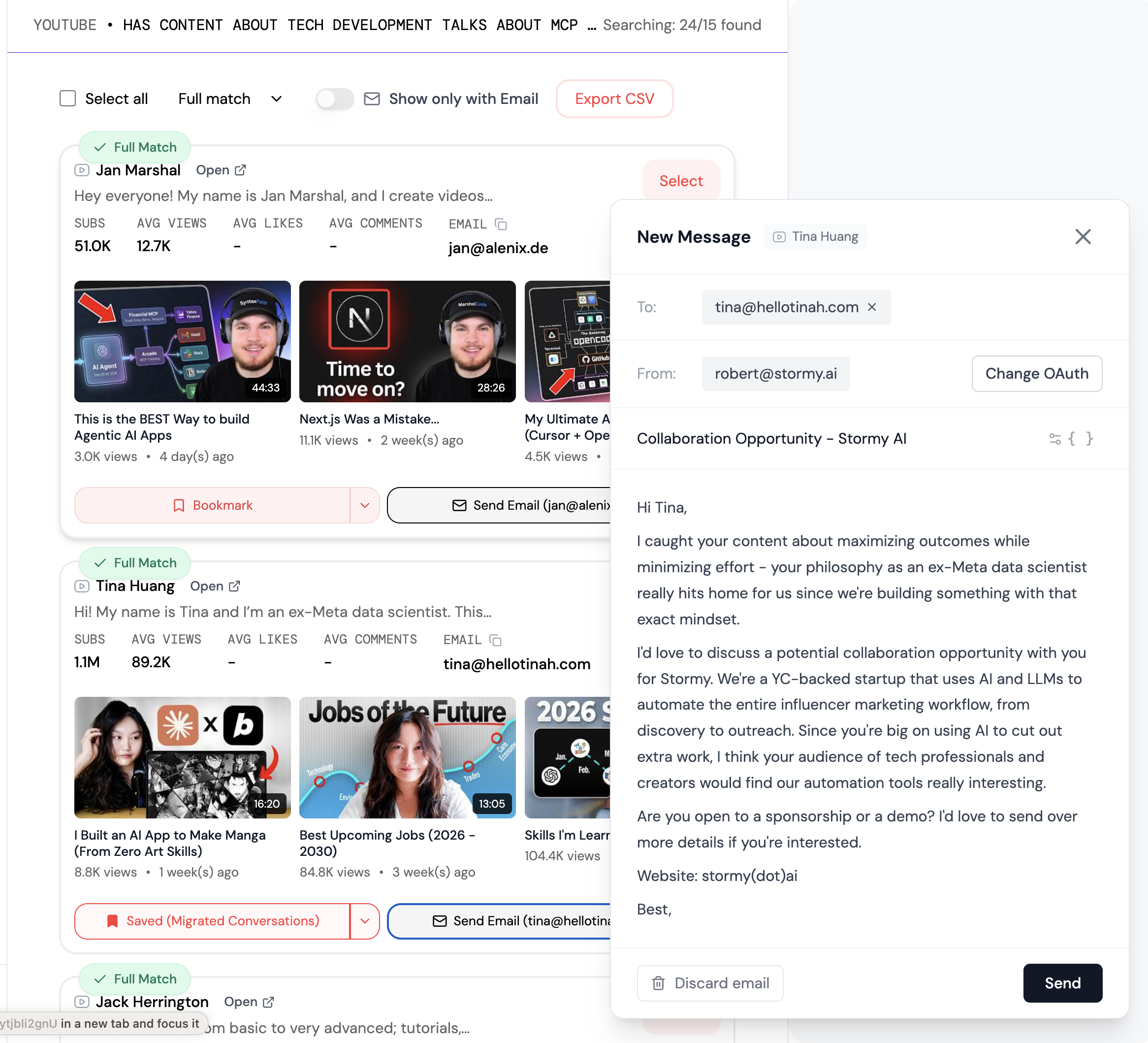
Once you have identified a trend—whether it is a new rap song format or a specific visual style—the next step is finding the right creators to execute it. This is where influencer marketing AI becomes tactical. While Claude Code identifies what is trending, you still need to find who is leading the charge. Using tools like Stormy AI can help source and manage UGC creators at scale by searching for those specifically engaging with the trends you've just uncovered.
For example, if your /last30days research shows that a specific "build in public" style is trending among developers on X, you can use Stormy AI's discovery engine to find creators in the "SaaS" or "DevTools" niche with high engagement rates. By combining real-time trend data with a robust creator CRM, you can move from "researching a trend" to "launching a campaign with five creators" in a single afternoon.
Validating Product-Market Fit with Social Data

Beyond aesthetics and influencer discovery, social media trend analysis is a powerful tool for product validation. Matt Van Horn demonstrated this by researching "Moltbot" (formerly Cloudbot), an open-source AI project. By analyzing the last 30 days of GitHub stars, X hype, and B2B adoption discussions, the AI was able to identify gaps in the current market—specifically the lack of multi-tenancy and audit logging in existing open-source versions.
You can use this same logic for any app or product launch:
- Competitive Research: Ask the tool to find recent complaints or "wish lists" on Reddit regarding your top three competitors.
- Market Sentiment: Analyze the reaction to recent industry news (like a major acquisition or a new feature release) to see where the "hype" is moving.
- Pivot Identification: If you see that a specific use case is getting 3,000+ likes on X while your current focus is getting zero traction, it’s a clear signal to shift your messaging.
Conclusion: The Future of Social Listening
The days of relying on static reports and 18-month-old training data are over. By integrating social media listening tools like the /last30days skill into your workflow, you gain an unfair advantage in speed and accuracy. You can identify most popular rap songs, viral web designs, and high-performing cold email frameworks based on what is working today.
To stay ahead, focus on building in public, using real-time social data to inform your content, and leveraging AI to automate the tedious parts of the process. Whether you are a solopreneur or a brand strategist, the ability to "plug in" and learn the latest marketing "kung fu" is the ultimate superpower in the AI era. Start by setting up your Claude Code environment, securing your API keys, and letting the /last30days skill show you exactly where the world's attention is headed next.