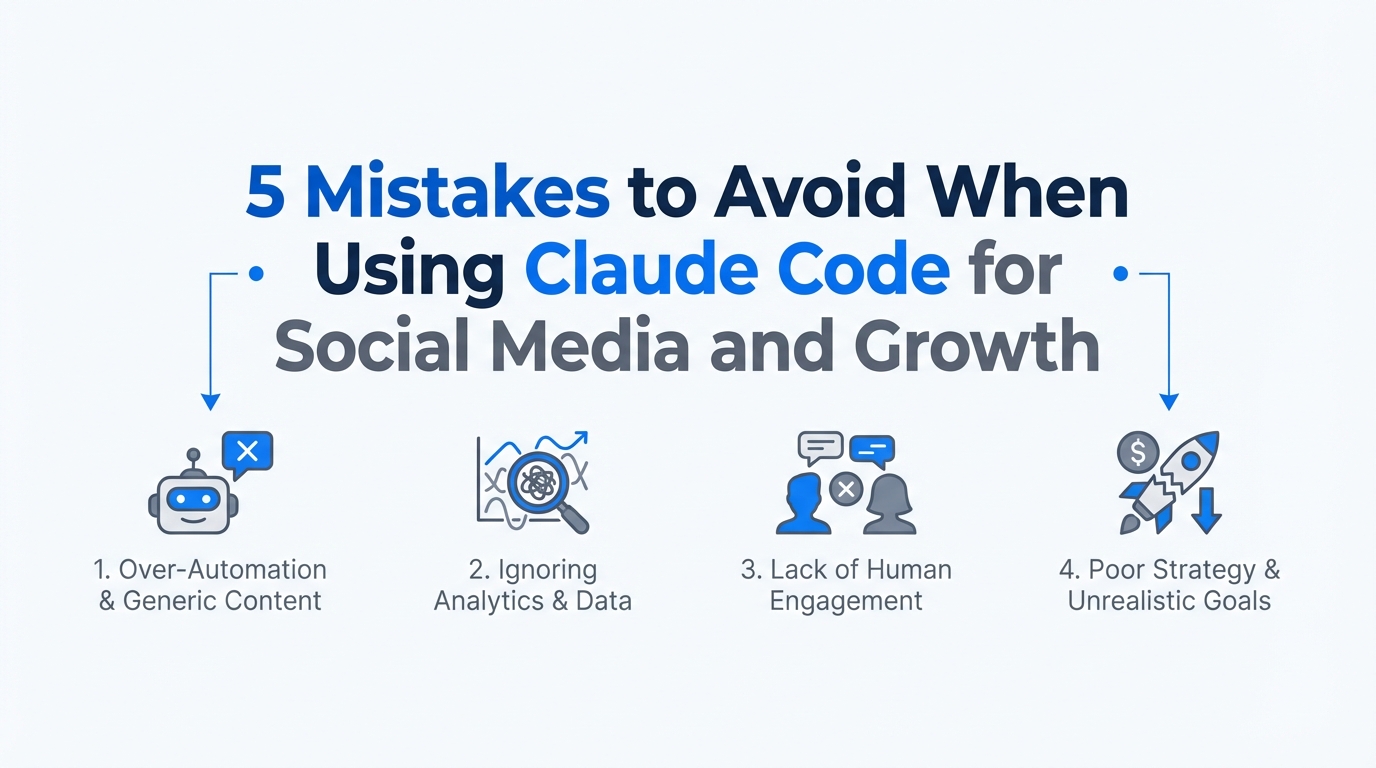
The era of "Chat AI" is rapidly giving way to "Agentic AI." For growth marketers and founders, this shift is personified by tools like Claude Code, a terminal-based agent that doesn't just write copy—it executes workflows. With the AI-driven social media market projected to reach $12 billion by 2031, the pressure to automate is immense. Marketing teams are already generating reports 30–40% faster than they were just a year ago. However, the move from browser-based chat to the terminal brings a new set of risks. If you aren't careful, your high-speed growth engine can quickly turn into a brand-damaging liability.
1. The Trap of 100% Automation and the 'Human-in-the-loop' Necessity
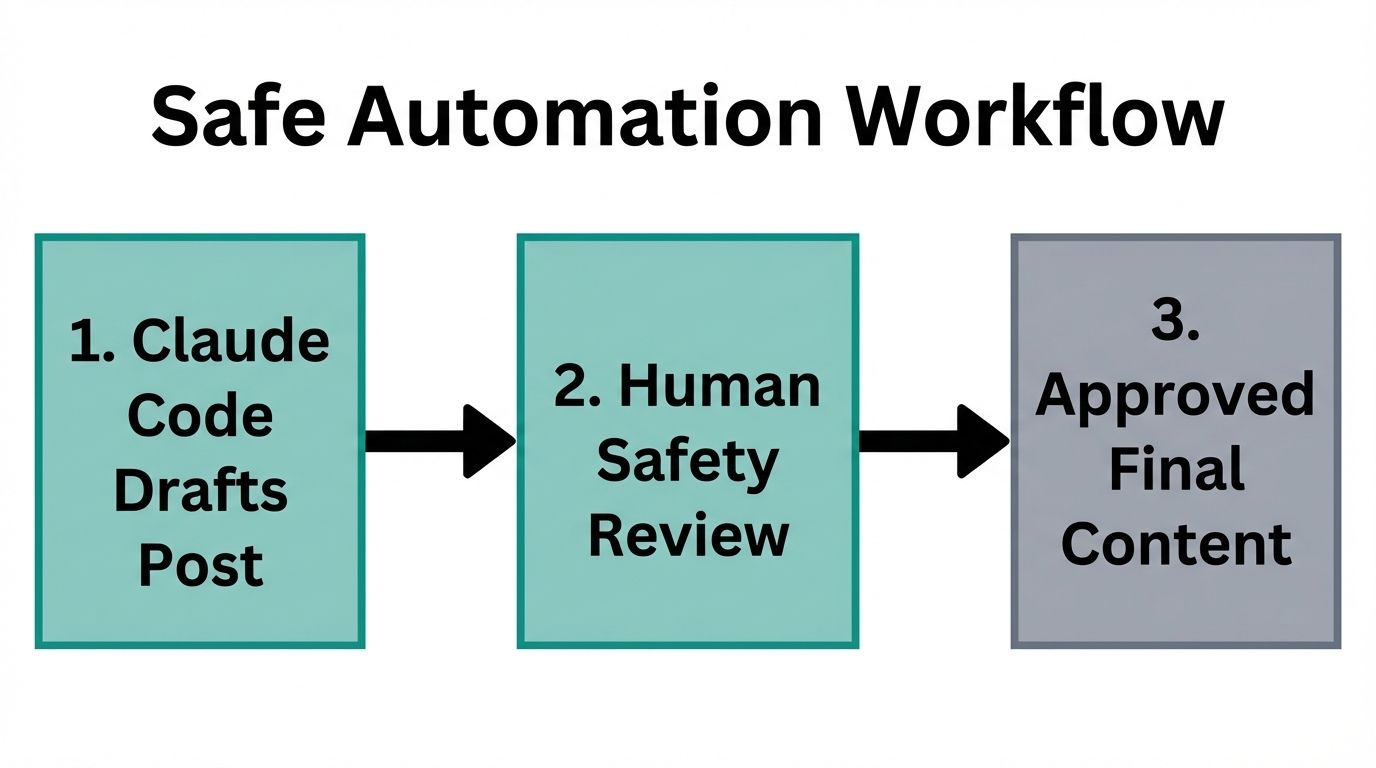
One of the most common social media automation mistakes is the "set it and forget it" mentality. While 61% of organizations cite workload reduction as their primary goal, relying 100% on AI without validation often leads to content that feels hollow. In 2026, social media algorithms have become hyper-sensitive to "robotic" patterns. If your posts lack a soul, platforms like LinkedIn and Meta may shadowban your reach, treating your automated efforts as spam.
As noted by experts at Obbserv, failing to implement a "human-in-the-loop" validation step is a recipe for disaster. The AI should handle the heavy lifting—the data scraping, the sentiment analysis, and the first drafts—but a human must provide the final creative spark and brand alignment. 88% of marketers use AI daily, but the most successful ones use it for fast decision-making rather than total creative abdication.
"Automation should enhance your brand's voice, not replace it. The moment your audience smells a machine, you've lost the trust that takes years to build."
2. Falling Victim to 'AI Fingerprints' by Ignoring Constitutional AI
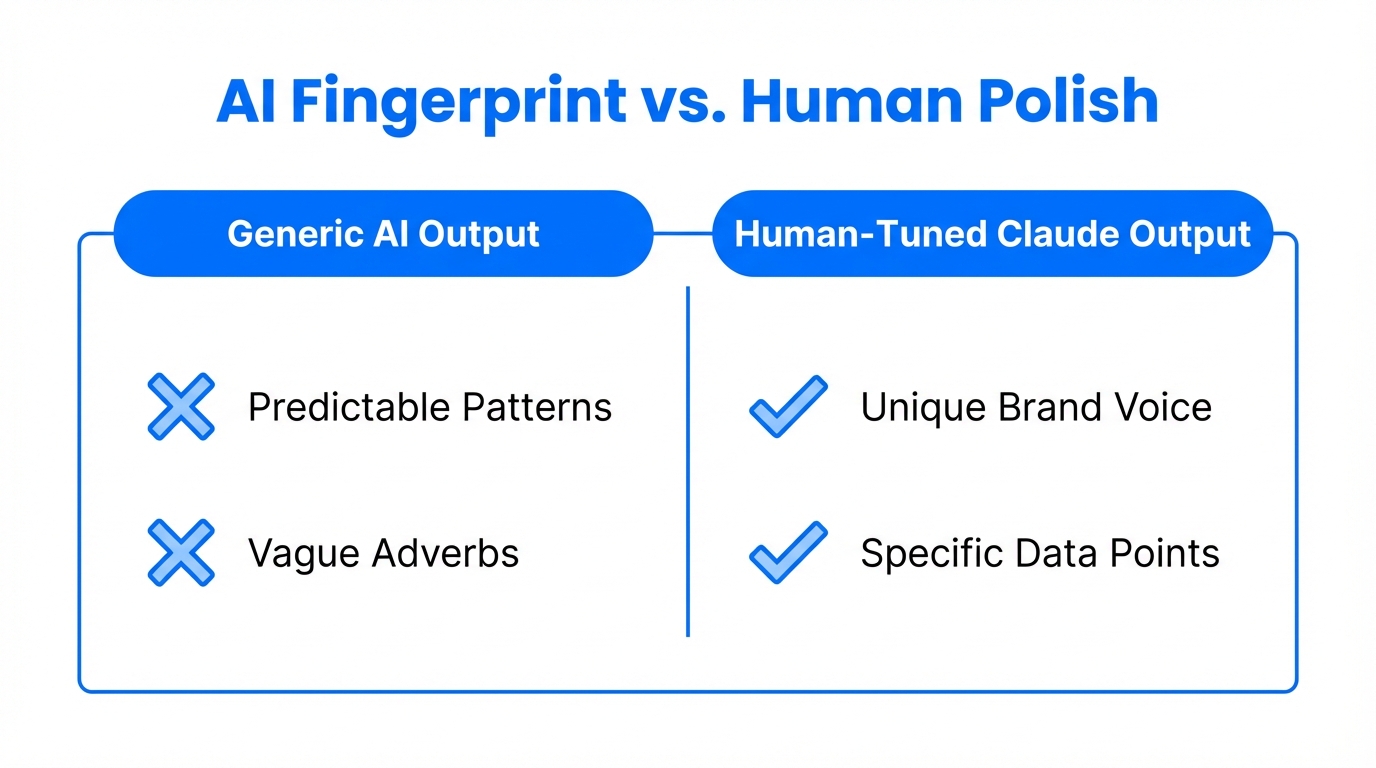
Audiences in 2026 are increasingly weary of the "AI fingerprint"—that generic, over-polished tone that screams "generated by a LLM." This is a significant hurdle for Claude Code brand safety. To avoid this, you must leverage Claude’s unique Constitutional AI framework. Unlike other models that may produce overly sterile or repetitive text, Claude is designed to be more nuanced and human-like.
To keep your content natural, use Claude's massive 200k+ token context window to ingest your actual brand bible, previous top-performing posts, and even your unique vocabulary. By providing this "contextual grounding," the AI can mirror your specific tone rather than defaulting to a generic assistant persona. High-growth creators like Julian Goldie have successfully used AI to reach hundreds of thousands of people, but they succeed because the AI is trained on authentic human patterns rather than generic prompts.
3. Attempting Automation Within 'Data Silos'
You cannot automate what you cannot see. Many growth teams try to use Claude Code to generate reports while their data is fragmented across Meta Business Suite, Google Analytics, and various Excel sheets. This is known as the "Data Silo" problem. Attempting automation when data is fragmented leads to inaccurate insights and wasted compute credits.
The solution is to centralize your data before the AI ever touches it. Utilizing tools like NappAI or building a unified Model Context Protocol (MCP) server allows Claude to see the full picture. MCP acts as the "bridge," allowing the AI agent to communicate with external sources like X (Twitter) and TikTok without manual exports. While platforms like Stormy AI streamline creator sourcing and outreach by centralizing influencer data, feeding that creator performance into your centralized AI workflow is what creates a truly dominant growth engine.
| Feature | Traditional Automation | Agentic AI (Claude Code) |
|---|---|---|
| Data Input | Manual CSV Uploads | Real-time API via MCP |
| Task Complexity | Single-step prompts | Multi-step 'Plan Mode' |
| Brand Safety | Keyword filters | Constitutional AI framework |
| Workflow Logic | Linear (If/Then) | Autonomous Reasoning |
4. Failing to Provide Precise Standards via 'CLAUDE.md'
Claude Code is a CLI-based agent, which means it thrives on precise documentation. One of the biggest AI marketing best practices is the creation of a CLAUDE.md or skill.md file in your project repository. This file serves as the "rules of engagement" for the AI. If you provide vague instructions, Claude will produce irrelevant or hallucinated insights.
Your CLAUDE.md should include:
- Project Structure: Where the data lives and where reports should be saved.
- Reporting Standards: Specific KPIs (CPA, ROAS, Engagement Rate) that matter to your brand.
- Tone Requirements: Explicit instructions on brand voice and formatting (e.g., "Never use emojis in LinkedIn reports").
"If your AI doesn't know your project structure, it's just a tourist in your codebase. Document your standards or prepare for chaos."
5. Ignoring Platform Nuance and Content Transformation
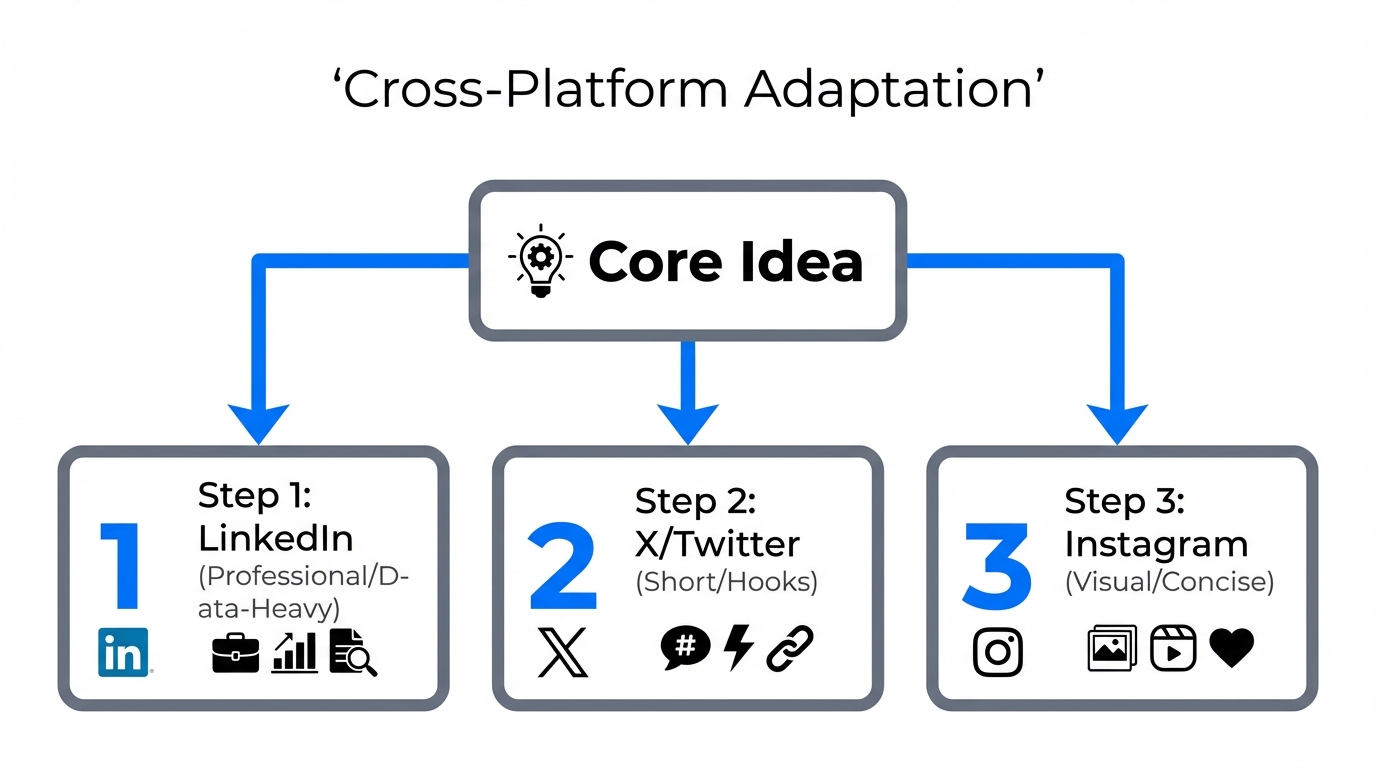
A fatal mistake is treating every social platform as the same. Posting the exact same automated report or content piece across LinkedIn, TikTok, and X is a fast track to low engagement. AI should be used to transform data for each specific platform's audience, not just to copy-paste it.
For example, a marketing agency might use Claude Code to reduce planning time from 20 hours to 3 hours. They don't just blast one message; they use the AI to analyze local trends and tailor reports for each specific niche. They see significant increases in engagement because the AI was tasked with nuance, not just speed. Use tools like Xpoz for real-time social listening to feed platform-specific trends back into your Claude Code workflows.
The Playbook for Claude Code Success
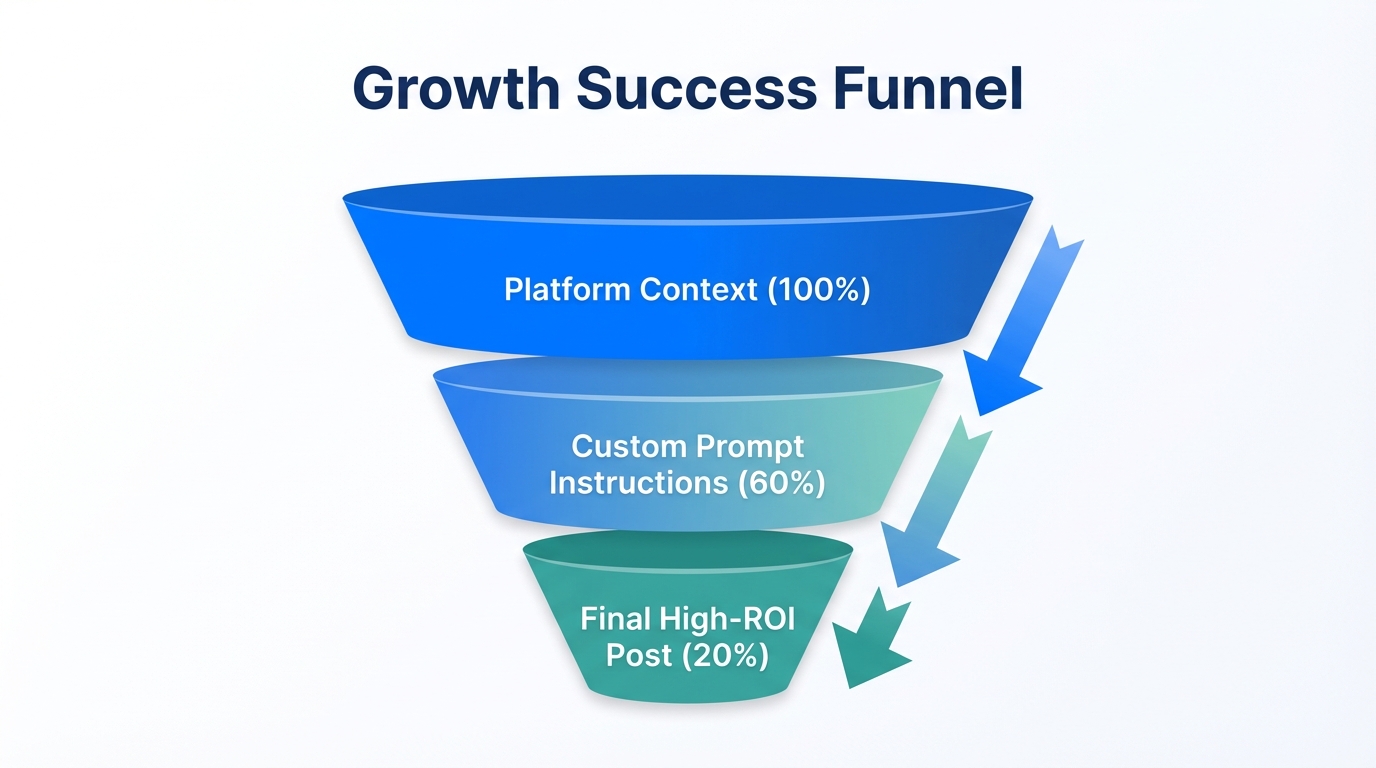
To successfully integrate Claude Code into your marketing stack without making these common mistakes, follow this sequential growth marketing automation playbook:
Step 1: Set Up Your MCP Bridge
Don't rely on manual data entry. Connect your social accounts and analytics via MCP servers. This allows Claude to pull the raw data it needs to make informed decisions without you acting as the middleman.
Step 2: Define the 'CLAUDE.md'
Create a master file that outlines your brand's voice, your key metrics, and your repository structure. Treat this as the "Brand Bible" for your AI agent.
Step 3: Enter 'Plan Mode'
Before executing any code, use `Shift + Tab` to enter Plan Mode. Ask Claude to architect the workflow first. For example: "Plan a workflow to scrape my latest LinkedIn post, compare its engagement to the last 30 days, and suggest three visual improvements for the next post."
Step 4: Human Validation
Review the output. Use your human intuition to tweak the creative angles. Then, and only then, use a modern scheduling tool like Late or SocialBee to schedule the content.
Conclusion: Building a Resilient AI Growth Engine
Claude Code is an incredibly powerful tool for social media and growth, but it requires a strategic hand. By avoiding the pitfalls of 100% automation, centralizing your data silos, and providing precise instructions through CLAUDE.md, you can build a growth engine that is both fast and brand-safe. Remember that in 2026, quality and nuance are the currencies that buy reach. To get the most out of your growth engine, pair Claude’s analysis with the creator discovery power of Stormy AI to ensure your inputs—especially your influencer and UGC data—are as high-quality as your outputs. Avoid these five mistakes, and you'll be well on your way to scaling your brand with the precision of an AI and the soul of a human.