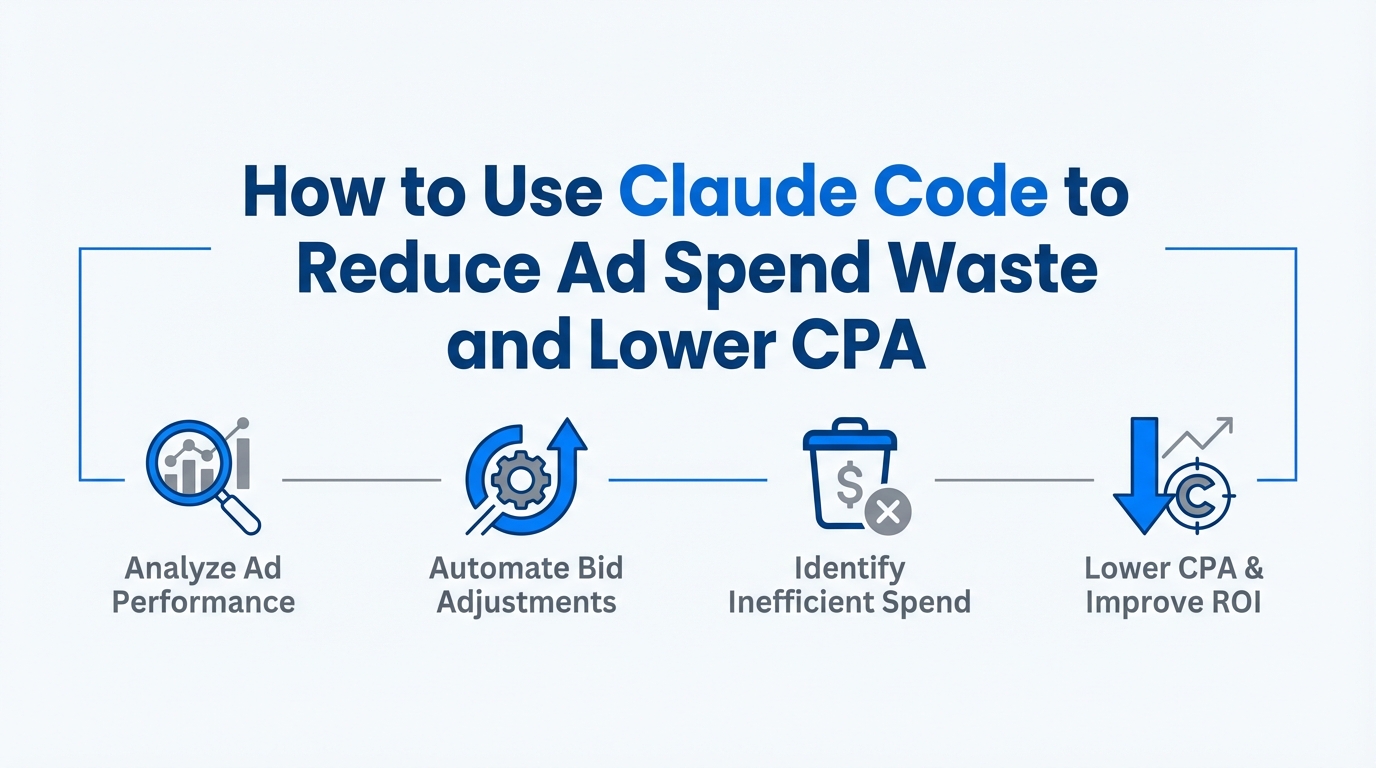
In the high-stakes environment of 2025 performance marketing, the margin for error has evaporated. As privacy regulations tighten and platform algorithms become increasingly opaque, marketers are finding that traditional manual optimization is no longer enough to maintain a healthy Return on Investment (ROI). The industry is currently witnessing a structural shift from "predictive" AI to "agentic" AI—tools that don't just suggest changes but execute them with surgical precision. At the forefront of this revolution is Claude Code, a terminal-based interface that allows growth teams to build autonomous workflows directly within their local development environments. By leveraging this technology, savvy marketers are learning how to reduce ad spend waste and significantly lower cost per acquisition (CPA) by automating the detection of budget leaks that human eyes often miss.
The 2025 Ad Waste Problem: Why 20-30% of Spend is Lost
The scale of inefficiency in modern digital advertising is staggering. Recent data from the Smartly 2026 Trends Report indicates that marketers estimate 20% to 30% of their annual digital spend is wasted on non-performing impressions, bot traffic, or incorrect targeting. This isn't just a rounding error; for a brand spending $1 million a month, that's $300,000 flushed away every thirty days. This waste occurs because native platform optimizations often prioritize their own revenue (spending your budget) over your specific business outcomes.
The gap between top-tier performers and the rest of the market is widening. While many are still struggling with manual CSV exports and reactive adjustments, the leaders are using Node.js-powered environments like Claude Code to run continuous audits. By moving beyond basic web-based chat interfaces, these teams avoid "AI slop"—the generic, low-effort outputs that fail to account for complex brand nuances—and instead build deep, context-aware optimization engines.
"Marketers who fail to automate their budget guardrails in 2025 aren't just losing money; they are forfeiting the data-driven agility required to compete in a winner-take-all digital economy."
Setting up 'Guardrail Scripts' within Claude Code
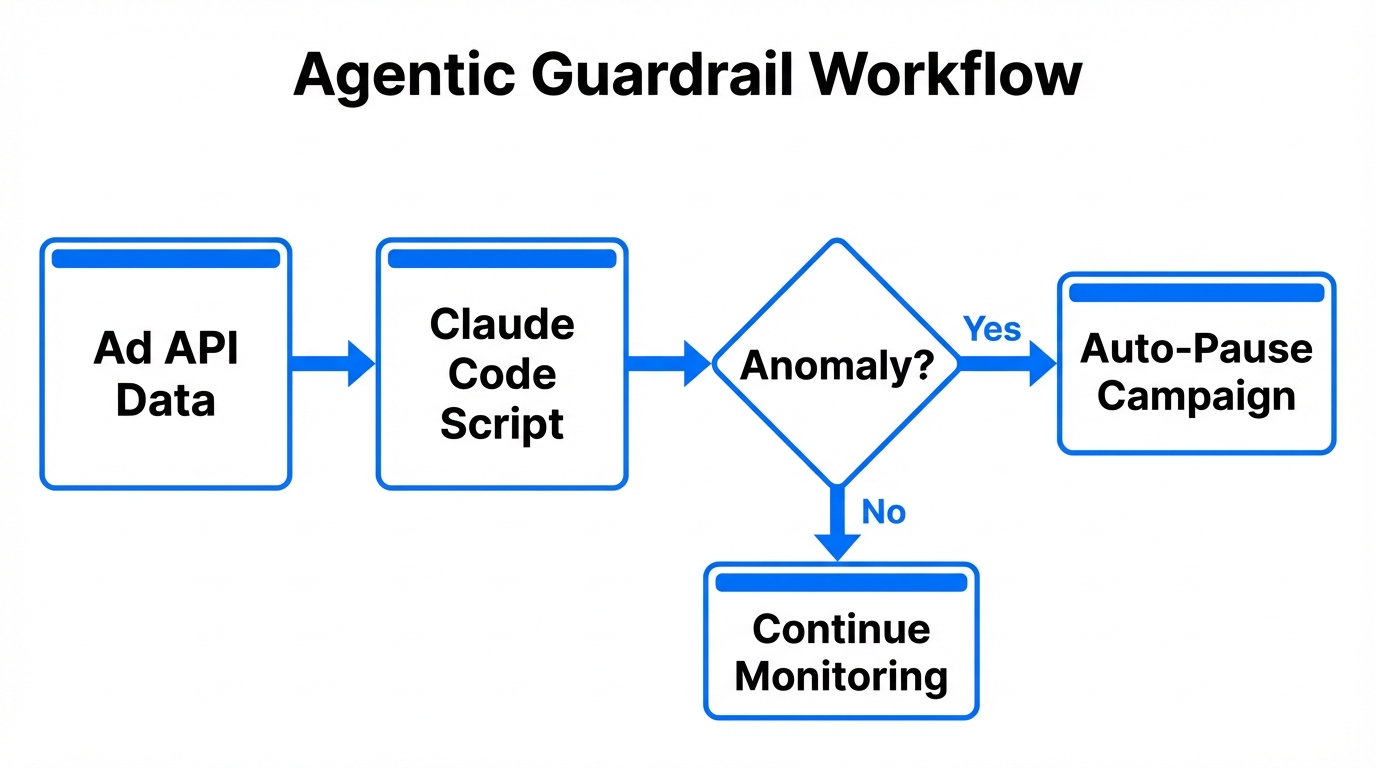
The most immediate way to reduce ad spend waste is to deploy what we call "Guardrail Scripts." These are autonomous pieces of code that monitor your Google Ads or Meta Ads accounts and trigger actions—like pausing a campaign or shifting budget—the moment a specific performance threshold is breached. Unlike the basic rules built into ad platforms, Claude Code can write complex logic that considers multiple variables, such as lifetime value (LTV), historical seasonal trends, and current inventory levels.
To begin, marketers can utilize resources like the MCP Market Google Ads Scripts. By connecting Claude Code to your Google Cloud Console, you can command the AI to: "Write a script that monitors my tCPA (Target Cost Per Acquisition) hourly. If any ad set exceeds my target by 50% with more than 100 impressions, pause it immediately and notify the team on Slack."
| Optimization Method | Latency | Complexity Level | Potential Savings |
|---|---|---|---|
| Manual Review | 24-48 Hours | Low | 5-10% |
| Platform Rules | 1-6 Hours | Medium | 10-15% |
| Claude Code Agentic Scripts | Real-Time | High (Customizable) | 25-40% |
This proactive approach eliminates the "overnight burn" where a runaway ad set spends thousands of dollars before a human logs in the next morning. It allows for a much more aggressive testing environment, as you can launch 10x more creative variants knowing that your AI guardrails will instantly kill the losers while scaling the winners.
Using CLAUDE.md to Prevent 'Context Death Spirals'
One of the biggest hurdles in using AI for marketing is "context death." This happens when a marketer starts a new chat for every task, causing the AI to lose track of brand voice, past performance history, and negative keyword lists. Claude Code solves this through the use of a CLAUDE.md file. This is a local file that serves as the "brain" for your AI agent, storing persistent guidelines that the AI reads before every single action it takes.
In your CLAUDE.md, you should define:
- Brand Voice: Tonal requirements and banned words to avoid "AI slop."
- Performance History: Which hooks have historically failed or succeeded.
- Success Metrics: A clear instruction to prioritize Return on Ad Spend (ROAS) or Pipeline Value over vanity metrics like Click-Through Rate (CTR).
- Reporting Standards: How you want your weekly performance reports formatted.
By maintaining this centralized context, you ensure that every optimization suggestion or new ad headline generated is aligned with your long-term strategy. This prevents the AI from suggesting generic "best practices" that don't apply to your specific niche. For agencies managing multiple creators, platforms like Stormy AI streamline creator sourcing and outreach, and those performance insights can then be fed back into the CLAUDE.md file to refine future creative briefs automatically.
"Your AI is only as good as the context you provide. The CLAUDE.md file is the difference between a generic assistant and a strategic partner that understands your brand's DNA."
Case Study: How Digital Applied Reduced Costs by 70%
The theoretical benefits of agentic AI are impressive, but the real-world results are even more compelling. The agency Digital Applied recently implemented a "sub-agent orchestration" workflow using Claude Code. They didn't just use one AI; they set up separate specialist agents for SEO, PPC, and Email marketing, all coordinated through a central terminal interface.
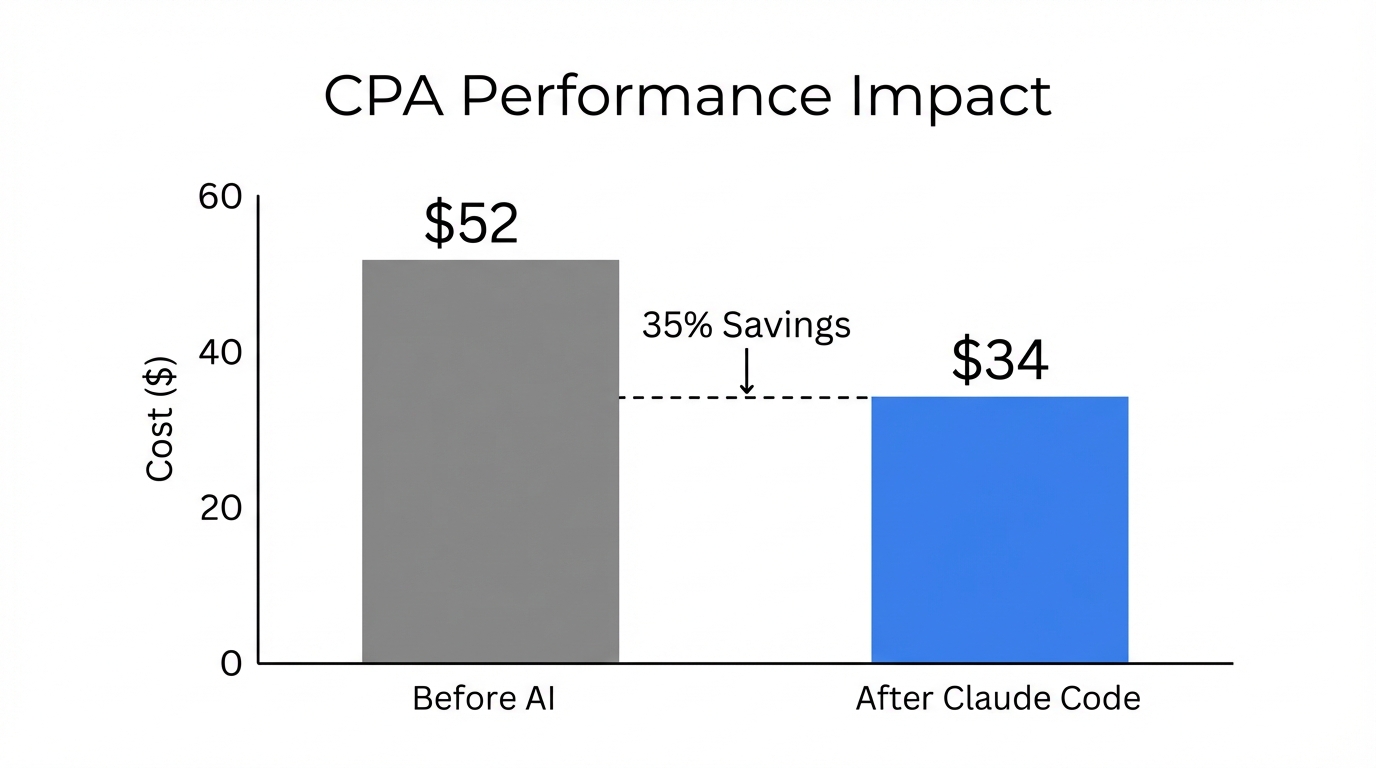
By automating their client content audits and PPC adjustments, they were able to complete tasks 81% faster than their previous manual process. More importantly, they saw a 70% reduction in marketing costs for their clients by identifying and pruning non-performing segments that had been active for months. This mirrors the results seen by the Anthropic team, who reported that their ad creative generation time dropped from 2 hours to just 15 minutes while testing 10x more variants.
This level of efficiency is what allows smaller teams to punch way above their weight class. When you aren't bogged down in the manual labor of campaign management, you can spend more time on high-level strategy and creative innovation. For example, you could use Firecrawl to scrape competitor landing pages and have Claude Code instantly draft counter-positioning ad copy to lower cost per acquisition by attacking your competitor's weaknesses.
The 'Broad Audience' Trap: Filtering Platform Suggestions
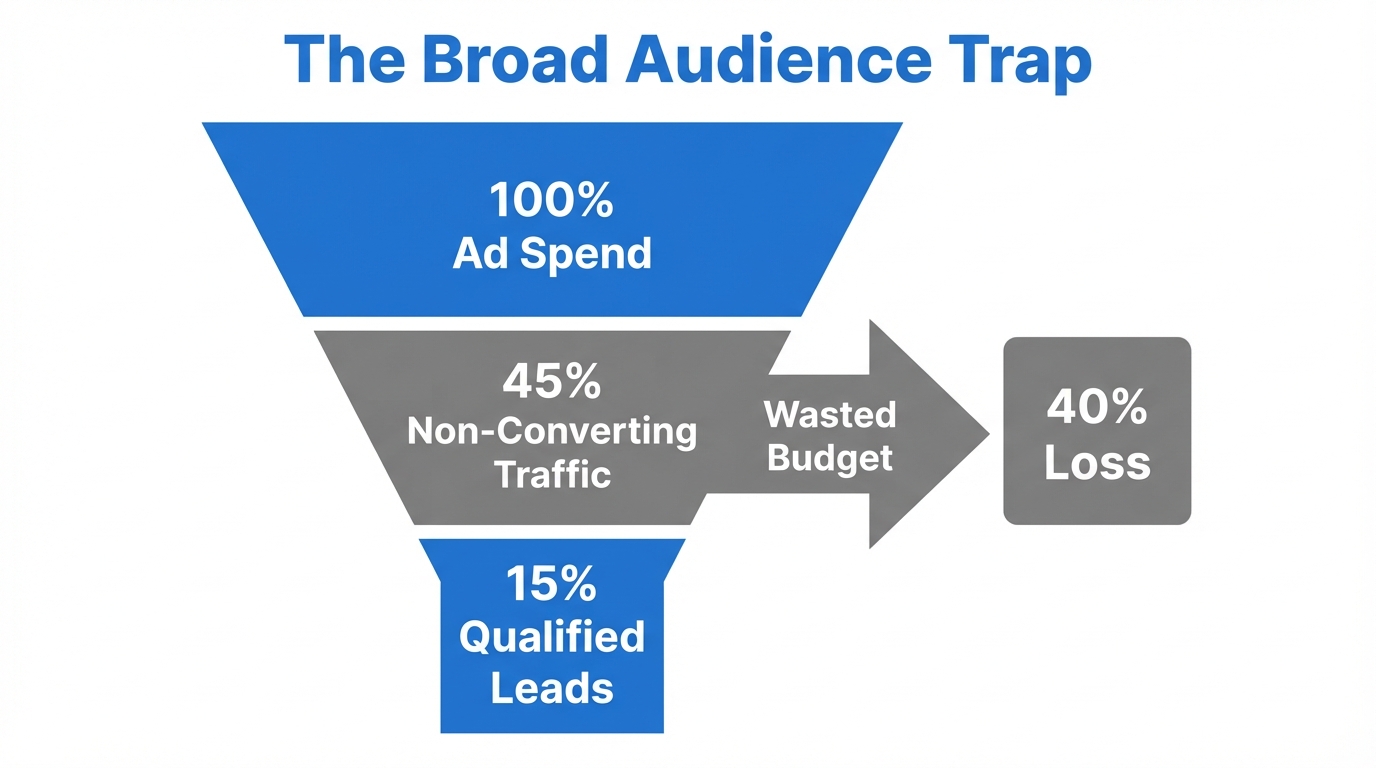
One of the most dangerous ways brands waste ad spend is by blindly following native platform recommendations. Features like Meta Advantage+ or Google’s Optimization Score often suggest "broadening your audience" to reach more people. While this sounds good in theory, for niche B2B brands or specialized e-commerce products, it often leads to a flood of low-quality leads and wasted budget on irrelevant impressions.
You can use Claude Code to act as a bullshit filter for these suggestions. By pulling your data through the Google Ads MCP Server, you can ask Claude to evaluate the platform’s suggestions against your actual conversion data. For instance, if Google suggests increasing your budget by 20% to "capture more traffic," you can command Claude: "Analyze the conversion quality of the traffic gained from the last time we broadened our audience. Did the LTV of those customers justify the increased CPA?"
Organizations that use AI to critique platform algorithms rather than blindly following them are the ones that maintain the highest margins. By identifying when "optimization" is actually just "up-selling" from the ad platform, you can protect your budget and ensure every dollar is directed toward the most profitable segments. Companies that leverage these agentic workflows see an average 37% reduction in CPA by simply cutting out the 'fluff' recommended by native tools like Google Ads Manager.
A Playbook for Lowering CPA with Claude Code
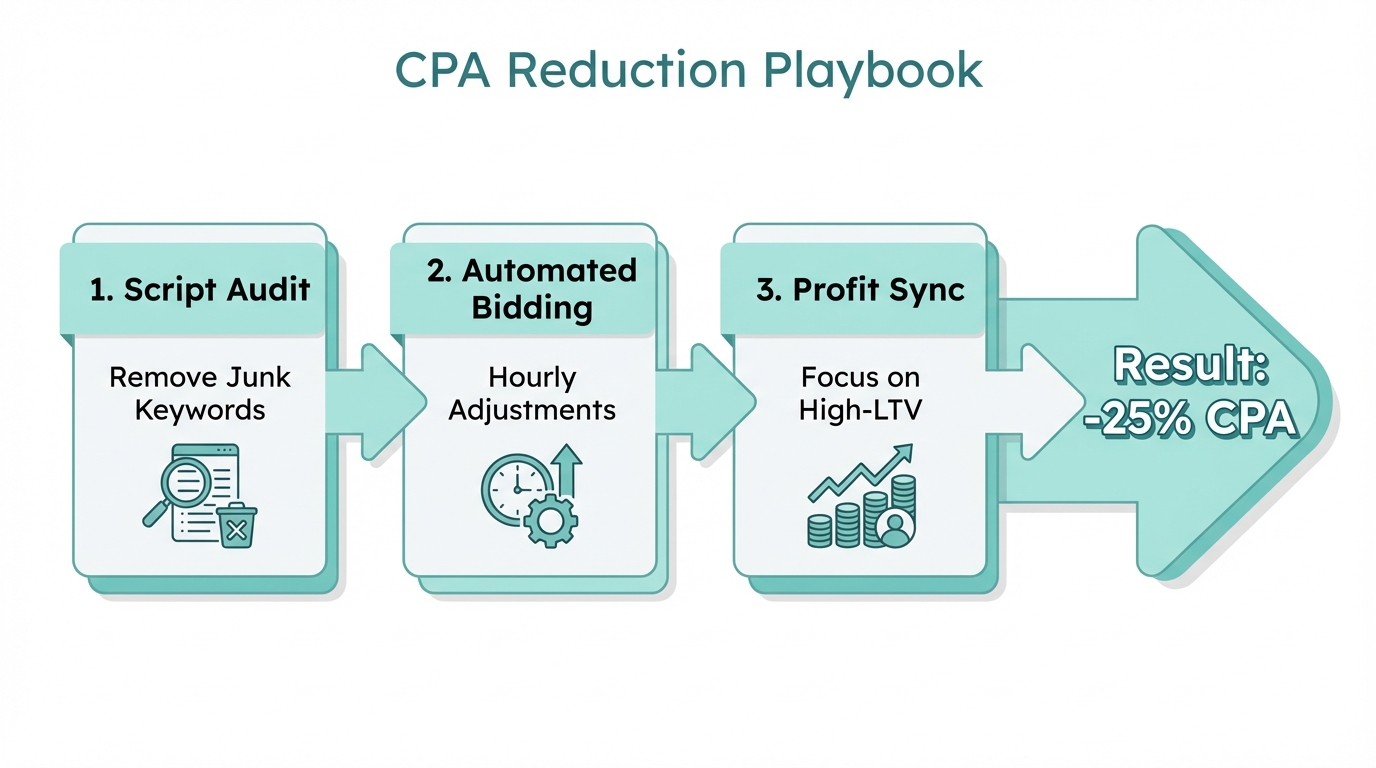
Ready to implement this in your own marketing stack? Follow this step-by-step playbook to start lowering your cost per acquisition today.
Step 1: Environment Setup
Ensure you have Node.js installed and gain access to the Claude Code terminal. This allows the AI to interact with your local files and marketing scripts directly.
Step 2: Connect Live Data
Use the Model Context Protocol (MCP) to link your ad accounts. Instead of manual exports, use the Meta Ads MCP or similar servers to give Claude real-time visibility into your spend and conversion data.
Step 3: Define Your CLAUDE.md
Create your brand's persistent memory. Include your negative keyword lists, your target CPA targets, and your "banned" creative styles to ensure the AI stays on track.
Step 4: Deploy Auditing Agents
Run the `/ads plan` command using tools like the Claude Ads GitHub Repo. Have the AI scrape your landing pages and competitor sites using Playwright to identify gaps in your current strategy.
Step 5: Automate Creator Workflows
For brands relying on UGC, source your creators through platforms like Stormy AI, then use Claude Code to analyze their past video performance data to generate perfectly tailored scripts for your next campaign.
The Future of AI Ad Optimization
The era of "set it and forget it" advertising is over. To reduce ad spend waste and maintain a competitive cost per acquisition, marketers must embrace the agentic capabilities of tools like Claude Code. By building custom guardrails, maintaining deep brand context via CLAUDE.md, and aggressively filtering platform "suggestions," you can build a marketing engine that is both more efficient and more profitable.
The technology is no longer the bottleneck—the bottleneck is how quickly you can integrate these autonomous workflows into your daily operations. Start small by automating a single budget guardrail, and as you see the savings materialize, expand your AI's scope to include creative generation, competitor intelligence, and full-funnel reporting. The 30% of waste is there for the taking; it's time to use AI ad optimization to claim it back for your bottom line.