In 2026, the era of the manual media buyer has officially come to an end. The frantic morning routine of checking Meta Ads Manager and Google Ads to adjust bids by 5% is a relic of the past. Today, the most sophisticated growth teams have transitioned to agentic performance marketing—a paradigm where AI agents don't just suggest copy, but autonomously manage million-dollar budgets, rebalance spend across channels, and swap out creative assets in real-time. Statistics show that teams integrating these specialized AI workflows report a 30% higher ROI and a 27% improvement in campaign performance within just six months, according to research from Stormy AI.
The shift is driven by two powerhouses: Anthropic’s Claude Code and OpenAI Operator. While OpenAI remains the volume leader with 800 million weekly users, Claude has surged to a 32% enterprise market share, largely due to its superior brand consistency and massive context windows. This guide will walk you through the exact playbook for setting up an autonomous bidding infrastructure that monitors your real-time ROAS and protects your margins while you sleep.
"Agentic performance marketing is the shift from AI as a drafting tool to AI as a decision-maker. By 2033, AI-influenced digital ad spend is projected to reach $81.6 billion." [source]The Rise of Agentic Bidding: Claude vs. OpenAI
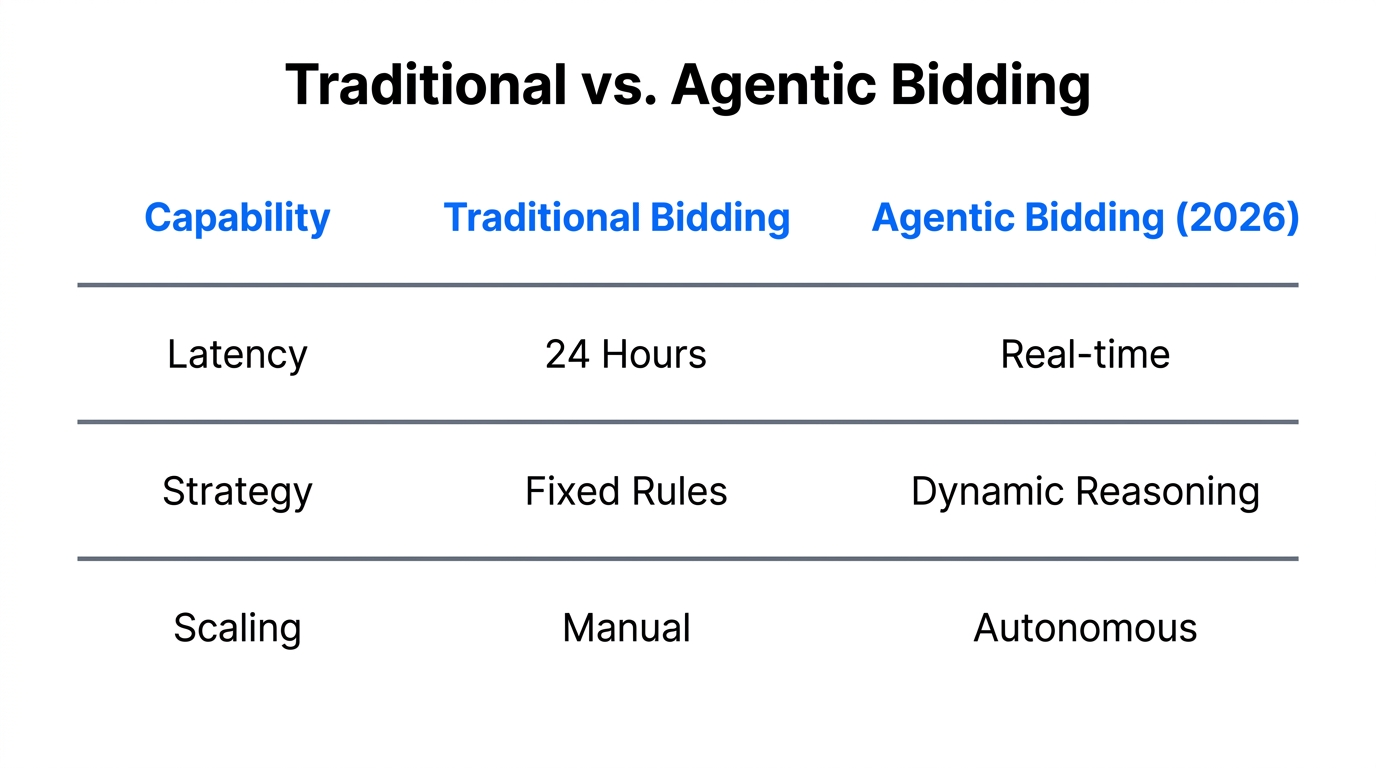
To build an autonomous system, you must first understand the "brain" of your operation. In 2026, the consensus among performance marketers is that a hybrid approach is best. OpenAI Operator for ads excels at the "math"—running Python scripts, managing API calls to Google Ads, and processing high-volume data analysis. Conversely, Claude Code for marketers acts as the "Creative Strategist," ensuring that automated changes don't violate brand guidelines or sound robotic.
| Feature | OpenAI (GPT-5 / Operator) | Claude (3.5 Sonnet / 4.5) |
|---|---|---|
| Primary Role | The Logical Architect | The Creative Strategist |
| Best For | Data analysis & automated scripts | Brand voice & deep account audits |
| Context Window | 128K - 400K tokens | 200K - 1M tokens |
| Integrations | Mature (Zapier, Microsoft) | Growing (AWS Bedrock, Vertex AI) |
As noted by UseGrowthOS, OpenAI is often superior for bid automation, while Claude avoids the "robotic fluff" typical of AI-generated content. Interestingly, 2026 has seen a strategic divide: OpenAI now displays contextually targeted ads within its free tiers, whereas Anthropic positions itself as a premium, ad-free professional tool, as reported by AI Agents Plus.
Playbook: Setting Up Your Autonomous Ad Agent
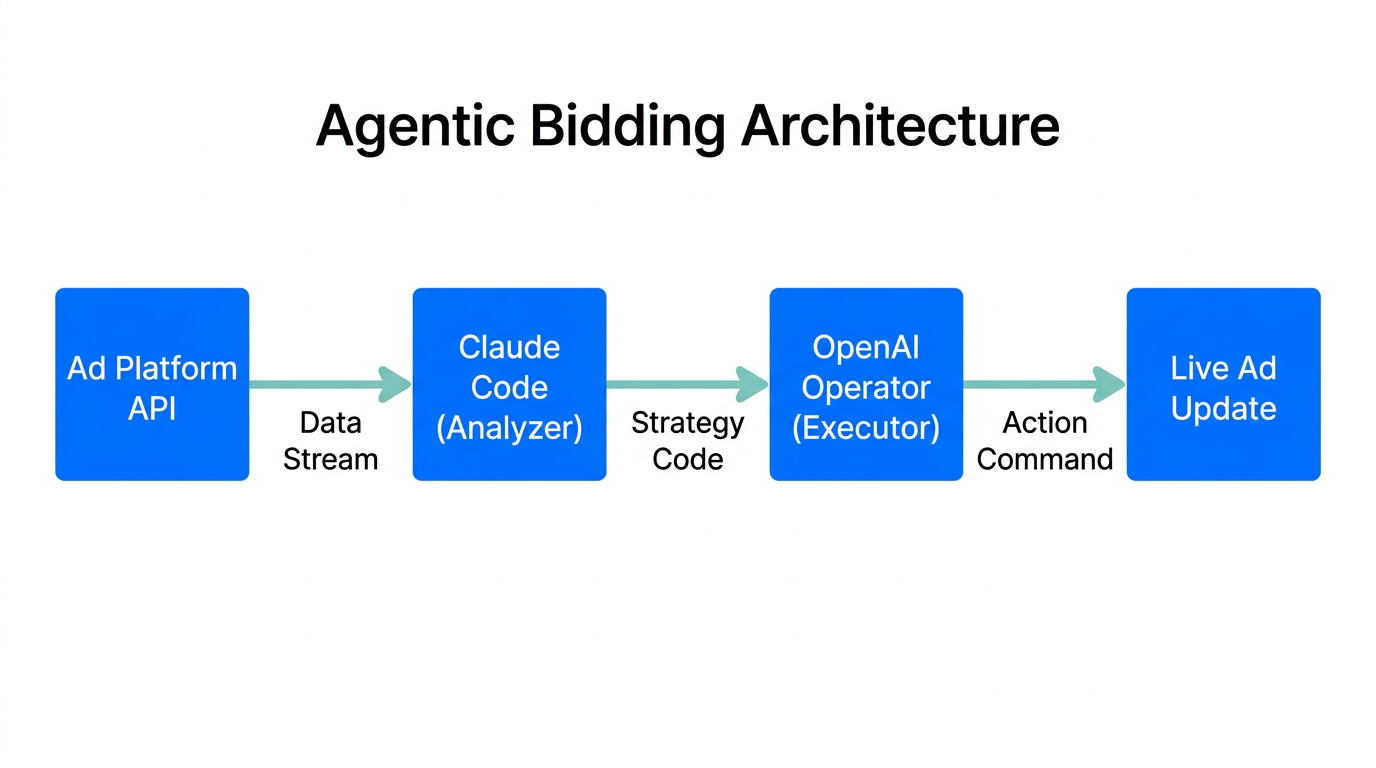
Setting up autonomous ad bidding requires connecting your LLM of choice to your marketing stack via an orchestration layer like Make.com or Zapier. Follow these steps to build your agentic pipeline.
Step 1: Define Your Bidding Logic
Before letting an agent loose, you must define the constraints. Use Claude Code to analyze your historical performance data. Upload a CSV of the last 12 months of spend from Meta Ads Manager and Apple Search Ads. Ask the agent to identify your "breakeven ROAS" and "efficiency frontier."
Step 2: Connect the APIs
Use OpenAI Operator to write and execute a script that pulls hourly data from your ad accounts. The agent should be programmed to look for specific triggers, such as a 15% drop in ROAS over a 4-hour window. By using Amazon Bedrock, enterprises like Brex have successfully automated 75% of their transaction and compliance processing, providing a blueprint for how marketers can handle high-velocity data.
Step 3: Establish the Rebalancing Protocol
The goal is multi-channel budget fluidity. If LinkedIn ROAS is outperforming Google by 2x, the agent should autonomously move 10% of the daily budget every two hours until the performance stabilizes. This is part of the "Agentic Bidding" model used by leading firms to maximize every dollar of spend.
Triggering Automated Creative Replacement
One of the biggest leaks in a performance marketing budget is "creative fatigue." In the past, you only noticed a fatigue issue when your CPAs tripled over a weekend. In 2026, we use agents to monitor CTR decay proactively.
Your autonomous agent should be configured to track the Click-Through Rate (CTR) on a rolling 24-hour average. When the agent detects a statistically significant downward trend (e.g., a 20% decay compared to the 7-day baseline), it triggers the following workflow:
- Asset Selection: The agent identifies the next best-performing creative style from your library. Platforms like Stormy AI are essential here for discovering creators and sourcing fresh UGC to keep the pipeline full.
- Briefing: Claude Code generates a new creative brief based on the hooks that are currently winning in the market.
- Deployment: OpenAI Operator pushes the new creative into a dynamic creative testing (DCT) campaign to validate it against the current winner.
"The future of ads isn't just better bidding; it's the ability to swap the engine while the car is moving at 100mph without dropping in performance."Case Studies: How TELUS and Brex Reinvested Millions
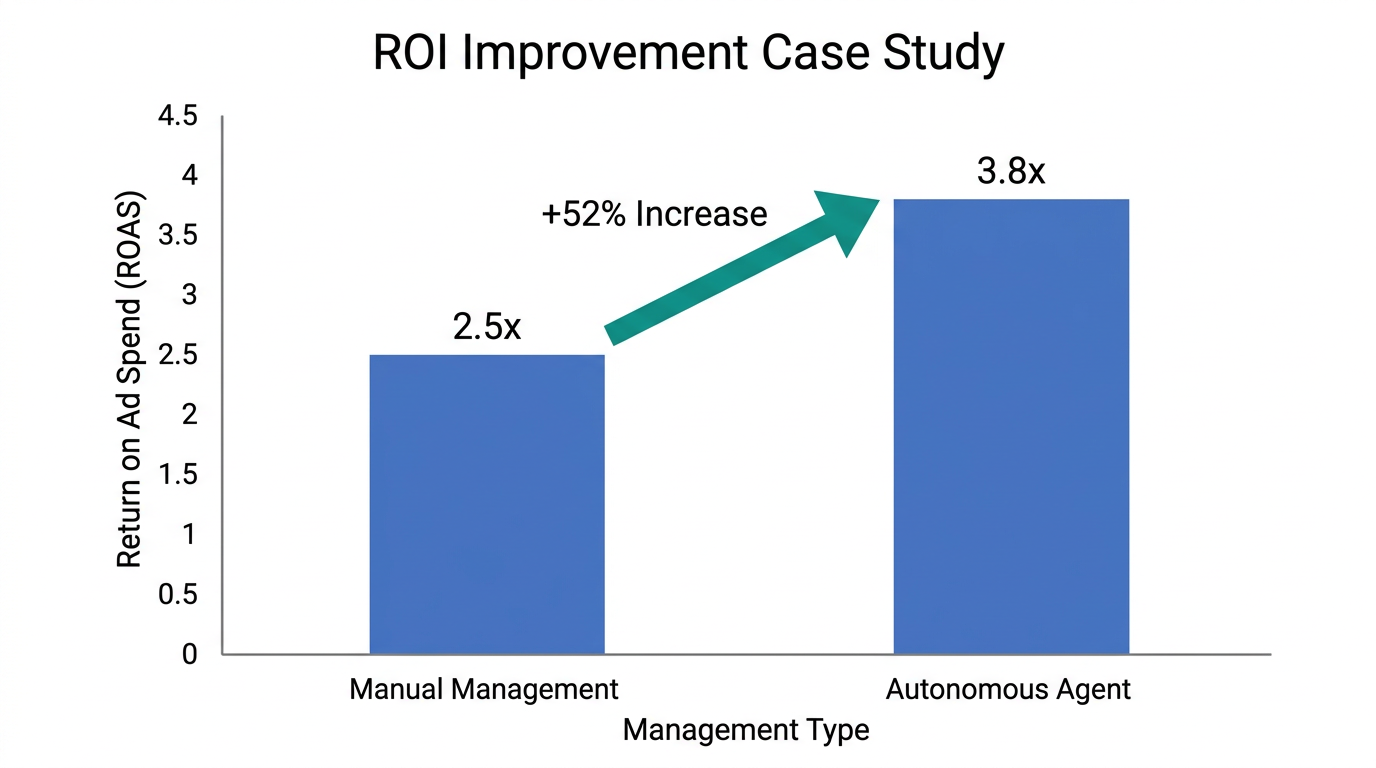
The transition to agentic performance marketing isn't just theoretical; it's delivering massive bottom-line impact for global brands. By automating acquisition labor, these companies have shifted their human talent from "button pushers" to "strategists."
| Company | AI Strategy | Result |
|---|---|---|
| TELUS | Built 13,000+ internal AI tools using Claude | $90 Million benefit & 500k hours saved |
| Brex | Integrated Claude via Amazon Bedrock | Automated 75% of processing tasks |
| Monks | AI-led creative pipelines | 97% reduction in creative costs |
TELUS reinvested their $90 million in savings directly into aggressive customer acquisition, essentially outspending competitors using the efficiency gained from AI. Meanwhile, Monks (formerly Media.Monks) demonstrated that AI can reduce production hours by 50%, allowing for a much higher volume of creative testing than was ever possible manually, according to Stormy AI’s analysis.
The 'Human-in-the-Loop' Rule: Preventing Hallucinated Spend
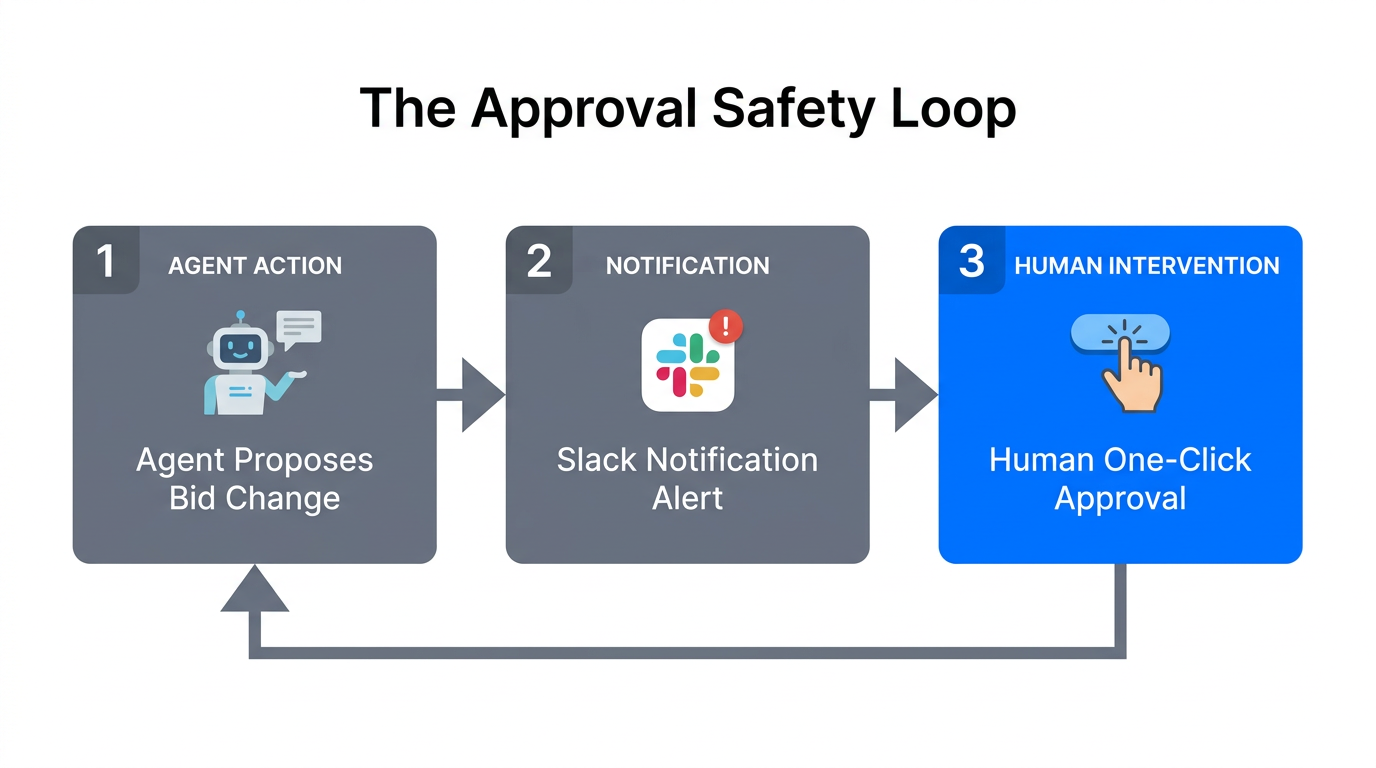
While the goal is autonomous ad bidding, total automation is a dangerous "set and forget" trap. AI models, including the latest versions of GPT and Claude, can still experience "hallucinations"—optimizing for the wrong metrics if not properly constrained. A common error is optimizing for vanity metrics like clicks rather than high-intent conversion data, a warning highlighted by Primotech.
To prevent a scenario where an agent spends $50,000 on low-quality bot traffic, we recommend the 20% Oversight Gap:
- Hard Caps: Set absolute daily spend limits in the native ad platforms (TikTok Ads Manager, etc.) that the agent cannot override.
- Strategic Reviews: Humans should spend 20% of their time auditing the intent behind the agent's decisions. Is the agent moving budget to LinkedIn because the leads are good, or because the CPC is artificially low?
- Data Hygiene: Ensure your conversion tracking (via Google Analytics or PostHog) is flawless. Feeding poor data into an autonomous agent is like putting low-grade fuel in a Ferrari; it will lead to flawed targeting and wasted spend.
Conclusion: The Future is Agentic
By 2026, the competitive advantage in digital marketing has shifted from those who can write the best ads to those who can build the best autonomous systems. Using OpenAI Operator for ads to handle the technical execution and Claude Code for marketers to maintain brand integrity creates a powerful, self-optimizing growth engine.
Success in this new era requires a commitment to data hygiene and a willingness to step back from manual control. Start by automating your ROAS monitoring, then move to budget rebalancing, and finally, full creative replacement. As you scale, platforms like Stormy AI can help you find the UGC creators needed to fuel your AI's creative requirements. The 30% ROI lift is waiting—it's time to let the agents take the wheel.