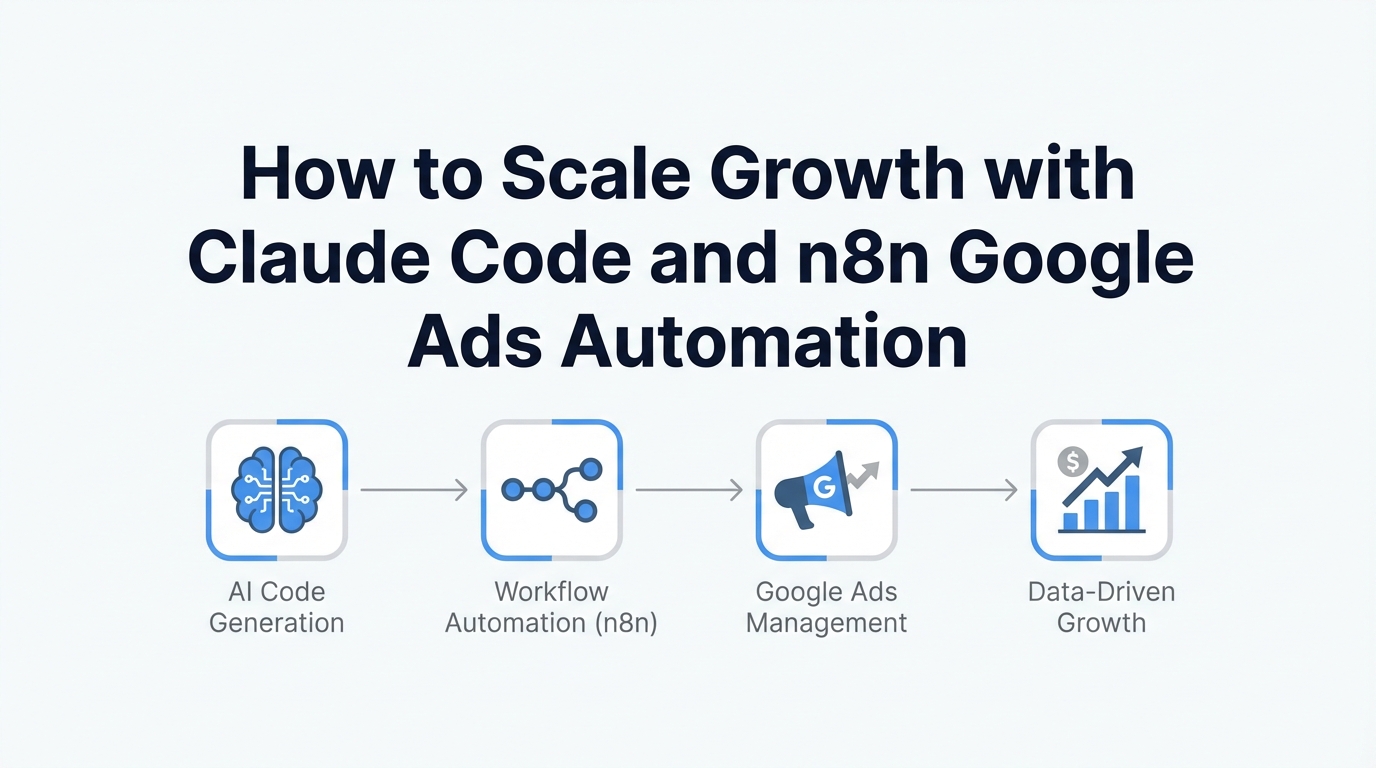
In the high-stakes world of performance marketing, the difference between a scaling campaign and a costly failure often comes down to how quickly you can process data. By 2025, the era of manual CSV exports and hand-crafted pivot tables is officially over. Growth leads and agency owners are now pivoting toward an AI-native marketing architecture that does more than just aggregate data—it makes decisions. By leveraging tools like n8n.io and the cutting-edge capabilities of Claude Code, marketing teams are reclaiming over 200 hours per month previously lost to manual reporting and routine adjustments. This guide explores how to architect this autonomous future.
The Shift to AI-Native Marketing Architectures in 2025
The marketing automation landscape has undergone a seismic shift. We have moved from simple Zapier-style triggers to complex, multi-agent workflows that handle entire lifecycles. According to recent data from Madgicx, the AI marketing market has reached a staggering $47.32 billion in 2025, with projections suggesting a leap to over $107.5 billion by 2028. This isn't just a trend; it's a fundamental restructuring of how growth is achieved.
Today, 88% of marketers use AI on a daily basis, and industry experts at Averi AI predict that 80% of analytics tools will be fully AI-powered by 2026. For a growth marketing automation strategy to be effective, it must move beyond "scripts" and toward "systems." This is where the combination of Claude Code and n8n becomes a competitive moat for agencies and internal growth teams.
"The 2025 marketing stack isn't about the tools you buy, but the AI-native architecture you build to connect them."Using Claude Code to Architect Complex n8n Workflows
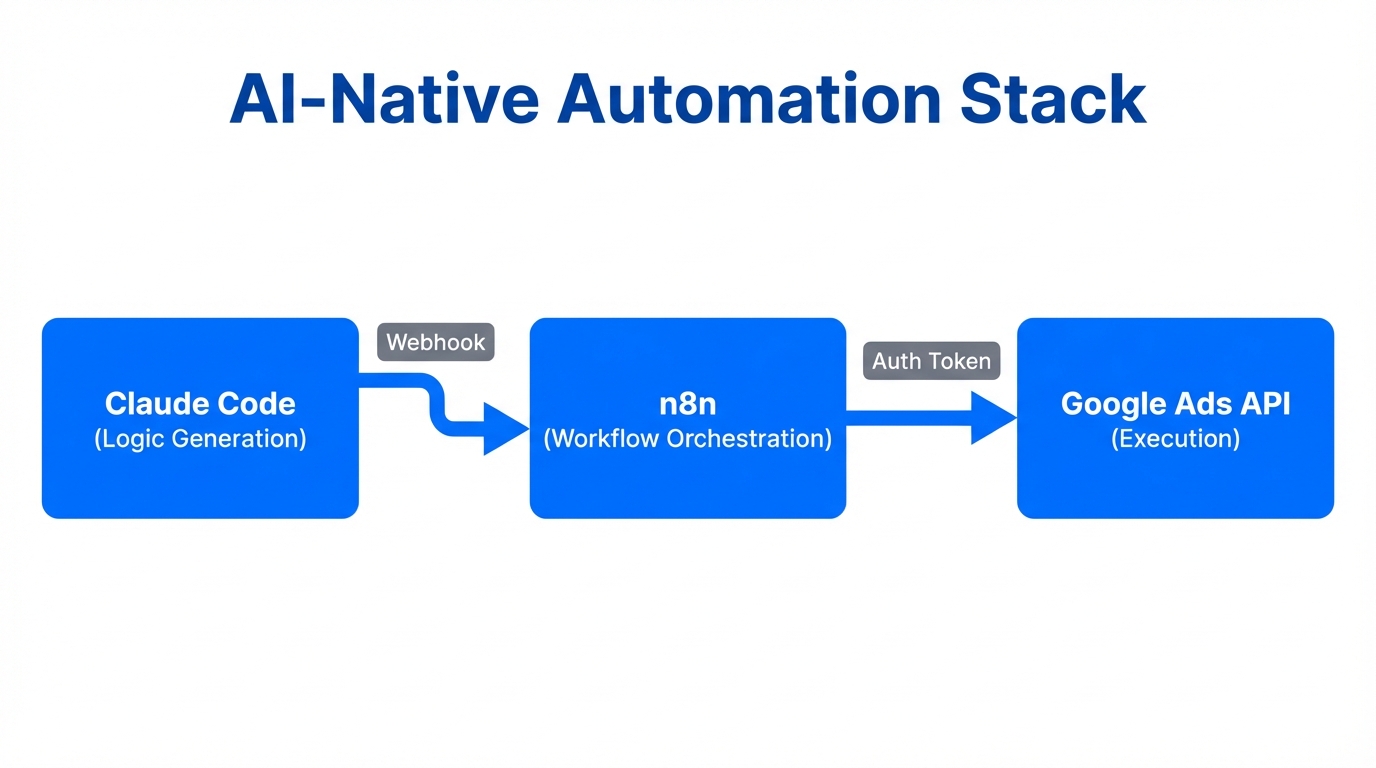
One of the biggest bottlenecks in marketing automation architecture has always been the technical barrier to entry. Building complex workflows in n8n used to require deep knowledge of JSON structures and API documentation. However, the introduction of Claude Code—Anthropic’s developer-centric toolset—has changed the game. By using the Model Context Protocol (MCP), Claude can now act as a remote systems administrator for your automation stack.
Instead of manually dragging nodes, developers and growth leads use Claude Code to "engineer" the workflow. Claude can research the n8n Google Ads documentation, write the logic in structured JSON, and deploy it directly via the n8n API. This agentic approach ensures high precision; in fact, Claude 3.7 Sonnet boasts a 95%+ accuracy rate in generating compatible JSON for automated environments, as noted by Marketing LTB. For those looking to dive deeper, the n8n MCP Server on GitHub provides the necessary bridge for Claude to see and edit your workflows in real-time.
The Playbook: Scaling Google Ads Automation
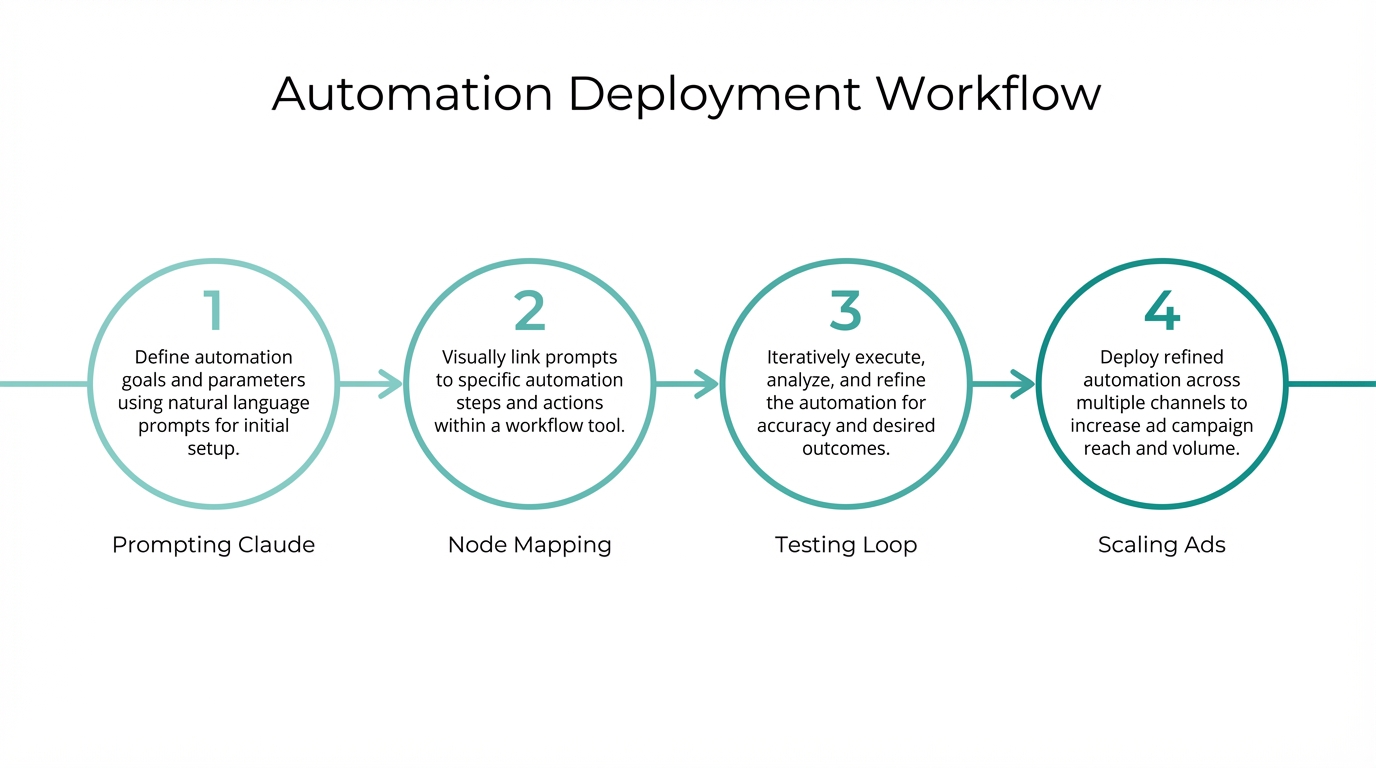
To build a world-class Google Ads automation engine, you need a structured, tiered approach. It’s not just about pulling data; it’s about what you do with it. Following this 3-tier strategy will transform your reporting into an actionable growth engine.
Step 1: Data Extraction via GAQL
The foundation of any automation is the quality of data. Most marketers make the mistake of fetching campaign data one by one, leading to the "N+1 problem" and API rate limits. Instead, use the Google Ads Query Language (GAQL) within your n8n nodes to fetch all necessary metrics—like ROAS, CPC, and Impression Share—in a single, batched request. This is best managed via the Google Ads API Console and triggered via a Cron node every Monday at 9:00 AM to ensure fresh data for weekly reviews.
Step 2: AI-Powered Insights with Claude 3.7
Once you have the raw JSON from Google Ads, pass it to the n8n Anthropic Node. Use "Chain of Thought" prompting to ask Claude to identify the top three anomalies, suggest budget reallocations based on performance, and draft a high-level summary for your team. This removes the "busywork" of data interpretation, allowing humans to focus on the 20% of high-level strategy that AI cannot yet handle alone, a principle championed by experts at Shared Physics.
Step 3: Dynamic Distribution
Don’t bury your insights in a PDF. Push the transformed data to dynamic dashboards in Google Sheets or Airtable for live tracking. Finally, configure a Slack node to ping your growth channel only when critical thresholds are met—such as a ROAS drop below 2.5x.
| Workflow Component | Manual Process | AI-Native Automation |
|---|---|---|
| Data Gathering | 3-5 Hours/Week | Instant (Cron Trigger) |
| Anomaly Detection | Subjective Analysis | 95% Accuracy (Claude 3.7) |
| Reporting/Alerts | Weekly Email | Real-time Slack Alerts |
| Budget Adjustments | Reactive/Manual | Proactive/Automated |
Cost-Benefit Analysis for Marketing Agencies
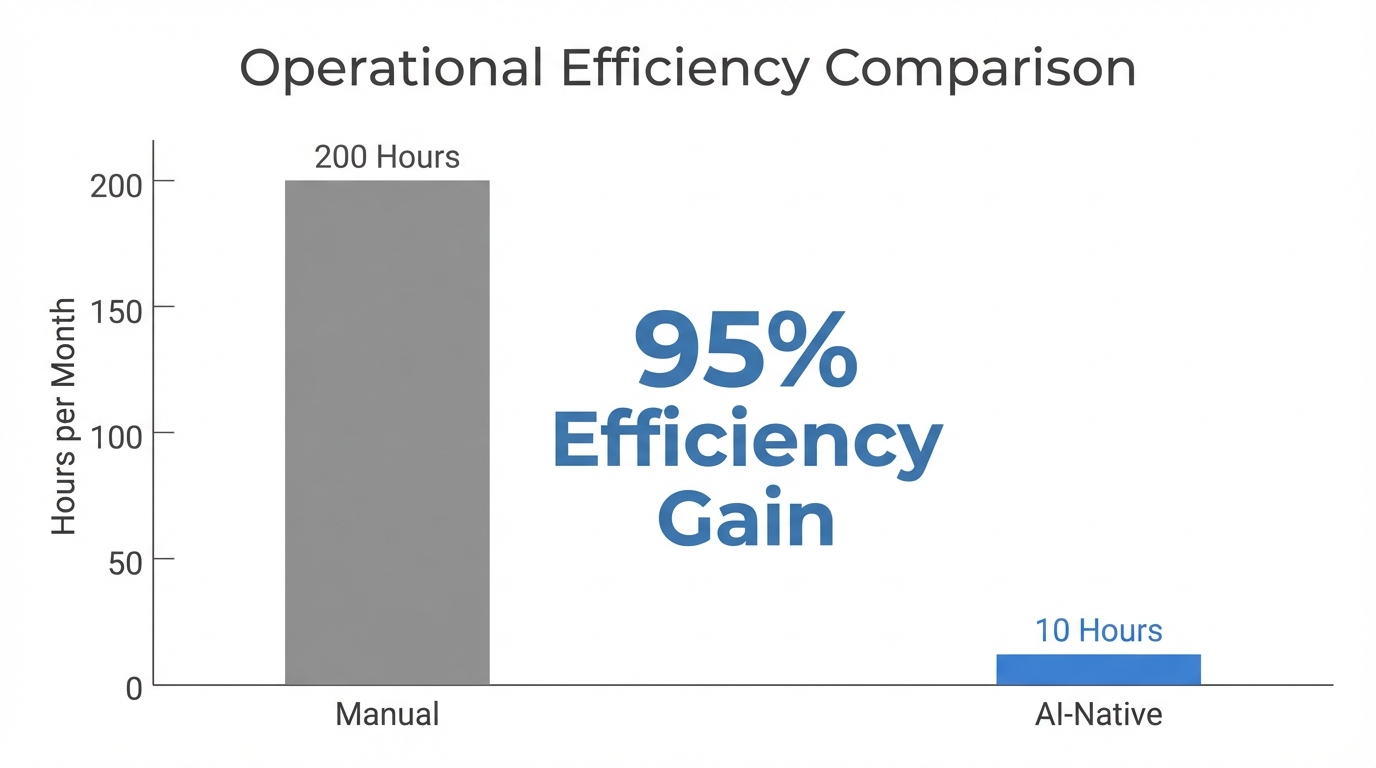
For agencies, the ROI of automated ETL processes is undeniable. Research from Dataslayer.ai confirms that teams using n8n for data pipelines save roughly 200 hours per month. When you multiply that by the hourly rate of a senior growth marketer, the savings often reach tens of thousands of dollars monthly. Furthermore, as you scale your Google Ads automation, you’ll likely need high-quality creative assets to fuel your campaigns. Modern platforms like Stormy AI streamline this process by helping you source and manage UGC creators at scale, ensuring your automated workflows always have fresh content to test.
"Automating the 80% of routine tasks allows your team to focus on the 20% of creative strategy that actually drives 10x growth."Case Study: Automated Budget Guardrails
A leading digital agency recently implemented an n8n workflow designed to prevent overspend—a common nightmare for growth leads. The system monitors Google Ads spend every hour. If a campaign's daily spend exceeds 120% of the target without a proportional increase in conversions, the workflow automatically pauses the campaign and sends an emergency alert to the team. This "guardrail" system has saved the agency thousands in wasted ad spend and provided peace of mind for high-budget clients. It’s a perfect example of how n8n marketing workflows can act as an insurance policy for your marketing budget.
Common Mistakes in Marketing Automation Architecture
Building an automated system comes with risks. To ensure your architecture remains robust, avoid these four common pitfalls:
- Hardcoded API Keys: Never place sensitive developer tokens in a Code Node. Always use n8n’s built-in Credentials Manager to prevent security leaks, as recommended by Sandbox Tech.
- The N+1 Problem: As mentioned, batching requests via GAQL is critical. Fetching 1,000 campaigns individually will trigger API limits and crash your workflow.
- Missing Error Triggers: Every workflow must have an Error Trigger Node. If the Google Ads API goes down and you don't have a fail-safe, your campaigns could run unmonitored for days.
- Context Window Overload: Don't send massive raw CSV files to Claude. Use n8n’s "Item Lists" node to aggregate and pre-process data before sending it to the AI for analysis.
By following these best practices and integrating tools like Stormy AI for creator management and discovery, you can build a comprehensive growth engine that handles everything from sourcing talent to optimizing spend. The future of marketing is not human vs. AI—it is the human who masters the AI architecture vs. the human who doesn't.
The Future of Growth Marketing
Scaling growth in 2025 requires a shift from manual execution to growth marketing automation. By combining the coding prowess of Claude Code with the flexible orchestration of n8n, you can build a marketing engine that is self-correcting and highly efficient. Start small by automating your weekly reporting, then graduate to complex budget guardrails and AI-driven creative testing. The time you save will be your greatest asset in a hyper-competitive market.