The era of the "button-pusher" media buyer is officially dead. As we navigate the marketing landscape of 2026, the distance between a high-performing creative strategy and its technical execution has collapsed. The shift from Generative AI (writing a single caption) to Agentic AI (executing full campaign lifecycles) is no longer a futuristic prediction—it is the current industry standard. Advertisers who have embraced this transition are seeing an average 22% higher Return on Ad Spend (ROAS) compared to those clinging to manual setups.
For the modern growth lead, the challenge isn't just about making better ads; it's about building better systems to deploy them. This is where Claude Code enters the fray. By moving beyond the visual interface of Meta Ads Manager and into the Command Line Interface (CLI), marketers can now act as "Strategic Architects," managing a fleet of AI agents that discover opportunities, optimize bids, and refresh creative assets while they sleep. This playbook will guide you through the transition from manual media buying to an agentic marketing strategy powered by Claude Code.
The Great Shift: From UI-Based Buying to CLI Efficiency
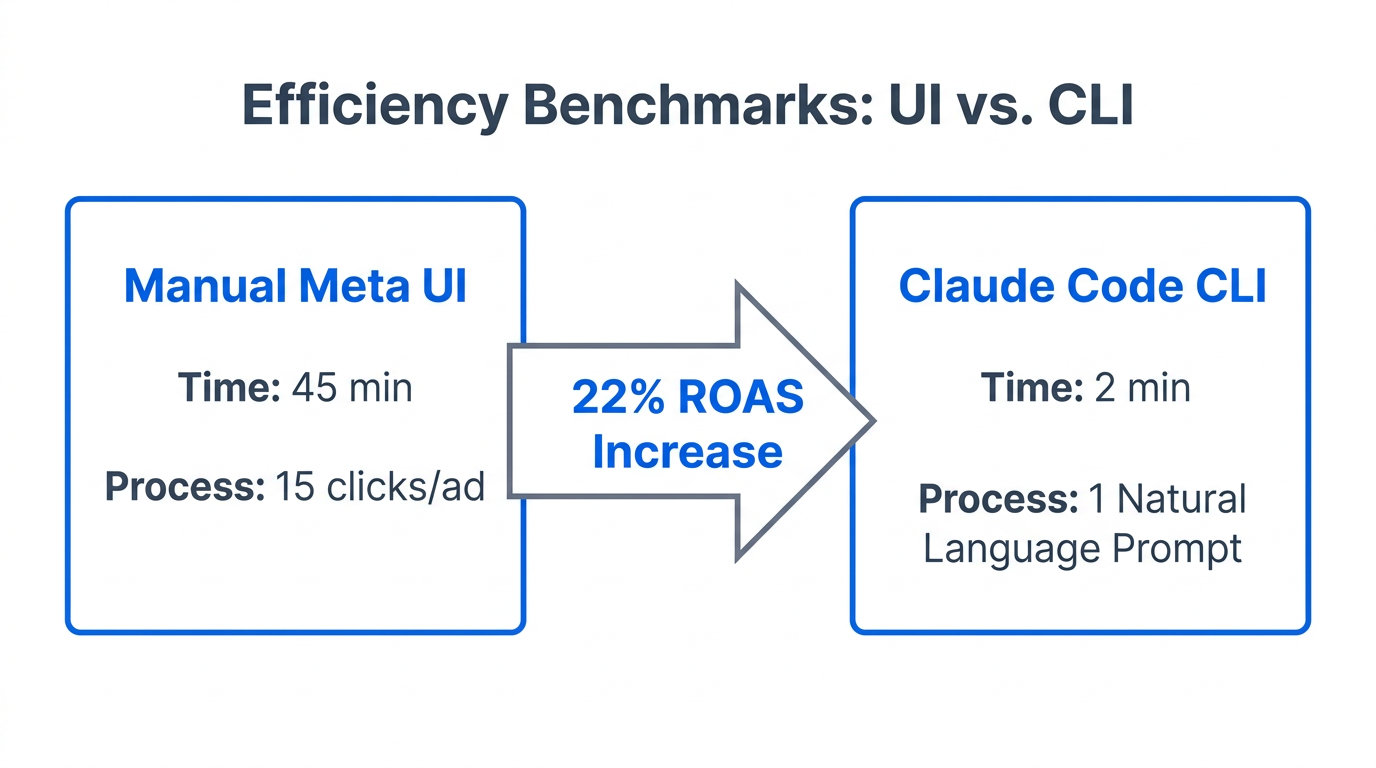
For over a decade, the Meta Ads Manager UI has been the primary workspace for media buyers. However, in 2026, the sheer volume of data and the speed of creative fatigue make manual clicking obsolete. High-level media buyers are moving toward the CLI. Using Claude Code, you are no longer limited by how fast you can click "Duplicate Campaign." Instead, you are executing bulk changes across hundreds of campaigns via terminal commands.
Why is the CLI superior? Because it allows for automation at scale. If you want to adjust the budget of every ad set targeting "Fitness Enthusiasts" in the UK by 10% based on yesterday's performance, you don't need to filter, select, and edit manually. You simply tell Claude Code to run a script that identifies those specific parameters and executes the change via the Meta Marketing API. This level of efficiency is what allows lean teams to manage multi-million dollar budgets with surgical precision.
"The role of the Media Buyer has evolved: you are no longer playing the instruments; you are conducting the orchestra."
Model Context Protocol (MCP): The Bridge Between AI and API
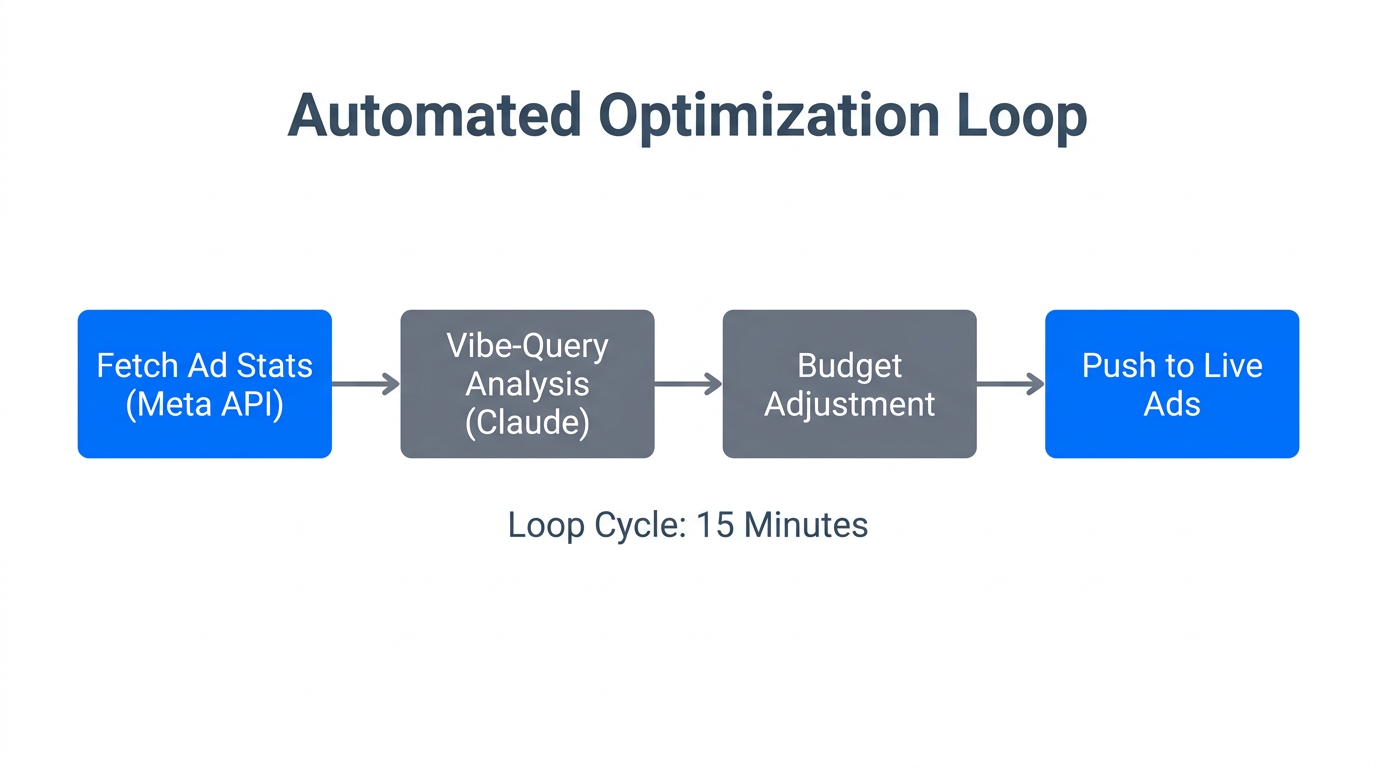
The real magic behind scaling Meta Ads in 2026 is the Model Context Protocol (MCP). This open standard allows Claude to securely "read" and "write" to external data sources in real-time. By connecting Claude Code to a Meta Ads MCP Server, you grant the AI the ability to see your campaign performance and take action directly within your account.
This isn't just a simple integration; it’s a fundamental shift in how AI media buying workflows function. With MCP, Claude isn't just guessing based on a screenshot you uploaded; it is querying the actual live data. It can detect a CPM spike in a specific region or identify which creative hook is resonating with a new demographic before you even finish your morning coffee.
Vibe Querying: Goodbye Pivot Tables, Hello Natural Language
In 2026, the most valuable skill a marketer can have is Vibe Querying. Rather than spending hours building complex pivot tables in Microsoft Excel to understand performance, agentic marketers ask natural language questions directly to their ad data. By using Claude Code, you can prompt your terminal with queries like:
- "Which of my ads had a 20% CPM spike yesterday, and what was the common creative element?"
- "Summarize the performance of all UGC videos versus high-production static images for the Gen Z demographic over the last 14 days."
- "Analyze the ROAS of our app install campaigns and suggest three budget reallocation moves to hit our $5 CPA goal."
This allows for immediate, actionable insights. When you identify that a specific type of User-Generated Content (UGC) is crushing it, you can immediately pivot your strategy. For brands scaling UGC, platforms like Stormy AI streamline creator sourcing and vetting, ensuring that your "automated ad machine" is always fueled with high-quality, authentic content that fits your brand DNA.
Manual Buying vs. Agentic Media Buying
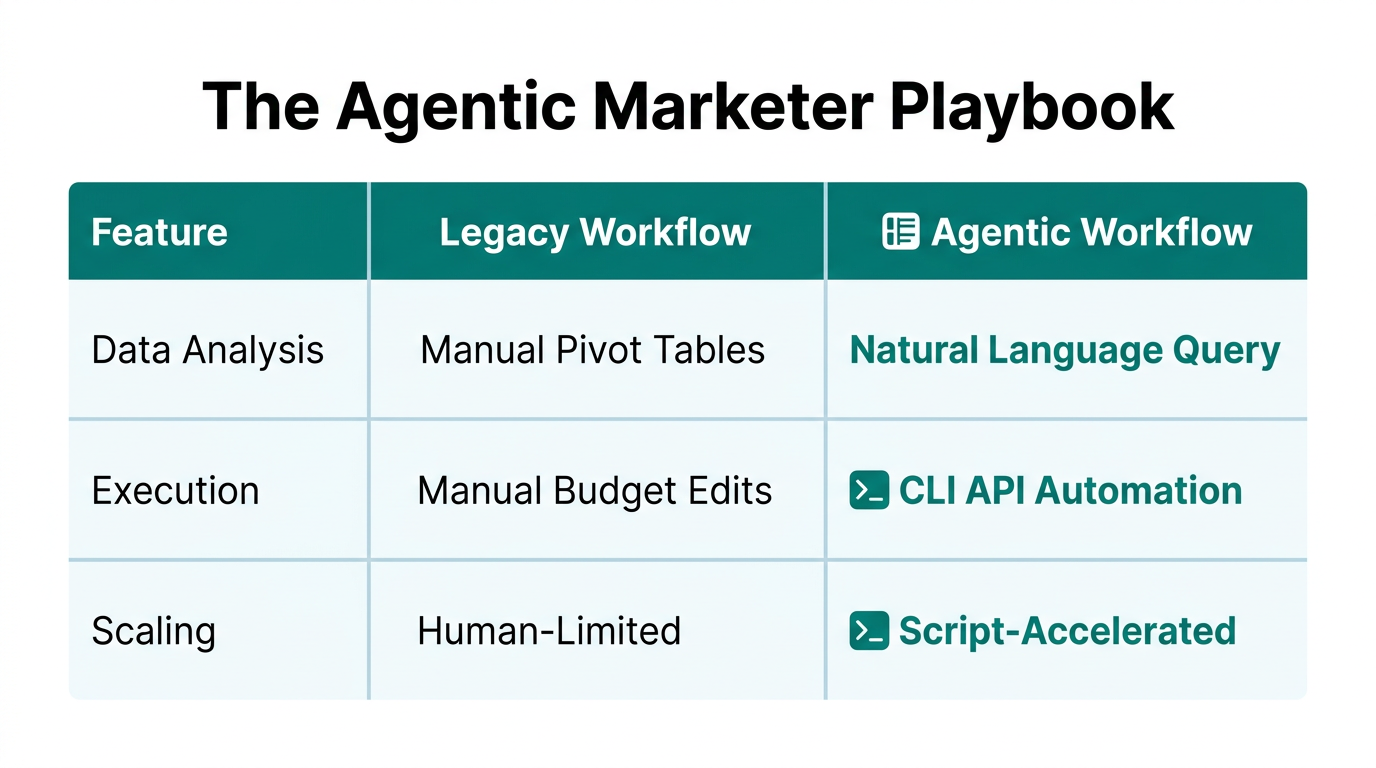
To understand the impact of this transition, let's look at the operational differences between the old school and the 2026 agentic approach.
| Feature | Manual Buying (2024 Legacy) | Agentic Buying (2026 Standard) |
|---|---|---|
| Workflow | Browser-based (Ads Manager) | CLI-based (Claude Code) |
| Data Analysis | Manual Export & Pivot Tables | Natural Language "Vibe Querying" |
| Creative Refresh | Manual Upload & Formatting | Programmatic API Pipeline |
| Optimization | Scheduled manual checks | Autonomous AI Agents (24/7) |
| ROAS Benchmark | Baseline | 22% higher average ROAS |
The Playbook: Actionable Strategies with Claude Code
Ready to move from a button-pusher to a Strategic Architect? Follow this sequence to build your private, automated "Ad Machine."
Step 1: The Creative Matrix
Use Claude Code to generate a Node.js script that takes a "Brand DNA" file and outputs 50 unique ad angles (hooks, bodies, and CTAs) tailored to specific customer personas. By leveraging Perplexity API to scrape real customer pain points from Reddit or forums, your AI-generated copy will feel human and deeply resonant, avoiding the dreaded "AI slop."
"The secret to high-converting AI creative is feeding it real customer research, not generic prompts."
Step 2: Automated Performance Audits
Instead of manual daily checks, use Claude Code to run a Python script that pulls yesterday's ROAS and automatically pauses any ad set that falls 15% below the account average. This protects your budget and ensures your Meta Ads ROAS optimization is happening in real-time, not just when you have time to log in. Teams using this approach have achieved up to 11% higher click-through rates (CTR) by pruning underperformers instantly.
Step 3: Bulk Upload Pipeline
Use the Meta Marketing API to programmatically upload hundreds of image and video variations. This bypasses the slow manual upload process and allows you to test a massive volume of creative "angles." For example, a solo SaaS founder recently used Claude Code to build a pipeline that generated 250+ targeted ad variations, discovering high-performing personas that human intuition had completely missed.
Common Pitfalls: Protecting Your Agentic Strategy
While the efficiency of AI is staggering, it is not a "set and forget" solution. To succeed in 2026, you must avoid these critical mistakes:
- The "Set and Forget" Fallacy: Over-automating without a Human-in-the-Loop review process can lead to AI optimizing for the wrong KPIs (like high CTR but zero actual sales).
- Neglecting Data Privacy: Signal loss is the enemy of AI. Ensure your scripts comply with privacy regulations by using secure protocols like the Meta Conversions API (CAPI).
- Ignoring Audience Fatigue: High-volume automated campaigns can quickly fatigue small audiences. Use Claude Code to monitor frequency caps and automatically cycle in new creative assets.
Conclusion: The Future is Agentic
The transition to agentic marketing strategy is the most significant change to digital advertising since the introduction of the smartphone. By leveraging Claude Code and the Meta Ads API, you are not just saving time—you are gaining a competitive edge that manual buyers simply cannot match. You are building a system that learns, adapts, and scales with a speed and precision that was impossible just two years ago.
Start small: install the Claude Code CLI, connect your first MCP server, and ask your first vibe query. The era of the Strategic Architect has arrived, and it's time to build your machine. For those looking to fuel their ad machines with high-performing UGC, Stormy AI provides the essential creator discovery and management tools to keep your campaigns fresh and converting.