The year is 2026, and the traditional startup timeline has officially collapsed. The days of hiring a dev team for three months just to see a functional MVP are a relic of the past. Today, the distance between a "vibe" and a validated business is measured in minutes, not months. Entrepreneurs are now utilizing agentic engineering and tools like Claude Code to compress the entire product-market fit (PMF) journey into a single lunch break. If you aren't shipping in hours, you're already being outpaced by a founder with a terminal and a vision.
The One-Hour Company Stack: Building at the Speed of Thought
Learn how to leverage the one-hour company stack for rapid AI development and deployment.
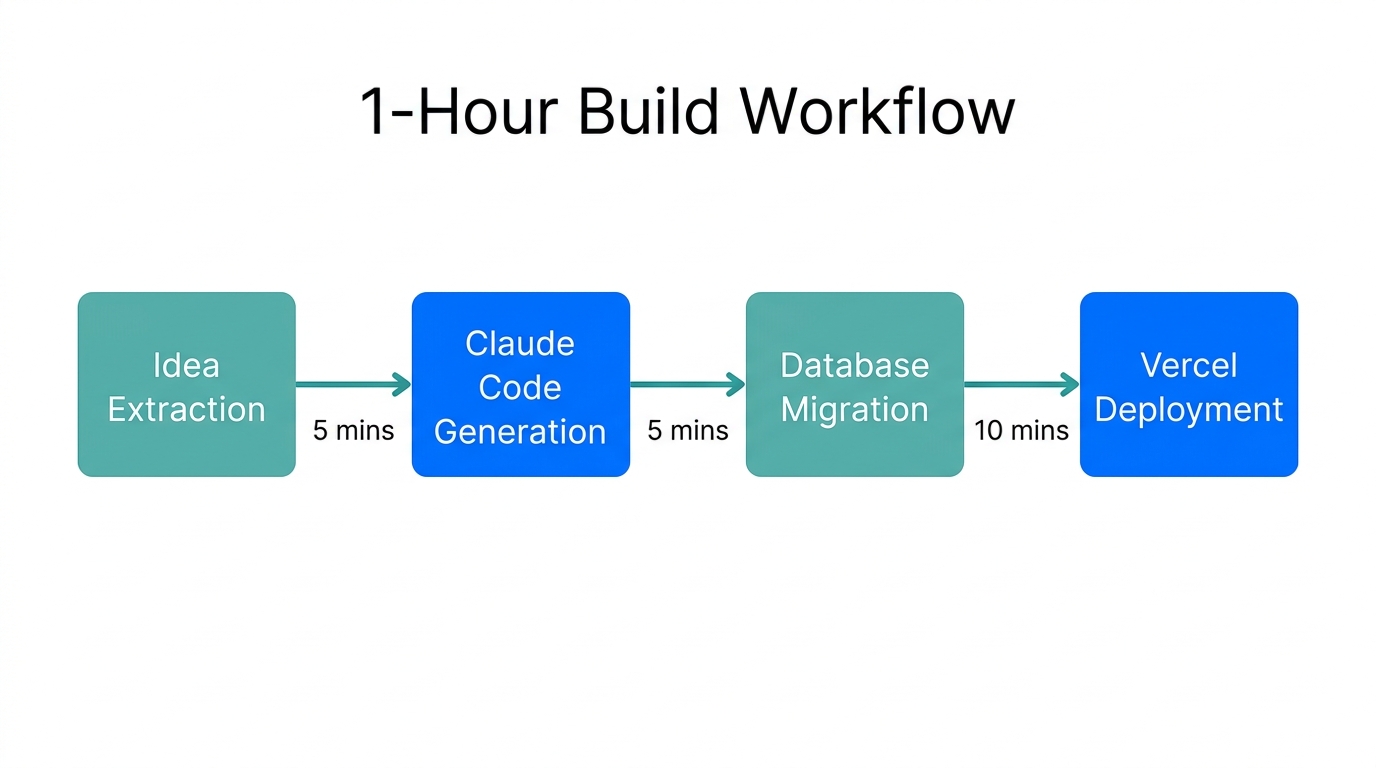
In 2026, we operate on what I call the "One-Hour Company Stack." It’s a lean, mean, agent-driven architecture that allows you to grab an idea and have it live with a checkout button before your coffee gets cold. It starts with sourcing a validated concept from platforms like Idea Browser, then moving immediately into what the industry now calls vibe coding.
Using Claude Code, you aren't just writing prompts; you are directing an autonomous agent to build entire repositories, handle deployment, and wire up infrastructure. You pair this with Stripe for instant payments and Framer or Typedream for a front-end that looks like it took a design agency weeks to polish. This isn't just "AI slop"—it's comprehensive, functional software built by agentic engineering platforms that have finally reached maturity.
"In 2026, you can have an idea at 9:00 AM, a product built by 9:45 AM, and your first paying customer by 10:00 AM. If you haven't iterated by lunch, you're moving too slow."
New vs. Old: The Death of the 12-Month Runway
Contrast traditional twelve-month development cycles with the accelerated 2026 product-to-revenue timeline.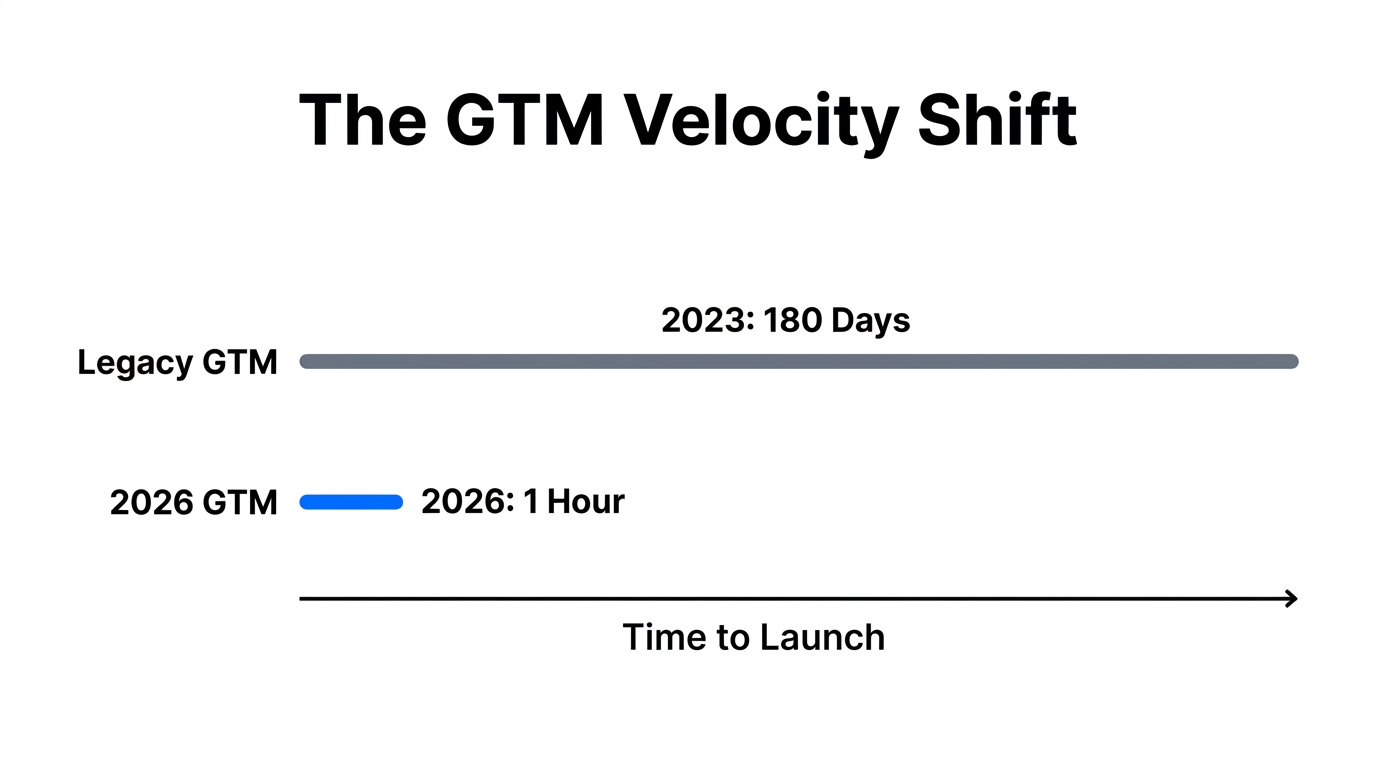
Let's look at the math of 2026 startup growth. In the old world (circa 2024), you'd spend months hiring, building, and eventually launching on Product Hunt, hoping for revenue by month 12. In the new paradigm, the "Arrow of Progress" has shifted the timeline to the left. We are now in the era of ambient businesses—autonomous entities that run with zero or very low daily human input.
| Milestone | Old Timeline (2024) | New Timeline (2026) |
|---|---|---|
| Product Concept | Week 1-4 | Minute 0-5 |
| MVP Development | Month 1-3 | Minute 5-45 |
| Go-To-Market | Month 4-6 | Minute 45-60 |
| First Revenue | Month 12 | Hour 1-2 |
This speed allows you to treat your startup like a scientific experiment. Instead of betting your life savings on one idea for a year, you can throw ten experiments against the wall in a single week. By utilizing Linear to track these micro-sprints and Zapier to glue the agents together, you create a culture of high-velocity execution that traditional firms simply cannot match.
Vertical AI: Selling Outcomes, Not Seats
Explore the massive opportunity for building vertical AI constellation software in niche markets.One of the biggest shifts keeping founders up at night is the transition from Vertical SAS to Vertical AI. Legacy SAS companies are currently facing a massive correction. According to recent data from Andreessen Horowitz, many are trading at 4x revenue instead of 12x because investors realize that seat-based licensing is dying. Why pay $50/user/month for a tool when an agent can do the work for you?
Vertical AI taps directly into the labor P&L. Instead of selling a software license that a human has to operate, you are selling the result. For example, instead of a CRM, you're selling a "Sales Agent" that books meetings. Gartner predicts that 40% of enterprise SAS will shift to outcome-based pricing by 2030. By building your 2026 startup on this model today, you're capturing a total addressable market that is 10x larger than traditional SaaS because you're replacing headcount, not just providing a dashboard.
"Vertical AI doesn't just capture IT budget; it replaces human labor. That’s a 10x bigger TAM than any SaaS product in history."
The Agent Economy: Orchestrating Your Ghost Team
Between 2025 and 2030, we are living through the Agent Economy. We’ve moved past the API economy into a world where agents discover and hire other agents on the fly. This has birthed the concept of the "Ghost Team"—an org chart where you might be the only human, but you manage a fleet of specialized agents for content, sales, and customer support.
Success in this era requires what I call Founder-Agent Fit. It’s no longer just about understanding the market; it’s about your ability to act as a film director, getting the best performance out of your AI models. You might use Stormy AI to autonomously discover and outreach to 100 high-fit creators for your niche app, then have a Lemlist sequence managed by an agent to handle the replies. This allows for a "micro-monopoly" where 100 true fans paying $50/month creates a highly profitable, 95% margin business run by a single person.
The 60-Minute GTM: Scrappy Customer Acquisition
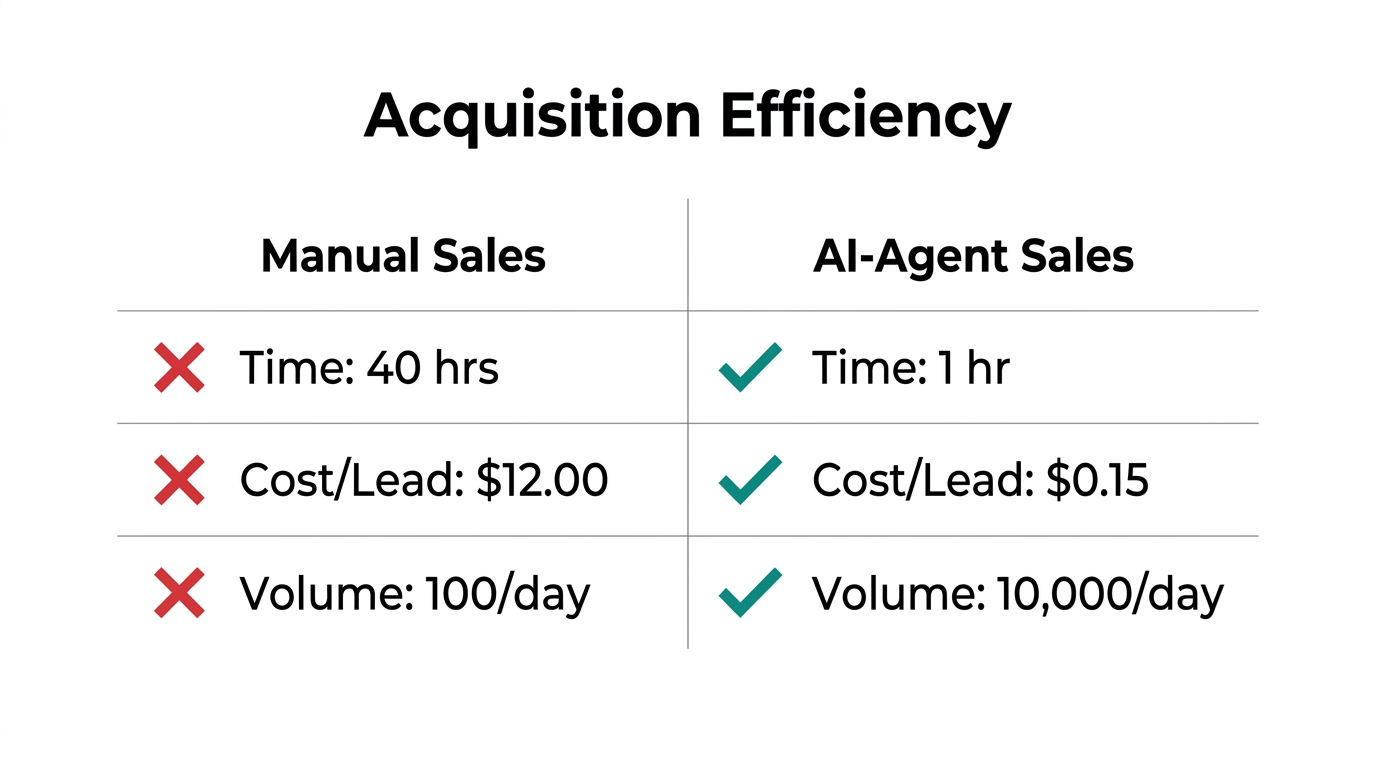
The final piece of the Claude Code playbook is the GTM execution. You don't need a massive ad budget to validate an idea in 2026. You need distribution. If you've been building an audience on Beehiiv or LinkedIn, your "launch" is simply a post or an email.
For those starting from scratch, the move is to use AI to build distribution. You can use platforms like Stormy AI to find influencers in your specific sub-niche (like "AI-native accountants" or "construction logistics managers") and set up automated, personalized outreach. When you can source 50 creators and send hyper-personalized pitches in the time it takes to eat a sandwich, your customer acquisition costs (CAC) plummet.
The 60-Minute Playbook:
- 0-10 Mins: Find a boring, high-pain niche (e.g., insurance faxes or legal discovery) on Idea Browser.
- 10-40 Mins: Use Claude Code to vibe-code a functional MVP with a Stripe checkout.
- 40-50 Mins: Deploy a landing page using Framer.
- 50-60 Mins: Use Stormy AI to find the first 10 creators in that niche and trigger an automated outreach agent.
A Word of Warning: The Agent Attack Surface
Understand why current cybersecurity is lagging behind the rapid expansion of the agent economy.While the speed is intoxicating, 2026 brings new risks. The "agent attack surface" is the new phishing. We are seeing real-world examples of prompt injection and poisoned context windows documented by Palo Alto Networks. When you give an agent access to your bank account or codebase, you are opening a door that requires strict digital hygiene. Quarterly "agent cleanses" and permission reviews are now as essential as changing your passwords.
"The vulnerability of the future isn't a bad link; it's an autonomous agent with the wrong instructions in its context window."
Conclusion: The Asymmetric Opportunity of 2026
We are living through the most asymmetric time in human history to build a company. The build cost is effectively zero, the tools are agentic, and the niches are wide open. While the window of pure speed-to-market might only last another 12-24 months before the big players catch up, those who start now will own the moats of the future: data, brand, and trust.
Don't wait for things to settle down. Use Claude Code to ship your first experiment today. Whether you're building an ambient business that runs while you sleep or a vertical AI tool that replaces legacy SAS, the only failure in 2026 is moving at the speed of 2024. Get your agents working, find your first 100 fans, and embrace the one-hour company era.