The marketing department of 2026 looks nothing like the creative silos of the early 2020s. We have officially entered the era of the System Architect. For years, growth marketers were defined by their ability to write copy, design ad sets, and manually manage spreadsheets. Today, the most successful growth leads aren't just writing headlines; they are building custom internal software. This shift has been catalyzed by agentic AI coding assistants, most notably Claude Code.
As we navigate through 2026, the transition from content creator to technical architect is no longer optional. Non-technical marketers are now using "vibe coding" to build proprietary marketing infrastructure that previously required a dedicated engineering team. In this guide, we will analyze the ROI of these AI-driven growth teams and provide a playbook for automating your own marketing stack using the latest agentic tools.
The ROI of AI-Driven Growth in 2026
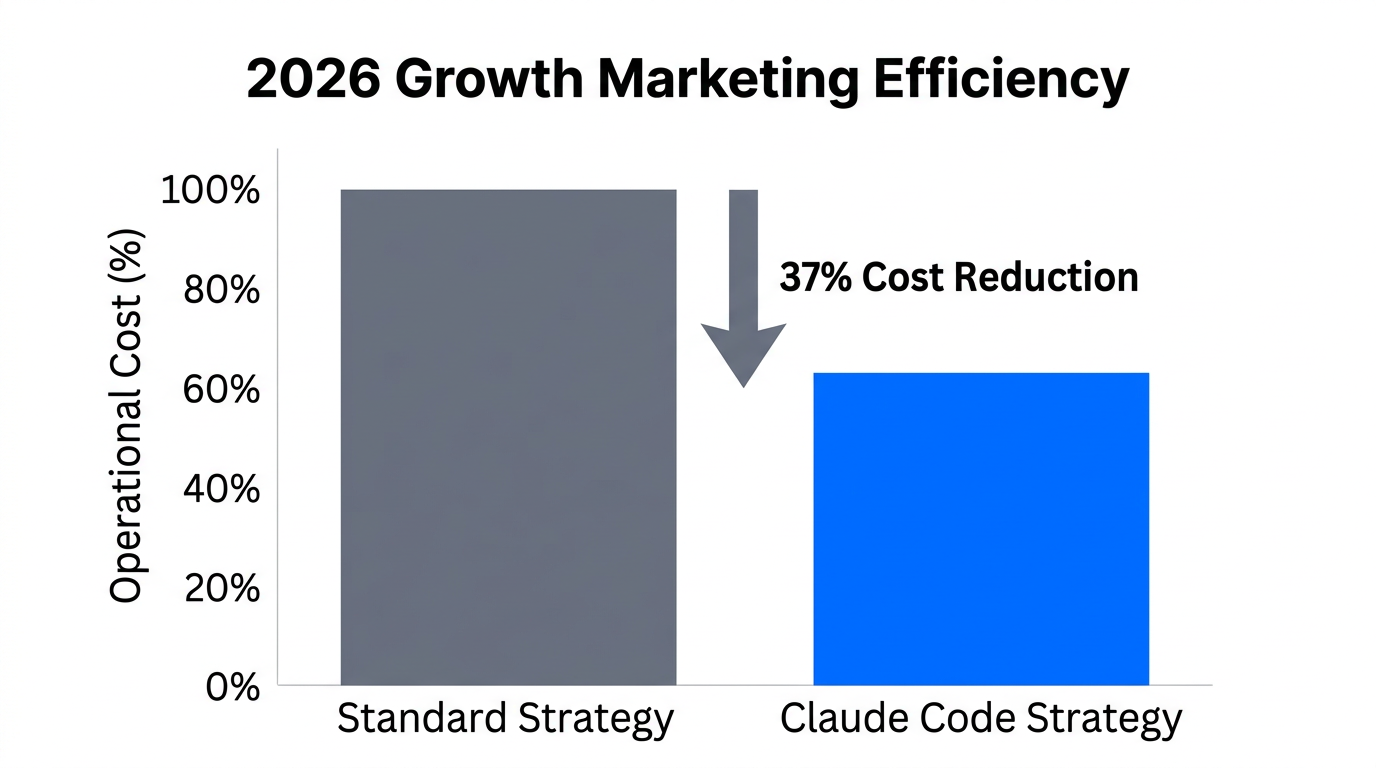
The data from early 2026 is conclusive: AI marketing trends are no longer about experimentation; they are about massive operational efficiency. According to recent research by McKinsey & Company, organizations utilizing AI for growth marketing report a 37% reduction in costs and a 39% increase in revenue. These aren't just marginal gains; they represent a fundamental shift in unit economics.
The ROI uplift is primarily driven by the compression of campaign lifecycles. Traditional marketing agencies often take weeks to move from strategy to deployment. However, AI-powered marketing agencies are now demonstrating 25–45% higher ROI than their legacy counterparts by deploying campaigns in a single day. This agility is fueled by tools like Claude Code, which allow marketers to spin up custom landing pages, tracking scripts, and data pipelines without waiting for a developer's sprint cycle.
"Organizations utilizing AI for growth marketing report a 37% cost reduction and 39% revenue increase in 2026, marking the end of the manual execution era."The Rise of "Vibe Coding": Marketers as Developers
Perhaps the most significant linguistic shift in 2026 is the emergence of vibe coding. This term refers to the process where a non-technical marketer describes a tool's desired function in natural language, and an AI agent like Claude builds the entire codebase. This isn't just a gimmick; it's a trend currently seen in 25% of YC W25 startups, where codebases are now 95%+ AI-generated.
For a growth marketer, vibe coding means you can build a custom dashboard that connects your Google Ads data to your Salesforce CRM in a single afternoon. You don't need to know Python or Node.js syntax; you just need to know the "vibe" of the data flow you want to create. Claude Code operates directly on your local project folder, utilizing a 1 million token context window to understand your entire marketing stack at once.
The 80/20 Rule: Balancing Automation and Resonance
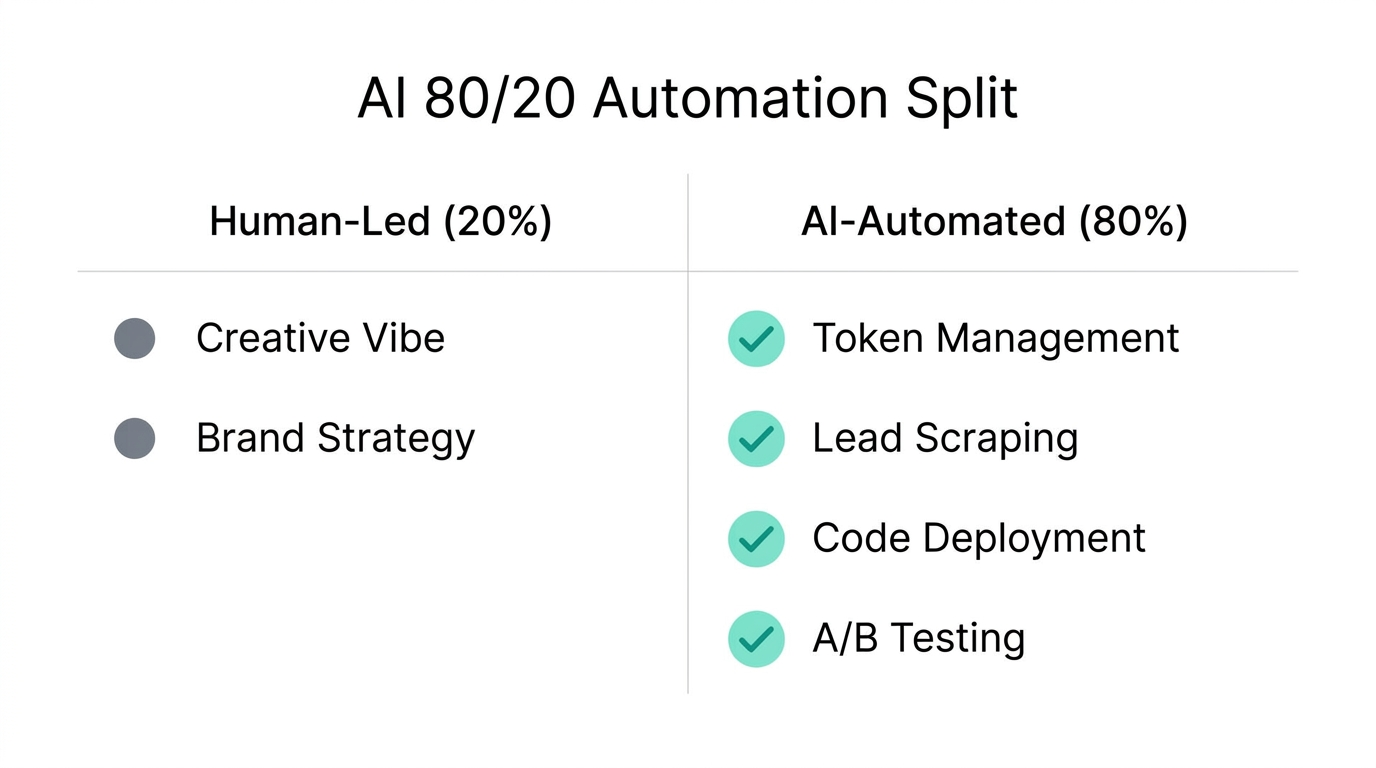
While marketing infrastructure automation is powerful, it carries a significant risk: the loss of brand soul. Experts at Stormy AI argue that the 80/20 rule is the golden ratio for 2026. AI should handle 80% of the technical and creative execution—things like data scraping, code generation, and initial drafting—while the final 20% must remain human-led.
This human element provides the emotional resonance and brand nuance that AI still lacks. Without this human filter, campaigns often fall victim to "AI slop," where content feels generic and fails to convert. The goal is to use Claude Code to build the engine, but keep a human in the driver's seat to ensure the brand's voice remains authentic.
"The entire marketing department is now one person with Claude Code and a coffee; domain expertise is now more valuable than syntax knowledge."| Feature | The Manual Marketer (2024) | The System Architect (2026) |
|---|---|---|
| Campaign Setup | Manual 2-week process | Same-day deployment |
| Data Analysis | Static spreadsheets | Custom AI-built dashboards |
| Creative Output | Hand-designed assets | Programmatic personalization |
| Cost Structure | High headcount / High agency fees | 37% cost reduction via AI agents |
Playbook: Building Your 2026 Marketing Infrastructure
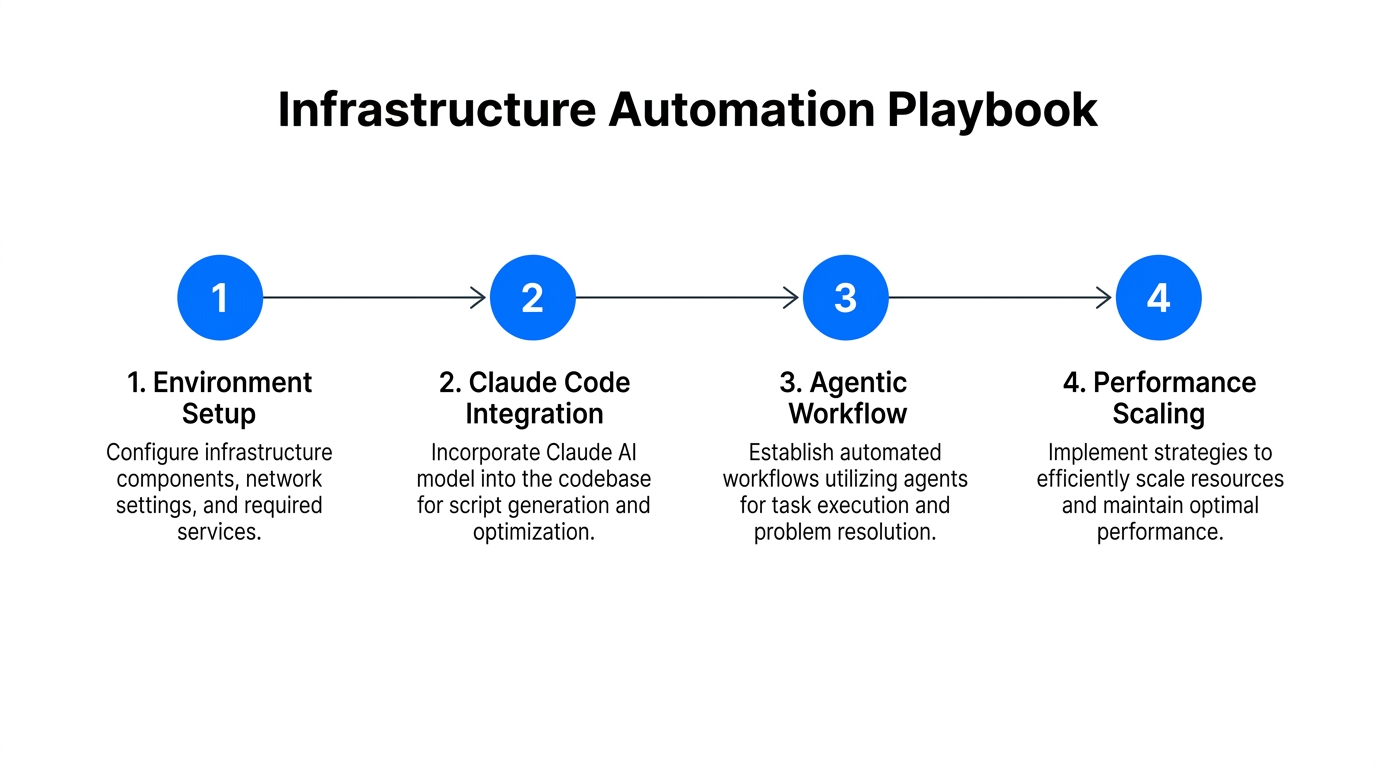
Ready to transition? Follow this step-by-step guide to using Claude to automate your growth workflows.
Step 1: Automate Custom Reporting
Stop paying for rigid SaaS reporting tools. Use Claude to write a script that connects to the Google Ads API. Ask Claude to fetch your CPA and ROAS data and push it into a custom Google Sheet. This reduces a multi-day manual task to a 40-minute automated process.
Step 2: Deploy Agentic SEO Audits
Instead of manual keyword research, use Firecrawl in tandem with Claude. You can build a specialized SEO agent that scrapes competitor sites and maps out semantic clusters in minutes. According to industry reports, auditing 50 pages now takes 1.5 hours compared to the 8 hours it took in 2024.
Step 3: Programmatic Creative Variations
Use Claude Code to interface with Remotion. This allows you to generate thousands of personalized video ad variations based on real-time user data, significantly lowering your CAC through hyper-relevance.
Case Studies: Starbucks "Deep Brew" and Anthropic Internal Tools
Major enterprises are already proving the efficacy of custom AI infrastructure. Starbucks utilized their "Deep Brew" AI program to drive a 30% higher ROI through automated personalization. By building custom engines rather than relying on off-the-shelf software, they created a proprietary competitive advantage.
Similarly, Anthropic’s own internal legal team reduced marketing content review turnaround from 3 days to just 24 hours. They achieved this by using Claude to build a dedicated review agent that flags compliance issues in real-time. This level of agility is what defines growth marketing leaders in 2026.
Security Best Practices: Avoiding the Pitfalls of AI Code
With great power comes great responsibility. When using agentic tools like Claude Code, marketers must follow strict security protocols to avoid credential leakage.
- Never put API keys in prompts: Always use a
.envfile to store sensitive keys for Meta Ads or Stripe. - Use a CLAUDE.md file: This file should define your security rules and project context so the AI agent knows exactly what it can and cannot access.
- Monitor Token Costs: Running autonomous agents on high-end models can lead to unexpected billing if you don't set daily budget caps via your API dashboard.
Furthermore, avoid over-automation. Relying 100% on AI for customer-facing copy often leads to creative fatigue and can result in your accounts being flagged by platforms like Meta. Always maintain a human-in-the-loop workflow.
Conclusion: The Future is Agentic
In 2026, the barrier between "marketer" and "developer" has all but vanished. By leveraging Claude Code and the principles of vibe coding, growth teams can build high-performance marketing infrastructure that scales without the need for massive engineering overhead. Whether it's automating your reporting via the Meta Marketing API or building custom SEO agents, the tools are now in your hands.
As you look to optimize your growth engine this year, remember the 80/20 rule. Automate the execution, but never outsource the heart of your brand. If you are ready to find the creators who will fuel your AI-powered campaigns, platforms like Stormy AI provide the essential discovery and outreach tools to complete your modern growth stack.