In 2026, the barrier between an idea and a functioning software system has effectively dissolved. We have entered the era of the "vibe-coded" startup, where founders are building billion-dollar companies with little more than a natural-language prompt and a clear vision. The rise of Claude Code and advanced models like Opus 4.6 has leveled the playing field, allowing non-technical entrepreneurs to bypass traditional dev cycles and build custom internal marketing and sales tools in hours, not months.
The Rise of the $1.8 Billion 'Vibe-Coded' Startup
The term "vibe coding" might sound casual, but the financial implications are staggering. We recently saw a founder hit a $1.8 billion valuation by building an entire application via Claude and other LLM interfaces, a trend frequently covered by TechCrunch and other major tech outlets. This shift means that the knowledge that once took 20 people 20 years to acquire is now accessible for $20 a month. For founders, this isn't just about saving on engineering costs; it’s about speed of execution.
In 2026, you no longer need to wait for a sprint cycle to test a new distribution hack. Whether you are building an automated lead scraper or a custom report generator that pulls from Notion and Google Ads, the models are now "exceptionally good" at predicting tokens and generating functional TypeScript code. However, as any founder will tell you, the tool is only as good as the context you provide it.
"We have reached a point where the models are good, but context still matters. You have the power to steer the models in a direction where you get quality or you get slop."
The 95% Rule: Why Less Context is More in 2026
Why simple context management is more effective than using massive agent and markdown files.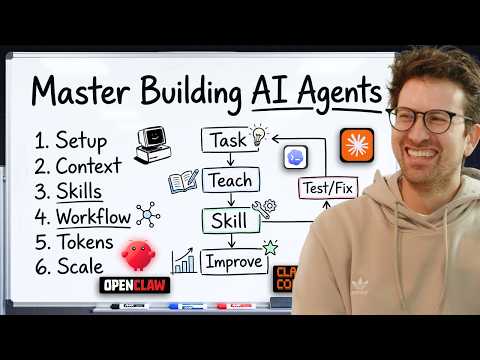
A common mistake for founders using Claude Code for business is over-engineering their configuration files. Many people spend hours crafting massive agent.md or claude.md files, thinking they need to explain every detail of their tech stack. In reality, 95% of people don't need these files. Because modern models can read your codebase directly, telling Claude "this project uses React" is redundant—it already knows by looking at your package.json.
Every line of unnecessary context you add is a waste of tokens. In a world where GPT-5.4 and Claude 4.6 have massive context windows, the goal is still to stay lean. The more "noise" you add to the initial prompt, the "dumber" the model becomes as it approaches its token limit. To maximize productivity, you must transition from monolithic context files to a system of Skills.
| Context Type | Token Usage | Best Use Case |
|---|---|---|
| Agent.md | High (900+ tokens/run) | Proprietary company info that never changes. |
| Skills (.md) | Low (50 tokens/run) | Modular workflows like "Generate Weekly Report". |
| System Prompt | Medium | General behavioral guidelines from the provider. |
The Secret Sauce: Mastering Skills and Progressive Disclosure
Stop handwriting your skill files and let the model generate them from successful workflows.The most efficient way to use Claude Code as a founder is through Skill files. Unlike a standard instruction file, a Skill uses "progressive disclosure." This means the agent only sees the name and description of the skill initially. Only when the agent identifies that it needs that specific skill does it load the full instruction set.
For example, you might have a skill for analyzing potential sponsors for your YouTube channel or newsletter. Instead of loading that 1,000-line logic file every time you chat, you give it a 50-token description. When you say, "Check this sponsor email," the agent triggers the skill and pulls in the deep-dive logic. This saves thousands of tokens and keeps the agent’s reasoning sharp.
The Recursive Fix Method: How to Build Robust Growth Tools
Using a recursive loop to improve your skills every time the AI makes a mistake.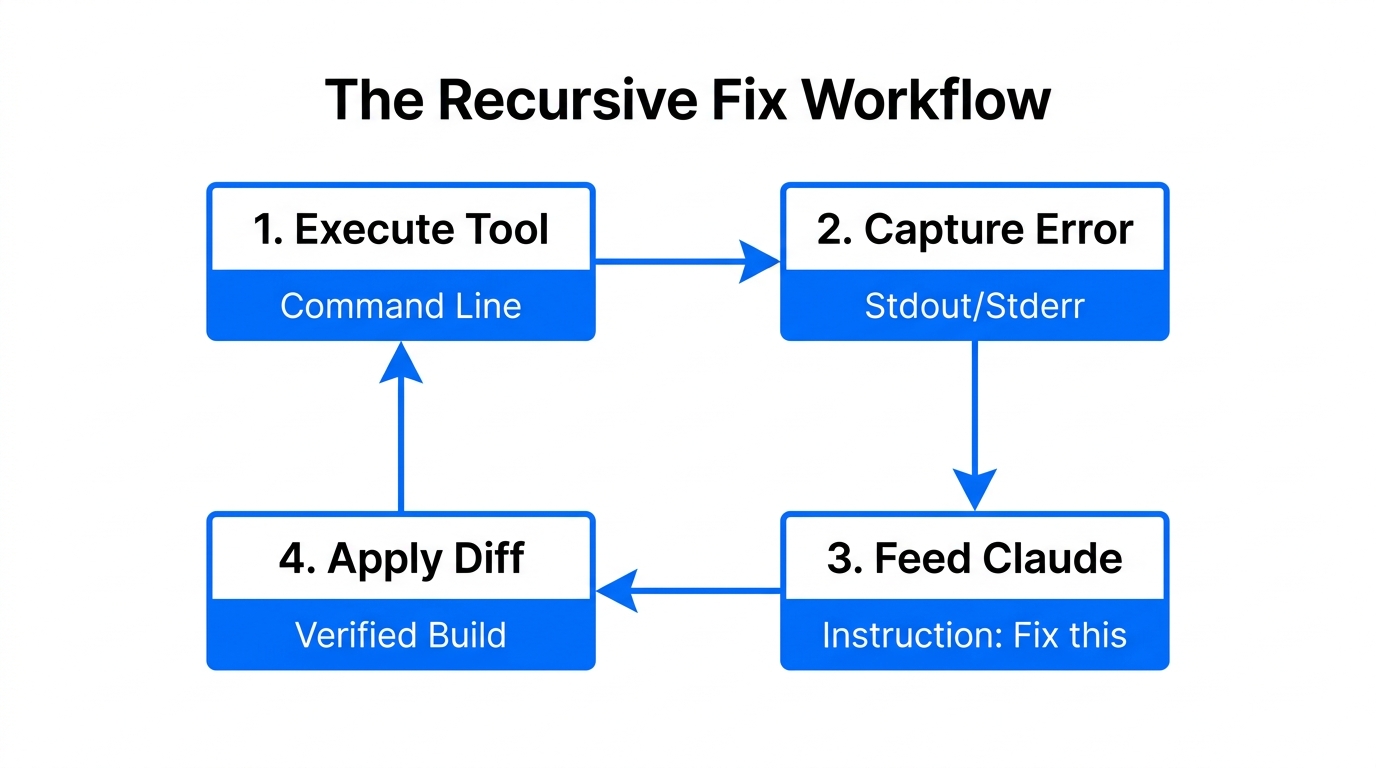
Founders often get frustrated when an AI agent fails. They assume the technology isn't ready. The reality is that agents don't think; they predict. To build high-scale automated distribution systems, you must use the Recursive Fix Method. This involves treating the AI like a new employee whom you are mentoring through a task for the first time.
Step 1: Hand-Walk the Workflow
Before you codify a skill, do the task back-and-forth with the AI. Tell it to research a company on Crunchbase or check their Trustpilot. If it fails, tell it why. "You missed the funding round data, look here instead."
Step 2: Identify the Failure Points
When the agent hits an error (like a 505 API error or a data formatting issue), don't just restart. Ask it: "Why did you fail?" The agent will often give a descriptive reason that you can then pass back into the logic.
Step 3: Codify the Fix
Once you have a successful run, tell the agent: "Review our conversation and update the Skill.md file so this error never happens again." By looping through this 3-5 times, you create a "flawless" automation that can handle complex data pulls from Beehiiv, Stripe, or legacy CRM tools without manual intervention.
"When the agent messes up, thank God. Don't complain. This is the moment where you identify the error and update the skill file so it never happens again."
Building a Multi-Agent System for High-Scale Distribution
Understanding the perfect moments to deploy sub-agents to scale your automation and productivity.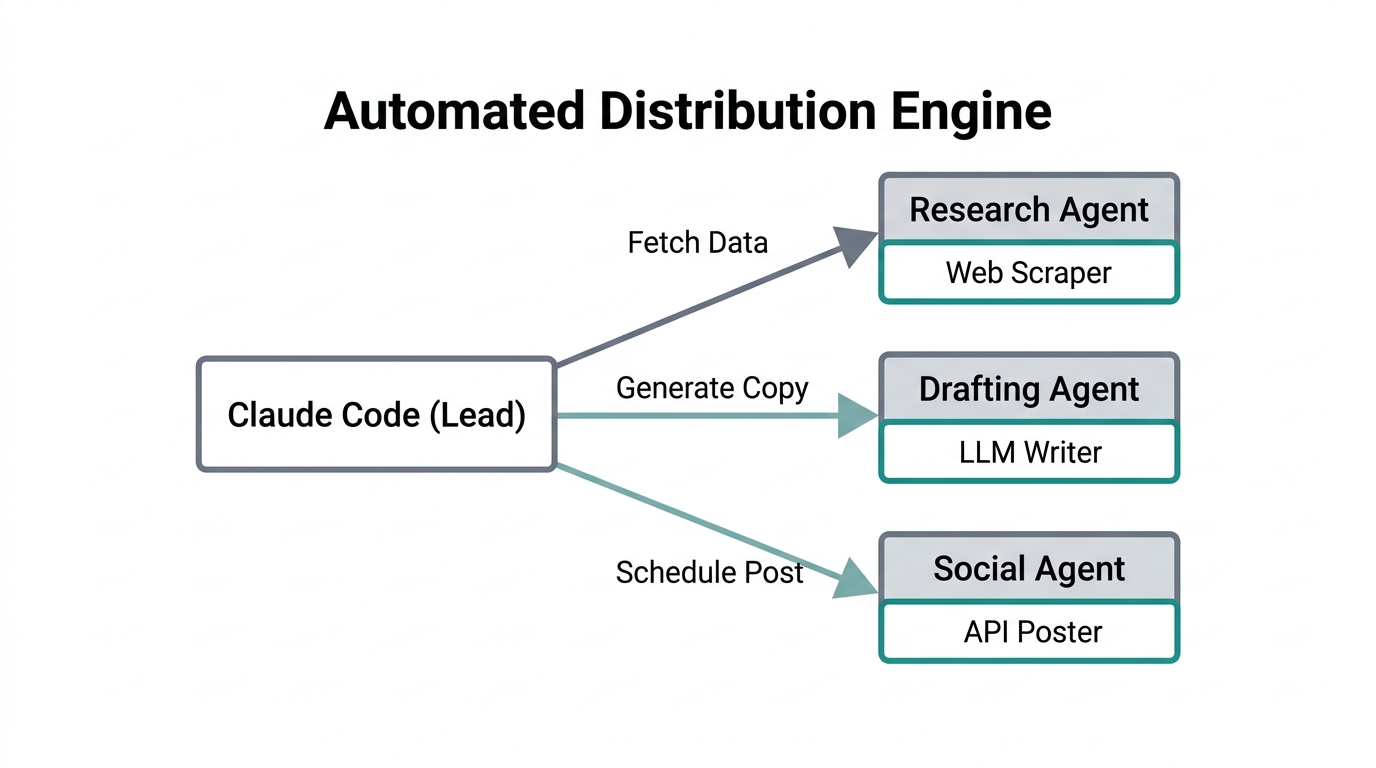
Once you have mastered individual skills, you can scale into a multi-agent system. In 2026, successful founders are using one "Main Agent" to manage several specialized sub-agents. This allows you to delegate automated distribution across different channels without manual oversight.
- The Marketing Agent: Handles UGC creator discovery, checks engagement rates, and manages initial outreach via Lemlist or Instantly. For brands looking to scale this even further, platforms like Stormy AI can act as the infrastructure for these agents, providing the AI-powered search and vetting needed to feed the outreach engine.
- The Business Dev Agent: Monitors sponsor emails, researches company financials, and updates your Pipedrive CRM.
- The Personal Productivity Agent: Manages your calendar, summarizes meeting notes in Fireflies, and builds your daily dashboard.
Scaling for productivity rather than "cool factor" is the hallmark of the 2026 founder. Don't build 15 agents because it looks impressive on Twitter. Build one, make it work, and then split off sub-tasks as they become repeatable workflows.
Moving from 'Cool' to 'Productive': Avoiding the Engineering Trap
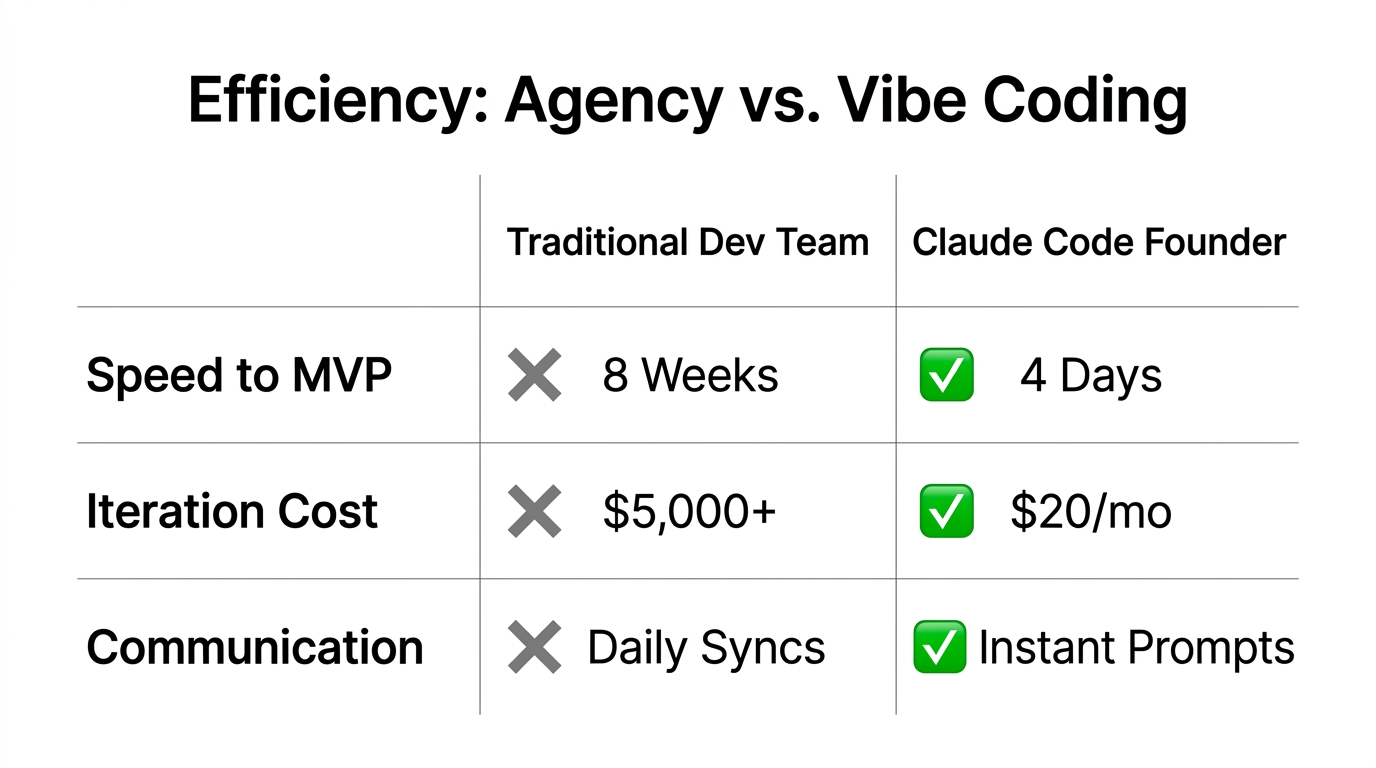
It is easy to get caught up in the latest AI memory papers or experimental agent harnesses. But for a founder, simple is better. If you can't explain your workflow in three sentences, you don't understand it well enough to automate it. The models are already trained on the world's knowledge; what they need from you is your specific taste and strategy.
Templates are having a renaissance in 2026 because they provide a clean context foundation. Instead of starting from a blank prompt, use high-quality boilerplate code from Next.js or other modern frameworks. This gives Claude Code a structured environment to build on, drastically reducing the likelihood of hallucinations or "spaghetti code" logic.
The Bottom Line for Founders
The 2026 landscape for AI for entrepreneurship is not about who has the most technical knowledge, but who has the best contextual control. By using Claude Code and the Skill-based architecture, you can build custom no-code growth tools that drive real customer acquisition. Stop waiting for a developer to build your internal tools. Start "vibe coding" your way to a more productive, automated distribution system today. If your growth involves high-volume creator partnerships, leveraging Stormy AI alongside your custom agents is the ultimate shortcut to scaling your brand in the AI age.