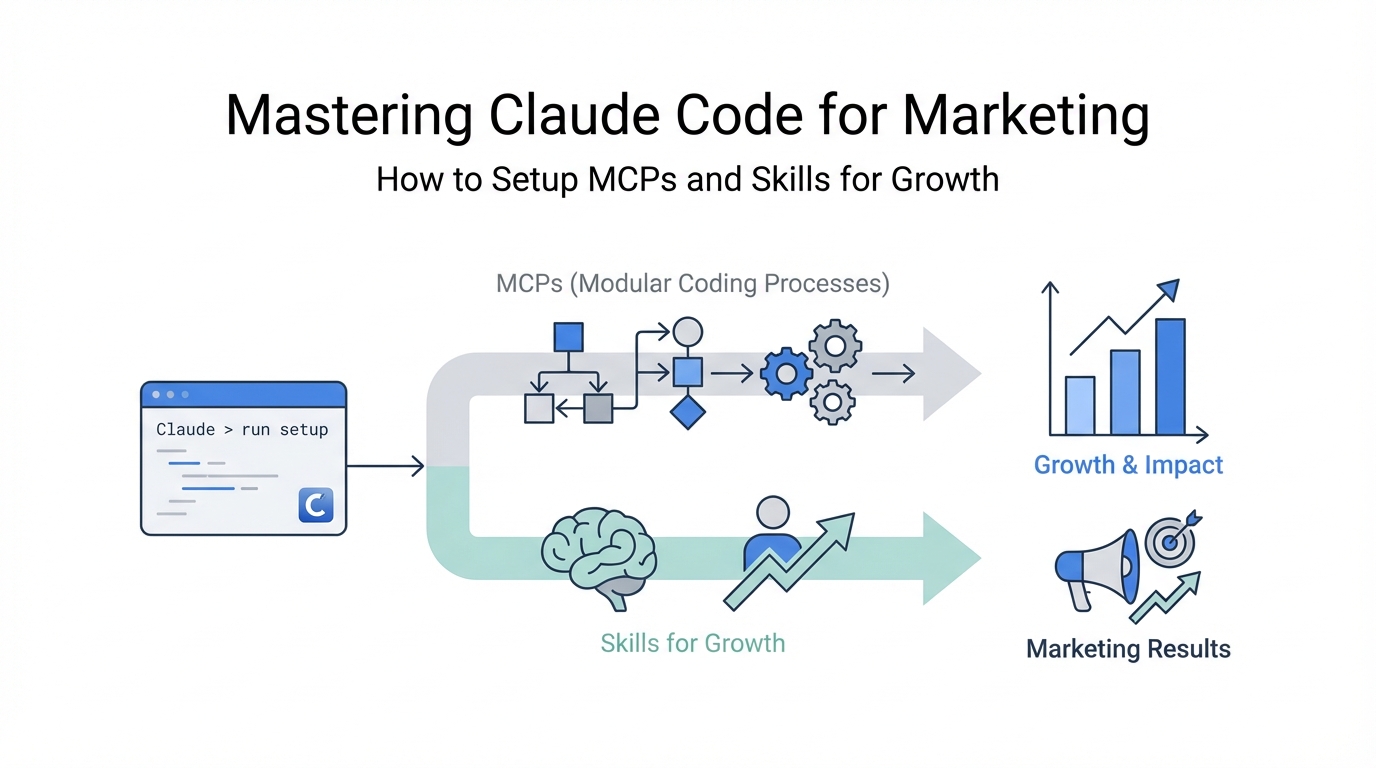
The era of "vibe coding" has officially transitioned into the era of vibe marketing. For years, founders and developers have used high-level AI agents to build products in record time, but the bottleneck has always been growth. How do you market as fast as you build? The answer lies in Claude Code, a terminal-based interface that allows you to treat your entire marketing funnel like a codebase. By leveraging AI Model Context Protocols (MCPs) and custom skills, you can automate deep research, generate high-converting direct response copy, and even produce video ads without ever leaving your command line. This guide will show you how to move past "AI slop" and build a professional-grade marketing system using Claude Code for marketing.
The Claude Code Advantage: Why the Terminal is the New Marketing Suite
Most marketers are used to fragmented workflows: one tab for Perplexity research, another for Google Docs, and a third for an ad manager. Claude Code breaks this cycle by providing a unified environment where your research, strategy, and execution live in the same place. This terminal interface is superior because it offers deep context; the AI can "see" your entire project structure, from your landing page code to your previous ad performance logs. This allows for a level of AI prompt engineering for marketers that simply isn't possible in a standard web-based chat interface.
Using a tool like Claude Code enables you to avoid the generic, low-effort outputs often referred to as AI slop. Because the system can access local files and real-time browser data, it produces marketing assets that feel lived-in and authentic to your brand. Whether you are running a Vercel-hosted SaaS or a local plumbing business, the terminal allows you to maintain a consistent brand voice across hundreds of landing pages and ad variations with a single prompt.
Setting Up Essential MCPs: The Engine of Automated Marketing Research
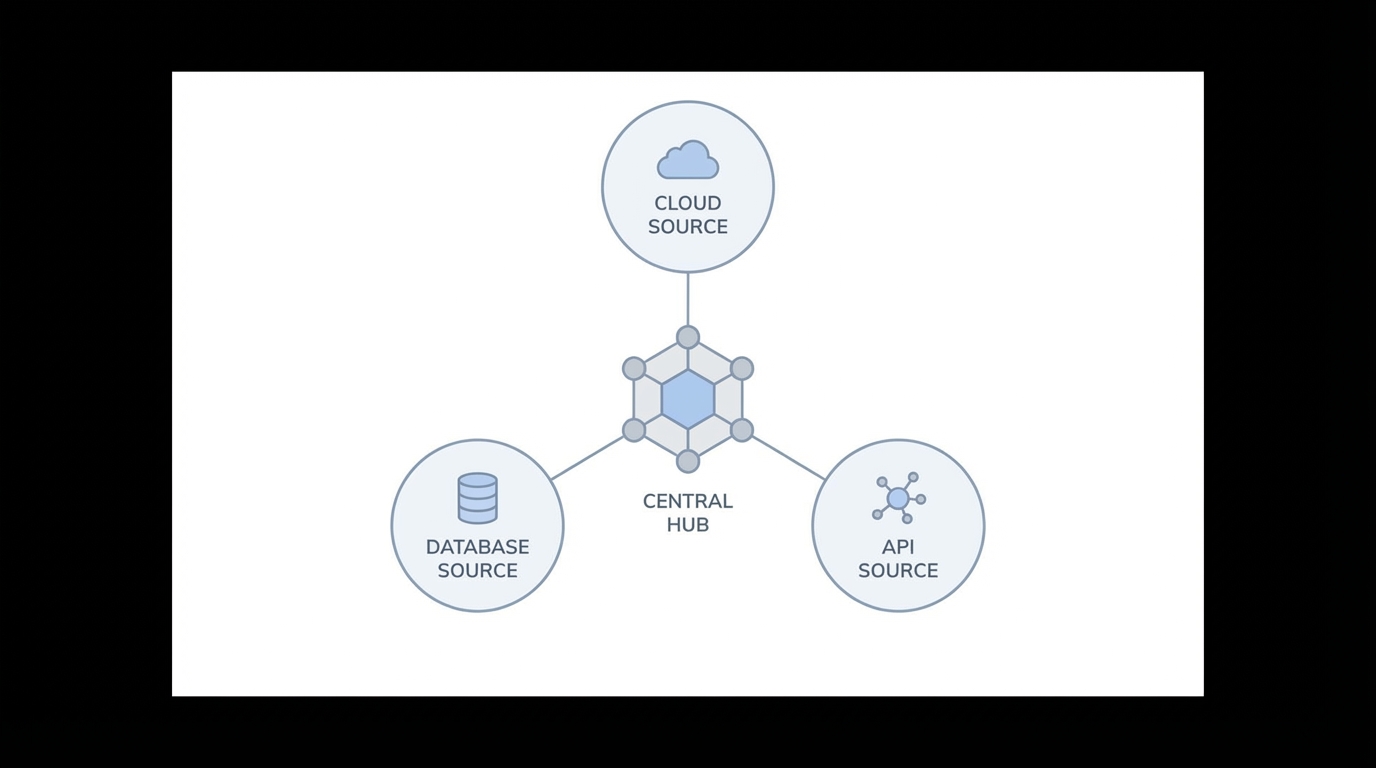
The AI Model Context Protocol (MCP) is the foundational bridge that allows Claude to interact with external tools and data. For a growth-focused setup, you need three primary engines. First is the Perplexity MCP, which acts as your deep research arm. Unlike standard LLMs that rely on training data, Perplexity allows Claude to go out and find the latest market gaps, competitor pricing, and untapped emotional hooks. This is the first step in any automated marketing research workflow: identifying exactly where your competitors are failing.
The second essential tool is the Playwright MCP for browser automation. Playwright allows Claude to open a browser window, navigate to a competitor's site, and take high-resolution screenshots or extract HTML for design inspiration. Instead of manually curating a swipe file, you can command Claude to "analyze the top five HVAC companies in Phoenix and tell me their core offer." This data is then fed directly into your strategy files, ensuring your Claude MCP setup guide is focused on real-world utility rather than theoretical exercises.
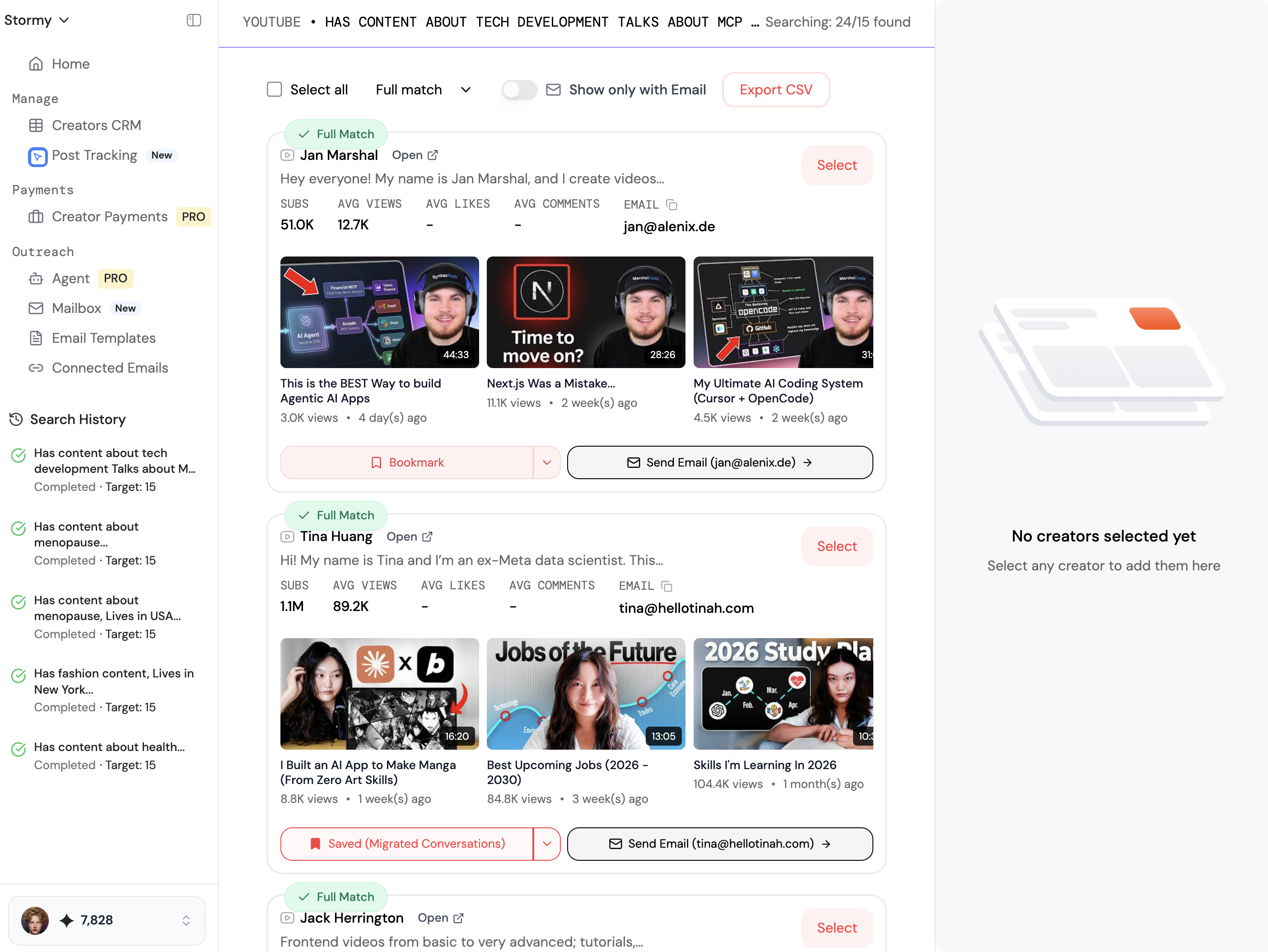
Finally, you should integrate Firecrawl. This tool is a scraping powerhouse that can turn any URL into clean Markdown for Claude to ingest. If you are looking to build an influencer marketing strategy or find potential lead targets, Firecrawl can navigate complex directories and return structured data. When combined with discovery tools like Stormy AI, you can find the exact creators in your niche and then use Claude Code to analyze their content style for better UGC collaboration outcomes.
Building Custom 'Skills': Your Marketing Instruction Manuals

In the Claude Code ecosystem, a Skill is essentially a sophisticated instruction manual or "system prompt" that you've refined for a specific task. Think of it as downloading an expert's brain into your terminal. For instance, you might create a Direct Response Copy Skill trained on the frameworks of legends like Eugene Schwartz or Claude Hopkins. By providing Claude with world-class references and specific formatting rules, you ensure that every piece of copy generated is elevated and conversion-optimized.
To build a high-quality skill, follow this playbook format:
Step 1: Gather World-Class References
Don't let the AI guess what "good" looks like. Feed it successful ad transcripts from the Meta Ads Library or high-converting landing page layouts. Your skill should include a section for taste and style constraints to prevent the "purple gradient and emoji" aesthetic that plagues generic AI content.
Step 2: Define the Logic and Frameworks
Incorporate specific marketing frameworks like PAS (Problem-Agitation-Solution) or AIDA (Attention-Interest-Desire-Action). Tell the skill exactly how to evaluate a market gap. For example, a Positioning Angle Skill should be instructed to look for "the unsexy gold mine" or the "speed weapon" in a saturated market, as discussed in the research by The Boring Marketer.
Step 3: Test and Iterate
Use Claude to self-review its output. Have your Skill run a draft, then have a separate Reviewer Skill critique it based on conversion principles. This iterative loop, performed in seconds in the terminal, is what separates a amateur setup from a world-class marketing machine.
The Orchestrator Skill: Managing the Complexity
As you build out dozens of skills—for SEO, email sequences, and ad creative—you may find yourself unsure of which one to trigger next. This is where the Orchestrator Skill becomes vital. The Orchestrator acts as your AI marketing manager. You can simply ask, "I have a landing page but no traffic, what should I do next?" and the Orchestrator will analyze your project files, see that you're missing a lead magnet, and recommend the Lead Magnet Skill to fill the gap.
This level of automated marketing management allows founders to stay in the "creative flow" without getting bogged down in project management. The Orchestrator can even spin up task-based agents with specialized roles—like a Greg Isenberg-style positioning expert—to review your research and pick the single best angle for a new campaign. This multi-agent approach ensures that your AI prompt engineering for marketers isn't just about single prompts, but about building a cohesive system that thinks for itself.
Creating High-Performance Assets: From Landing Pages to Video Ads
Once your research and strategy are dialed in, Claude Code can move into production mode. By using the Front-End Design Skill from Anthropic, you can generate conversion-optimized landing pages that avoid the typical "AI look." Instead of generic templates, Claude can create an "anti-corporate" aesthetic that stands out. You can even use the Playwright MCP to self-correct the design by taking screenshots of its own work and iterating until it looks perfect.
For traffic generation, the integration of Re-motion is a game-changer. Re-motion allows you to programmatically create video ads using code. By passing your brand colors, fonts, and custom copy from Claude Code into a Re-motion template, you can generate 100 different ad variations for Meta or TikTok in a single sitting. This is the ultimate "testing machine"—you can test dozens of hooks and visual styles at a cost of near zero.
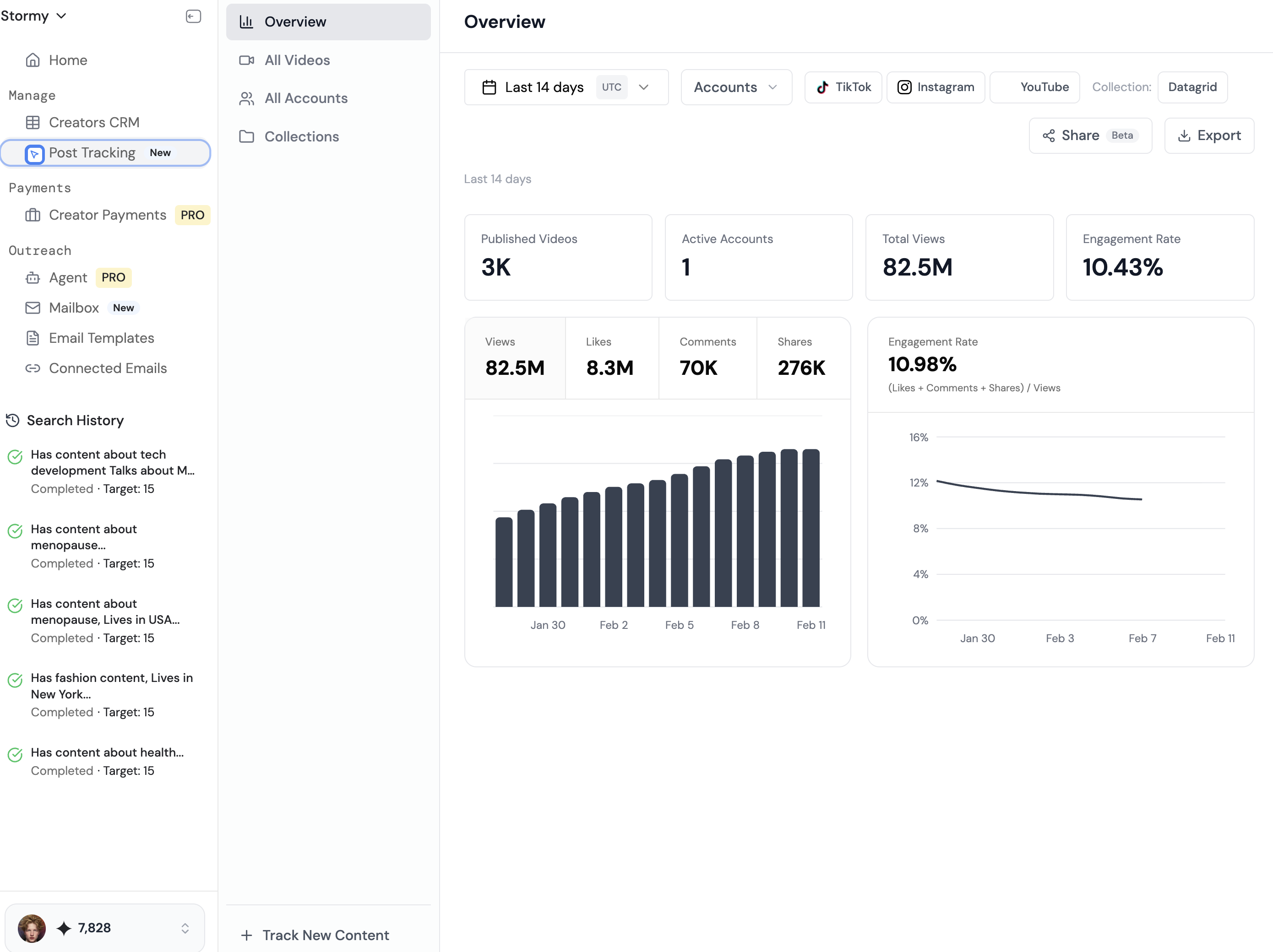
While Claude handles the asset creation, you need a way to track how these assets perform once they're in the wild. If you're running influencer-led campaigns with your new assets, using a dashboard like Stormy AI allows you to monitor post-performance and engagement rates in real-time. This creates a feedback loop: your performance data from Stormy can be fed back into your Claude Code terminal to further refine your Skills and Orchestrator for the next round of growth.
Conclusion: Shipping at the Speed of Vibe
The transition from manual marketing to AI-powered vibe marketing isn't just about speed; it's about quality and scale. By mastering Claude Code for marketing, setting up the right MCPs, and codifying your expertise into Skills, you can build a complete marketing funnel—from deep research to programmatic video ads—in a single afternoon. The barriers between building a product and finding customers are dissolving. Now is the time to get your hands dirty in the terminal, build your own instruction manuals, and become a testing machine that outpaces the competition. Use tools like Stormy AI to find your initial creators, and let Claude Code do the heavy lifting of building the world-class system they'll be promoting.