Accelerating E-commerce GTM: Validating A/B Tests with Claude Code and Synthetic Personas
Learn how to use Claude Code and synthetic user testing for marketing to validate A/B tests in minutes. Reduce CAC and optimize pricing strategy for 2026 growth.
In the high-stakes landscape of 2026, the traditional e-commerce go-to-market strategy 2026 has undergone a radical transformation. No longer can founders afford the luxury of "launch and learn" cycles that burn through precious capital. As the AI-enabled e-commerce market surges toward a $8.65 billion valuation, according to HelloRep, the competitive edge has shifted toward those who can validate hypotheses before they ever hit a live server. The emergence of agentic command-line tools like Claude Code has turned A/B testing from a slow, manual design process into a high-velocity, autonomous workflow that protects your customer acquisition cost reduction 2026 targets by eliminating traffic waste.
The Shift to Agentic Experimentation
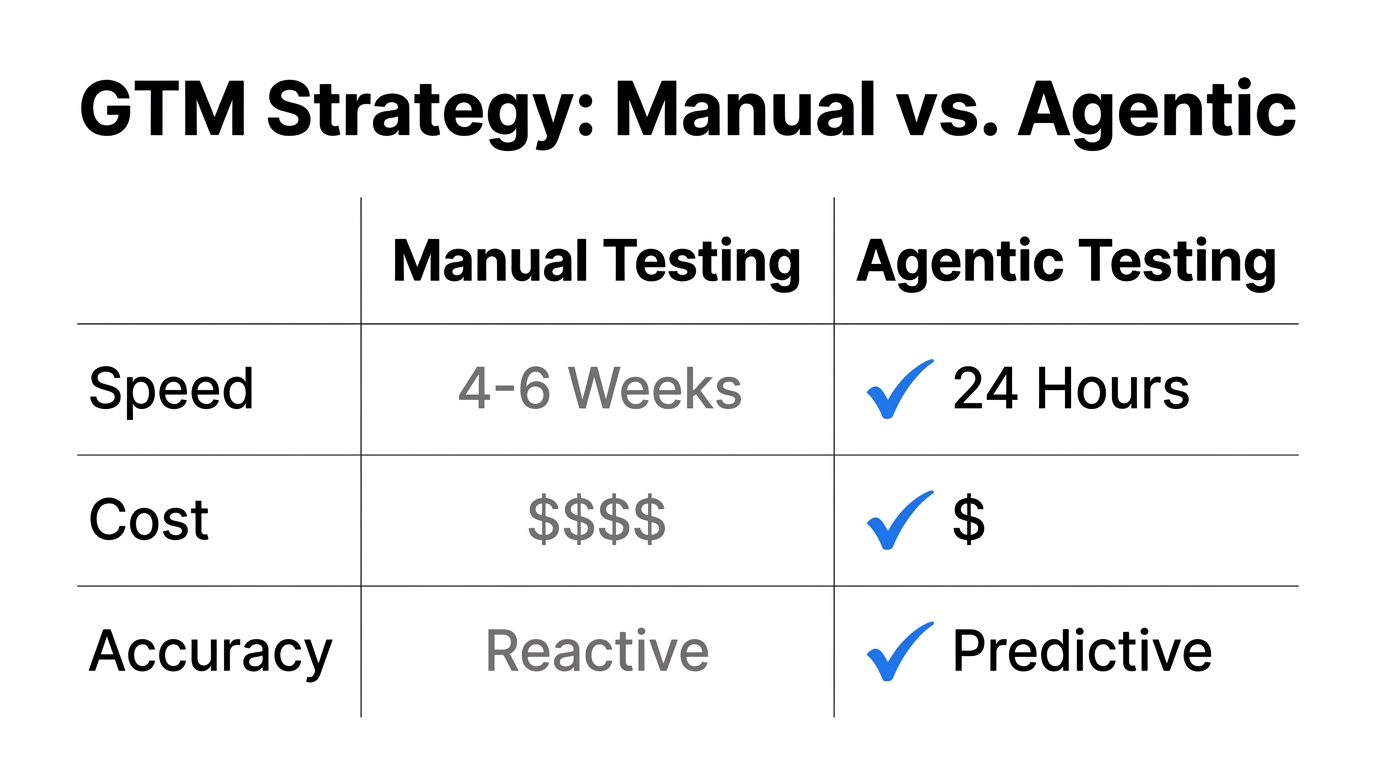
By early 2026, the industry moved away from testing simple button colors toward deeper behavioral hypotheses. Leading platforms like Contentsquare now utilize AI agents to identify friction points in the user journey automatically. These insights are then fed into experimentation engines like Optimizely or VWO to launch "variant clusters." While traditional teams might manage two or three tests per month, Claude Code e-commerce growth strategies enable brands to launch up to 30 variants simultaneously, reaching statistical significance 10x faster than previous years, as noted by MarketBetter.
"The most expensive data you can buy is data from a failed live experiment. Synthetic testing allows you to fail 1,000 times in five minutes for the cost of a few API tokens."
This shift is critical when you consider the potential upside. High-impact optimizations, such as "Sticky Add-to-Cart" buttons for mobile users, have shown an average 18–32% conversion lift in recent studies by Brillmark. By using Claude Code to autonomously generate these variants, e-commerce brands are scaling their testing volume without scaling their headcount.
| Feature | Traditional A/B Testing | Agentic Testing (Claude Code) |
|---|---|---|
| Test Velocity | 2-3 tests per month | 30+ variant clusters per week |
| Validation | Live traffic only | Synthetic personas (Ditto) pre-launch |
| Code Generation | Manual front-end dev | Autonomous CLI generation via Claude Code |
| Analysis | Manual dashboard review | Real-time MCP data synthesis |
Pre-Launch Validation: The Power of Synthetic User Testing
The most significant breakthrough in synthetic user testing for marketing is the ability to run "Concept Tests" against AI-generated consumer personas before spending a single dollar on Meta Ads. Using tools like Ditto, marketers can simulate how 64+ distinct audience segments will react to a specific offer, landing page layout, or pricing tier.
This approach effectively reduces the risk of traffic waste. Instead of sending 10,000 visitors to a flawed hypothesis, you use Claude Code to iterate on the concept based on feedback from these synthetic personas. This method ensures that by the time a test goes live on Shopify, it has already been "pre-vetted" by an AI model trained on trillions of consumer data points.
Identifying 'Elasticity Cliffs' in Your Pricing Strategy
Pricing is often the most sensitive lever in e-commerce. A minor adjustment can either double your margins or collapse your conversion rate. A real-world example of AI pricing optimization strategy in action involves ESPN DTC. By utilizing AI-driven research, they tested four pricing points across 64 distinct personas in just 30 minutes. This high-speed simulation identified a sharp "elasticity cliff" at the $29.99 mark—a threshold where conversion intent dropped by over 40% across key segments.
In a traditional environment, finding this cliff would have required weeks of risky live testing. With Claude Code and Ditto, the team could pivot their strategy in a single afternoon. For brands looking to scale, pairing this pricing intelligence with influencer-driven traffic from Stormy AI allows for hyper-targeted campaigns that hit the exact "sweet spot" for each creator's unique audience demographic.
"Price is what you pay; value is what your synthetic personas tell you they are willing to pay before you break your checkout flow."
Step-by-Step: The Claude Code GTM Playbook
To implement these Claude Code e-commerce growth tactics, you must treat the CLI as a development partner. Follow this structured playbook to accelerate your testing roadmap.
Step 1: Establishing the Context (CLAUDE.md)
Never start a project without a CLAUDE.md file in your root directory. This file serves as the "source of truth" for the AI, defining your tech stack (e.g., Shopify, BigCommerce), coding standards, and primary KPIs. It ensures the AI doesn't suggest a Google Ads script when you are working on a Cypress integration.
Step 2: Installing the A/B Test Skill
Leverage the Model Context Protocol (MCP) by installing the "A/B Test Setup" skill from the MCP Market. This skill forces Claude to follow "Hard Gates" before generating code: it blocks implementation until you define a valid hypothesis, runs a power analysis to calculate required sample size, and establishes a metric hierarchy (Primary, Secondary, and Guardrail metrics).
Step 3: Generating Hyper-Segmented Variants
Use Claude Code to generate the actual code for your variants. For example, you might prompt: "Create 64 variants of our checkout page tailored to the personas identified in our latest Ditto research report, focusing on social proof for Gen Z and security badges for Boomers."
& command in Claude Code to run background agents that perform unit tests on these 64 variants using Cypress or Playwright, ensuring no critical bugs hit production.Step 4: The Validation Loop
Once the variants are coded, feed the previews back into your synthetic persona group. Analyze the results via Claude. If a variant fails to move the needle with the synthetic "Budget-Conscious Parent" persona, discard it immediately. This cycle ensures you only deploy the top 5% of ideas to live traffic.
Protecting Your CAC with AI Efficiency
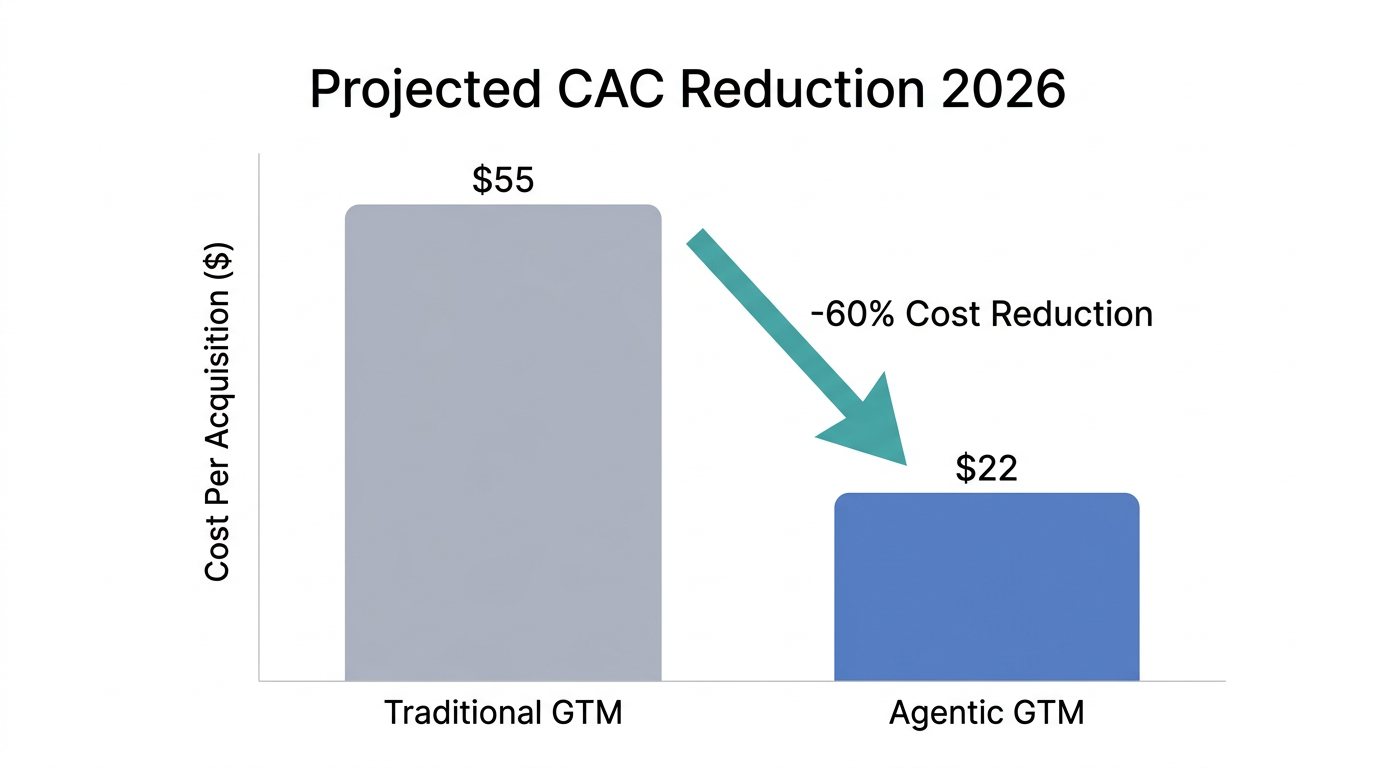
Systematic A/B testing is known to increase email marketing ROI by up to 83%, yet only 59% of companies currently utilize it, according to MailMend. In 2026, the gap between those who use agentic experimentation and those who don't is widening. By automating the grunt work of testing, your team can focus on higher-level strategy, such as finding the right UGC creators to fuel the top of your funnel.
Platforms like Stormy AI streamline this transition by helping you discover creators who align with your highest-performing synthetic personas. Once Claude Code validates that a specific value proposition resonates with a "Fitness Enthusiast" persona, you can instantly use Stormy's AI search engine to find creators in that niche with 10k-100k followers to launch a coordinated campaign.
"The future of growth is a closed-loop system: AI finds the friction, AI generates the fix, synthetic users validate the solution, and AI creators distribute the message."
Common Mistakes to Avoid in 2026
Despite the power of these tools, there are several pitfalls that can derail an AI pricing optimization strategy:
- The "Omniscience" Trap: Giving Claude massive, multi-part prompts like "Fix my checkout and redesign the homepage." This leads to hallucinated code and partial implementations. Break tasks into sub-steps.
- Statistical Peeking: Stopping a test the moment a variant looks like a winner. Use the
/compactcommand in Claude Code to have the AI summarize confidence intervals rather than raw percentages. - Security Risks (CVE-2025-59536): Be wary of malicious "Claude Hooks" in untrusted repositories. Always run Claude Code in local, trusted environments and verify your
~/.claude/hooksto protect your Stripe or Shopify API keys. - Context Pollution: Keeping a single session alive for too long causes Claude to make assumptions based on stale data. Start fresh sessions using
/clearwhen switching from variant design to data analysis.
Conclusion: Building a Resilient GTM Machine
Accelerating your e-commerce growth in 2026 requires a relentless focus on validation velocity. By integrating Claude Code with synthetic persona testing through Ditto, you transform your go-to-market strategy 2026 from a series of educated guesses into a data-backed certainty. You protect your margins by identifying elasticity cliffs early and reduce your CAC by ensuring every live visitor is met with a high-probability conversion path. Pair this technical rigor with the creator-led discovery of Stormy AI, and you have a growth engine that is truly autonomous, scalable, and resilient against market shifts.