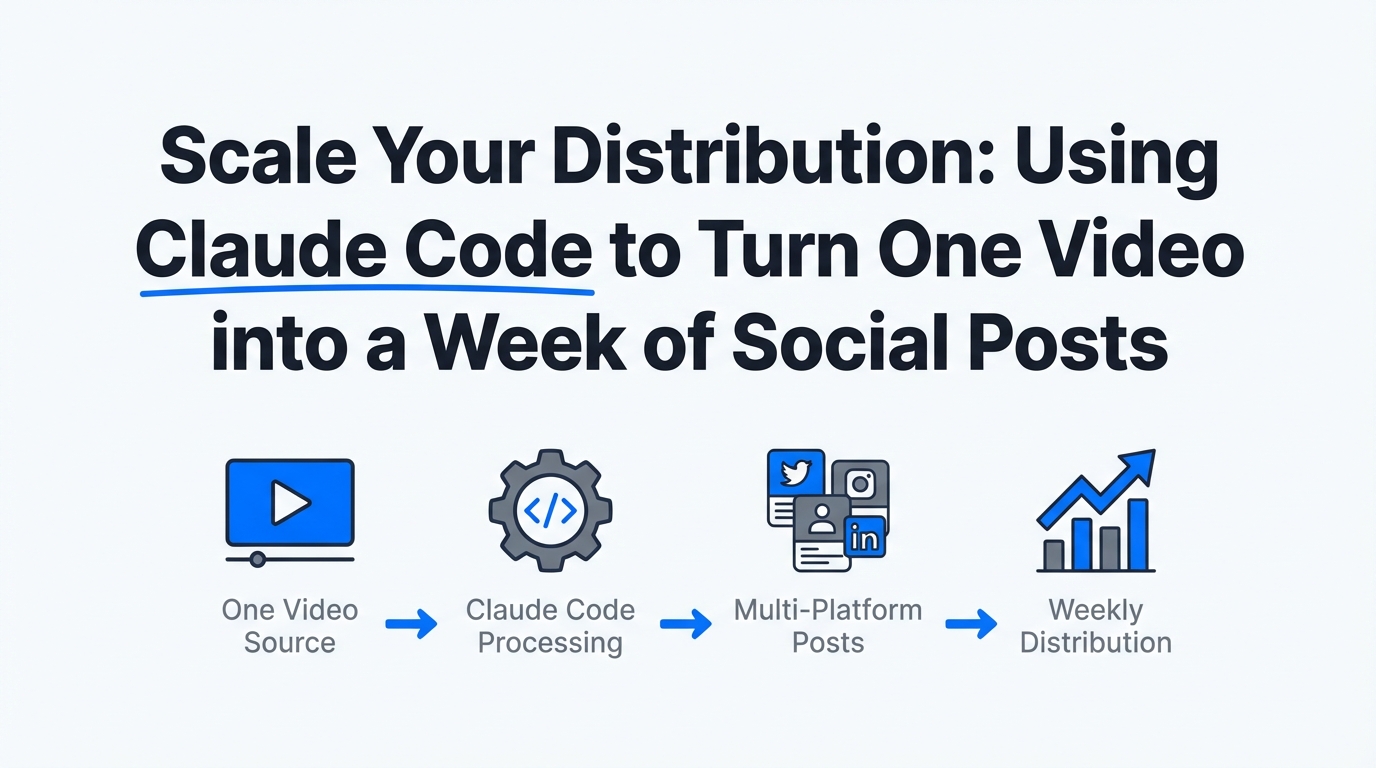
Content creation is no longer the primary bottleneck for modern marketing teams; distribution is. In an era where the social media management market is projected to reach $124.63 billion by 2032, the ability to rapidly fragment a single piece of long-form content into dozens of platform-specific assets is the ultimate competitive advantage. While most creators spend hours manually drafting threads and captions, a new wave of "Action AI" is emerging. By moving away from browser-based chat interfaces and into agentic command-line tools like Claude Code, marketers are achieving a 300x increase in output for complex repurposing workflows.
The Repurposing Loop: From Raw Video to Social Assets
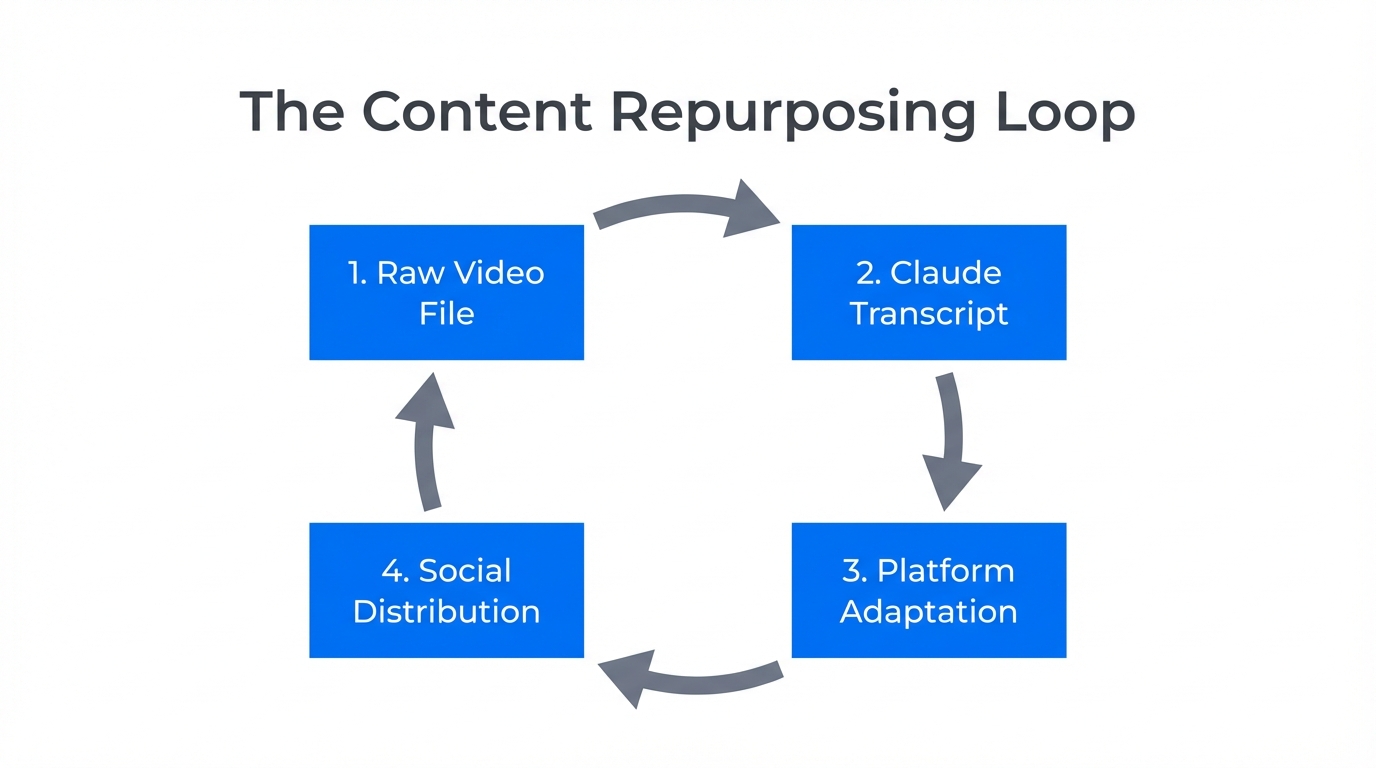
The core of an effective content repurposing strategy lies in the "Repurposing Loop." Instead of starting from a blank page, you start with a high-value anchor—typically a YouTube video, a podcast episode, or a long-form blog post. Using Claude Code, you can point an autonomous agent at a transcript or a URL and instruct it to extract key insights, data points, and quotable moments.
This isn't just about summarization. According to a 2025 survey, 56% of marketers are already using AI to assist in their workflows, but the shift to agentic systems allows for deep structural transformation. Claude Code can ingest a 20-minute YouTube transcript and instantly identify the most viral-ready hooks for X (formerly Twitter) or the most professional takeaways for a LinkedIn article.
"The trend is moving away from isolated chat interfaces toward MCP-enabled workflows that allow AI to talk directly to local files and scheduling APIs."
Adapting Hooks for Multi-Platform Social Strategy
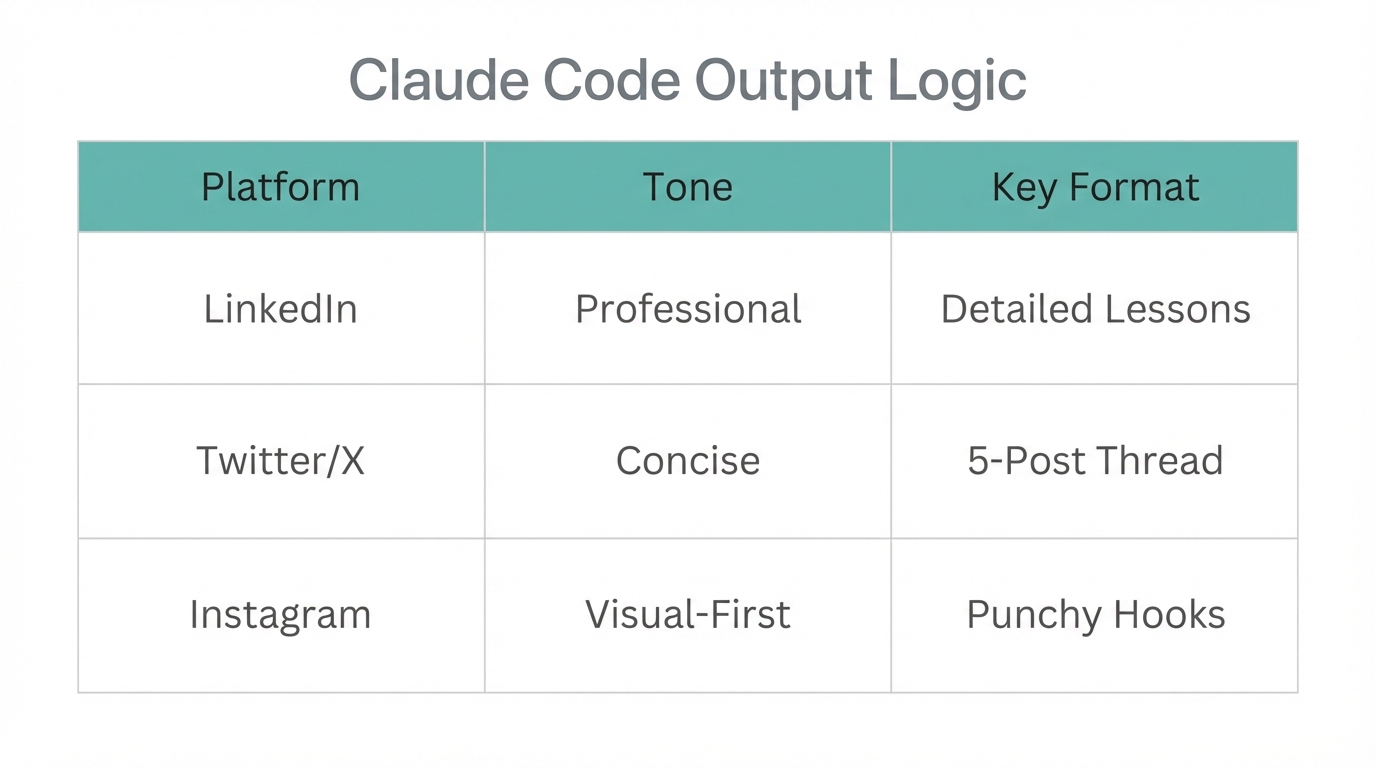
One of the most common mistakes in social media scaling is "Platform Blindness"—posting the exact same copy across every network. Each algorithm rewards different structures. X favors punchy, controversial, or list-based threads; LinkedIn rewards professional narrative and industry insight; TikTok requires high-energy scripts that hook the viewer in the first three seconds. Experts at the Digital Marketing Institute emphasize that human roles are shifting toward Context Engineering—guiding the AI's logic to match these specific nuances.
By using Claude Code, you can implement a CLAUDE.md file in your project root. This file acts as a persistent memory bank that defines your brand voice, content pillars, and platform constraints. When you ask Claude to repurpose a video, it automatically checks these constraints to ensure a LinkedIn post doesn't include 30 hashtags and an X thread doesn't sound like a corporate press release.
| Platform | Structure Focus | Algorithm Trigger |
|---|---|---|
| X (Twitter) | Threaded lists / Contradictory hooks | High early engagement (RTs/Replies) |
| Professional narrative / White-space heavy | Dwell time and professional relevance | |
| TikTok/Shorts | Hook-Body-CTA scripts | Retention rate and completion |
Building the Infrastructure with Claude Code
To truly achieve AI content distribution, you need more than just a prompt; you need a workflow. Claude Code allows for the creation of custom "Forward Slash" commands. For example, a marketer could build a /social command that triggers a multi-step sequence: researching current trends via a Puppeteer MCP server, checking a "topic cooldown" to avoid repetitive posting, and generating platform-specific drafts.
This infrastructure often involves connecting Claude to external tools. You might have Claude generate the content and then ping a Zapier Webhook to send that data to a scheduler like SocialBee. For more advanced teams, developers are using automated APIs as the "hands" for Claude, allowing the AI to hit "Schedule" on Instagram or LinkedIn without a human ever touching a dashboard. This level of automation is why Gartner predicts that 40% of enterprise applications will integrate task-specific AI agents by 2026.
When you are sourcing external voices to amplify these distributed posts, platforms like Stormy AI streamline creator sourcing and outreach, ensuring your repurposed content is supported by authentic influencer engagement.
Case Study: The 20-Hour Marketing Reclaim
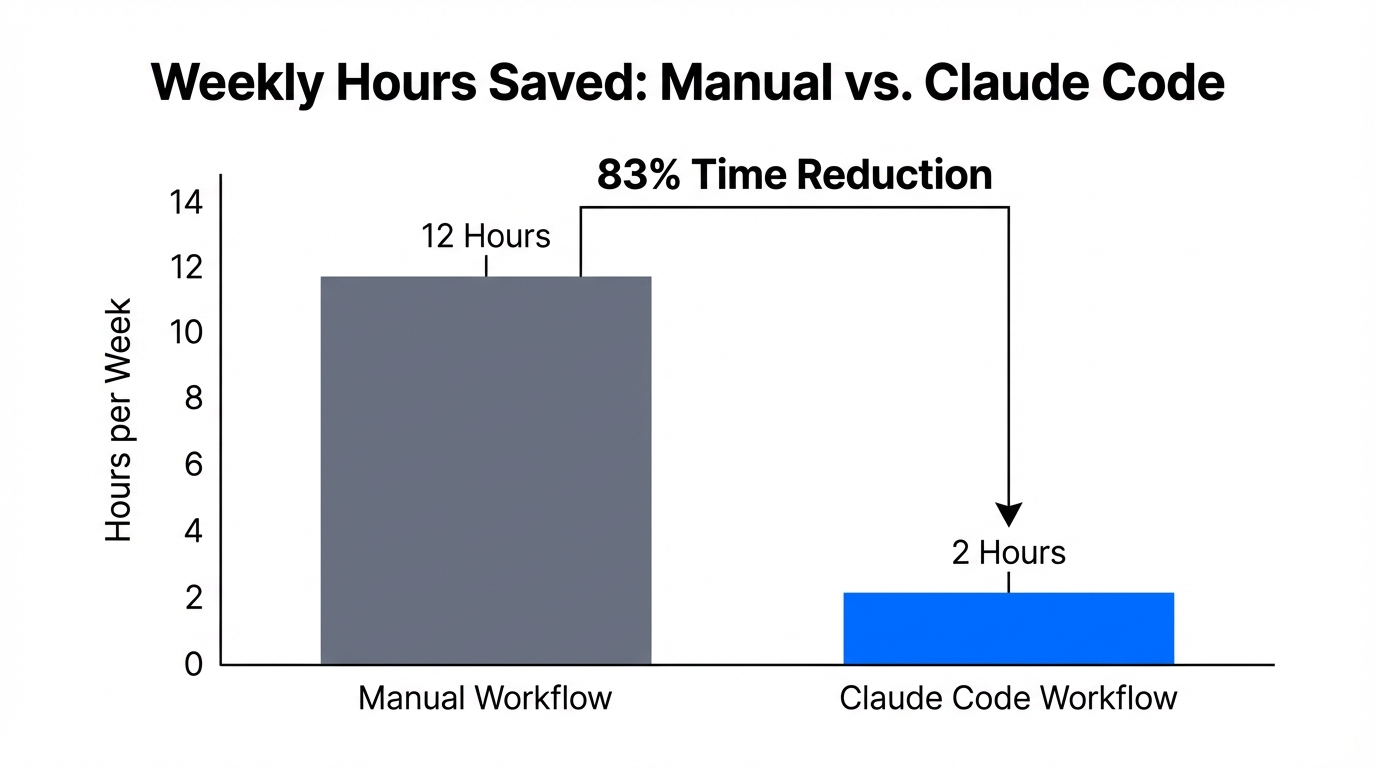
At the Skool community for AI practitioners, marketers have demonstrated that a single 5-6 hour build of a Claude Code repurposing script can save a team over 20 hours of manual work every week. Instead of a social media manager spending all Monday drafting posts, the agentic workflow handles the bulk of the creation, leaving the human to focus on strategy and high-level editing.
"The 'Set it and Forget it' mentality is a fallacy. Agentic AI requires a review gate, but it eliminates 90% of the manual labor."
By utilizing tools like Apify to scrape competitor gaps and n8n.io to build approval gates in Slack, agencies are moving toward programmatic social distribution. This allows them to maintain a presence on five or more platforms simultaneously with the same headcount that previously managed just one.
Avoiding Shadowbans: Rate-Limiting and Logic
High-volume Claude Code automation comes with risks. If an AI agent attempts to post too frequently or scrapes data too aggressively, it can lead to account shadowbans or IP blocks. It is critical to instruct Claude to include rate-limiting logic within its scripts. This ensures that posts are spaced out naturally and API calls mimic human-like behavior.
Platforms like Mixpost recommend using automation to handle the heavy lifting of scheduling while keeping a human eye on the final output. Furthermore, tracking the performance of these automated campaigns is vital. You can monitor engagement across platforms and refine your Claude Code prompts based on what is actually working in the real world.
Conclusion: Scaling into the Future
The transition from manual social media management to Claude Code automation is not just a trend; it is a necessity for brands that want to stay relevant in a fragmented digital landscape. By building a robust repurposing loop, respecting platform-specific nuances, and implementing safe automation infrastructure, you can turn a single hour of video into a week of high-performing social content. The goal is to work on your distribution, not just in it. As you scale, remember to pair your AI-driven distribution with high-quality creator discovery on Stormy AI to ensure your message reaches the right audience every time.