In 2026, the barrier between a growth marketer and a software engineer has effectively dissolved. We have entered the era of "vibe coding," where domain expertise—knowing exactly what to build—is far more valuable than the ability to memorize syntax. For SEO professionals, this shift is most evident in the move from manual spreadsheets to agentic SEO workflows. Organizations adopting these AI-powered strategies are seeing a 37% reduction in costs and a 39% increase in revenue, as they automate the technical drudgery that used to consume entire work weeks.
By early 2026, 93% of CMOs report that generative AI is delivering clear ROI, and 73% of marketers are now using these tools daily—nearly double the adoption rate seen in 2024. The most powerful tool in this new stack is Claude Code, a terminal-native, agentic assistant from Anthropic that can operate directly on your local codebase or marketing repository. This guide provides a technical yet accessible playbook for scaling Claude Code SEO audits and technical automation.
The Shift to Agentic SEO Workflows in 2026
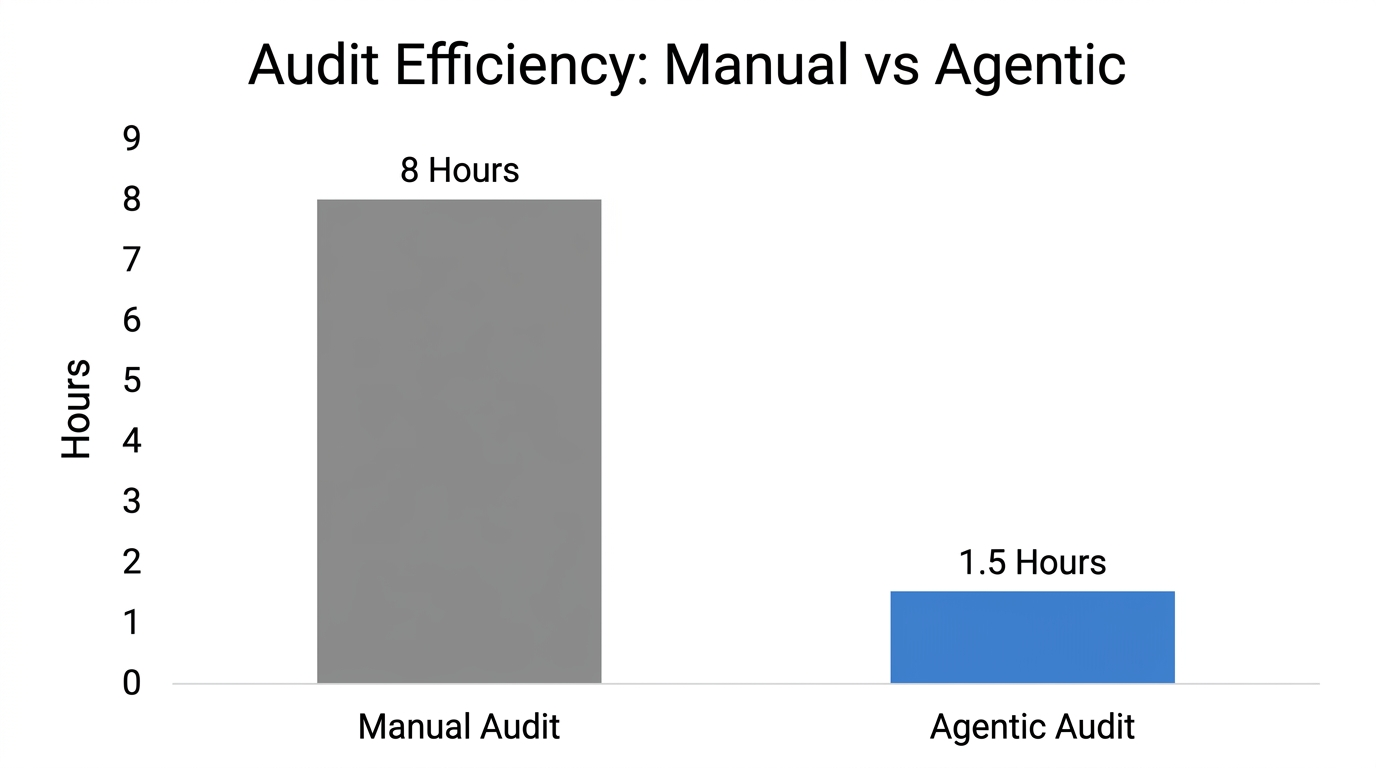
Traditional SEO audits used to be a grueling 8-hour process involving manual exports from crawling tools, tedious keyword mapping in Excel, and hours of internal link analysis. In 2026, agentic SEO workflows have compressed this timeline into a 90-minute automated sprint. This isn't just about speed; it's about strategic depth. AI-powered marketing agencies are now demonstrating 25–45% higher ROI by deploying agents that can think, plan, and execute across multiple files simultaneously.
"The entire marketing department is now one dude with Claude Code and a coffee."
As industry experts point out, the democratization of code means that a single marketer can now build custom dashboards and automated crawlers that previously required a dedicated engineering team. This is particularly prevalent in the YC W25 cohort, where 25% of startups are launching with 95%+ AI-generated codebases. For growth teams, this means the "technical SEO" bottleneck is finally gone.
Setting Up Your Stack: Claude Code, Firecrawl, and MCP
To run a high-performance AI-powered SEO strategy, you need three core components. First is Claude Code, which provides the brain and the interface. Its 1 million token context window allows it to ingest your entire site structure, content library, and technical documentation in one go. Using the /plan mode, you can instruct the agent to map out complex multi-file automations before it writes a single line of code.
| Feature | Manual Audit (2024) | Agentic Audit (2026) |
|---|---|---|
| Scraping Speed | Sequential/Tool-based | Instant (Firecrawl) |
| Internal Linking | Manual mapping | AI-mapped semantic clusters |
| Context Window | File-by-file | 1M+ tokens (Entire codebase) |
| Data Integration | Static CSV exports | Live MCP connections |
The second piece of the puzzle is Firecrawl. Traditional crawlers often struggle with modern JavaScript-heavy sites, but Firecrawl is designed for AI agents, converting any website into clean, LLM-ready markdown. Finally, we use the Model Context Protocol (MCP). MCP allows Claude to securely connect to live data sources like the Google Ads API or Salesforce, ensuring your SEO strategy is grounded in actual conversion data rather than just vanity metrics.
Automated Keyword Mapping with Firecrawl
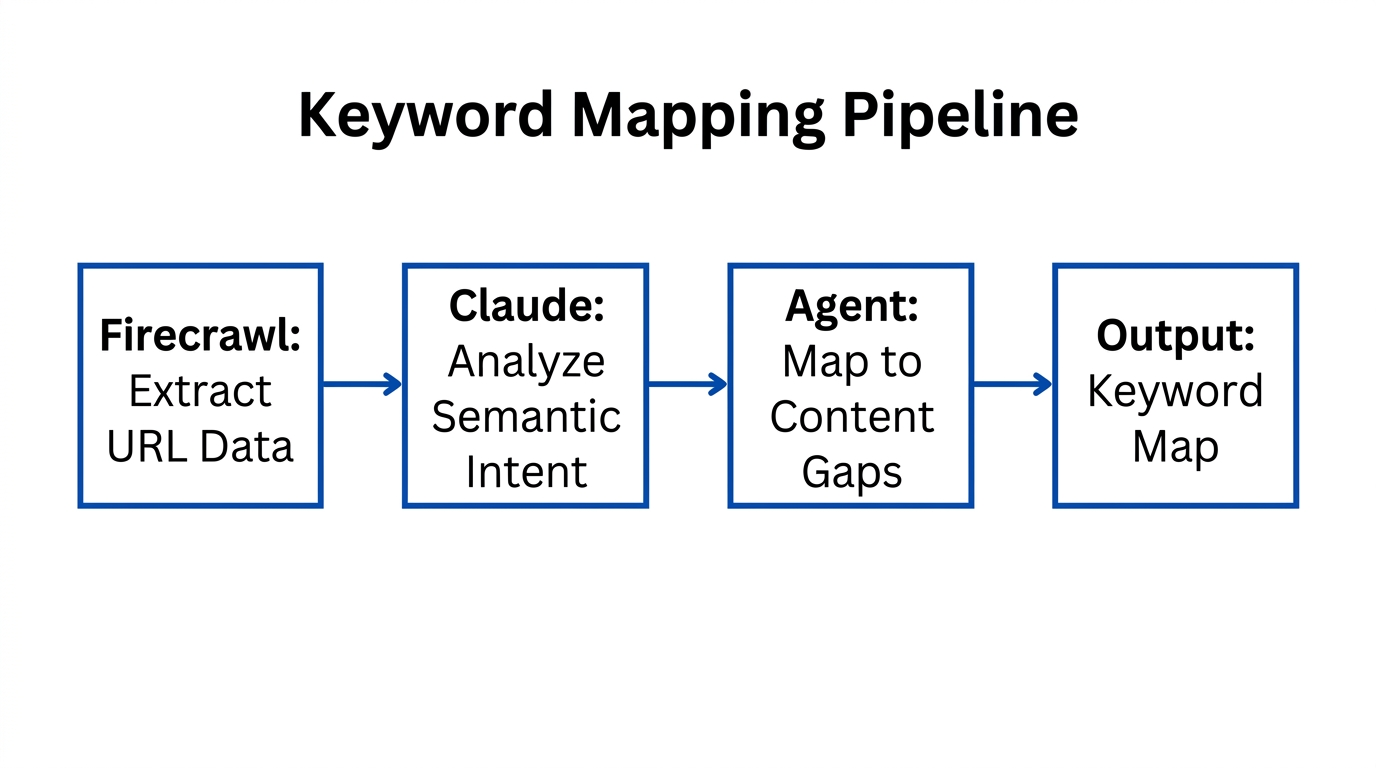
Manual keyword mapping is the "spreadsheet hell" of SEO. With Claude Code, you can automate competitor semantic analysis in minutes. By pointing a Claude-managed script at a competitor's sitemap using Firecrawl, the agent can identify content gaps and map out semantic clusters that you are currently missing.
This process allows you to programmatically identify high-intent clusters. Instead of looking at individual keywords, the agent looks at the "topical authority" of your competitors and suggests a content roadmap to overtake them. For brands that use influencers to drive traffic, integrating this data with a platform like Stormy AI allows you to see which keywords are trending among UGC creators and align your technical SEO with your social presence.
Building a Specialized 'SEO Content Auditor' Agent
One of the most powerful applications of Claude Code is the creation of sub-agents. You can define a specialized SEO Content Auditor within your terminal that performs the following tasks autonomously:
- Internal Linking Analysis: Scans all 50+ pages to find orphan pages and suggest contextually relevant internal links.
- Keyword Density & LSI: Analyzes whether your content is over-optimized or missing Latent Semantic Indexing (LSI) terms that search engines expect.
- Technical Vetting: Uses Playwright to check for broken links and rendering issues across different viewport sizes.
"AI can handle 80% of the technical execution, but the final 20%—brand nuance and emotional resonance—must remain human-led."
This "80% Rule" is critical. While Claude Code can fix your meta tags and optimize your headers, your team must still provide the creative direction. Advanced marketing teams use this agentic approach to reduce content review turnarounds from 3 days to just 24 hours.
The Playbook: Executing Your First Agentic Audit
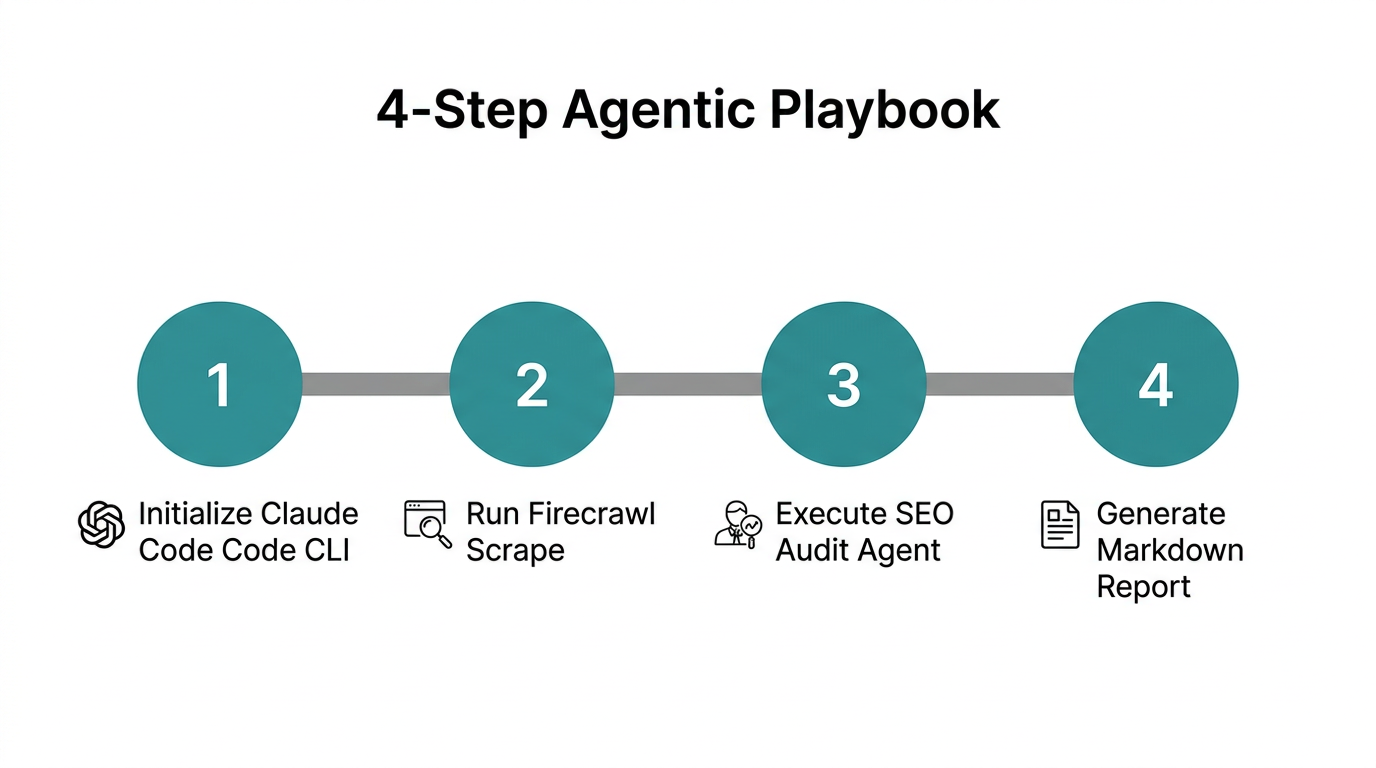
Ready to deploy? Follow these steps to set up your first technical SEO automation workflow using Claude Code.
Step 1: Environment Initialization
Start by creating a dedicated directory for your SEO project. Initialize a CLAUDE.md file—this acts as the "brain" for your agent, defining the rules it must follow. Never place raw API keys in your prompt; instead, use a .env file to manage credentials for tools like n8n or Firecrawl.
Step 2: Scrape and Convert
Use Firecrawl to pull your current site content. Command Claude to: "Use Firecrawl to crawl my sitemap and save every page as a markdown file in the /content folder." This gives the AI a clean, readable version of your entire site.
Step 3: Analyze Semantic Gaps
Run a competitor analysis. Instruct Claude: "Analyze the markdown files in /competitor-content and compare them to my /content folder. Identify 10 high-value topical clusters I am currently missing."
Step 4: Technical Fixes and Redirects
Leverage the agent's coding ability to write script-based fixes. For example, have it generate a redirects.conf file or optimize your image alt tags across the entire codebase. This is where AI-powered SEO strategy saves dozens of hours of manual entry.
Step 5: Performance Integration
Connect Claude to your performance data via MCP. By linking your HubSpot or Search Console data, the agent can prioritize audits for pages that have high impressions but low click-through rates (CTR).
Avoiding Common Mistakes in Agentic SEO
While the productivity gains are massive, over-reliance on automation can lead to "fragmented automation" that doesn't actually drive growth. Avoiding these three common mistakes will keep your strategy on track:
- Token Cost Explosion: Running high-volume autonomous agents on advanced models without budget caps can lead to massive bills. Always set limits in your developer console.
- Creative Fatigue: Relying 100% on AI for customer-facing copy often leads to "AI slop." Platforms like Meta and Google are increasingly sophisticated at detecting and de-prioritizing low-effort automated content.
- Credential Leakage: As mentioned, security is paramount. Ensure your
.gitignoreis properly configured before starting any terminal-native AI session.
The Future of Growth Marketing
The transition to agentic SEO workflows in 2026 is not just a trend; it's a fundamental restructuring of how marketing work gets done. By leveraging Claude Code, Firecrawl, and MCP, you can move away from the "admin" of SEO and focus on high-level strategy and creative resonance. Whether you are building custom reporting pipelines to replace expensive SaaS tools or deploying sub-agents to audit hundreds of pages in an afternoon, the goal remains the same: faster iteration and higher ROI.
As you scale your technical SEO, remember that the most successful brands in 2026 are those that combine these technical efficiencies with authentic, human-led content. If you're looking to fuel your SEO with high-quality user-generated content, platforms like Stormy AI can help you find the right creators to build that "20%" of emotional resonance that AI simply can't replicate. The era of the 90-minute audit is here—it's time to start building.