In 2026, the competitive edge for growth teams has shifted from who has the biggest budget to who has the highest engineering velocity. We are no longer in the era of simple AI autocompletion; we have entered the age of agentic execution. With the global AI coding assistant market reaching $8.5 billion this year, growth leads and founders are bypassing traditional development bottlenecks to build custom marketing tools, lead magnets, and internal dashboards in record time.
The hallmark of this shift is the Claude Code 15-Minute Test. This is a ritual designed to validate if a non-trivial growth feature—like a custom attribution scraper or a dynamic pricing engine—can be built autonomously by an AI agent without a single line of manual code from a human. For growth engineering teams, mastering this test is the difference between launching in hours or weeks.
The 2026 Agentic Landscape: Why Speed is the Only Metric
According to recent data, 78% of development teams have now adopted AI coding tools, with 62% of professionals using them daily to handle complex tasks (Panto AI). Tools like Claude Code have transformed the workflow from "writing code" to "orchestrating agents," leading to a documented 40% increase in coding speed and a 35% reduction in debugging time for high-performing teams (SNS Insider).
"In 2026, growth engineering is no longer about writing syntax; it is about acting as a Quality Gate for autonomous agents that execute at the speed of thought."
Case Study: How Wix Engineering Redefined Research
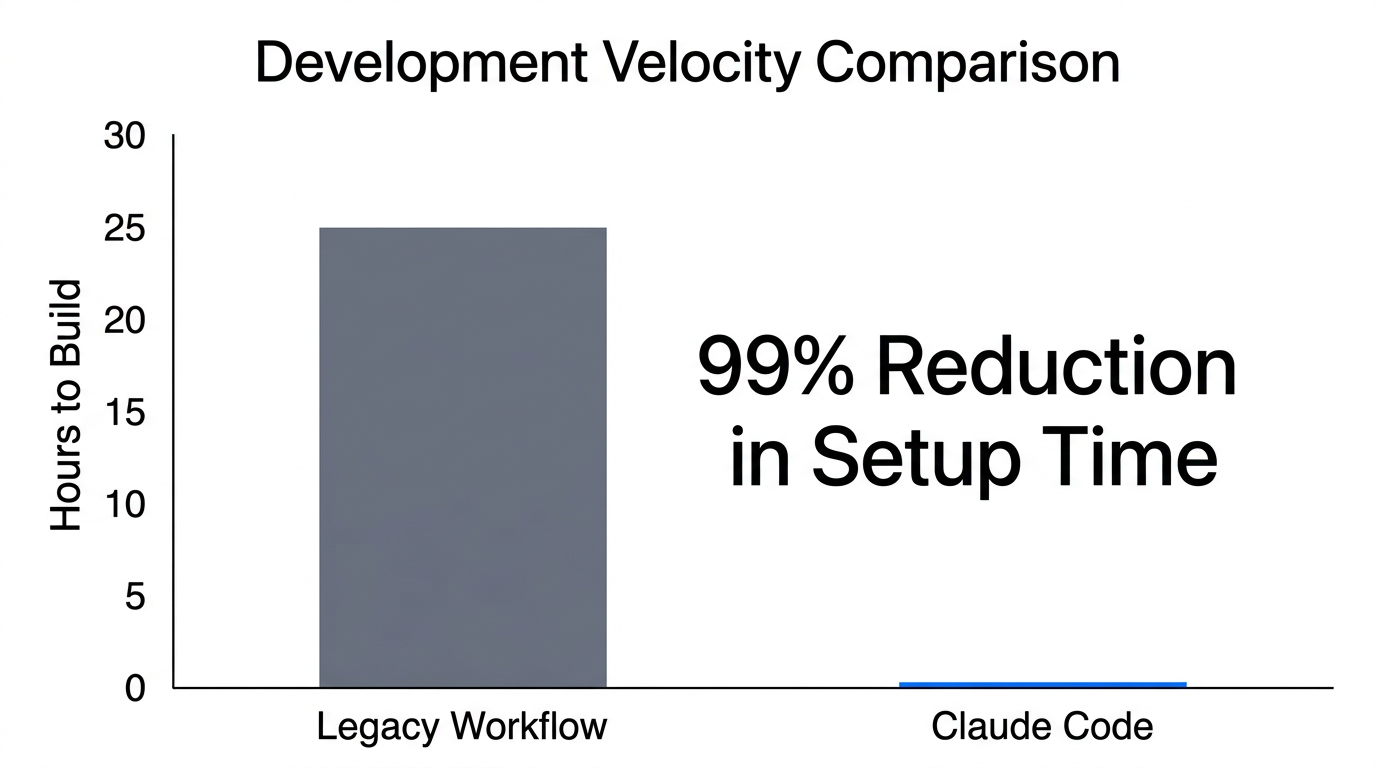
The power of the 15-minute test isn't theoretical. Wix Engineering recently demonstrated how they reduced their "morning feature research rituals" from 60 minutes down to just 15 minutes (Wix Engineering). By deploying parallel Claude Code agents, they were able to research architecture, backend constraints, and security vulnerabilities simultaneously.
This same velocity is being applied to growth. Imagine a founder needing a custom dashboard to track influencer performance across five different platforms. Instead of waiting for a sprint cycle, they use a terminal-first agent to scrape, aggregate, and visualize that data. By connecting these custom tools to AI-powered discovery platforms like Stormy AI, teams can automate the entire pipeline from creator sourcing to ROI tracking without writing a single line of CSS.
Claude Code vs. Cursor: Choosing Your Growth Weapon
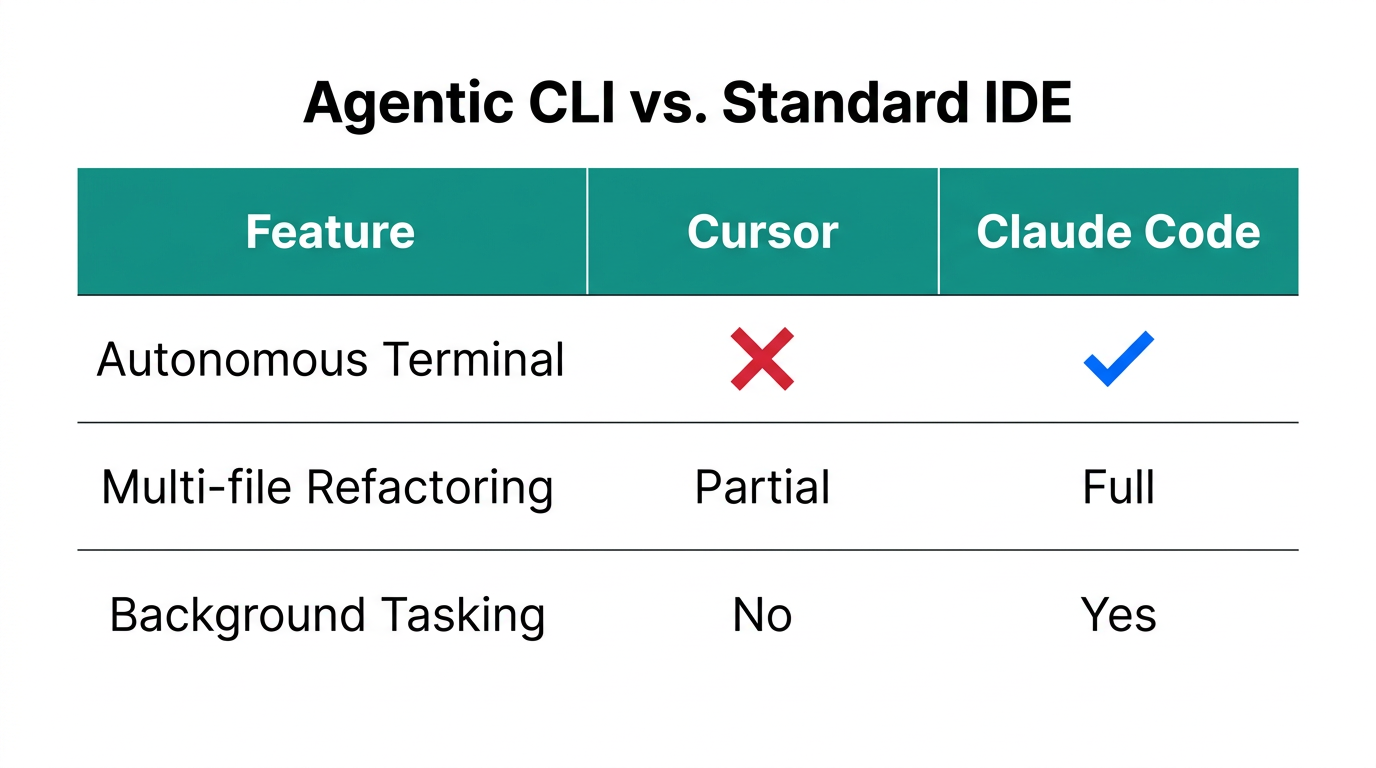
While many marketers are familiar with AI-native IDEs, the choice of tool depends heavily on the complexity of the growth tool being built. Claude Code is increasingly seen as the "Delegator"—a tool built for high-reasoning, terminal-native execution—whereas Cursor remains the preferred "Accelerator" for rapid UI iteration.
| Feature | Claude Code (The Delegator) | Cursor (The Accelerator) |
|---|---|---|
| Primary Function | Terminal-first agent | AI-native IDE |
| Autonomy | High (Shell/Test/Edit Loop) | Medium (In-IDE Agents) |
| Multi-file Reasoning | Superior (78% accuracy) | Standard (73% accuracy) |
| Best For | Architectural refactors & complex bugs | Daily flow & rapid prototyping |
Data from SitePoint suggests that for full-feature implementations, Claude Code wins with a 68% success rate compared to Cursor's 54%, largely due to its superior ability to handle global context without "Context Rot."
The 15-Minute Playbook: A Step-by-Step Guide
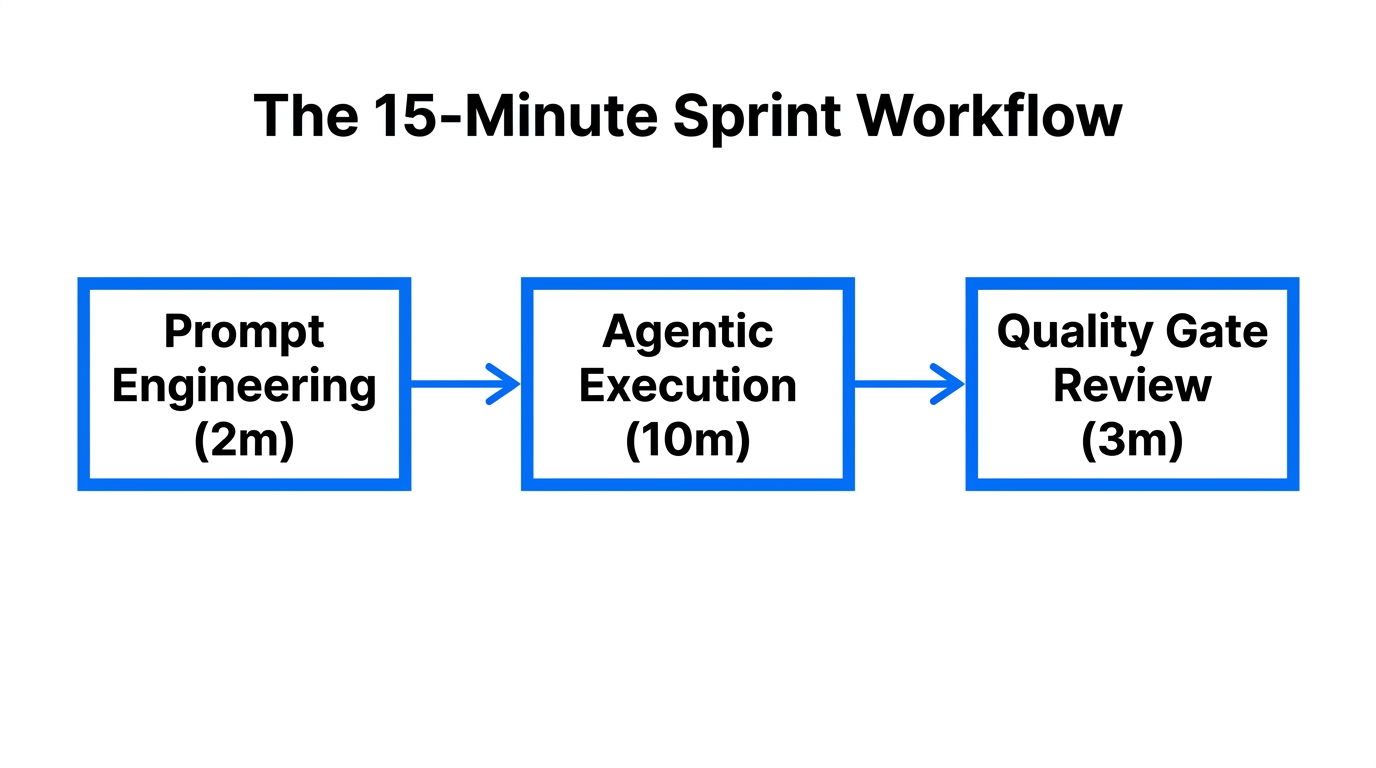
To implement the 15-minute test in your growth department, follow this structured four-phase ritual. This prevents the "Generic AI Output" problem where the model defaults to basic CRUD apps instead of project-specific logic (Zen van Riel).
Phase 1: Context Loading (3 Minutes)
Before asking for a feature, you must prime the environment. Initialize a CLAUDE.md file in your root directory. This file acts as the "brain" for the agent, containing your tech stack, naming conventions, and "do-not-touch" areas. According to the Claude Documentation, this ensures the agent stays within the architectural guardrails of your existing codebase.
Phase 2: Explore & Interview (4 Minutes)
Enter Plan Mode. Do not give a direct command yet. Instead, say: "Analyze our current lead capture logic. Interview me to find the missing constraints for a new referral engine." This forces the agent to identify edge cases—like cookie expiration or multi-device tracking—that a standard prompt would miss.
"The most dangerous phrase in 2026 growth engineering is 'just build it.' The most powerful is 'interview me for constraints.'"
Phase 3: Test-Driven Development (5 Minutes)
This is where the 15-minute test is won or lost. Command the agent to write a failing test first. "Write a failing test for the referral engine that triggers on a 302 redirect. Do not write the fix until the test fails with Error [X]." This approach, championed by AI Labs Pro, ensures that the code produced actually solves the problem rather than just 'looking' correct.
Phase 4: Gated Implementation (3 Minutes)
Move to Normal Mode. Let the agent fix the code and run the tests. Once they pass, command it to: "Audit this implementation against the patterns in @file_path." This final check prevents security vulnerabilities, which have seen a 23.7% increase in teams that rely on "vibe coding" without verification (Trigi Digital).
Solving the "Context Rot" Crisis
As sessions grow longer, even the best agents can suffer from Context Rot—where the LLM begins to "forget" earlier decisions or ignores new instructions. Researchers at The New Stack call this the "Bored 6-Year-Old" effect. To fight this, high-performance growth teams use the "Document & Clear" pattern.
Once your session reaches 60% of its token capacity, use a /catchup command to summarize all progress into a markdown file, then /clear the session. This resets the agent's focus and ensures it doesn't start producing "hallucinated boilerplate" (Nathan Onn).
The New Role: Marketers as Quality Gates
In 2026, the growth lead's role is evolving. You are no longer just a strategist; you are the Quality Gate for high-converting growth tools. By leveraging Review-First Development, you can oversee the creation of custom landing page builders or automated outreach sequences that link directly into your Stormy AI creator CRM.
This paradigm shift allows startups to move with the speed of an enterprise R&D lab. For example, a research team recently used Claude Code to build a custom GUI and driver for instrument communication in just 15 minutes—a task that previously took weeks (Reddit r/ClaudeAI). Applying this to marketing, you can build a custom A/B testing framework for your mobile app's paywall in the time it takes to have a coffee break.
"Velocity is the only moat left. If your competitor can build a custom tool in 15 minutes and it takes you 15 days, the game is already over."
Conclusion: Future-Proofing Your Growth Stack
The Claude Code 15-Minute Test is more than just a productivity hack; it is the new standard for growth engineering velocity. By implementing the four-phase playbook—Context Loading, Interviewing, TDD, and Gated Implementation—you can ensure your marketing tech stack is as agile as your strategy.
As you scale, remember to keep your context healthy, use MCP servers to pull in real-time data, and treat your AI agents as junior engineers that require strict architectural guardrails. Whether you are building internal dashboards or scaling creator outreach, the ability to build and deploy custom tools in 15 minutes will be your greatest asset in 2026.