In the rapidly shifting landscape of generative AI for content creation, 2026 has marked a definitive turning point for marketers. As audiences grow increasingly weary of the "AI fingerprint"—that unmistakable smell of over-polished, hype-driven prose—brands are flocking to a more sophisticated alternative. By August 2025, website visits for Claude AI had exploded by 10.3x, jumping from 16 million to a staggering 164.8 million in just eight months, according to traffic data from SimilarWeb and community discussions on Reddit. This shift isn't just about traffic; it's a fundamental change in how we approach social media automation 2026, moving away from robotic outputs toward a more grounded, human-like dialogue.
The Claude Advantage: Why Marketers are Choosing Naturalism Over Hype
For years, the industry standard was characterized by flowery language and hyperbolic claims. However, current usage patterns show that 39% of AI interactions are now focused on direct automation and agentic workflows rather than simple chat assistance. As of January 2025, Claude reached 18.9 million monthly active users worldwide, a statistic highlighted in recent Medium marketing analyses. The primary draw is Claude’s "Constitutional AI" framework, which ensures that content remains safe, brand-compliant, and—most importantly—natural.
When comparing Claude AI vs ChatGPT for marketing, social media strategists often point to Claude’s superior performance in long-form LinkedIn posts and technical threads. While other models might rely on repetitive structures, Claude’s reasoning is analytical and nuanced. This is likely why Claude is currently used by 70% of Fortune 100 companies, as noted in high-level industry reviews and case studies. For a brand, this means less time editing out "AI-isms" and more time focusing on high-level content strategy.
"The shift from generic AI to Claude is a shift from 'writing' to 'communicating.' In 2026, the brands that win are the ones that sound the most human, even when using automation."
The RCTC Framework: A Playbook for High-Conversion Prompts
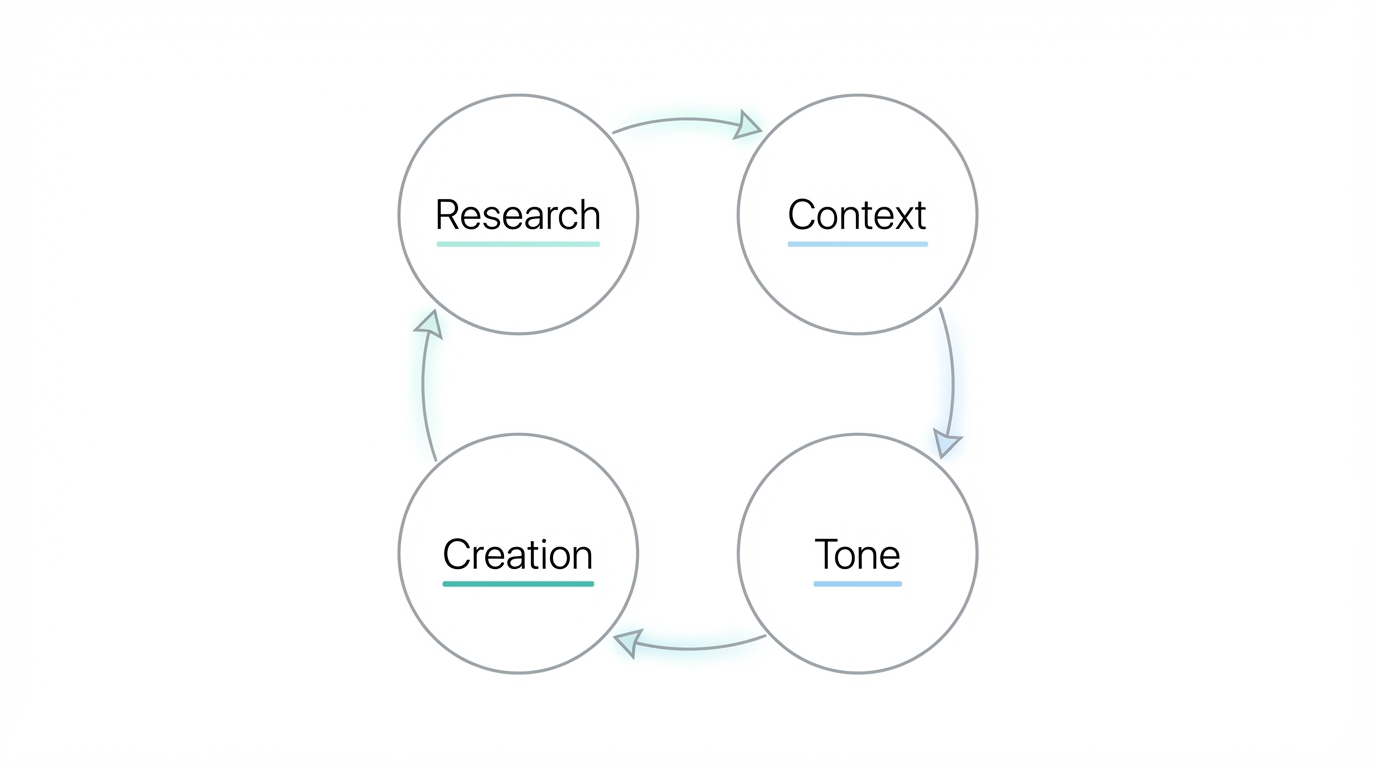
To truly unlock Claude AI for social media, you cannot rely on one-sentence requests. The most successful marketers utilize the Role-Context-Task-Constraint (RCTC) framework to ensure precision in every post. This framework serves as the backbone of a modern AI social media marketing strategy.
Step 1: Define the Role
Instead of saying "Write a post," tell Claude to act as a "Senior Growth Marketer at a SaaS company with 10 years of experience." This changes the vocabulary and the tone from generic to authoritative.
Step 2: Provide the Context
Upload your recent analytics or a transcript of a podcast. Explain the audience: "We are speaking to CMOs who are frustrated with high customer acquisition costs (CAC)."
Step 3: Assign the Task
Be specific. "Write a 10-tweet X thread that breaks down the findings from this PDF. Start with a hook that challenges a common industry myth."
Step 4: Set the Constraints
This is where the "naturalism" happens. Tell Claude: "Do not use words like 'revolutionize,' 'delve,' or 'tapestry.' Use short sentences. Ensure the reading level is at a 7th-grade grade level." This level of control is why experts at Studio36 Digital recommend Claude for final content execution over broader, more creative-focused models.
Implementing Claude Projects for Brand Consistency

One of the most significant social media automation 2026 trends is the move away from one-off prompts toward persistent "Claude Projects." A Project allows you to upload a Knowledge Base of up to 500 pages. This acts as a permanent brain for your brand, housing your brand voice guidelines, past successful posts, and SEO frameworks.
- Brand Bible: Upload your internal style guide so Claude never forgets your preferred spelling or tone.
- Past Successes: Upload your top 20 performing Instagram captions. Claude will analyze the patterns and replicate that specific "vibe" in future outputs.
- SEO Keywords: Include a document of your target keywords to ensure every post is optimized for discovery.
By using Claude Projects, you eliminate the need for "Zero-Shot" prompting (giving no examples), which often leads to generic output. Instead, you leverage Few-Shot Learning, providing the AI with the exact context it needs to be 100% brand-compliant every time.
Leveraging Artifacts for Real-Time Content Previews
A standout feature for social media managers is "Artifacts." This allows you to see real-time previews of social media graphics (SVGs), interactive content, or formatted layouts directly next to your chat window. For example, if you are planning a campaign on Canva, you can first ask Claude to generate the layout code or SVG elements to visualize the structure before you even open a design tool.
This is particularly useful for Instagram Stories or LinkedIn Carousels. You can prompt Claude to "Generate a 5-slide carousel layout for a post about AI trends," and it will render the text and basic design elements as an Artifact. This visual-first approach saves hours of back-and-forth between copy and design teams.
"Artifacts bridge the gap between text-based ideation and visual execution, making Claude the first AI that understands the visual rhythm of social media."
Scaling Your Strategy: From AI Scripts to Human Voices

Once you have mastered your AI social media marketing strategy and generated high-quality scripts for TikTok or Reels, the next challenge is execution. Even the best AI-generated script needs an authentic human voice to resonate. This is where modern influencer platforms become essential.
When you have a batch of AI-optimized scripts, tools like Stormy AI can help source and manage UGC creators at scale. You can use natural language to find creators who perfectly match the "natural" tone you’ve established in Claude. For instance, if your Claude-generated strategy targets fitness enthusiasts in Los Angeles, you can instantly find matching creators to bring those scripts to life.

By combining Claude’s creative intelligence with a robust discovery tool, you can create a fully automated content pipeline that feels remarkably human and authentic to your audience.
Case Study: Reducing Content Planning Time by 85%
The theoretical benefits of Claude are impressive, but the real-world results are even more striking. Consider a 25-location restaurant chain that recently overhauled its AI social media marketing strategy. Prior to using Claude, their marketing team spent 20 hours per month manually planning their content calendar, writing captions, and researching trends.
By implementing Claude Projects and the RCTC framework, they achieved the following:
- Time Efficiency: Planning time dropped from 20 hours to just 3 hours per month.
- Engagement: They saw a 35% increase in engagement because the content was more tailored to local audiences.
- Consistency: Using a central Knowledge Base ensured that all 25 locations maintained a unified brand voice while still allowing for localized menu updates.
Similarly, a sustainable fashion brand used Claude to plan a 30-day Instagram campaign. By focusing on "natural" storytelling rather than aggressive sales tactics, they gained 10,000 followers in 30 days and generated significant revenue in their first month of operation.
The Multi-Platform Repurposing Workflow
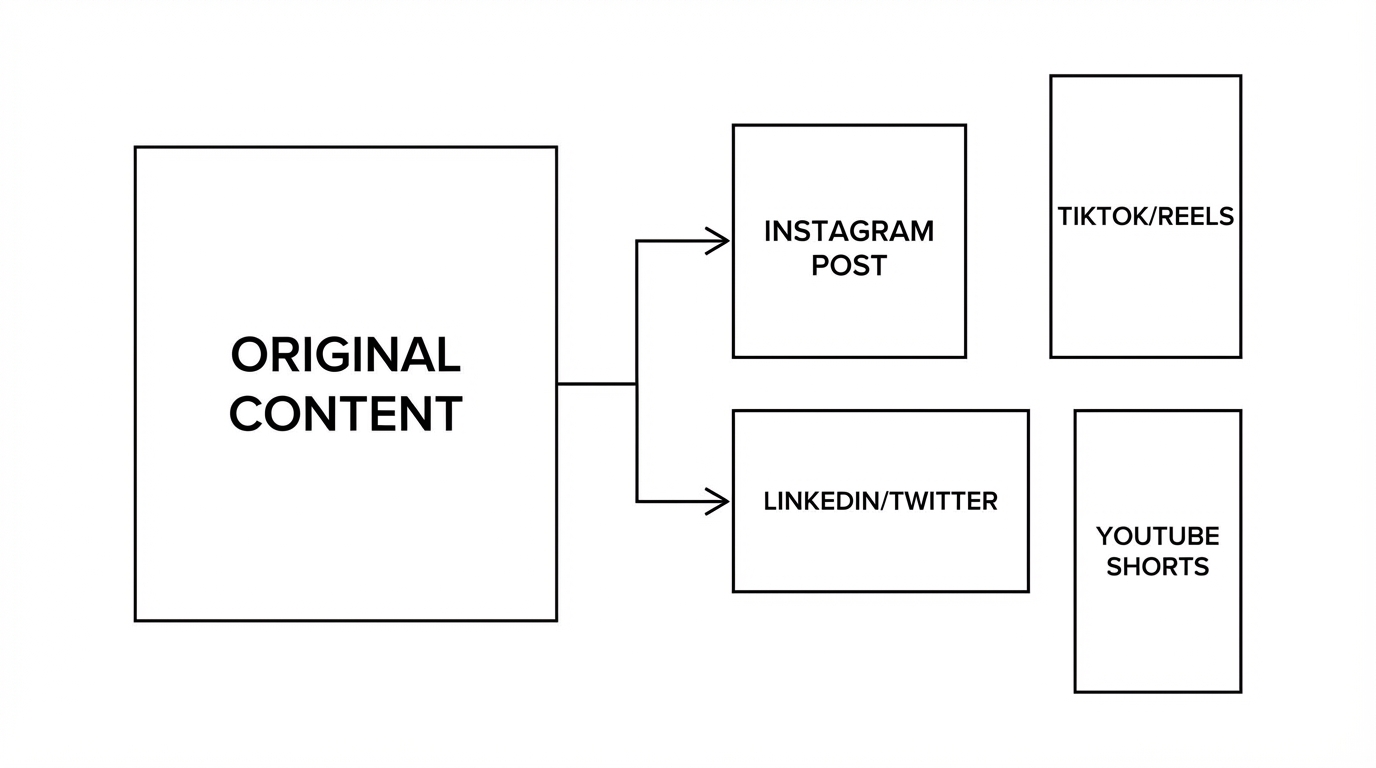
One of the most powerful ways to use generative AI for content creation is to take one "source of truth" and explode it into dozens of platform-specific assets. In 2026, the workflow looks like this:
- Record: Record a 10-minute video or podcast episode.
- Transcribe: Use a tool to get the text, then upload it to Claude.
- Execute: Ask Claude to generate:
- A 10-tweet X Thread (Hook → Story → Lesson → CTA).
- An Instagram Caption using a Problem-Solution-Benefit format.
- A LinkedIn Newsletter draft (approximately 1,500 words).
- Three TikTok Hooks based on the most emotional pain points in the transcript.
This ensures your message is consistent across all platforms while respecting the unique "vibe" of each. As experts from Social Media Examiner suggest, use ChatGPT for initial brainstorming and then bring those ideas into Claude for the final execution where precision matters most. Once these assets are live, you can monitor their impact using the post tracking features in Stormy AI to see which AI-generated hooks performed best.
Common Mistakes to Avoid: The "AI Fingerprint"
Even with Claude’s advanced naturalism, it is easy to fall into traps that scream "this was written by an AI." To maintain authenticity and trust, avoid these common pitfalls:
- Copy-Pasting Without Refinement: Always add a "human touch." Include a personal anecdote, a specific internal data point, or even a bit of current industry slang that an AI wouldn't know.
- Neglecting the Knowledge Base: If you don't feed Claude examples of your best work, it will revert to its default (albeit high-quality) style. Always use Few-Shot Learning.
- Factual Hallucinations: Claude is highly confident but can still get numbers wrong. Always fact-check statistics, especially if they weren't in your provided documents, as noted in studies on AI hallucinations.
- Platform Mismatch: Don't post a LinkedIn-style post on TikTok. Always instruct Claude on the specific "Vibe" (e.g., "punchy and fast-paced" vs. "professional yet conversational").
"The greatest risk in 2026 isn't using AI; it's using AI so poorly that your audience loses trust in your brand's voice."
The Future of AI Social Media Marketing
The transition to Claude AI for social media represents a broader move toward quality over quantity. In 2026, the ability to generate thousands of posts is less valuable than the ability to generate ten posts that truly connect with an audience. By mastering the RCTC framework, leveraging Claude Projects, and utilizing Artifacts, marketers can reclaim their time while actually improving the quality of their output.
As you build your AI social media marketing strategy, remember that the goal is not to replace the human element, but to amplify it. Use Claude to handle the heavy lifting of drafting and repurposing, so you can spend more time on the high-level strategy and community building that truly moves the needle. Ready to start? Begin by building your first Claude Project today and watch your content planning transform from a 20-hour chore into a 3-hour strategic session.