The Japan Company Handbook Lesson: Finding Infinite Returns
 22:55
22:55To understand how to dominate a niche, we must look at how Warren Buffett approached the Japanese market. In a world where investors use complex Excel models to predict the future, Buffett found what Mohnish Pabrai calls a "no-brainer" bet. He didn't need to be a genius; he just needed to recognize an anomaly in the Japan Company Handbook.
Buffett identified five Japanese trading companies that were paying an 8% dividend yield. At the same time, he could borrow Yen at a mere 0.5% interest rate. By borrowing five billion dollars to buy these stocks, his dividend coverage was 16 times his interest payment. Because he used no equity and the cash flow covered the debt instantly, it was essentially an infinite return. This is the ultimate growth strategy playbook: finding a situation that hits you over the head like a 2x4 because the numbers simply don't make sense to ignore.
| Metric | The Market Average | Buffett's Japan Bet | Why it Won |
|---|---|---|---|
| Borrowing Cost | High / Variable | 0.5% (Yen-denominated) | Ultra-low leverage cost |
| Dividend Yield | 2-3% | 8% | High immediate cash flow |
| Strategy | Broad Diversification | High-Conviction Niche | Specific market anomaly |
"We don't need to know many things about many things. We need to know a lot about a little. The highest level of intellect is simplicity."
The 'Too Hard' Pile: Why Growth Teams Must Ignore Trends
34:18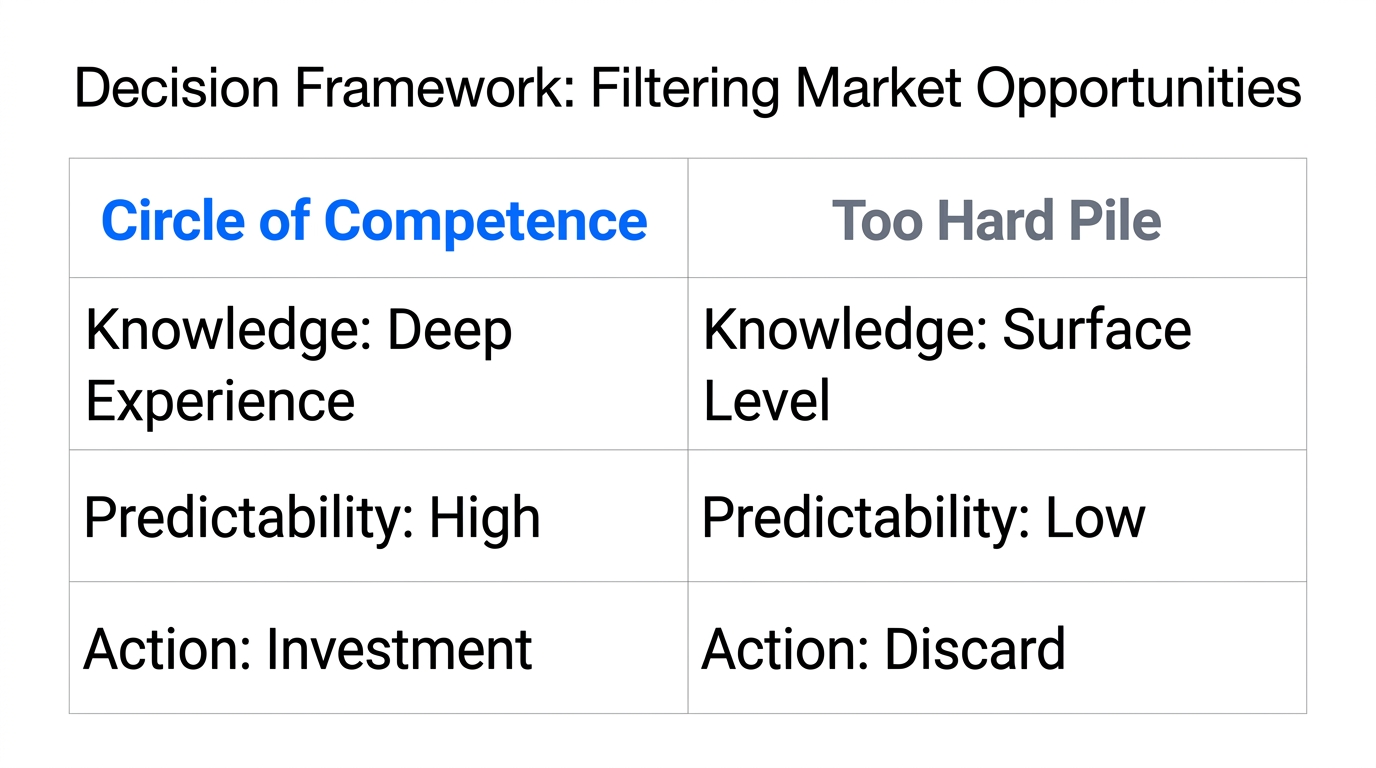
One of the most powerful tools in a founder's office in 2026 isn't a new software—it's a physical or digital 'Too Hard' Box. Buffett famously keeps a box on his desk for ideas that are too complex to handicap. If a business requires a 50-tab Excel spreadsheet to prove it works, it’s an automatic pass. This level of humility is what separates top-tier entrepreneurs from those who burn out chasing 'flavor of the day' tactics.
For modern marketing teams, this means putting 99% of new platforms and shiny objects into the 'Too Hard' pile. Instead of trying to master every nuance of TikTok Ads Manager, Meta, and LinkedIn simultaneously, the most profitable brands double down on the one platform where they have a specific edge. If you are sourcing UGC creators for a mobile app, for example, your focus should be entirely on the data that moves the needle. Platforms like Stormy AI facilitate this by allowing you to automate the discovery and outreach process, so you can spend your 'brainpower' on strategy rather than manual labor.
Hardcoded Traits: Resisting the Urge to 'Mirror'
49:06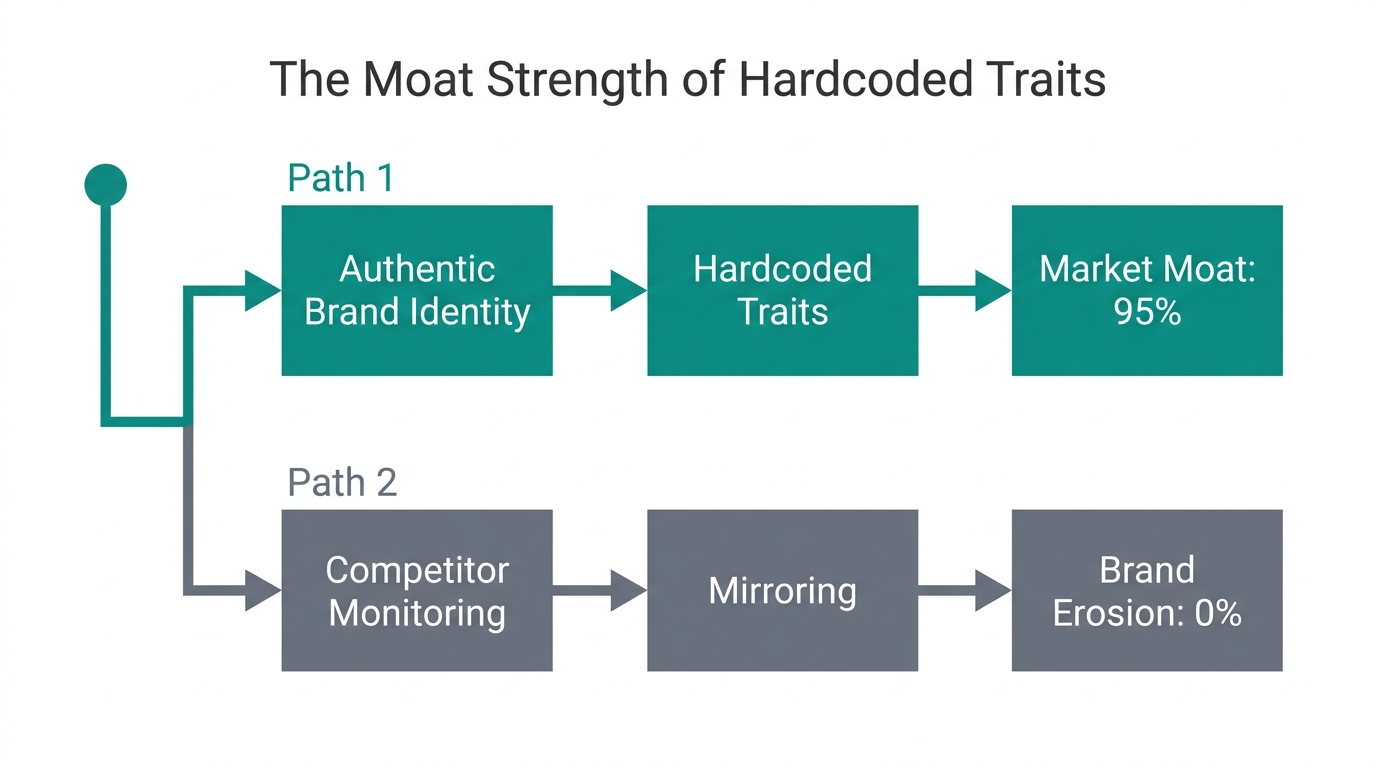
Most humans are hardwired for 'mirroring'—we look at what is socially acceptable or what competitors are doing and adapt our behavior to fit in. In brand building, this is a death sentence. To build a defensible moat, you must identify your hardcoded traits. These are the qualities that are established early in a brand's life and cannot be changed without destroying its soul.
Look at Costco. They pay their employees significantly more than the industry average because their founder, Sol Price, believed that workers should be able to afford the products they sell. This wasn't a PR stunt; it was a hardcoded trait. Competitors like Sears or Kmart tried to 'mirror' parts of the model but lacked the structural conviction to win. In 2026, niche marketing strategy is about being "an inch wide and a mile deep," much like billionaire real estate mogul John Arrillaga, who only invested in properties within two miles of the Stanford campus. He knew every brick and every lease in that tiny radius, making him unbeatable.
"The best investors and entrepreneurs are the ones who never sold their soul to fit a trend. They stayed within the two-mile radius of what they knew best."
Leverage vs. Pace: The Rick Guerin Mistake
Speed is often glorified in entrepreneurship, but in 2026, the distinction between pace and leverage is critical. Mohnish Pabrai tells the story of Rick Guerin, an early partner of Buffett and Munger. Guerin was just as smart as they were, but he was in a hurry. He used margin (leverage) to accelerate his returns, and when the 1973-74 crash happened, he was forced to sell his Berkshire shares at $40 to cover margin calls. Today, those shares are worth over $700,000.
Being in a hurry kills brands. A 20-year runway with a simple 10% annual growth rate creates more wealth than a 2-year spike followed by a leverage-induced collapse. When managing your brand's Google Ads or influencer spend, avoid the temptation to over-leverage your budget on unproven 'viral' moments. Instead, focus on the compounding effect of long-term creator relationships and consistent audience trust.
Building a Circle of Competence in 2026 Influencer Marketing
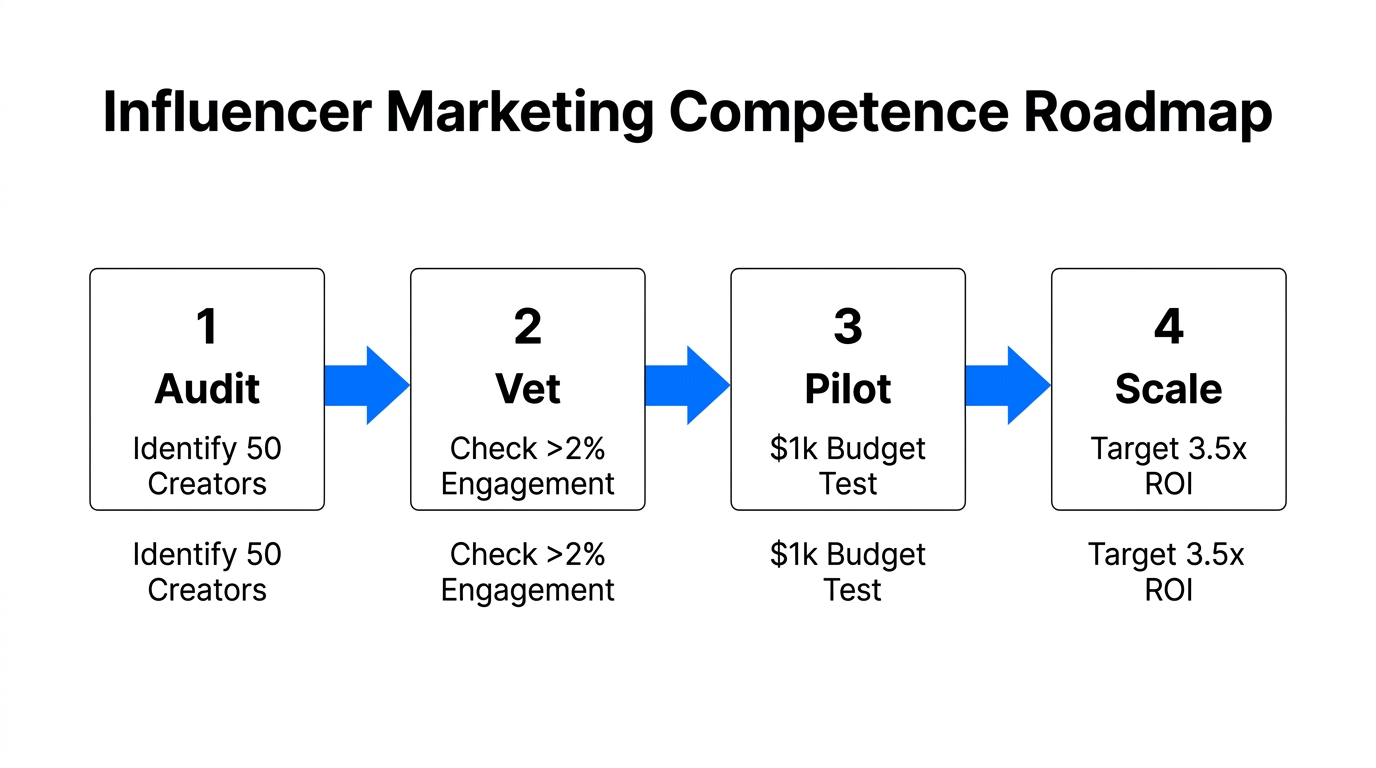
The 'Circle of Competence' applies directly to how you scale through influencers. In 2026, the brands seeing 80x growth aren't hiring 'general' influencers. They are finding creators who live within the same narrow niche they do. If you sell fitness equipment for home offices, you don't need a general fitness influencer; you need the specific creator who only reviews home-office ergonomic gear.
To execute this 2026 growth strategy playbook:
- Define Your 2-Mile Radius: What is the specific sub-niche you know better than anyone?
- Vet for Integrity, Not Just Reach: Use social media analytics to distinguish between high-uncertainty (which is an opportunity) and high-risk (which is a danger).
- Automate the Mundane: Use tools like Stormy AI to handle the discovery and outreach 'blocking and tackling,' so you can focus 95% of your time on strategic decisions.
- Ask 'And Then What?': Always look for second-order effects. If a creator's audience grows, how does that affect your supply chain or your brand's long-term sentiment?
The Path to Niche Dominance
Dominating a niche in 2026 doesn't require a massive team or a revolutionary AI. It requires the discipline to stay within your circle of competence and the patience to let compounding do the work. By ignoring the 'Too Hard' pile and focusing on hardcoded brand traits, you build a moat that is reinforced by every single interaction. Stop trying to mirror the giants; instead, measure the space between the aisles like Sam Walton. Success is a game of inches, and the most focused player always wins.
Ready to find the creators who fit your circle of competence? Start your search on Stormy AI today and stop guessing where your next 100x return will come from.