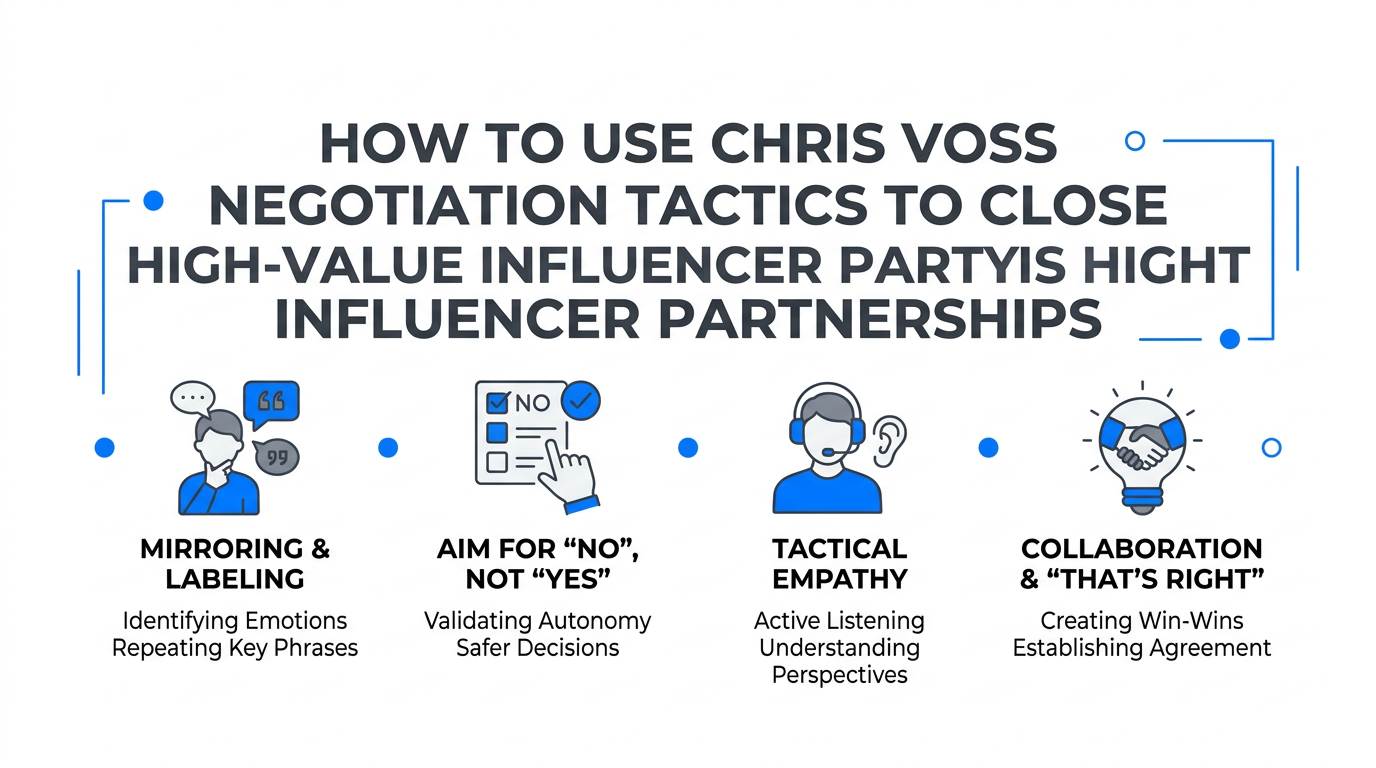
In the high-stakes world of the creator economy, the difference between a failed outreach email and a multi-year brand ambassadorship often comes down to a single conversation. Most influencer marketing managers approach negotiation as a tug-of-war over CPMs and usage rights, viewing the creator as an adversary to be outmaneuvered. But as Chris Voss, former lead FBI hostage negotiator, famously argues, negotiation is not an act of battle; it’s a process of discovery. To close high-value influencer marketing deals, you must stop trying to "win" the argument and start trying to understand the human on the other side of the screen. This playbook adapts Voss’s master-level strategies specifically for the nuances of creator economy partnerships.
Why Traditional 'Win-Lose' Negotiation Kills Creator Loyalty
Discover why compromising in a negotiation often leads to mediocre results for both parties.
Most marketers are taught a "win-lose" model of negotiation. We walk into a deal with a maximum budget and try to squeeze the creator for the lowest possible rate. We use leverage—the threat of walking away or the promise of "exposure"—to force a concession. While this might save you $500 on a one-off post, it effectively destroys the foundation of a long-term partnership. When a creator feels they were "beaten" in a negotiation, they harbor resentment. This resentment manifests as lower-quality content, slow communication, and a total lack of brand advocacy once the check clears.
Voss argues that the most mercenary, profit-driven objective you can have is to be collaborative. Why? Because collaboration is low-maintenance and high-yield. According to Voss, you make more money being collaborative than you ever made being cutthroat. In the context of Meta Ads Manager campaigns fueled by UGC, a creator who feels respected and heard will go the extra mile to produce high-performing creative, saving you far more in CAC than you ever saved in the initial fee.
The Power of 'Tactical Empathy' in Influencer Outreach
Chris explains the simplest way to build trust using tactical empathy and active listening.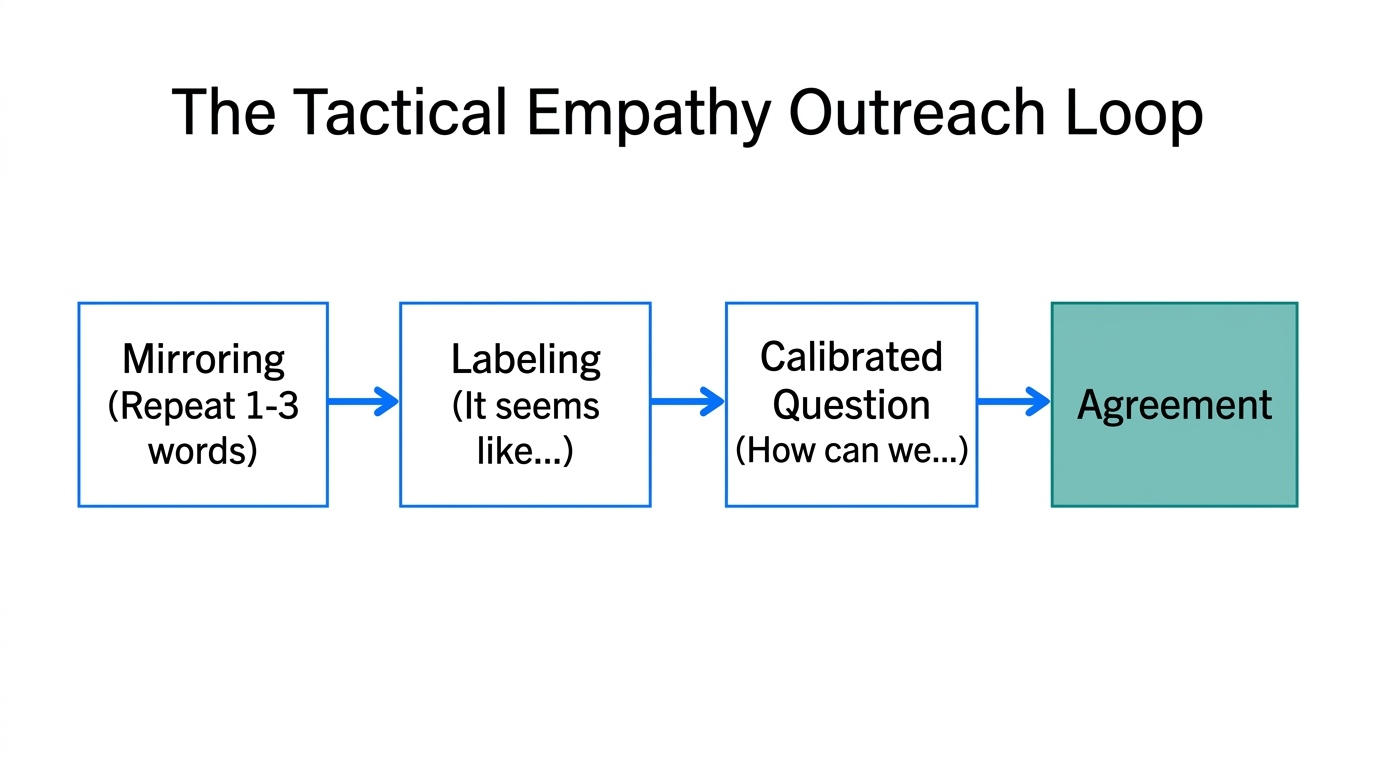
Tactical empathy is not about being nice or agreeing with the creator; it is about demonstrating a thorough understanding of their situation. When you reach out to a top-tier creator on TikTok or Instagram, you are entering their world. They are likely overwhelmed, wary of "slimy" brands, and protective of their audience.
Voss teaches the "Late Night FM DJ Voice"—a calm, soothing, downward-inflecting tone that deactivates the other person's fear response. In written outreach, this translates to acknowledging the creator's hard work and value before ever mentioning a deliverable. Instead of a cold pitch, try deactivating their likely negatives. Voss suggests starting with an "Accusation Audit":
- "I’m probably going to seem like another brand that doesn't understand your niche."
- "It might seem like I'm asking for a lot of work on a tight deadline."
- "You probably feel like your inbox is a graveyard of low-value offers."
By calling out the negatives yourself, you deactivate the amygdala (the brain's fear center). This builds instant trust because you appear as a straight shooter who isn't trying to hide the friction points of the deal.
"The first move in a negotiation is to remove yourself as a threat. Why would a creator make a great deal with you if they feel they need to protect themselves from you?"
Using 'Labeling' to Uncover Budget and Motivation
A "label" is a verbal observation of an emotion or a situation. Instead of asking a direct, interrogative question like "What is your budget?", which makes people feel cornered, Voss recommends using labels to trigger information. Labels always start with phrases like: "It seems like...", "It sounds like...", or "It feels like...".
In influencer marketing negotiation, labeling is your most potent tool for uncovering a creator's true requirements without causing defensive posturing. Consider these examples:
- To uncover budget: "It seems like you have a very specific standard for the brands you choose to represent."
- To address a high quote: "It sounds like there’s a lot of production effort involved in your content that I might not be fully seeing."
- To handle a ghosting creator: "It feels like your priorities have shifted since we last spoke."
When you use a label, you must stay silent and wait for the response. Voss calls this "Effective Pause." The silence creates a vacuum that the creator will feel compelled to fill with information they wouldn't have given in response to a direct question. This is how you find the "Black Swans"—the hidden pieces of information (like a competing brand offer or a personal deadline) that change the entire dynamic of the deal.
The 'No-Oriented Question' Framework
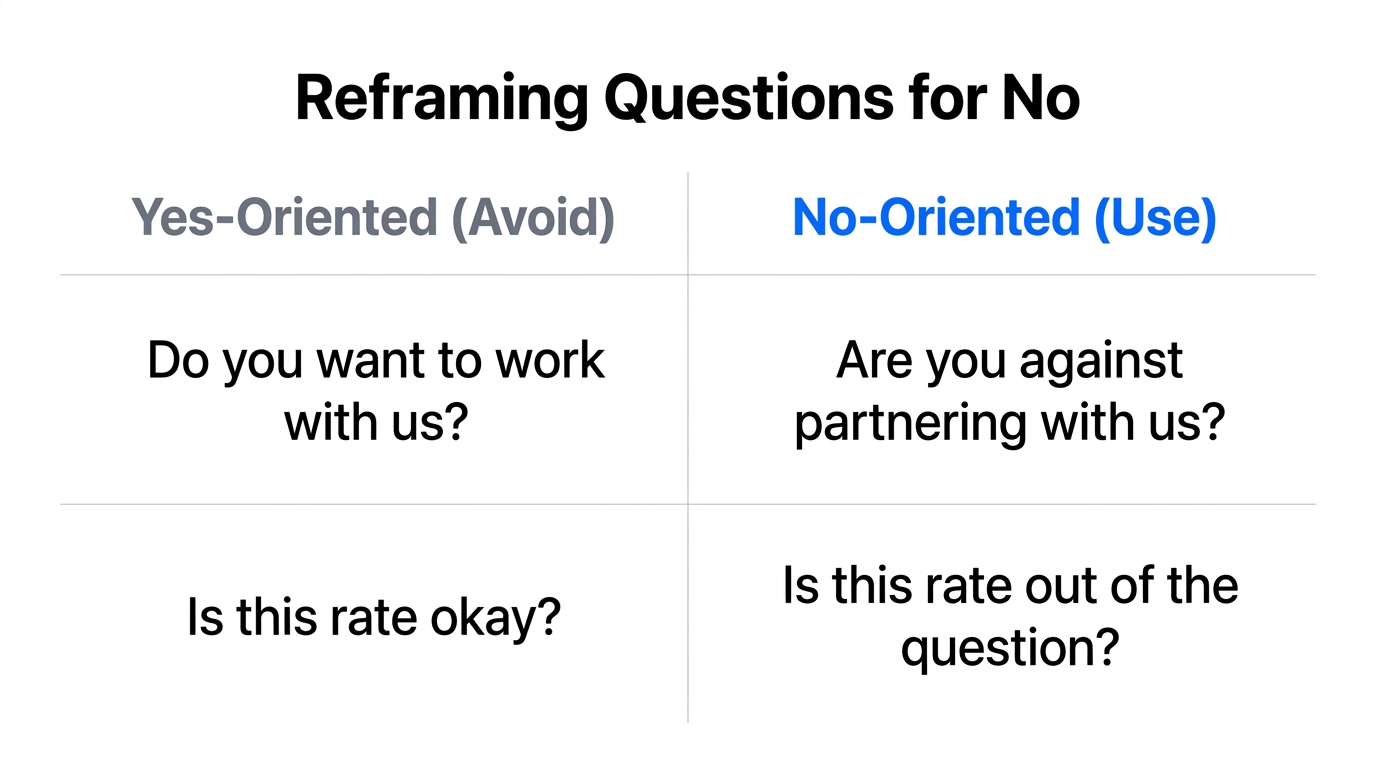
We are conditioned to chase "Yes." Sales training tells us to get the prospect saying "Yes" early and often. However, Voss argues that "Yes" is a trap. When a creator says "Yes," they feel they have committed to something and may immediately feel the urge to back away or protect themselves. Conversely, "No" feels like protection. People feel safe when they say "No."
By flipping your questions to be "No-oriented," you remove the friction of the negotiation. Instead of asking "Do you want to work with us?", ask:
- "Is it a ridiculous idea to explore a partnership for Q4?"
- "Are you totally against the idea of a performance-based bonus?"
- "Would you be offended if we asked for raw footage usage rights?"
It is much easier for a creator to say "No, it's not ridiculous" than to say "Yes, I want to do that." It gives them the illusion of control while moving the deal forward. This strategy is particularly effective when managing large-scale campaigns using tools like Notion for project management or automated outreach systems.
Comparison: Traditional vs. Voss-Style Negotiation
Chris Voss compares different negotiation styles and how they impact the final outcome.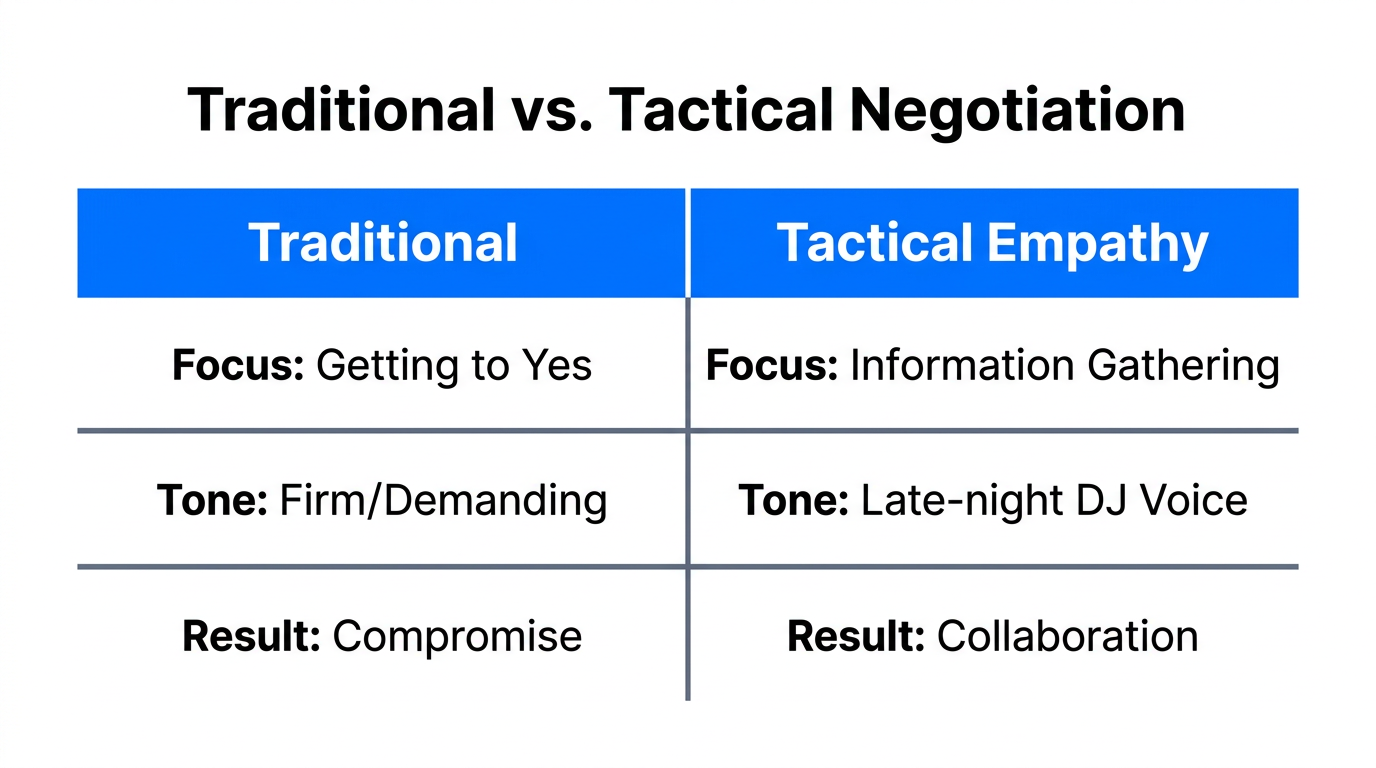
| Feature | Traditional Model | Chris Voss Tactical Empathy |
|---|---|---|
| Primary Goal | Winning/Concessions | Trust and Discovery |
| Voice Tone | Assertive/Persuasive | Late Night FM DJ (Calm) |
| Information Capture | Direct Questions | Labeling and Mirrors |
| Closing Tactic | Chasing the "Yes" | Triggering the "No" |
| Long-term Result | Transactional/Resentful | Collaborative/Prosperous |
Implementation: The 'Limo-In, Limo-Out' Partnership Model
Learn the 'limo-in, limo-out' principle for leaving a lasting and positive final impression.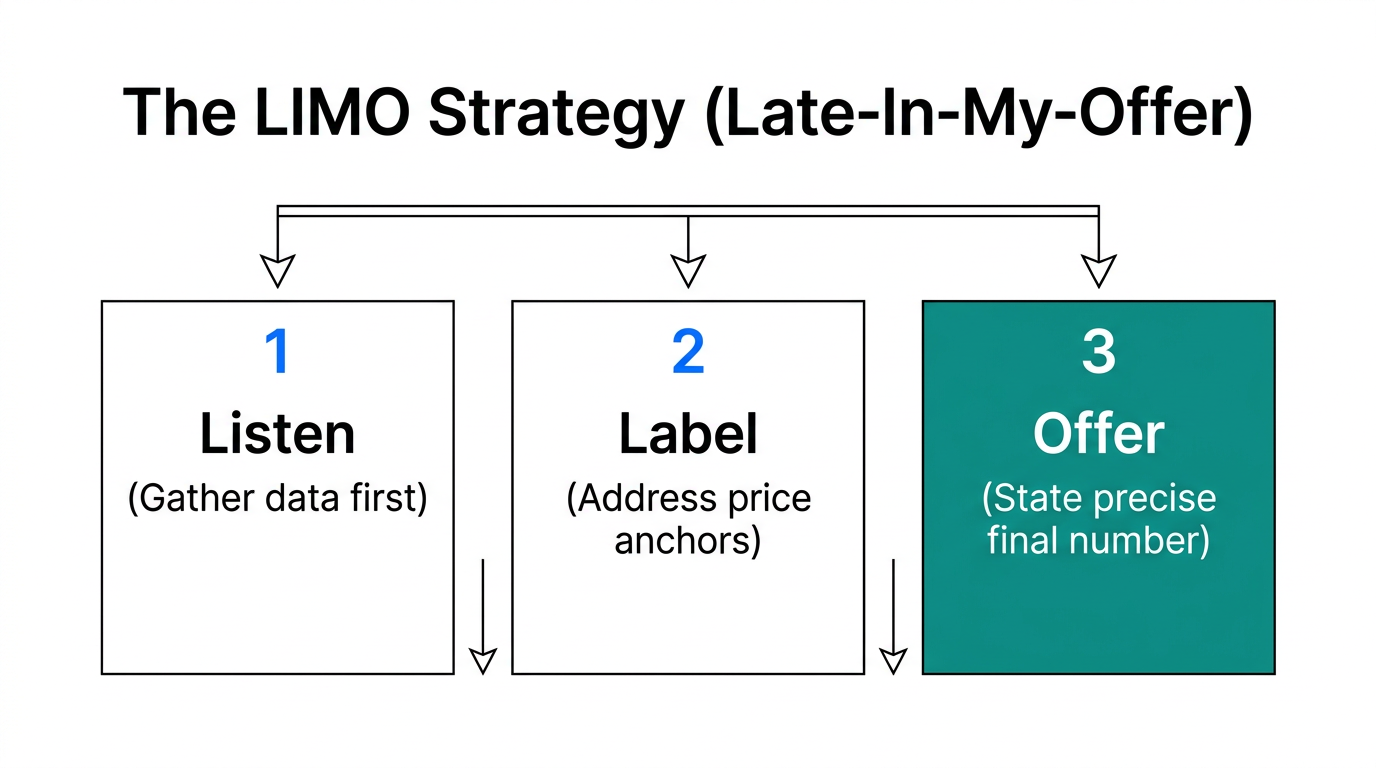
Voss cites Oprah Winfrey as a master negotiator because of her "Limo-In, Limo-Out" philosophy. In the entertainment world, there is a joke: "In a limo, out in a taxi." This refers to brands that treat creators like royalty during the pitch but discard them as soon as the content is posted. Oprah’s philosophy was that every person—regardless of the deal's outcome—should leave the interaction feeling respected, heard, and appreciated.
In the creator economy, the last impression is the lasting impression. Even if a negotiation fails because of budget constraints, ending with a label like, "It seems like you really value the integrity of your production, and I respect that," keeps the door open for future collaboration. When you treat the relationship as a "Limo-In, Limo-Out" experience, you build a network of creators who actually want to work with you again.
"People don't remember how things started or the middle; they remember the most intense moment and how it ended. The last impression is the lasting impression."
To execute this at scale, brands are moving away from messy spreadsheets and toward integrated platforms. Modern growth teams use Stormy AI to find creators via natural language search, and then use its built-in AI outreach to personalize the initial "tactical empathy" touchpoints. By automating the discovery and initial vetting, managers can spend 100% of their energy on the high-level negotiation and relationship-building that Voss recommends.
Conclusion: Negotiation is an Emotional Game
Mastering Chris Voss negotiation tactics requires a fundamental shift in mindset. You must move from being a "pitcher" to being a "listener." By using tactical empathy to deactivate negatives, labeling to uncover hidden motivations, and No-oriented questions to ensure safety, you transform the negotiation from a battle into a collaborative problem-solving session. Your budget is a tool, but your empathy is your leverage.
Start your next campaign by assuming you don't have all the facts. Use tools like Stormy AI to source creators who align with your brand's values, and then enter every negotiation with the goal of making that creator feel like the most understood person in the room. When you master the art of the "Limo-Out," you’ll find that the best creators aren't just working for you—they’re rooting for you.