Being a founder is often described as the loneliest job in the world. You are constantly bombarded with advice on how to scale, yet when it comes to the high-stakes decisions—the kind that determine whether your company hits $20 million or folds under pressure—you are often operating in a vacuum. Most business growth technology focuses on tracking what happened in the past, rather than helping you navigate the future. But what if you could integrate your HubSpot CRM data with an LLM to create a custom 'thought partner'? By combining the analytical power of ChatGPT with the deep context of your business finances and goals, you can build a fractional COO that works 24/7.
The Loneliness of Leadership and the Need for a Virtual Partner
To understand why a custom AI coach is necessary, we must look at the patterns of successful founders. Research indicates that the number one predictor of long-term health and happiness isn't money or fame; it is the quality of close relationships. According to the Harvard Study of Adult Development, which has tracked individuals for over 85 years, having even one person you can count on is what protects your brain and body. For a founder, that person is often a co-founder or a coach.
However, human coaches are expensive and not always available at 2:00 AM when you're staring at a spreadsheet. This is where AI for founders steps in. By setting up a private GPT instance, you aren't just using a chatbot; you are building a repository for your business's "Ledger A"—a concept popularized by John D. Rockefeller in the biography Titan. Rockefeller tracked every cent, and by feeding similar data into an AI, you create a digital mirror that identifies blind spots in your business growth technology stack.
"The number one predictor of long-term health and happiness was not money, fame, power, or even exercise. It was the quality of close relationships."
The 20-Minute Setup: Training Your AI Life Coach
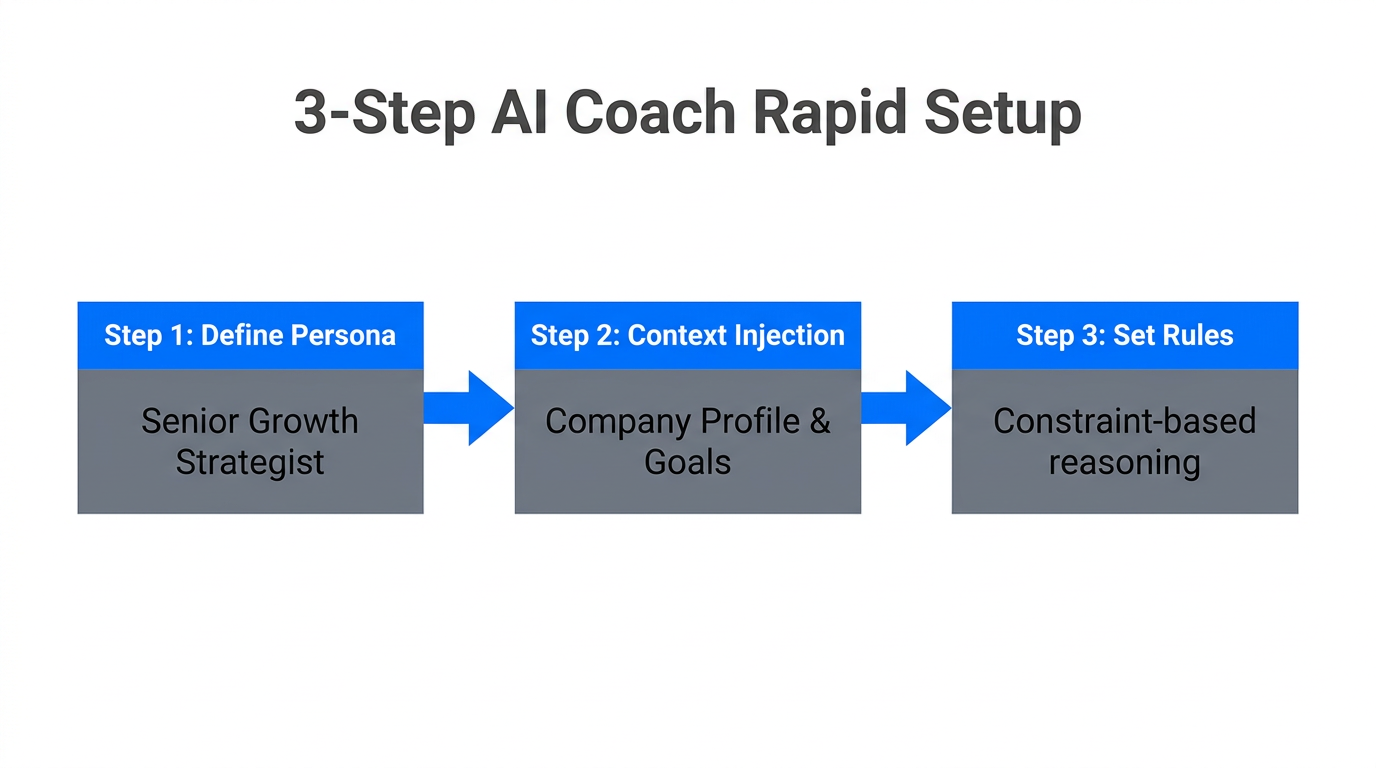
The goal is to move past generic advice. To make ChatGPT for business truly effective, you need to provide it with the "soul" of your company. This doesn't require a coding degree; it requires a structured 20-minute brain dump. You can do this using the "Custom Instructions" feature or by building a dedicated GPT in the ChatGPT interface.
Step 1: The Context Injection
Upload documents from tools like Notion or paste text covering the following four pillars:
- Personal Finances & Net Worth: Your current liquidity, burn rate, and 10-year financial targets.
- Business Goals (SMART): Use the Specific, Measurable, Achievable, Relevant, and Time-bound framework. For example, "Grow newsletter subscribers by 3% weekly to reach 100k by Q4."
- The "Antilibrary": A list of books, frameworks, and mentors you admire (e.g., Aristotle’s views on virtue friendship or Dale Carnegie’s How to Stop Worrying and Start Living).
- The Daily Grind: Current roadblocks, team conflicts, or negotiation hurdles.
Step 2: Defining the Persona
Instruct the GPT to act as a "Fractional COO and Life Coach." Tell it to be skeptical, to look for the "inverse" of your decisions, and to never let you settle for indecision. Inaction breeds doubt and fear; your AI should be programmed to push you toward reversible experiments rather than endless planning.
Integrating HubSpot CRM Data for Real-Time Insights
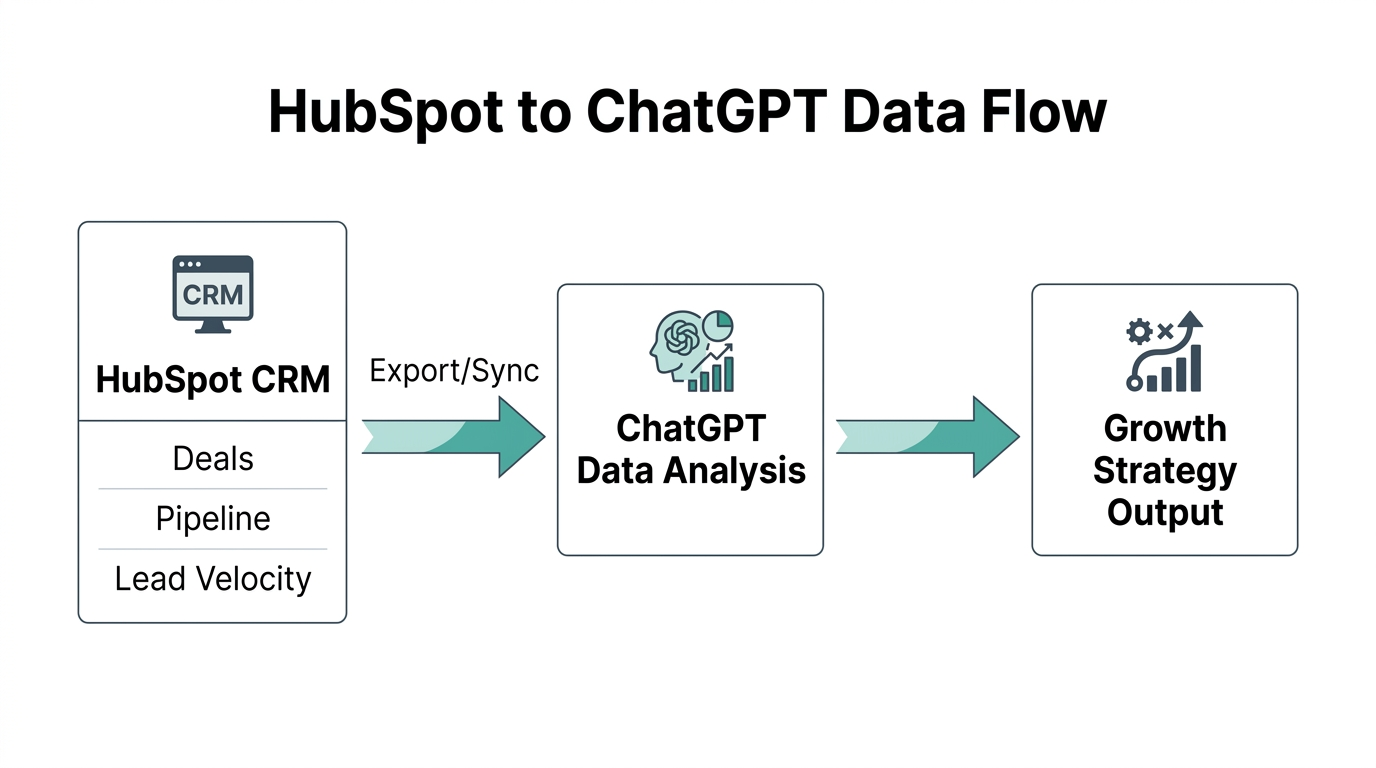
A static coach is a dead coach. To turn your AI into a growth engine, you need to bridge the gap between your CRM and your LLM. HubSpot automation allows you to export deal flows, lead sources, and customer churn data directly into your analysis prompts.
| Data Source | AI Analysis Goal | Growth Outcome |
|---|---|---|
| HubSpot Deal Stages | Identify where leads drop off in the funnel. | Optimize Sales Scripts |
| Customer Support Tickets | Sentiment analysis on product friction. | Reduced Churn |
| Marketing Attribution | Compare CAC across Google Ads vs. TikTok Ads. | Higher ROI |
By using Zapier or Make, you can set up a workflow where a weekly digest of your HubSpot performance is sent to your custom GPT. You can then ask: "Based on my goal of 3% weekly growth, which lead source should I double down on this week?" This transforms AI decision making from a theoretical exercise into a daily tactical advantage.
Using AI to Simulate Decisions and Identify Blind Spots
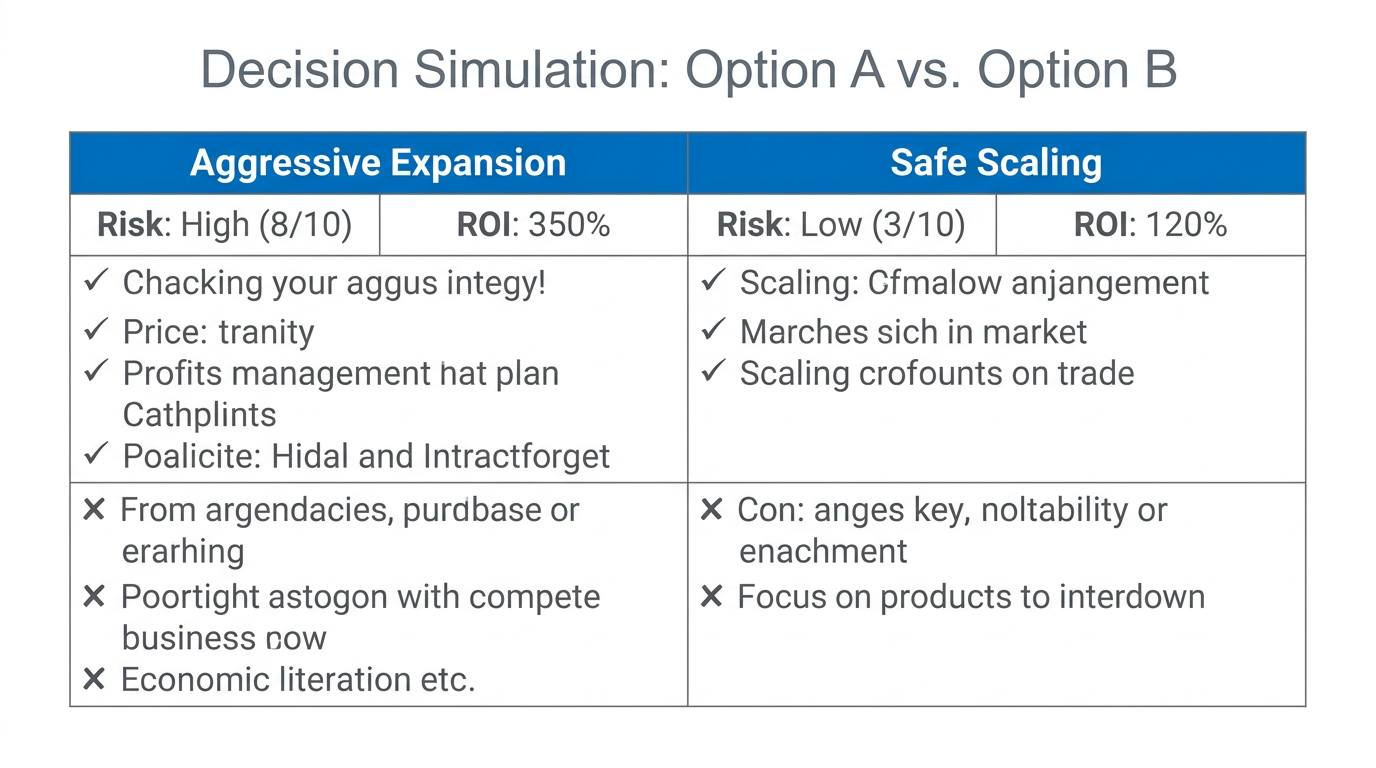
Psychologist Dan Gilbert, author of Stumbling on Happiness, found that humans are remarkably bad at predicting what will make them happy. His research showed that once we are locked into a decision, our brains "manufacture" happiness to justify the choice. The danger for founders is staying in "research mode" forever to avoid the pain of a wrong choice.
Your AI coach can help you bypass this by running pre-mortem simulations. Instead of asking "Is this a good idea?", ask the AI: "It is six months from now and this decision has failed miserably. Tell me exactly how it happened." This inversion technique, often used by the world's most successful investors, forces you to confront the risks you are currently ignoring.
"Once we're locked into a decision, the brain makes peace with the decision. It literally manufactures happiness. Happy people take more action while miserable people wait for the right decision."
When you are scaling your marketing, for example, you might be unsure whether to invest in influencer partnerships or traditional ads. Platforms like Stormy AI can help you source and manage UGC creators at scale, but you first need the AI coach to help you decide if your brand is ready for that level of public-facing content. You can use ChatGPT to vet the personas of the creators you find on Stormy AI against your long-term brand vision stored in the GPT's context.
High-Stakes Execution: Negotiations and Email Prep
The most practical use for ChatGPT for business is in the heat of battle. When a high-value contract is on the line or a key employee is threatening to quit, emotions can cloud your judgment. Your AI coach, trained on your goals and finances, provides a stoic second opinion.
The Negotiation Playbook
- Paste the Email: Drop the text of the difficult email into your custom GPT.
- Set the Objective: Tell the AI, "I need to keep this client but I cannot lower my price by more than 5% without hitting my burn limit."
- Draft and Iterate: Have the AI generate three versions: one assertive, one empathetic, and one analytical.
Because the AI knows your Stripe revenue data and your HubSpot pipeline, it won't suggest a deal that puts your business at risk. It acts as a fiduciary for your future self.
The Power of Mastery and Compounding
One of the guaranteed ways to be miserable in business is to switch projects every quarter. Success requires paying a known cost today for an unknown payoff tomorrow. Whether you are building an app or growing a presence on TikTok, the reward often doesn't show up for months or years. This is the price of winning.
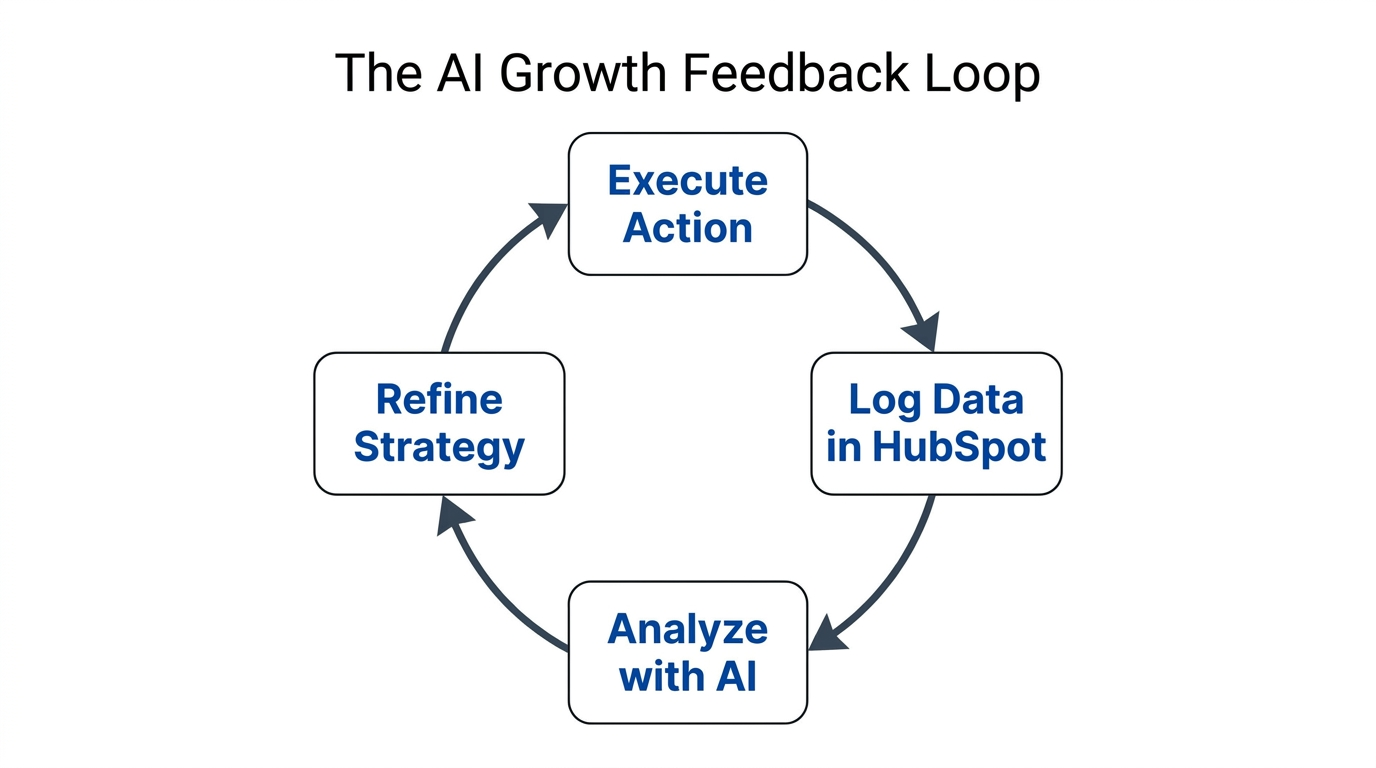
Your AI coach can help you track this progress when the scoreboard still says zero. By documenting your weekly "wins" and tracking metrics in tools like Google Analytics, and then feeding that into your business coach GPT, you can see the compounding effect of your efforts. Even if your revenue hasn't doubled, your subscriber growth or lead quality might be trending upward at a rate that guarantees success if you just don't quit.
Conclusion: Building Your Growth Stack
The modern growth stack for a founder isn't just a list of SaaS tools; it's an integrated ecosystem where data flows into decision-making. Use HubSpot for your CRM, Stormy AI for creator discovery and influencer management, and ChatGPT as the central intelligence that ties it all together.
Don't just spend your time planning. Act now. Set up your custom GPT today, link your data, and stop making decisions in the dark. The difference between a founder who burns out and one who scales to an eight-figure exit is often just the quality of the thought partner they have by their side. Build your digital partner today and start treating your growth strategy like the science it is.