Using ChatGPT and Claude to Find Blind Spots in Your 2026 Go-To-Market Strategy
Learn advanced AI prompting techniques like the 100x hack and Wade Foster warm-up to vet your 2026 GTM strategy and uncover hidden marketing blind spots.
In 2026, the difference between a high-growth Go-To-Market (GTM) strategy and a mediocre one isn't just the data you collect; it is how you stress-test the logic behind that data. As marketing leaders, we often fall victim to our own optimism, overlooking the distribution gaps and execution hurdles that inevitably arise. While AI for GTM strategy has historically been used for content generation or simple summarization, the most sophisticated executives are now using models like ChatGPT and Claude as adversarial thought partners. By treating AI as a high-level consultant rather than a digital assistant, you can uncover critical strategic blind spots before they cost you millions in wasted ad spend or failed product launches.
The Evolution of GTM in 2026: Beyond Surface-Level Automation
The marketing landscape has shifted toward "AI orchestration," a term coined by leaders at companies like Zapier. We are no longer just connecting APIs; we are building autonomous agents that handle everything from candidate risk detection to personalized email drafting. In this environment, your GTM strategy must be more than a static document. It needs to be a living system that has been poked, prodded, and vetted by models that have processed millions of pages of business theory and historical campaign data.
When you are planning a massive distribution push—perhaps involving a mix of Google Ads, creator partnerships, and organic social—it’s easy to focus on the "what" and ignore the "how." To solve this, savvy executives are adopting the "Wade Foster" approach to AI interaction, ensuring the model has enough context to provide truly surgical feedback.
The 'Wade Foster' Warm-Up Sequence for Strategic Output
See how Wade Foster prepares ChatGPT to critique and analyze complex business strategy documents.
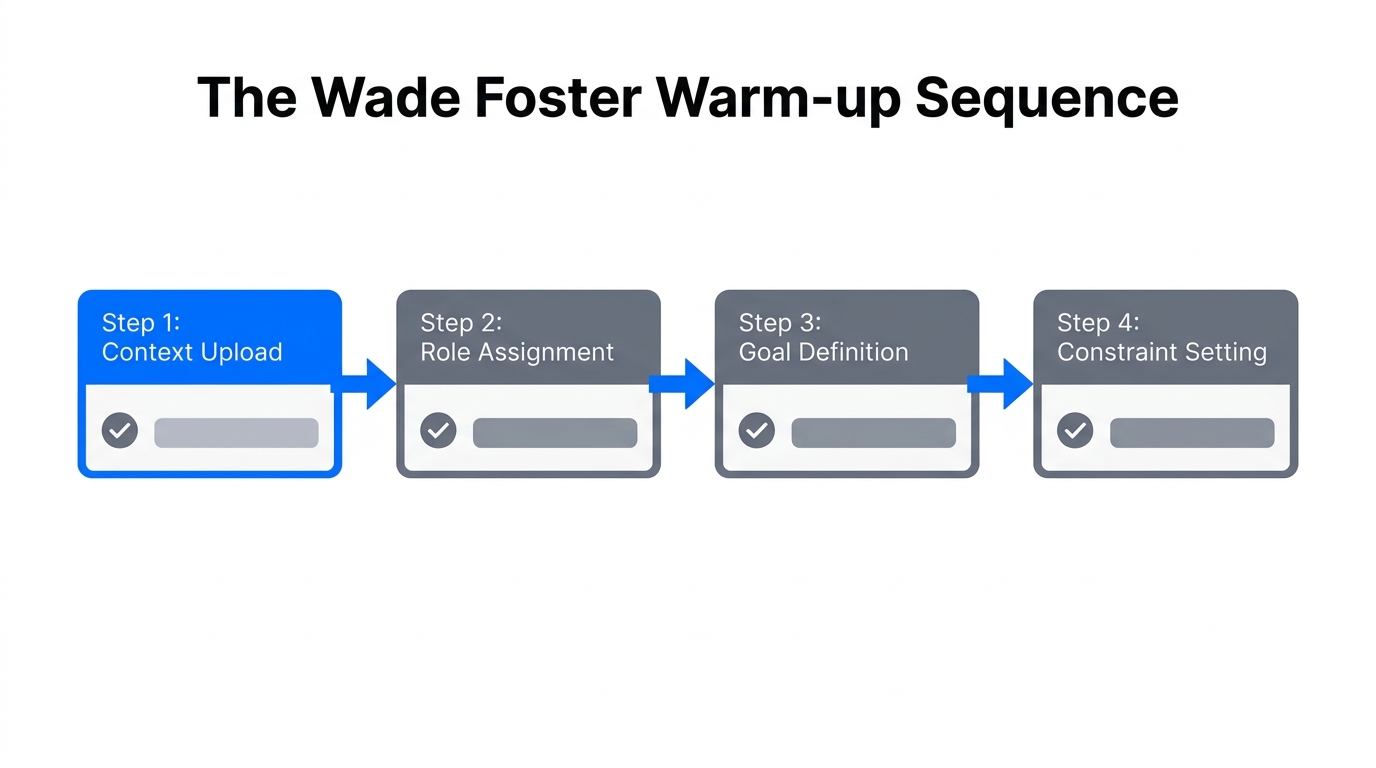
One of the most effective techniques for business leaders comes from Wade Foster, the CEO of Zapier. Foster advocates for a specific "warm-up" sequence before asking the AI for a final recommendation. Most users make the mistake of asking their most important question first. Instead, you should start by feeding the AI a massive amount of context and asking it to describe the information back to you.
Step 1: The Context Dump
Upload your 50-page strategy memo, your internal data from your CRM, and your recent campaign performance from Meta Ads Manager. Tell the AI exactly what these documents are without asking for an opinion yet.
Step 2: The Descriptive Feedback Loop
Ask the AI: "Succinctly describe back to me the core philosophy, quantitative goals, and distribution channels outlined in these documents." This ensures the model has accurately parsed the data before you move into analysis.
"The most sophisticated AI users don't just ask a question right away; they gather context and get the model in sync with their specific business logic first."
Step 3: Questioning the Context
Before proceeding, use this prompt: "Based on the documents provided, what additional questions do you need answered to have full context of my business goals?" This often reveals gaps in your own planning that you hadn't even documented yet.
The '100x More Specific' Prompt Hack for Strategic Vetting
A specific technique for using raw team transcripts to identify hidden organizational blind spots.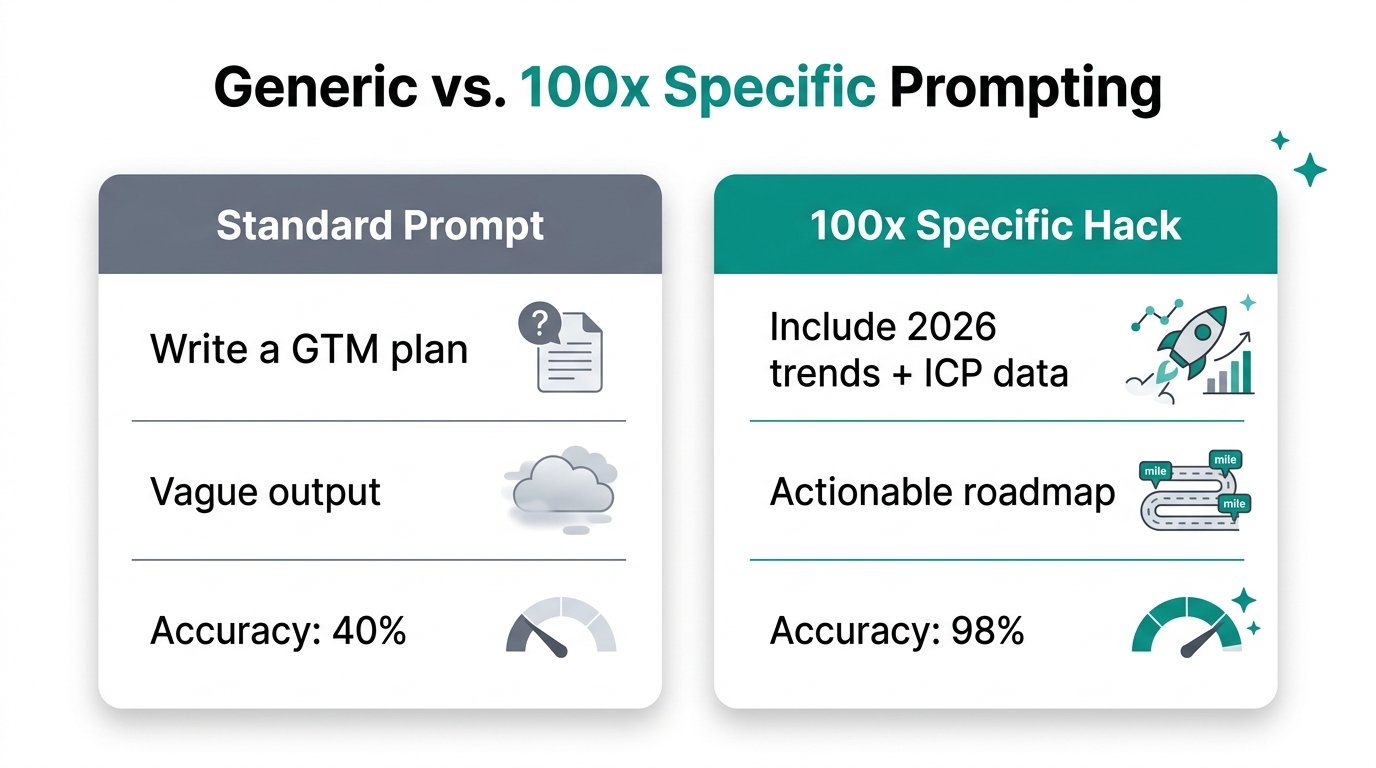
Once your model is warmed up, you need to push it past the generic "business speak" that often plagues AI outputs. A technique popularized by Hillary, the product lead at Whoop, is the "100x More Specific" prompt. If an AI gives you a generic suggestion like "focus on high-intent keywords," you immediately reply with: "Be 100x more specific."
This forces the model to dig into the nitty-gritty details of your GTM plan. For example, instead of suggesting better "social media engagement," the model might identify that your current TikTok Ads strategy lacks a clear call-to-action in the first three seconds, or that your attribution model is failing to track cross-device conversions on Apple Search Ads.
| Strategy Component | Generic AI Feedback | '100x More Specific' AI Feedback |
|---|---|---|
| Influencer Marketing | "Partner with niche creators." | "Target 10K-50K follower fitness creators in LA using Stormy AI to vet for 80% audience quality." |
| Email Outreach | "Personalize your subject lines." | "Draft 3-step sequences in Instantly targeting SaaS CEOs who mention 'AI' in their LinkedIn bios." |
| Product-Market Fit | "Gather customer feedback." | "Analyze the last 500 support tickets in Intercom to identify the top 3 feature gaps causing churn." |
Using platforms like Stormy AI during this phase allows you to bridge the gap between AI strategy and execution. For instance, once the AI identifies that your "blind spot" is a lack of localized creator content, you can instantly discover creators on Stormy who fit the exact demographic profiles the AI suggested.
Meta-Prompting: Making ChatGPT Write Its Own Research Prompts
For high-level GTM planning, you shouldn't be the one writing all the prompts. Strategic prompt engineering in 2026 involves "meta-prompting"—asking the AI to design the optimal workflow for your specific problem. This is particularly useful for deep-market research.
Try this prompt: "I am launching a new AI-powered productivity tool targeting mid-market agencies. I need a comprehensive research plan to identify competitor distribution weaknesses. Write the five most effective prompts I should use to analyze this market using your browsing and data analysis tools."
By letting the AI design the research methodology, you ensure that it utilizes its own capabilities (like web searching or code execution) to the fullest. This technique is excellent for identifying marketing strategy blind spots 2026, as it often suggests data sources or angles—like analyzing subreddit sentiment or scraping public reviews on G2—that a human might overlook.
"Meta-prompting shifts you from a 'doer' to an 'architect.' You are no longer writing the strategy; you are vetting the system that generates it."
Using Claude to Analyze 50-Page Production and Distribution Memos
While ChatGPT is excellent for quick iterations and logic, Claude is often the preferred choice for marketing executives dealing with massive, 50-page strategy decks or leaked competitor memos (like the famous Mr. Beast production memo). Claude's massive context window allows it to "hold" the entire strategy in its head at once, identifying contradictions that span across different chapters of your plan.
For example, if your distribution memo on page 5 suggests a "low-cost acquisition" strategy but your hiring plan on page 42 outlines a massive team of expensive creative directors, Claude will flag this inconsistency. This is a classic blind spot that often goes unnoticed in traditional human-led reviews.
- Cross-Departmental Logic: Upload your sales plan from Pipedrive and your marketing plan from Asana. Ask Claude: "Where does the marketing top-of-funnel fail to meet the sales team's lead qualification requirements?"
- Risk Mitigation: Use the "Pre-Mortem" prompt: "Imagine it is one year from today and this GTM strategy has failed spectacularly. Based on these documents, tell me the three most likely reasons why it failed."
Implementing Autonomous Agents in Your GTM Execution
Wade demonstrates how to build and deploy autonomous AI agents for your business workflows.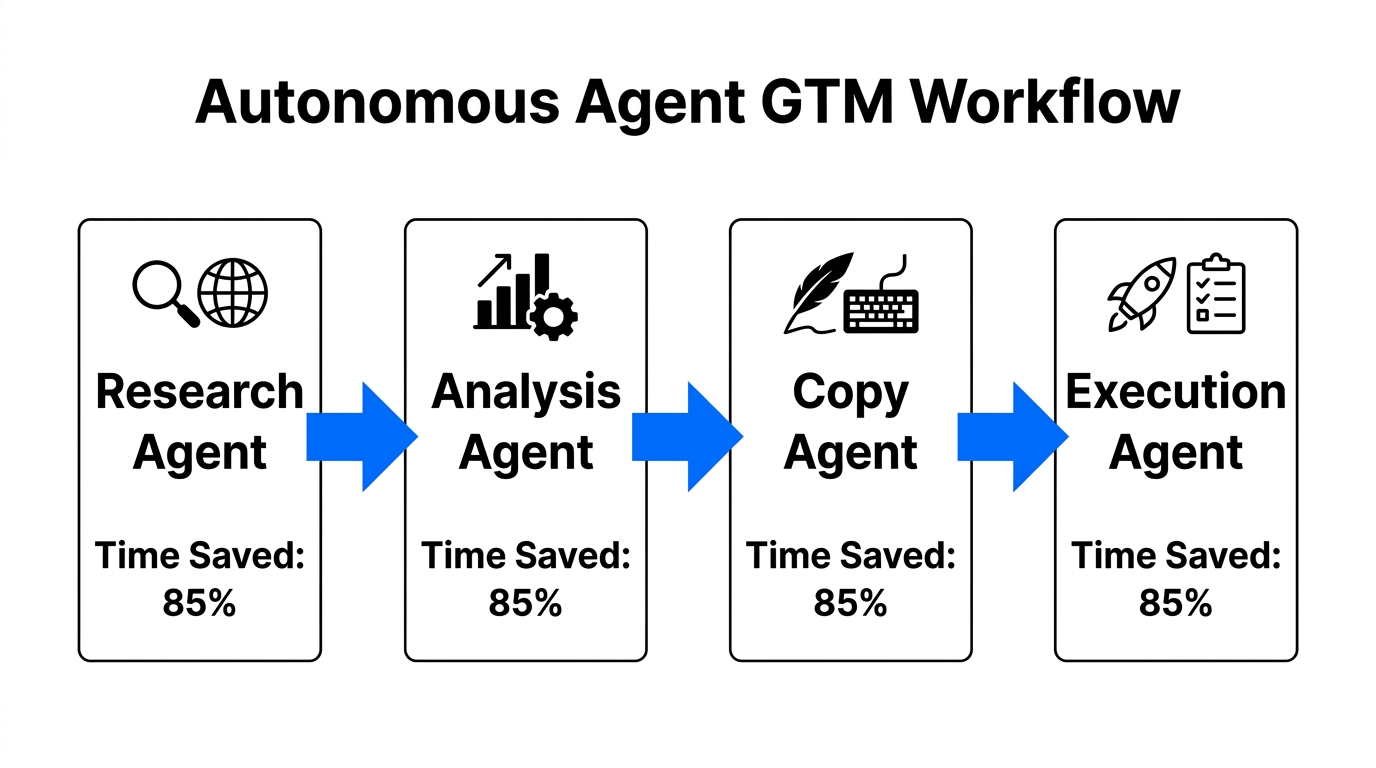
Vetting the strategy is only half the battle; the second half is execution. In 2026, the most efficient teams are moving away from manual task management and toward autonomous agents. This is where tools like Zapier Agents come into play. Instead of manually replying to every partnership inquiry, you can set up an agent that analyzes the incoming email, checks the sender's domain against ZoomInfo, and drafts a personalized reply based on your GTM goals.
At Stormy AI, we’ve taken this a step further with an AI Agent specifically for influencer marketing. Once your 2026 strategy identifies a need for user-generated content (UGC), you can set an autonomous agent to discover, outreach, and follow up with creators daily—allowing your team to focus on the high-level strategy while the AI handles the repetitive 1:1 interactions.
Conclusion: The Strategic Advantage of AI-Driven Vetting
Success in 2026 GTM strategy isn't about working harder; it’s about having a better "thought partner" to catch your mistakes. By implementing the Wade Foster warm-up sequence, utilizing the 100x specificity hack, and leveraging the long-context windows of Claude, you can transform your AI from a novelty into a strategic powerhouse. Use these tools to poke holes in your own logic, and you’ll find that your 2026 campaigns are not just faster to launch, but significantly more resilient to market shifts.
Ready to turn your AI strategy into actual creator partnerships? Start by using Stormy AI to find the creators your strategy needs today.