When the original iOS App Store launched, it didn't just change how we used phones; it created a massive wealth-creation window for those who moved early. Today, we are standing at a similar precipice with the launch of the ChatGPT App Store. Unlike traditional marketplaces where users manually search, download, and open apps, the AI ecosystem is shifting toward contextual discovery. Success in this new era requires a radical departure from traditional App Store Optimization (ASO). To win, developers must master ChatGPT App Store SEO, ensuring their tools trigger naturally within a user's conversation rather than waiting for a direct search.
Manual Installs vs. Contextual Discovery: The New Search Paradigm
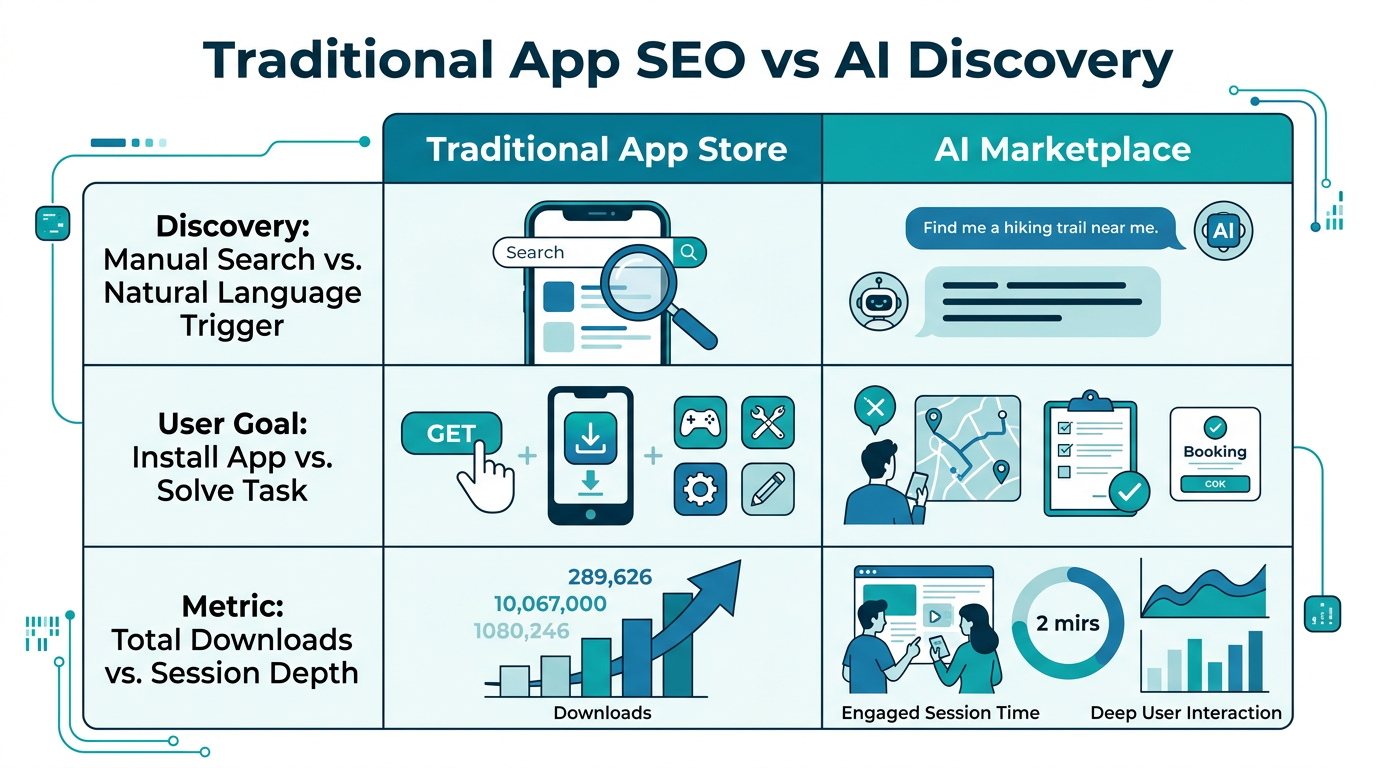
Traditional app marketing relies on a high-friction funnel: a user identifies a need, searches for a keyword, browses a list, downloads an app, and authenticates. According to research from the recent OpenAI Dev Day, the future of AI search optimization lies in removing these steps. In the ChatGPT ecosystem, apps like Figma and Canva are no longer just destinations; they are capabilities that surface exactly when the user needs them.
Imagine a user typing, "Design a new logo for my startup ideas podcast." Instead of the user leaving the chat to find a design tool, ChatGPT contextually suggests Canva to handle the task immediately. This is the core of growth hacking in the AI age: optimizing for the prompt, not just the search bar. This "just-in-time" delivery of software means that your app’s visibility is tied directly to its perceived utility within a specific conversational context.
"The people who made the shift from web to mobile crushed it. There is a possibility that this becomes a massive wealth creation moment in AI if you are early."
Keyword Mapping: Identifying Conversational Triggers
In standard SEO, we target head terms like "tax software" or "real estate search." In ChatGPT App Store SEO, you must map your metadata to search intent and long-tail conversational triggers. Users are asking questions, not typing fragments. For example, Zillow doesn't just rank for "houses"; it optimizes for the natural language experience of finding homes through chat.
To identify your triggers, look at the specific problems your app solves. Instead of targeting "PDF converter," a high-performing AI search strategy would focus on triggers like "convert this bank statement to a spreadsheet." This specific niche has proven incredibly lucrative; tools like BankStatementConverter.com generate upwards of $40,000 to $50,000 in monthly revenue by solving one highly specific, high-intent problem.
| Feature | Traditional ASO | ChatGPT App Store SEO |
|---|---|---|
| Discovery | Manual Search & List Browsing | Contextual AI Triggers |
| Primary Metric | App Downloads | Conversation Invocations |
| User Intent | Keyword-Based | Natural Language Prompting |
| User Flow | Friction-heavy (Download/Install) | Low-friction (One-click Connect) |
Optimizing App Descriptions for the OpenAI Search Algorithm
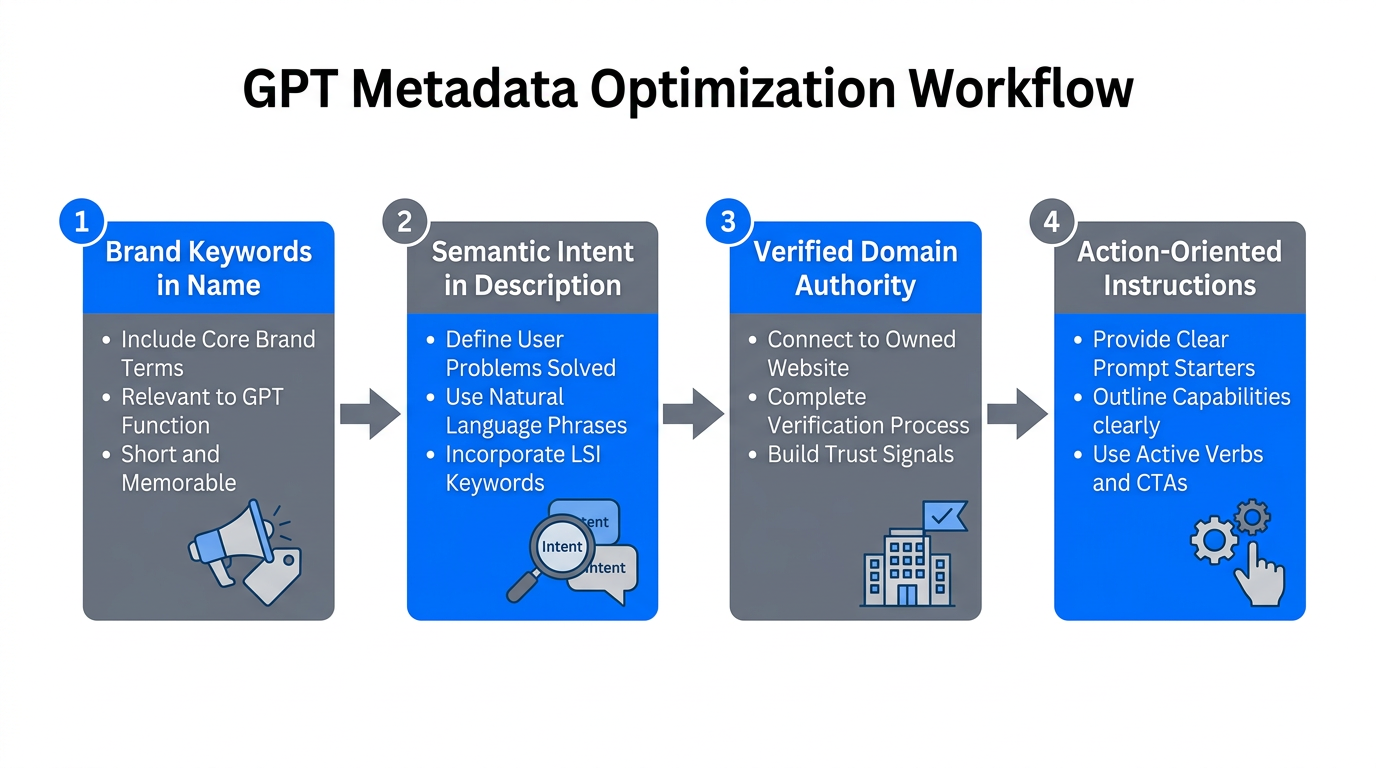
While OpenAI has not published a formal ranking manual, technical marketing data suggests that the algorithm prioritizes apps that clearly define their "capabilities" in the manifest and description. Your app description should not just list features; it should list actions. If you are building an "AI Tax Guy," your description must explicitly mention that it can "file quarterly taxes," "detect deductions from Stripe data," and "autofill forms."
Retention is equally critical. OpenAI’s canvas allows for a visual experience—like the one used by Coursera to teach machine learning—which keeps users inside the interface. By providing a rich UI within ChatGPT, you increase the dwell time and repeat usage of your app, which signals to the algorithm that your tool is highly relevant for those specific query types. Once you have built a high-utility app, using platforms like Stormy AI to identify and outreach to UGC creators can help generate the initial volume of mentions and data needed to build search authority.
"No one wants to go to a store and download apps anymore. What makes this better is it's contextual—you just type and the solution appears."
The Role of Premium Domains in Boosting Search Authority
One of the most surprising takeaways from successful early GPT apps is the continued importance of branding and domains. Even within an AI interface, a strong domain provides a trust signal that impacts click-through rates and perceived authority. In the debate between .com and .ai, the .com remains the gold standard of digital real estate, described by industry experts as the "Manhattan" of the web.
However, for a growth hacking play, a highly descriptive domain like RepairMyCreditScore.ai can be incredibly effective if it mirrors the exact intent of the user. When ChatGPT presents a selection of apps to a user, a clear, authoritative name often wins the click. This is particularly true for high-stakes industries like healthcare or finance, where users seek expertise and safety. An "AI Healthcare Concierge" that connects to Zocdoc will perform better if its branding suggests a legitimate, professional service.
Best Practices for Retention: Winning the Chat Interface
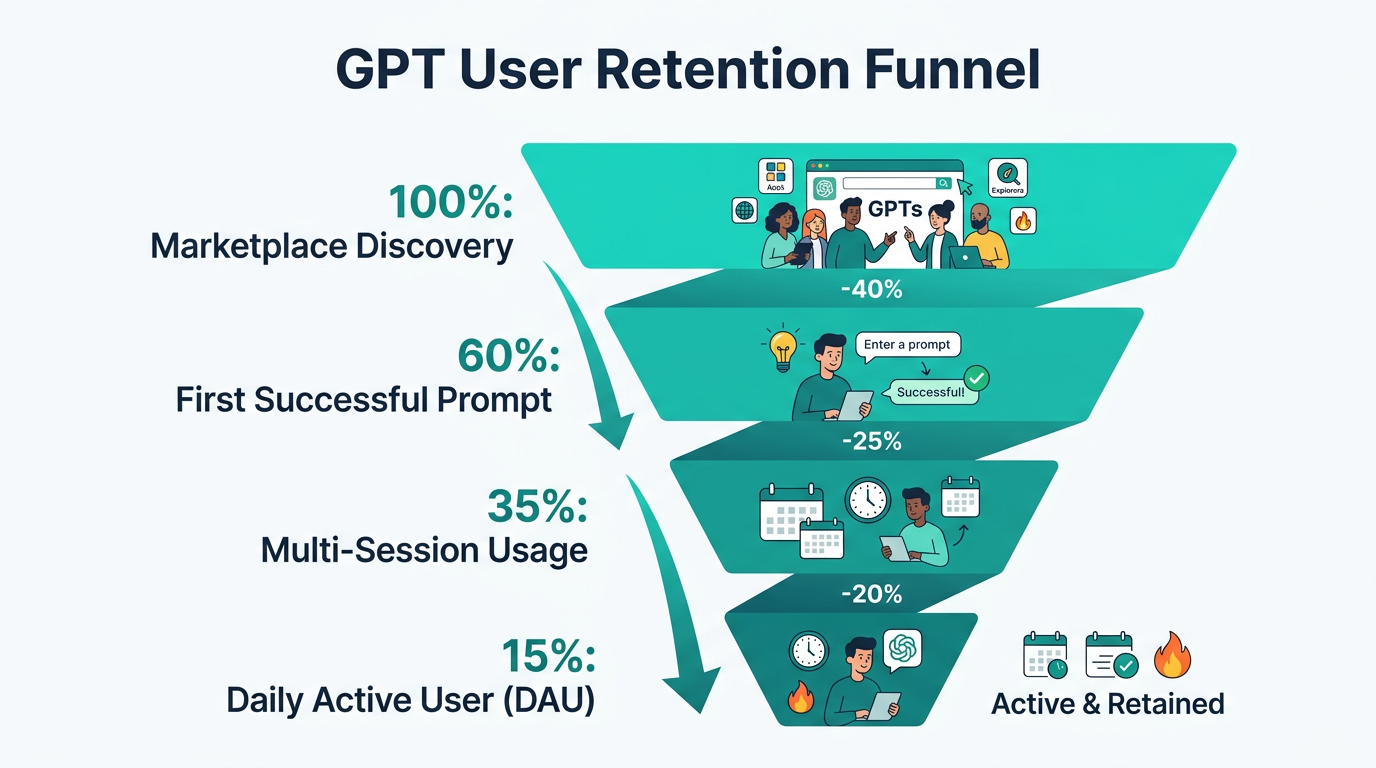
To ensure your app doesn't become a "one-prompt wonder," you must focus on deep integration. The most successful apps connect to the user’s existing tech stack, such as Plaid for banking or Google Drive for document management. This connectivity creates a "moat" around your app; once a user has connected their data, the friction of switching to a competitor increases significantly.
- Personalization: Use the chat history to offer "warm" advice, similar to an "AI Grandma" persona that remembers previous interactions.
- Interactive UI: Don't just return text; use the canvas to show interactive maps, sliders, or dispute templates.
- Seamless Authentication: Use OAuth to make connecting accounts as frictionless as possible.
Conclusion: Seizing the AI Gold Rush
Optimizing for the ChatGPT App Store is about understanding that search intent has evolved. We are moving from a world of "keywords" to a world of "tasks." Whether you are building a tool to fix a credit score or a niche converter for bank statements, the goal of ChatGPT App Store SEO is to be the most helpful response to a user's natural language request. With 800 million weekly users looking for solutions, the opportunity for developers and marketers is unprecedented. By focusing on contextual triggers, premium branding, and deep data integrations, you can position your app at the center of this new AI economy. Don't wait for the market to mature—start building and optimizing your triggers today.