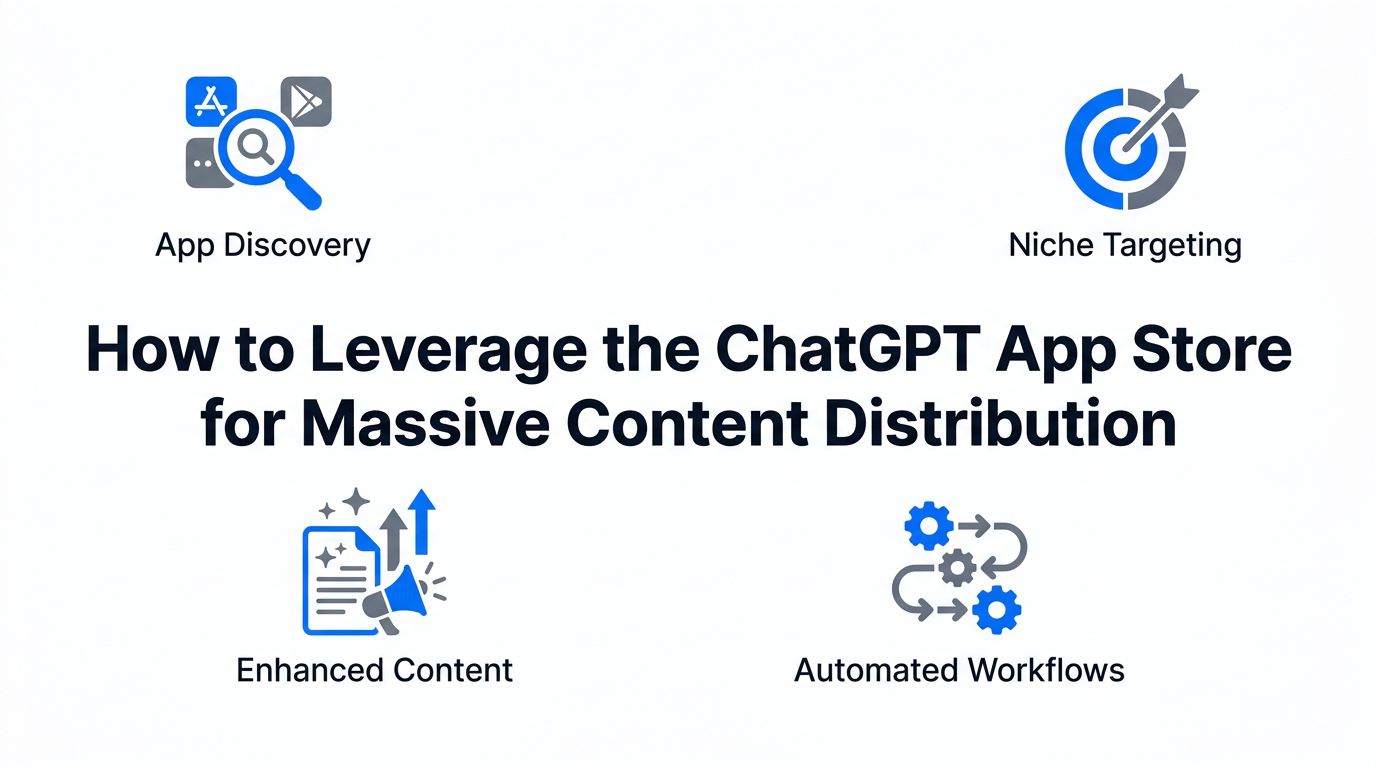
In 2008, the launch of the iOS App Store changed the trajectory of the internet, creating a new class of billion-dollar companies that built their empires on mobile-first distribution. Today, we are witnessing a parallel shift in the digital landscape. With the recent announcement that OpenAI has reached 800 million weekly active users, the ChatGPT App Store represents the single most significant wealth creation moment in the AI era. For brands and creators, this isn't just another platform; it is a fundamental shift from search-based discovery to contextual, conversational distribution.
The 'New Mobile App Store' Moment for Digital Marketers
The core value of the ChatGPT App Store lies in its ability to eliminate the friction of the traditional internet. For over a decade, digital marketing growth has relied on a fragmented journey: search on Google, click a link, land on a website, and eventually convert. Within the ChatGPT ecosystem, this journey is compressed into a single interface. As discussed during OpenAI's Dev Day, tools like Figma are already demonstrating this by allowing users to turn sketches into workable diagrams without ever leaving the chat interface.
This is the 'mini-internet' effect. If a user can connect to their favorite apps directly within a conversation, they no longer need to navigate to external URLs. For marketers, this means the content distribution strategy must evolve from 'driving traffic to a site' to 'integrating a tool into the conversation.' The scale is unprecedented; reaching 800 million people every week is a distribution pipe that rivals the early days of Facebook or the App Store.
Understanding the 'Contextual Discovery' Shift
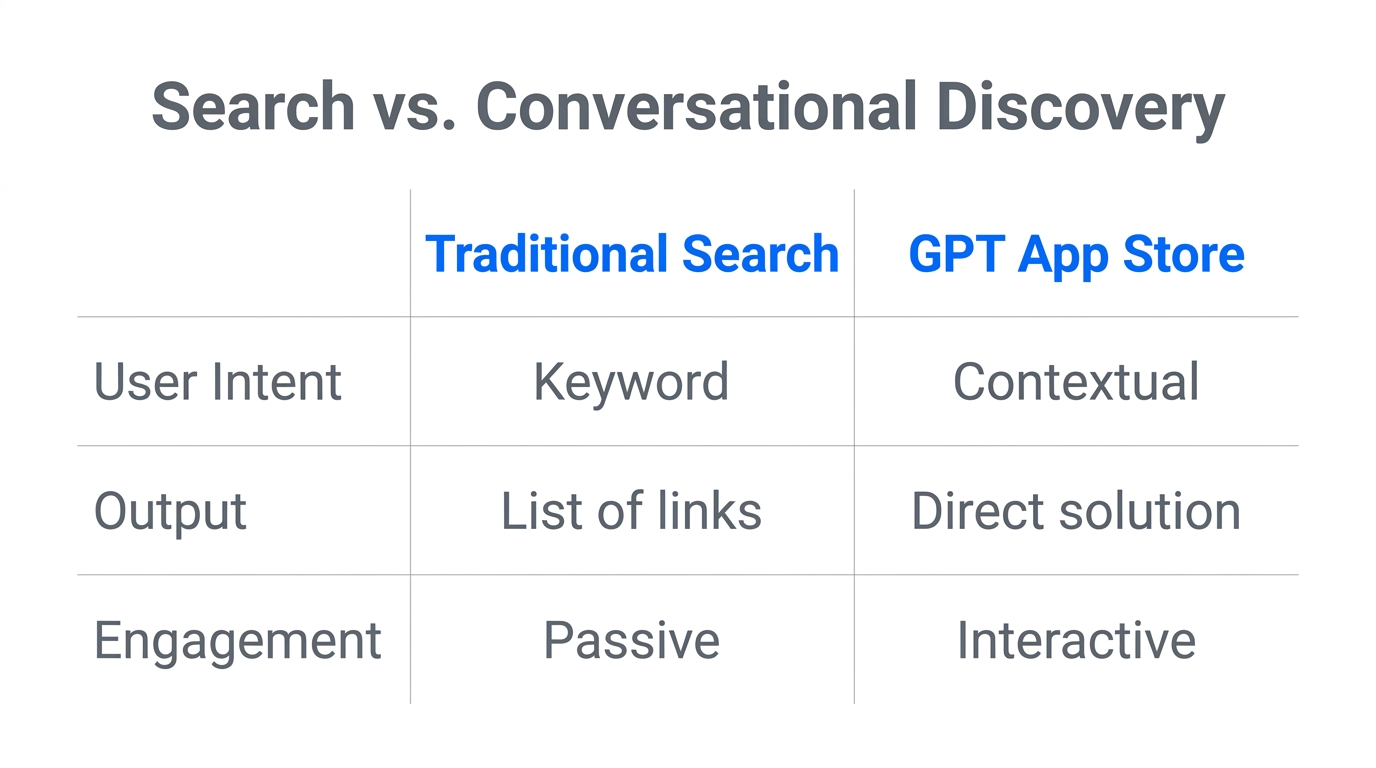
One of the primary reasons previous attempts at 'Custom GPTs' struggled to gain mass adoption was the requirement for users to manually find and install them. The new iteration of the store solves this through contextual discovery. Instead of browsing a library, the app surfaces naturally when the user asks a relevant question. For example, if a user mentions wanting to learn about machine learning, ChatGPT can automatically suggest or connect to Coursera to provide a structured educational experience.
This shift removes the 'intent-to-action' gap. In traditional marketing, you hope a user remembers your brand when they have a problem. In conversational marketing, your brand appears exactly when the problem is being discussed. This is why niche tools like Bank Statement Converter, which reportedly generates $40,000 to $50,000 in monthly revenue, are perfectly suited for this environment. They solve a specific, high-intent problem that users frequently describe in natural language.
"The discovery opportunity is massive because it's contextual. You don't have to download anything—the app just appears when you need it most."Case Studies: How Canva and Zillow Leverage Conversational Traffic
Early movers like Canva and Zillow have already integrated their core functionalities into the ChatGPT ecosystem. Canva allows users to prompt a logo design directly in the chat, generating multiple options that can be refined through further conversation. While the initial output might be a '6.5 out of 10,' the ability to iterate in real-time within a familiar UI is a game-changer for user retention.
Similarly, Zillow uses the ChatGPT App Store to facilitate natural language property searches. Instead of clicking filters on a website, a user can say, 'Find me a home in Austin with a pool and great schools,' and the Zillow app surfaces interactive results within the chat. This level of app store optimization (ASO) for AI requires a new focus on how your brand’s data is structured to be read by large language models.
| Feature | Traditional Web App | ChatGPT App Integration |
|---|---|---|
| Discovery | SEO / Paid Ads | Contextual AI Trigger |
| User Friction | High (Requires sign-up/navigation) | Low (Direct integration) |
| Interactivity | Static UI | Natural Language Iteration |
| Distribution | User must find you | AI surfaces your tool |
Expanding Distribution through Strategic Outreach
While the ChatGPT App Store provides an incredible 'pull' mechanism through contextual discovery, a successful content distribution strategy still requires a 'push.' This is where high-quality user-generated content (UGC) and creator partnerships become essential. To truly dominate a niche—whether it's an 'AI Tax Guy' app or a 'Credit Repair' concierge—you need to showcase the utility of your integration on social platforms.
For brands building these apps, managing the discovery process is half the battle. Platforms like Stormy AI streamline creator sourcing and outreach, enabling developers to find and vet UGC creators who specialize in AI and productivity niches. By using Stormy AI to automate outreach to influencers on TikTok and YouTube, you can create a viral feedback loop where social media traffic drives users to search for your app specifically within ChatGPT, further training the AI to surface your tool for relevant queries.
"Distribution is no longer just about the link; it's about the integration into the user's daily conversation flow."Step-by-Step Playbook for Integrating Into the ChatGPT Ecosystem
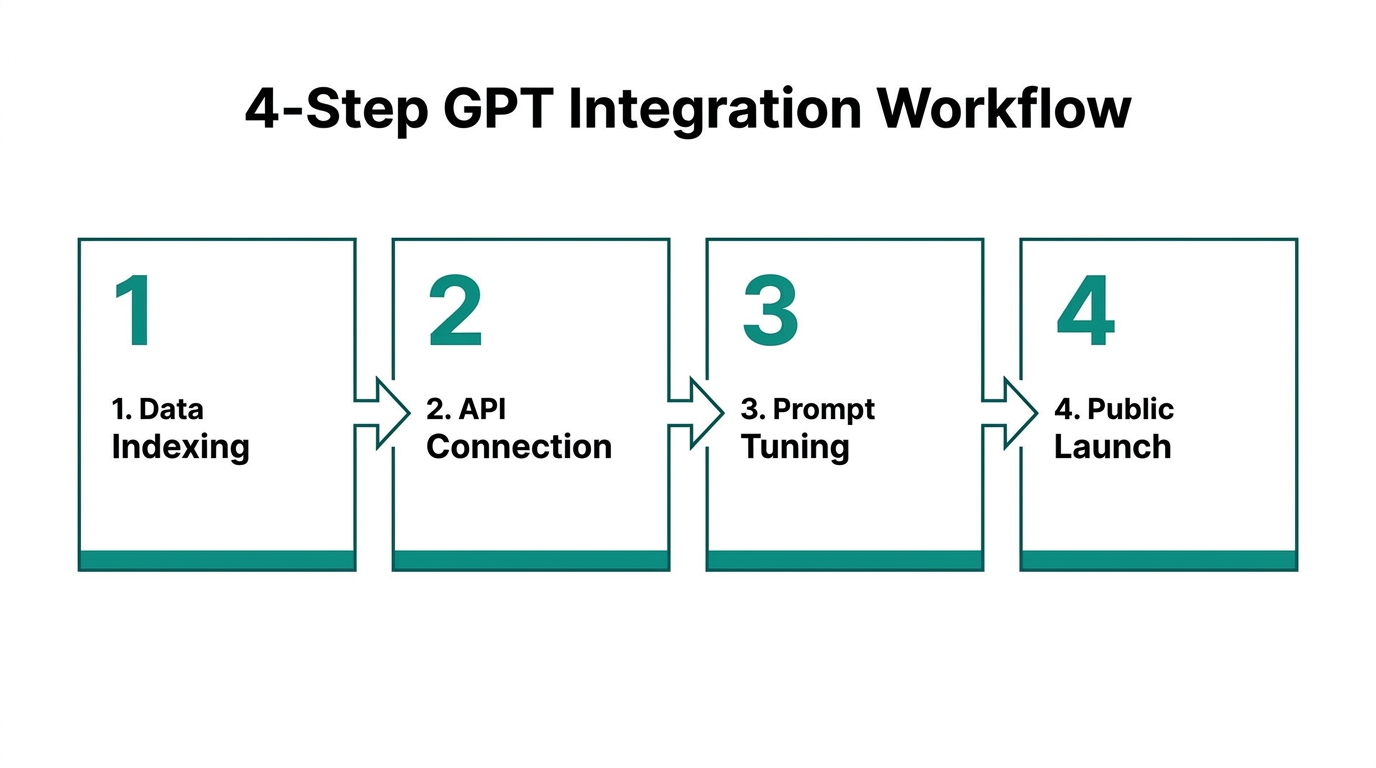
Building for the ChatGPT App Store is significantly faster than traditional mobile development. An MVP can often be launched in 30 days or less by following these steps:
- Identify a High-Intent Query: Use tools like Perplexity to find common pain points users are solving with AI, such as credit repair or tax filing.
- Secure a Semantic Domain: Choose a domain that matches the intent. While .com remains the gold standard, .ai domains are increasingly effective for AI-native tools.
- Build the SDK Layer: Use coding assistants like v0.dev or Cursor to build the connection between your API and the ChatGPT SDK. Focus on creating a 'Canvas' experience that allows for visual interaction.
- Optimize for Intent: Ensure your app’s metadata clearly defines what problems it solves so ChatGPT's orchestration layer knows when to trigger it.
- Scale via Creator CRM: Manage relationships with influencers who can demo your app. A robust CRM like Stormy AI ensures you can track which creator collaborations are driving the most app usage and installs.
Measuring ROI: Conversational Traffic vs. Traditional Social Channels
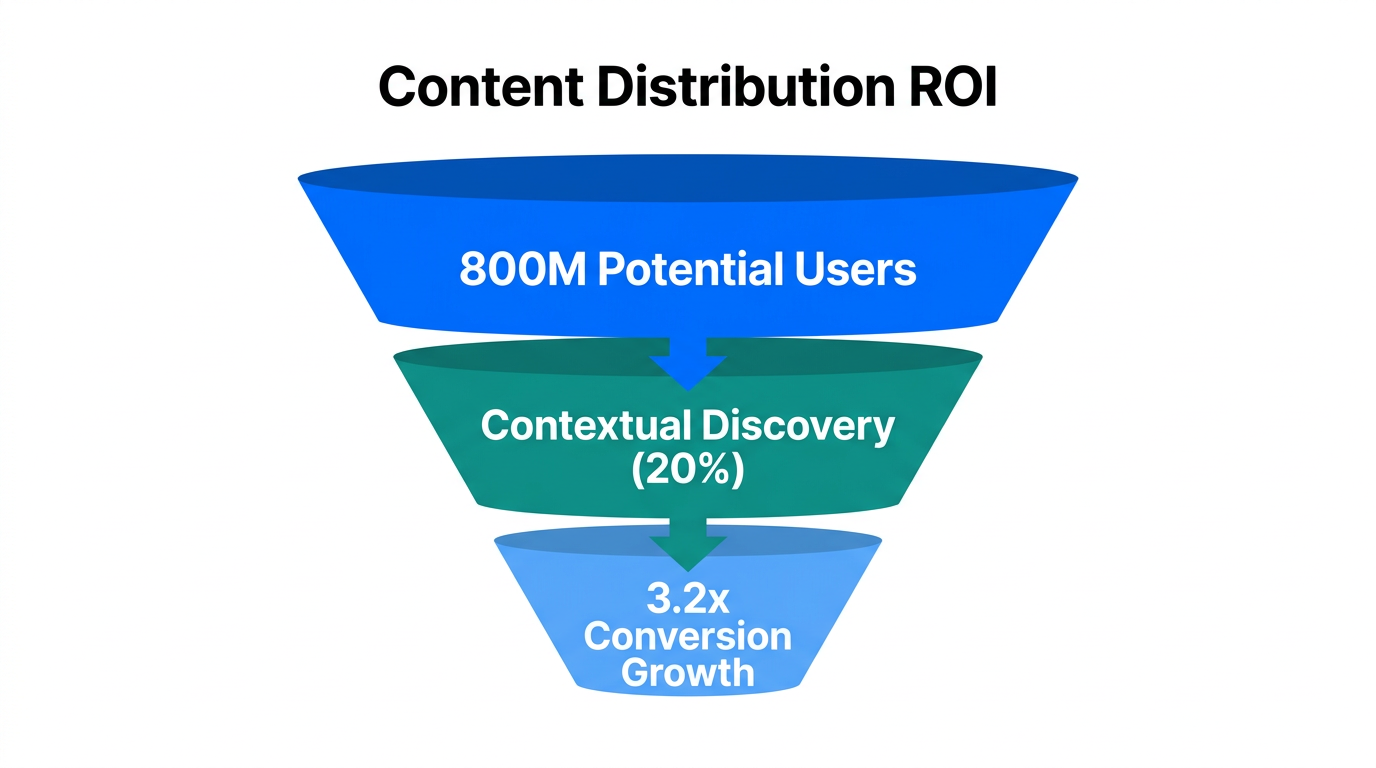
The ROI of the ChatGPT App Store is measured differently than traditional channels. Instead of focusing solely on Click-Through Rate (CTR), marketers must look at Interaction Depth and Conversation Retention. Traffic from ChatGPT is inherently higher intent; someone asking for tax advice is closer to a conversion than someone scrolling past a Google Ad or Facebook ad for tax software.
By leveraging a modern growth stack—pairing Stormy AI for creator sourcing with Klaviyo for follow-up email sequences—brands can turn a simple AI prompt into a long-term customer relationship. The goal is to own the high-demand query. If your app becomes the default response for 'fix my credit score,' the lifetime value (LTV) of that distribution channel is immeasurable.
Conclusion: The Future of Distribution
The ChatGPT App Store is effectively the new Manhattan of the digital world—prime real estate that is currently undervalued and sparsely populated. Whether you are building an 'AI Grandma' life advisor or a complex financial tool like a K1 agent for tax documents, the window to be an 'early adopter' is closing. By integrating your brand into the conversational flow of 800 million users and supporting that growth with conversational marketing and strategic creator outreach, you can build a distribution engine that operates while you sleep. The tools are ready; the users are there. The only question is whether you will build for the conversation or remain stuck in the search.