The history of technology is often defined by "platform shifts"—moments when the infrastructure of the internet changes so fundamentally that it creates a vacuum for new millionaires to emerge. We saw it with the shift from desktop to mobile, where early movers on the Apple App Store built empires out of simple utilities. Today, we are witnessing the next great wealth creation moment: the launch of the ChatGPT App Store. With over 250 million weekly active users as reported by Reuters, OpenAI has turned its flagship product into a mini-internet, allowing developers to build deeply integrated applications that solve high-intent problems without the user ever leaving the chat interface.
The Shift from Custom GPTs to Contextual Discovery
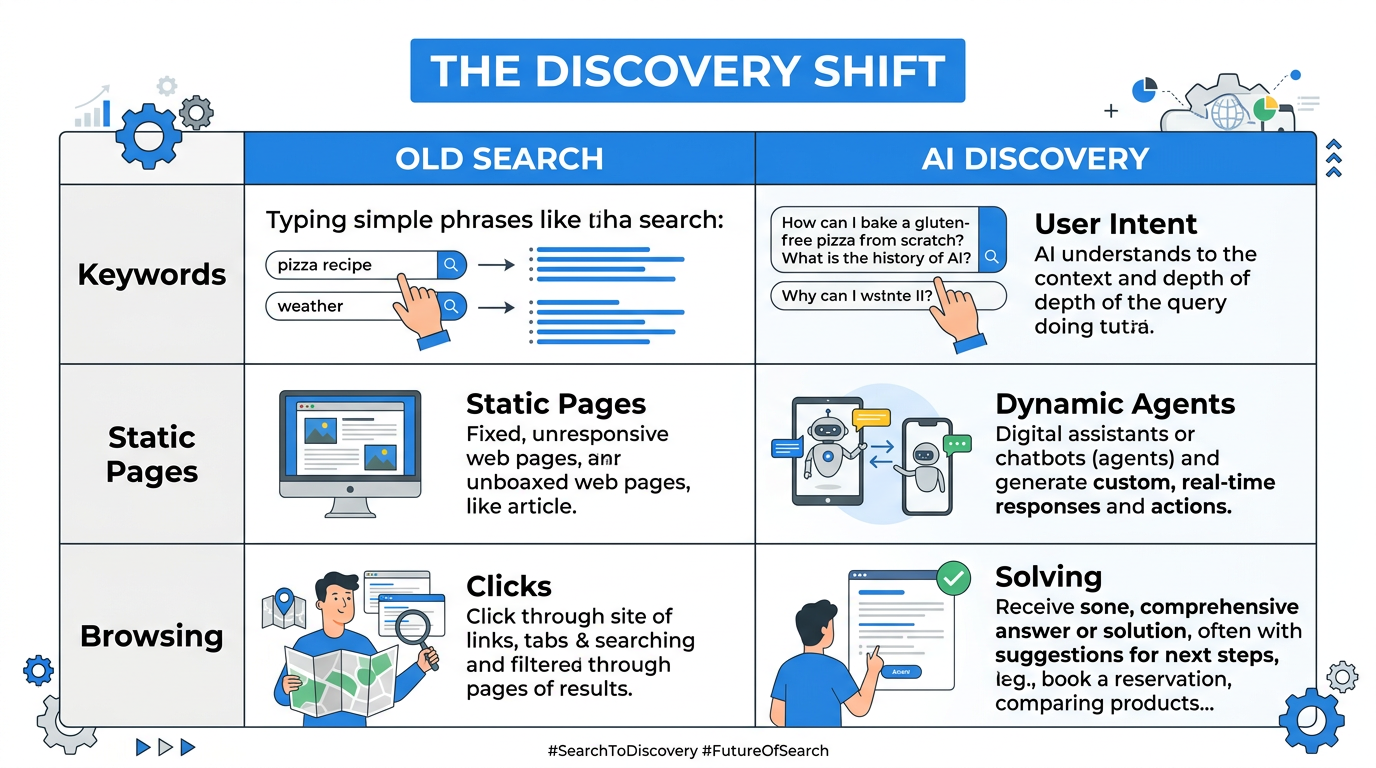
Many entrepreneurs were burned by the initial launch of "Custom GPTs," which often felt like glorified prompt wrappers that lacked a discovery mechanism. However, the new ecosystem announced at OpenAI's Dev Day is fundamentally different. Instead of requiring users to browse a static store, the new ChatGPT experience is contextual. If a user asks a question about design, the system can automatically suggest a tool like Canva or Figma to help them finish the task.
"The ability to use apps within ChatGPT basically turns it into a mini internet where discovery is driven by intent, not just search results."This creates a massive opportunity for micro-SaaS businesses that solve specific, high-friction problems. When you get in front of nearly a billion people every week, you don't need a complex marketing funnel; you just need to be the right solution at the moment the user expresses a need.
Idea 1: The AI Tax Guy and K1 Agent
Tax season is a universal pain point, but for investors and small business owners, the complexity scales exponentially. One of the most profitable niches identified is a dedicated AI Tax Agent. Imagine a tool where a user can prompt, "File my quarterly taxes," and the app connects to Stripe or a banking interface via Plaid to autofill forms and identify deductions in seconds.
Consider the success of bankstatementconverter.com, a simple utility that reportedly generates $40,000 to $50,000 in monthly revenue just by converting PDFs to Excel. In the ChatGPT App Store, a specialized "K1 Agent" could solve the nightmare of real estate investors who receive dozens of tax forms via email in various formats. By integrating with Gmail, the app could surface every K1 form instantly, saving hours of manual searching. This is a high-intent, high-value problem that users are willing to pay for to avoid the "scammy" feel of traditional financial service portals.
Idea 2: The AI Healthcare Concierge
Navigating the healthcare system is a search nightmare. Most users spend hours cross-referencing insurance networks with doctor availability. An AI Healthcare Concierge app could integrate with platforms like ZocDoc and major insurance databases to answer the specific prompt: "Find me the best dermatologist near me that takes Blue Cross and has an opening this week."
This isn't just a search tool; it’s a referral engine. By owning the high-demand query, you can monetize through affiliate fees or lead generation for medical practices. The goal is to build an interactive local map and booking interface directly inside the ChatGPT canvas, making the process of finding a doctor as easy as ordering a pizza.
Idea 3: AI Credit Repair Specialist
The credit repair industry is notoriously opaque and often feels untrustworthy to the average consumer. However, the demand is astronomical. Keywords like "how to fix my credit score" carry massive search volume and high commercial intent. An AI business focused on credit repair could connect to bureaus like Experian or Equifax and provide users with a transparent, step-by-step roadmap to improve their rating.
By offering an interactive UI with dispute templates and score simulation sliders, you provide a level of utility that traditional firms can't match. As discussed on major entrepreneurship platforms like My First Million, the cost of a high-quality domain like RepairMyCredit.ai is a small price to pay for the trust it builds. You can monetize this through monthly subscriptions or referral fees to legitimate financial products.
"The credit repair industry is ripe for disruption because it’s currently dominated by scammy actors—AI brings transparency to a black-box process."Idea 4: The Niche Emotional Advisor (AI Grandma)
While most AI business ideas focus on productivity, there is a growing market for "human-centric" AI. Not everyone wants clinical advice from an LLM; sometimes, they want the warm, blunt, and old-school wisdom of a grandmother. Building a brand around an "AI Grandma" character provides a unique life advisor experience.
This type of app thrives on personality and brand-building. It’s less about complex API integrations and more about fine-tuning a persona that offers emotional support and common-sense advice. This can be monetized through a "freemium" model where users pay for more in-depth, long-term life coaching sessions or specialized "recipes for life."
Idea 5: The High-Frequency Meme Engine
In the age of social media, memes are a primary form of communication. While general AI can generate images, it often fails at the specific cultural nuance and layout required for a viral meme. A dedicated Meme Engine app in the ChatGPT App Store could offer optimized templates and real-time trending topics to help creators stay relevant.
By integrating with tools like Canva, you can allow users to "one-prompt" a design that is ready for TikTok or Instagram. Once your creative tool is live, platforms like Stormy AI can help you source and manage UGC creators to promote your app at scale, ensuring your tool becomes the go-to for social media managers.
| Business Idea | Target Audience | Monetization Strategy | Integration Complexity |
|---|---|---|---|
| AI Tax Guy | Freelancers/SMEs | SaaS Subscription | High (Bank/IRS APIs) |
| Healthcare Concierge | General Patients | Affiliate/Referral Fees | Medium (ZocDoc/Insurance) |
| Credit Repair | Subprime Consumers | Lead Gen/Monthly Fee | High (Credit Bureaus) |
| AI Grandma | Gen Z/Stressed Users | Freemium/Tokens | Low (Persona Tuning) |
| Meme Engine | Social Managers | Ad-supported/Pro Tier | Medium (Design APIs) |
How to Validate Your AI Business Idea
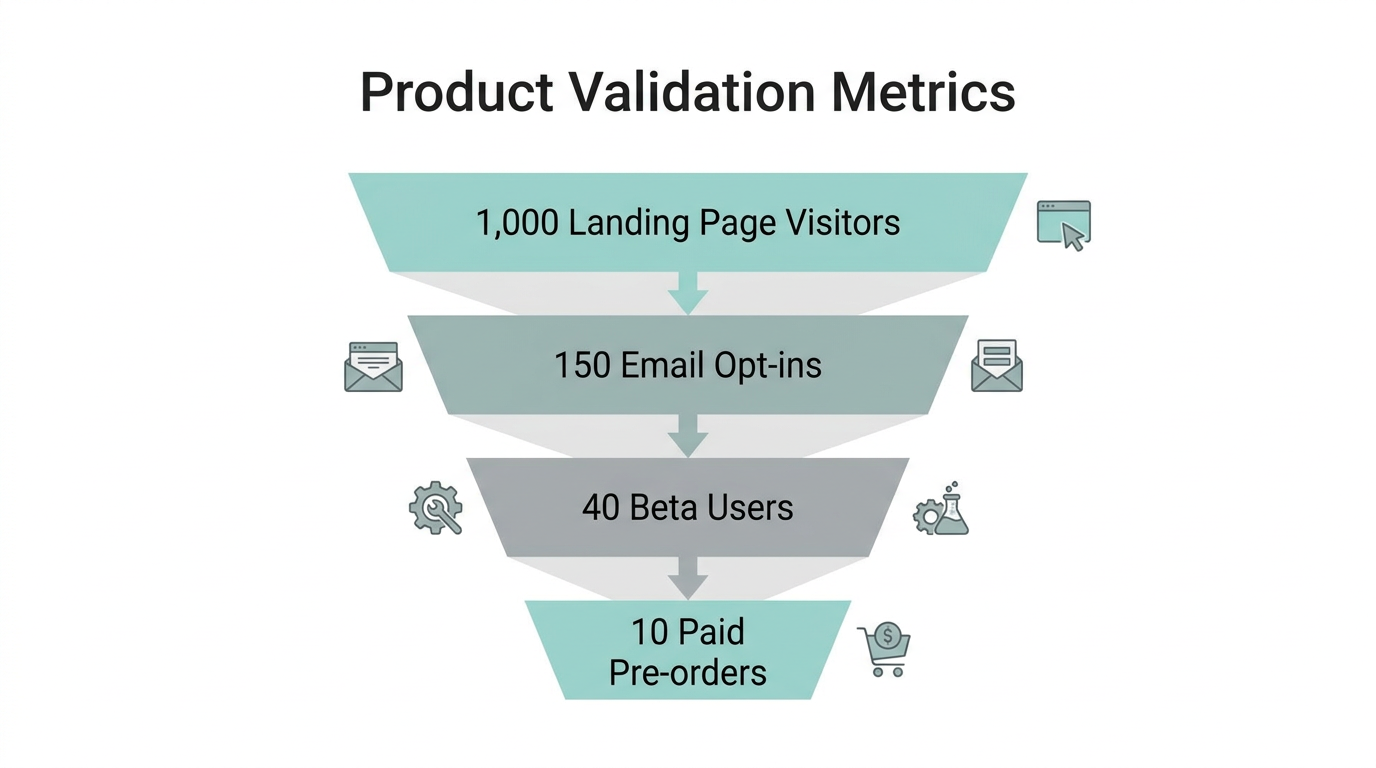
Before writing a single line of code, you must validate that people are actually searching for your solution. Use keyword research tools to find high-intent queries. If thousands of people are asking Perplexity or Google how to solve a specific problem, that intent will eventually move to the ChatGPT App Store.
- Check Search Volume: Look for queries starting with "how to," "best tool for," or "file my..."
- Analyze Competition: Are the current solutions old-school or "scammy"? If so, an AI-native version will win.
- Test with a Landing Page: Build a quick site using Framer or Webflow to collect emails before you build the full app.
The 30-Day MVP Playbook: From Idea to Launch
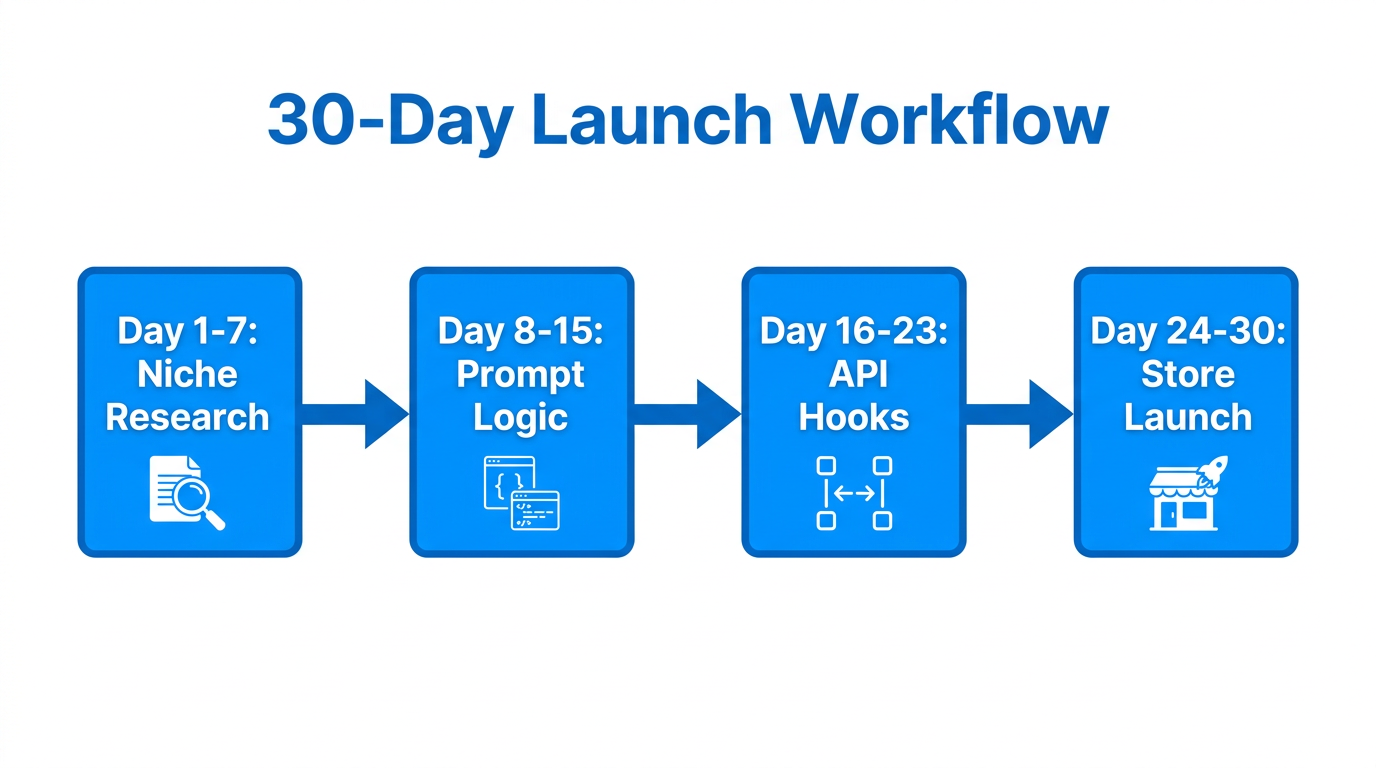
The speed of AI development means you no longer have an excuse for a 6-month dev cycle. You can move from concept to a working app in 30 days using the following framework:
Phase 1: The Build (Days 1-14)
Stop overthinking the tech stack. Use AI-native coding tools like Cursor or Claude to generate your initial codebase. Focus on one core feature—for example, if you're building the Tax Agent, focus solely on "finding K1s in Gmail."
Phase 2: Integration and UX (Days 15-21)
Use the OpenAI SDK to connect your app to the ChatGPT interface. Ensure your UI is interactive and utilizes the "canvas" feature for a visual experience. This is where you connect APIs like Plaid for banking or ZocDoc for medical data.
Phase 3: Approval and Growth (Days 22-30)
Submit your app for approval by OpenAI. While waiting, focus on your growth engine. Acquire a strong domain (e.g., a .com or .ai) to build authority. For user acquisition, you don't need a huge budget. Using Stormy AI, you can discover influencers in your niche and set up an automated AI agent to outreach to them, securing early reviews and UGC content to drive visibility in the store.
Conclusion: The First-Mover Advantage
The ChatGPT App Store is currently in its "Gold Rush" phase. Just like the early days of the iOS App Store, the first few hundred apps that provide genuine utility will capture the lion's share of the 800 million users. Whether you choose to automate taxes, simplify healthcare, or provide emotional support, the key is to move fast and focus on intent-driven discovery. The tools to build, validate, and market your AI business—from Cursor for development to Stormy AI for creator discovery—are more accessible than ever. Stop browsing and start building; your first sale could be just 30 days away.