In the rapidly evolving landscape of 2026, many founders still fall into the trap of hunting for a "completely original" idea. They wait for a lightning bolt of innovation that has never been seen before, fearing that if a product already exists, the opportunity is gone. However, the story of Zach and the Cal AI growth framework proves the exact opposite. By entering a hyper-competitive niche—calorie tracking—and identifying the 20% of AI-driven features that drive 80% of user value, Zach scaled Cal AI to a $50M revenue run rate before selling to an industry titan.
This isn't just a story of luck; it is a masterclass in app market validation 2026. It’s about leveraging the success of incumbents to set your own revenue floor and using probabilistic decision-making to scale. If you are a founder looking to launch in 2026, your biggest green light isn't a lack of competition—it's the presence of it.
Why 'That Already Exists' Is Your Biggest Green Light
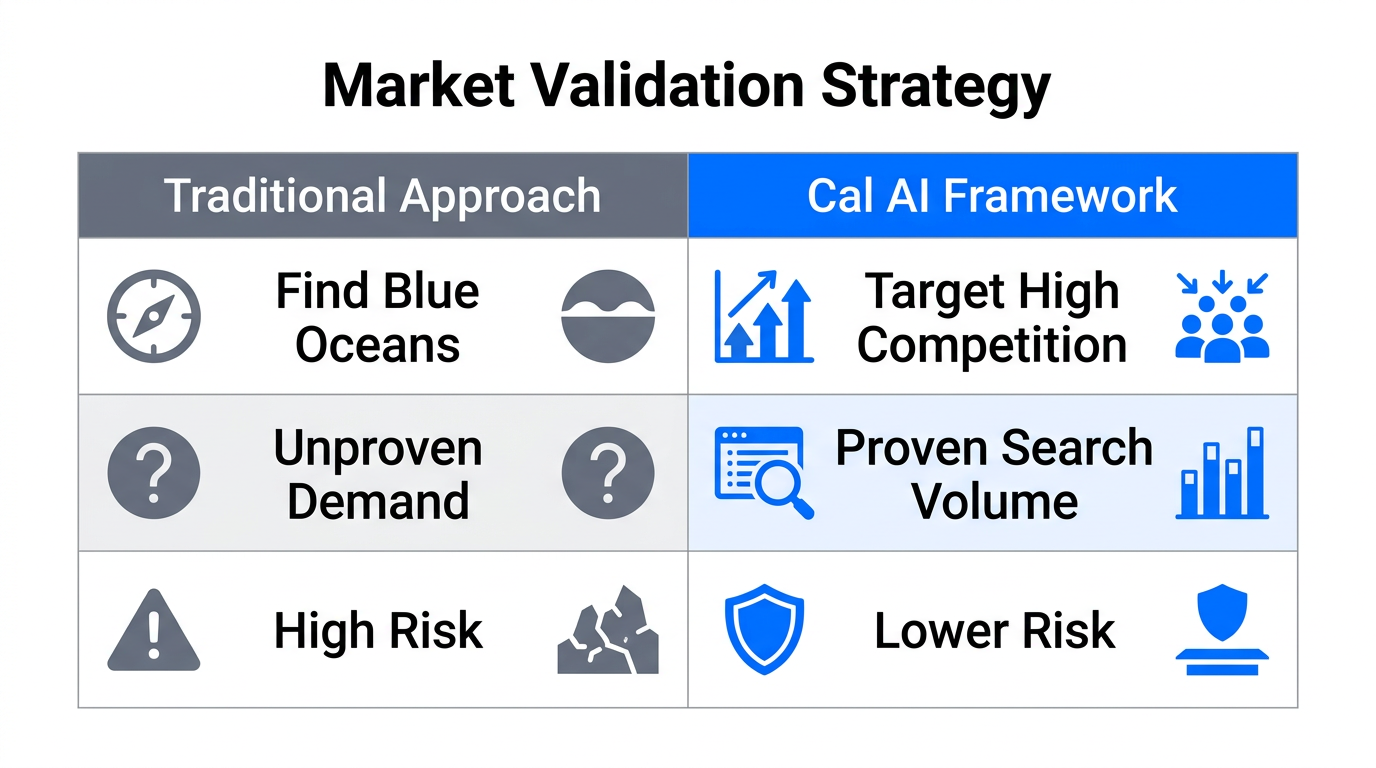
The most common rejection in entrepreneurship classes is: "That already exists." In the Cal AI framework, this phrase is music to a founder's ears. When Zach looked at the market, he didn't see My Fitness Pal as an unbeatable wall; he saw it as proof of market demand. If a company is doing $200M in annual revenue, it establishes a high floor for what a modern, AI-first competitor can capture.
In 2026, market validation isn't about asking if a problem exists; it's about seeing who is already paying to solve it. When you see an incumbent with millions of users but a legacy user experience, you've found your gap. Cal AI didn't reinvent nutrition; it reinvented the friction of nutrition tracking using AI photo recognition.
"Seeing that another product is doing well should be the opposite of a deterrent. It is proof that the market is so big that multiple winners can exist simultaneously."The EV Decision Framework: Probabilistic Entrepreneurship
Zack explains his analytical framework for deciding when to go all-in on ideas.
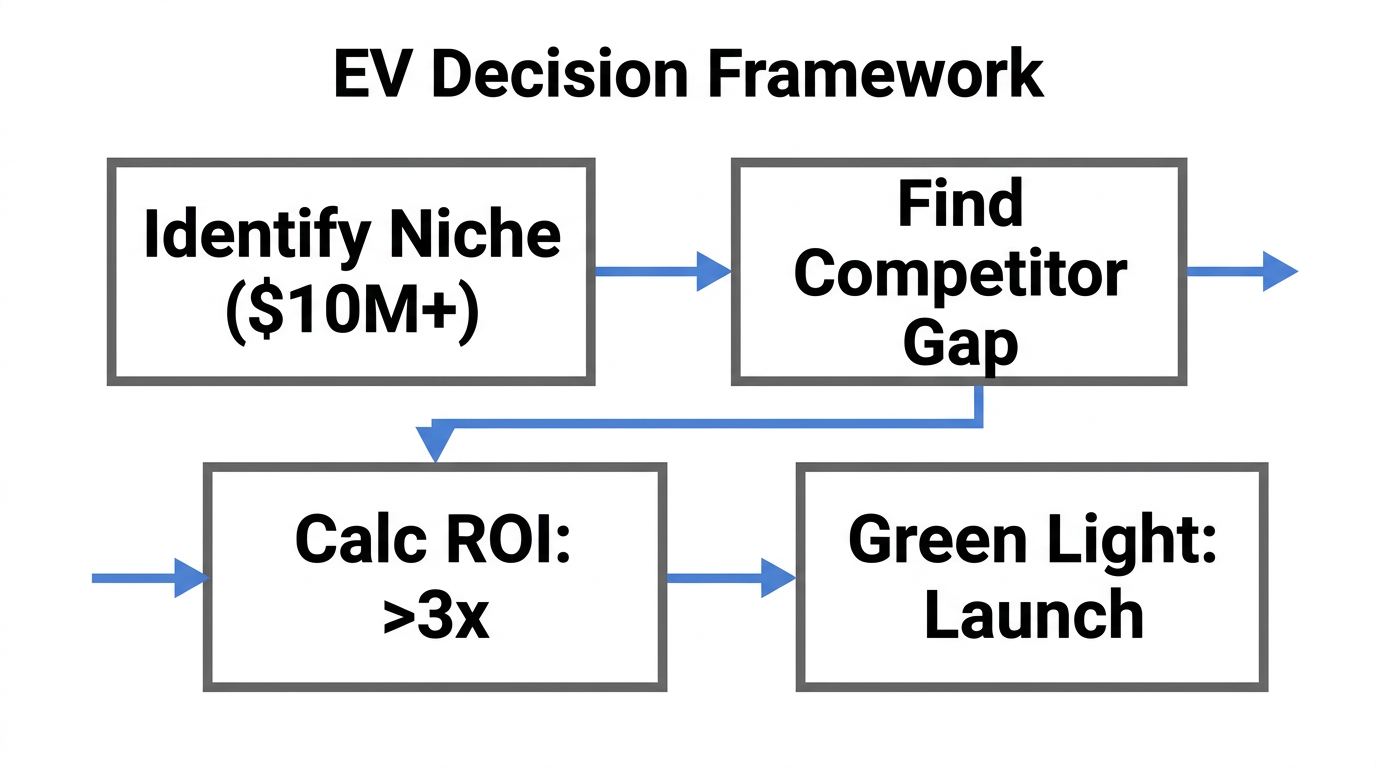
One of the core pillars of the Cal AI journey is the use of the Expected Value (EV) framework. This transition from emotional decision-making to probabilistic thinking is what separates hobbyists from scale-up founders. Instead of asking "Should I do this?", Zach’s framework asks: "What is the probability of success multiplied by the potential prize?"
For example, when deciding whether to sell a company or keep bootstrapping, you must weigh the 100% certainty of a current offer against the 20% probability of reaching a $500M valuation. If the math doesn't favor the long-term hold after factoring in the risk of market shifts or AI-driven obsolescence, the rational move is to take the win and compound that capital into the next venture.
| Decision Factor | Emotional Approach | EV Framework (2026) |
|---|---|---|
| New Feature Launch | "I think this is cool." | 70% chance of 20% retention lift. |
| Market Entry | "It's too crowded." | Proven $1B TAM; 10% capture is $100M. |
| Exit Strategy | "I want to be a unicorn." | 90% probability of liquid $50M vs 5% chance of $1B. |
This objective lens allows founders to survive the "we're effed" moments. By understanding that every venture is a series of bets, you can manage your entrepreneurial decision making without the paralyzing fear of failure. You aren't betting your life; you're betting on a probability distribution.
The 20% of Features That Drive 80% of Results
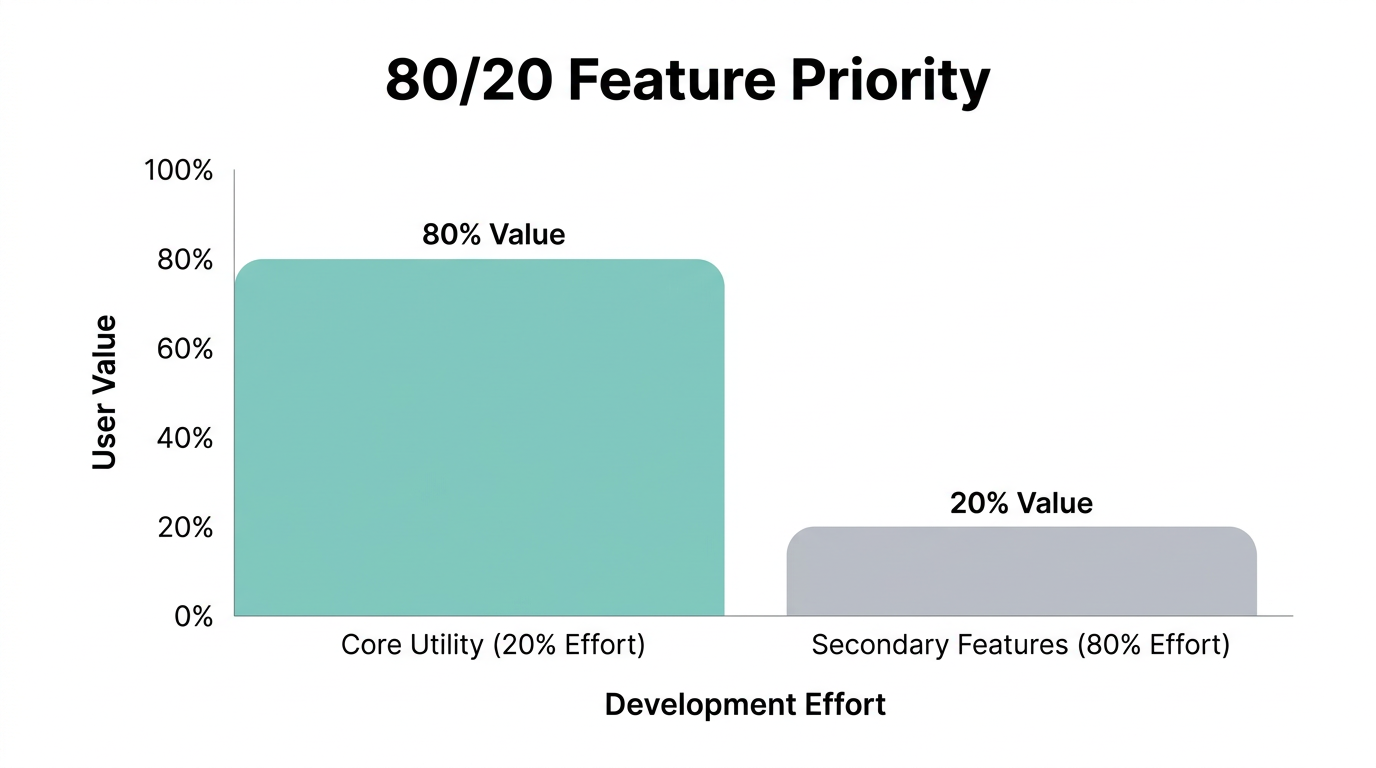
In 2026, the lean startup model has evolved into the AI-first model. Zach emphasizes the Pareto Principle: identifying the small subset of features that provide the most value. For Cal AI, it wasn't about having more charts than My Fitness Pal; it was about semantic search and AI photo logging. Users didn't want a better database; they wanted to stop typing their meals.
Zach identifies "semantic search for followers" as a prime example of an untapped 2026 opportunity. Imagine an app that lets you search your Instagram or X followers for specific professional profiles or interests using natural language. This kind of AI-driven utility solves a specific, high-value problem without needing a bloated feature set.
"Learn the 20% of skills that get you 80% of the results. That is how you lead a team of people who are smarter than you."When building your GTM strategy for apps, focus on the AI "magic moment." For Cal AI, the magic was: Photo -> Calories -> Done. For your next app, find the equivalent friction point and use AI to dissolve it. This lean approach allowed Zach to run a 30-person team while generating tens of millions in revenue, maintaining high margins that are attractive to private equity buyers.
Pivoting to Premium: The High-Margin Subscription Shift
A significant part of the Cal AI framework is the transition from "free-to-play" or ad-supported models to high-margin subscription software. In 2026, the most enduring companies in the app space are those that value their product enough to charge for it from day one.
Zach's experience selling to My Fitness Pal highlighted a crucial reality: Freemium is a science, but Premium is a business. By studying how incumbents handle their paywalls and conversion funnels, you can skip the trial-and-error phase of monetization. If you want your app to be an enduring business, it needs to be premium-first.
The Founder's Journey: Skill Stacking in 2026
Learn why combining multiple decent skills is more effective than mastering just one.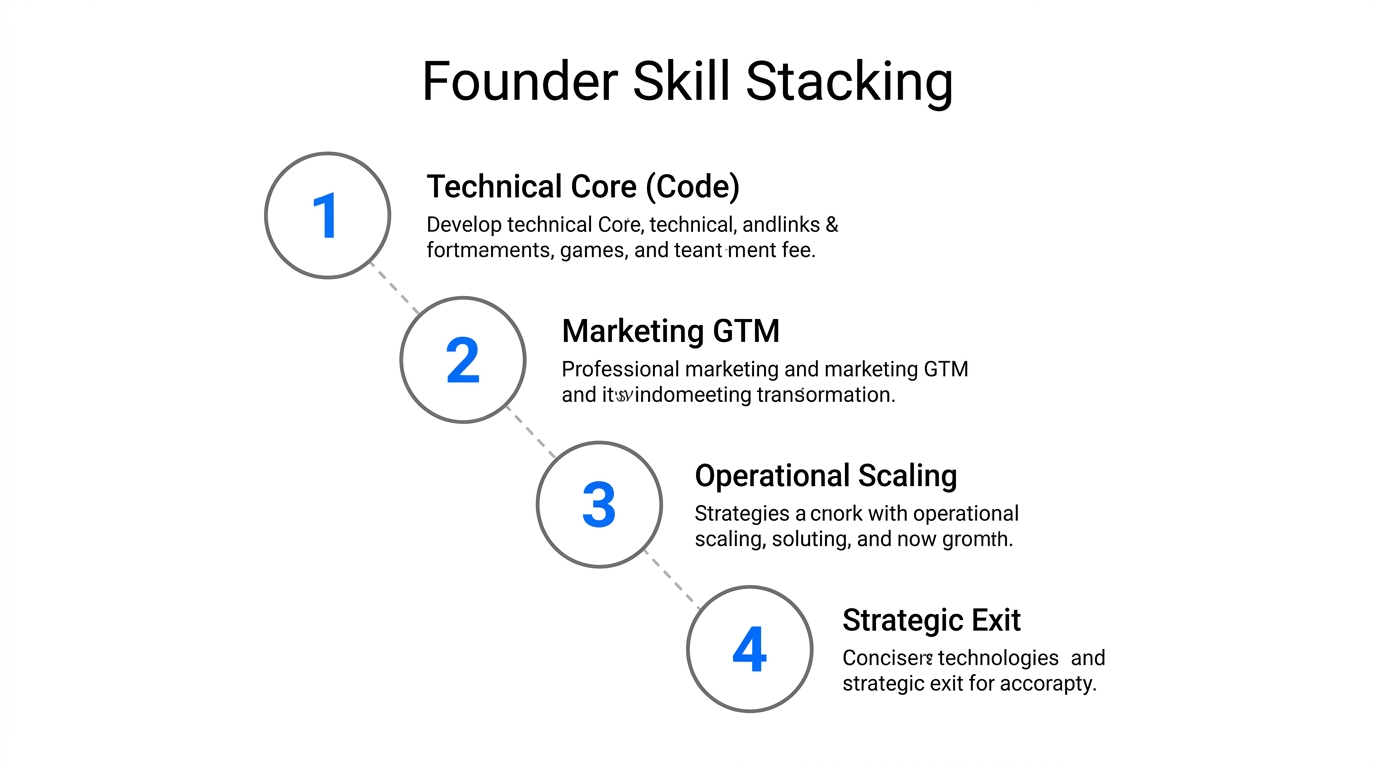
The 2026 requirement for solo or small-team growth is skill stacking. You don't need to be a 900-IQ "gigabrain" in coding or a world-class marketer. You need to be good enough to be dangerous in both. Zach started programming at age 7 but realized that the combination of coding knowledge and viral marketing was his true competitive advantage.
His growth strategy relied heavily on influencer marketing—specifically native, organic content on TikTok. By having influencers create authentic videos about the app, Cal AI reached $2M per month in revenue before they even touched performance ads on Meta Ads Manager. To replicate this, modern founders use platforms like Stormy AI to discover creators in specific niches (like fitness or productivity) and automate the outreach process, allowing a solo founder to run a massive influencer operation while they sleep.
Once the organic engine was humming, Zach scaled by spending over $1M per month on performance ads across TikTok Ads Manager and Google Ads. This transition from "organic-only" to "paid-scale" is a hallmark of the Cal AI framework.
"It's the combination of skills that's valuable. You don't have to be world-class at one thing; you just have to stack three things that make you dangerous."Conclusion: Actionable Steps for Scaling Bootstrapped Software
Final thoughts on how to build enduring businesses in a rapidly changing world.The Cal AI growth framework teaches us that the best time to start is when the path is already paved by others. Scaling bootstrapped software in 2026 doesn't require a laboratory; it requires an observant eye and the audacity to compete.
To win in a competitive niche this year, follow this playbook:
- Identify the Floor: Find a niche where incumbents are making $50M+ but the technology feels "pre-AI."
- Apply the EV Framework: Make decisions based on probability, not emotion. Focus on bets with the highest expected value.
- Build the 20%: Use AI to solve the single biggest friction point in the user journey. Forget the bloat.
- Stack Your Skills: Use AI tools like Claude to code faster and use platforms like Stormy AI to manage your creator marketing.
- Go Premium: Charge for value. Use the revenue to fuel performance ads on TikTok and Facebook.
Zach's journey from a high-schooler building gaming sites to a 19-year-old with a multi-million dollar exit is a reminder that in the age of AI, speed and audacity are the only real barriers to entry. Stop looking for a new world—start building a better version of the one we already have.