In the digital landscape of 2026, the search engine optimization paradigm has fundamentally shifted from a traffic brokering model to a sophisticated model of authority signaling. As the global AI SEO software market reaches a staggering $2.43 billion, brands are no longer just fighting for keywords; they are competing for Reputation Arbitrage. The goal today is to ensure AI agents—like OpenAI’s 'Operator'—recommend your brand to high-ticket buyers without requiring a single traditional backlink. To win in this environment, growth teams are turning to programmatic solutions like Byword.ai to build massive, semantically complete content clusters that satisfy both human intent and generative engine algorithms.
The Shift to Generative Engine Optimization (GEO) in 2026
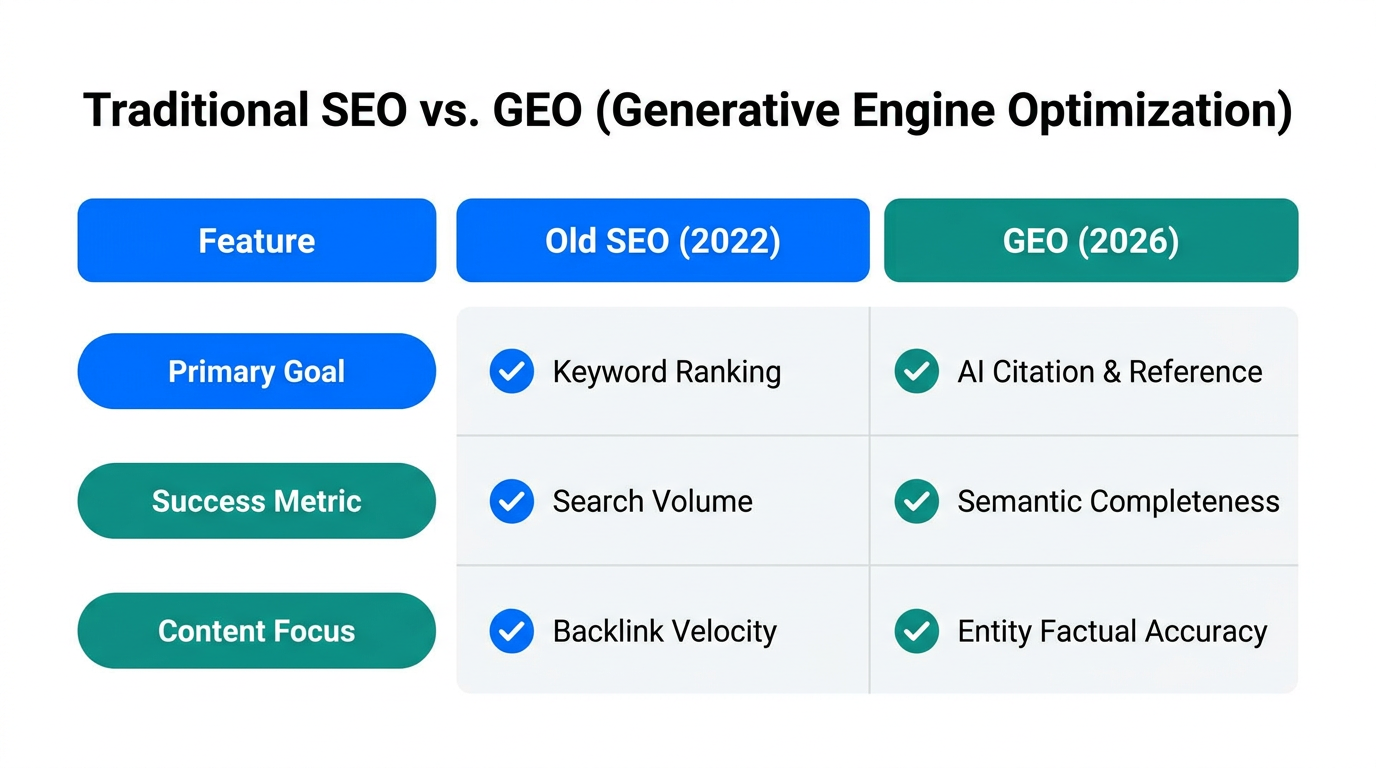
Traditional SEO as we knew it in 2024 has been replaced by Generative Engine Optimization (GEO) and Answer Engine Optimization (AEO). The numbers are stark: roughly 1 billion users now use ChatGPT as their primary information source, and AI search traffic has surged by 527% year-over-year. For marketers, the reality is 'zero-click': between 60% and 70% of Google searches now end on the SERP because AI Overviews (AIO) satisfy the query directly.
However, being the source of an AI Overview isn't just a vanity metric. Data shows that being featured as a source in a Google AIO increases the click-through rate for that specific source from 0.6% to 1.08%. While organic CTRs generally collapse, the referral quality from AI citations remains 3x higher for considered purchase categories like SaaS and FinTech. This is where Byword.ai programmatic SEO becomes essential, allowing you to flood the index with the high-intent, long-tail pages that AI crawlers love to cite.
Deploying the Byword.ai Programmatic Engine
To execute AI content scaling in 2026, you need more than just a generator; you need a workflow that handles 1,000+ long-tail queries without triggering 'Helpful Content' penalties. Byword.ai excels here by integrating with the latest models like GPT-4o and Claude 3.5 to maintain brand voice at scale. The process begins with identifying "Conversational Nodes"—the specific questions users ask AI agents, such as "What is the consensus on [Brand X] for enterprise automation?"
| Feature | Traditional SEO (2022-2024) | AI SEO / AEO (2026) |
|---|---|---|
| Primary Goal | Rank #1 for Keywords | Be the "Cited Source" in AI answers |
| Currency | Backlinks (DR/DA) | Citations & Entity Trust |
| Success Metric | Monthly Organic Traffic | AI Share of Voice & Conversion Quality |
When using Byword.ai, you aren't just writing blog posts. You are building machine-readable chunks of data. This includes placing a "Primary Answer" lead—a 2-3 sentence direct answer to the query—at the very top of every page. This facilitates extraction by AI crawlers, ensuring your site remains a top candidate for AIO citations.
The 'Sitemap Heist': Building Superior Semantic Completeness
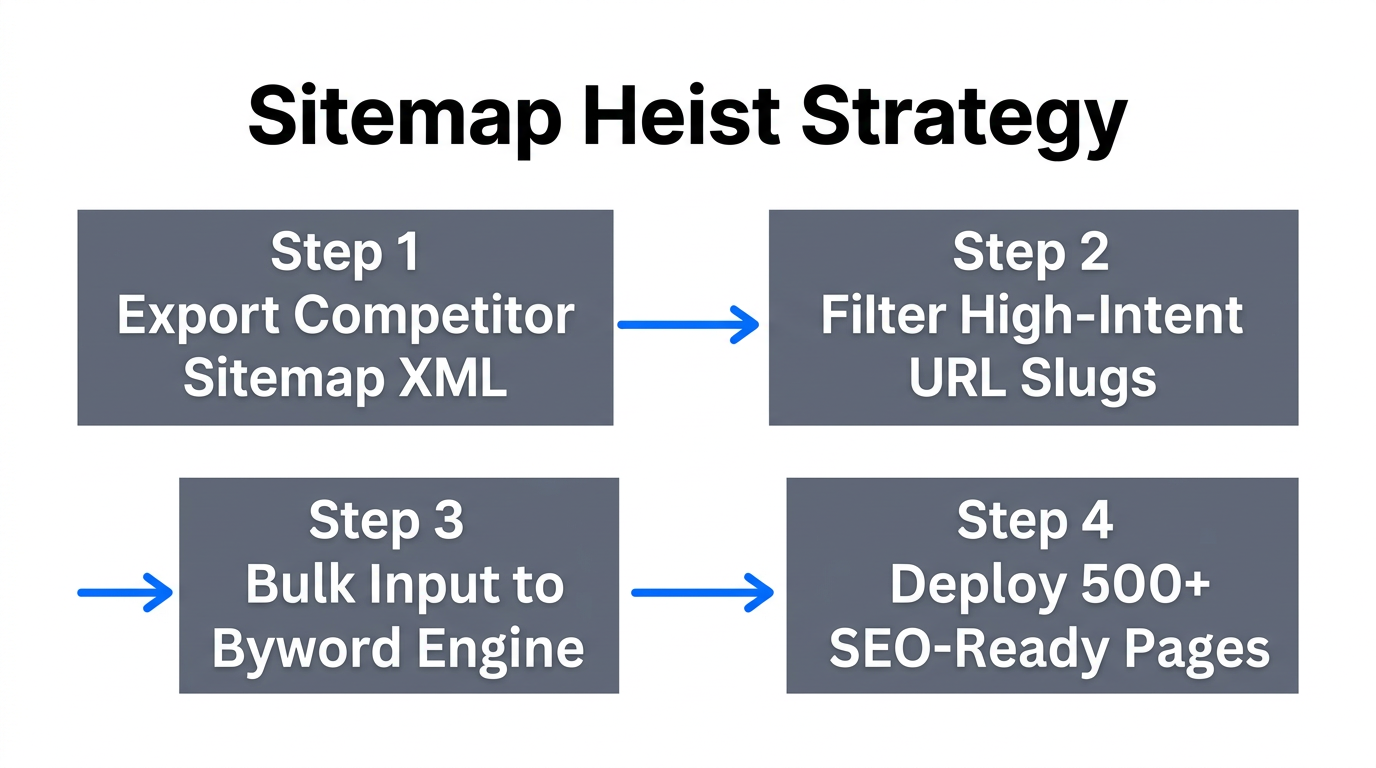
One of the most effective programmatic growth strategies involves analyzing what is already working for your competitors and then doing it better. In a famous case study, practitioner Jake Ward exported a competitor’s sitemap and used Byword.ai to publish 1,800 pages in 48 hours, eventually stealing 3.6 million visits. However, in 2026, a raw "heist" is a recipe for a manual action. The modern version of this strategy requires focusing on Semantic Completeness.
"Traditional Domain Authority correlation with ranking has dropped from r=0.43 to r=0.18. Meanwhile, Semantic Completeness has shot up to r=0.87."
To achieve this, use Byword.ai to map out niche clusters that your competitors have only touched on superficially. By covering every possible facet of a topic—using advanced entities and structured data—you signal to Google and AI models that your domain is the ultimate authority. You can supplement this by using tools like Surfer SEO to ensure each programmatic page contains the exact entities the AI's internal Knowledge Graph expects.
Human-in-the-Loop: Adding 'Real World Experience'
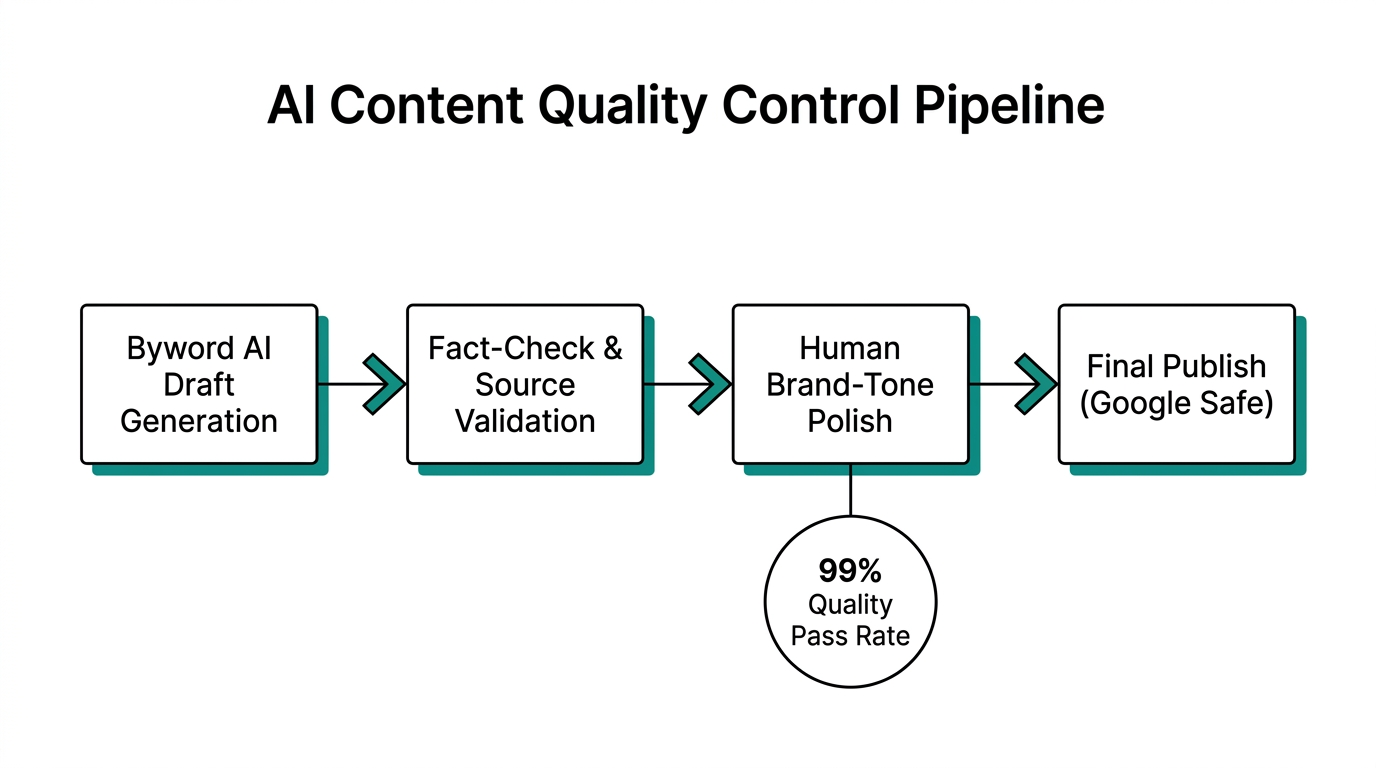
Google’s 2026 algorithms are hyper-sensitive to "unhelpful" AI content. To avoid penalties, your Byword.ai drafts must undergo human-in-the-loop editing. This isn't just about proofreading; it's about adding unique signals that AI cannot replicate. According to research from MaximusLabs AI, adding specific elements can boost visibility by up to 40%.
- Cite Sources: Adding links to .edu or .gov sites increases your own citation probability by 10%.
- Quantitative Data: Replace vague claims with hard stats (e.g., "14.2% MoM growth" instead of "fast growth").
- Expert Quotations: Include insights from high-authority entities in your field to act as "citation-bait" for LLMs.
Another critical 2026 tactic is Entity Seeding. AI models use human-verified datasets like Reddit and niche forums to decide which brands to trust. This is where a multi-channel approach is vital. For example, brands often use Stormy AI to discover and collaborate with creators who can seed brand mentions across TikTok and YouTube, creating the "Reputation Arbitrage" that AI search engines look for when citing sources.
Workflow Integration and Pricing for Byword.ai
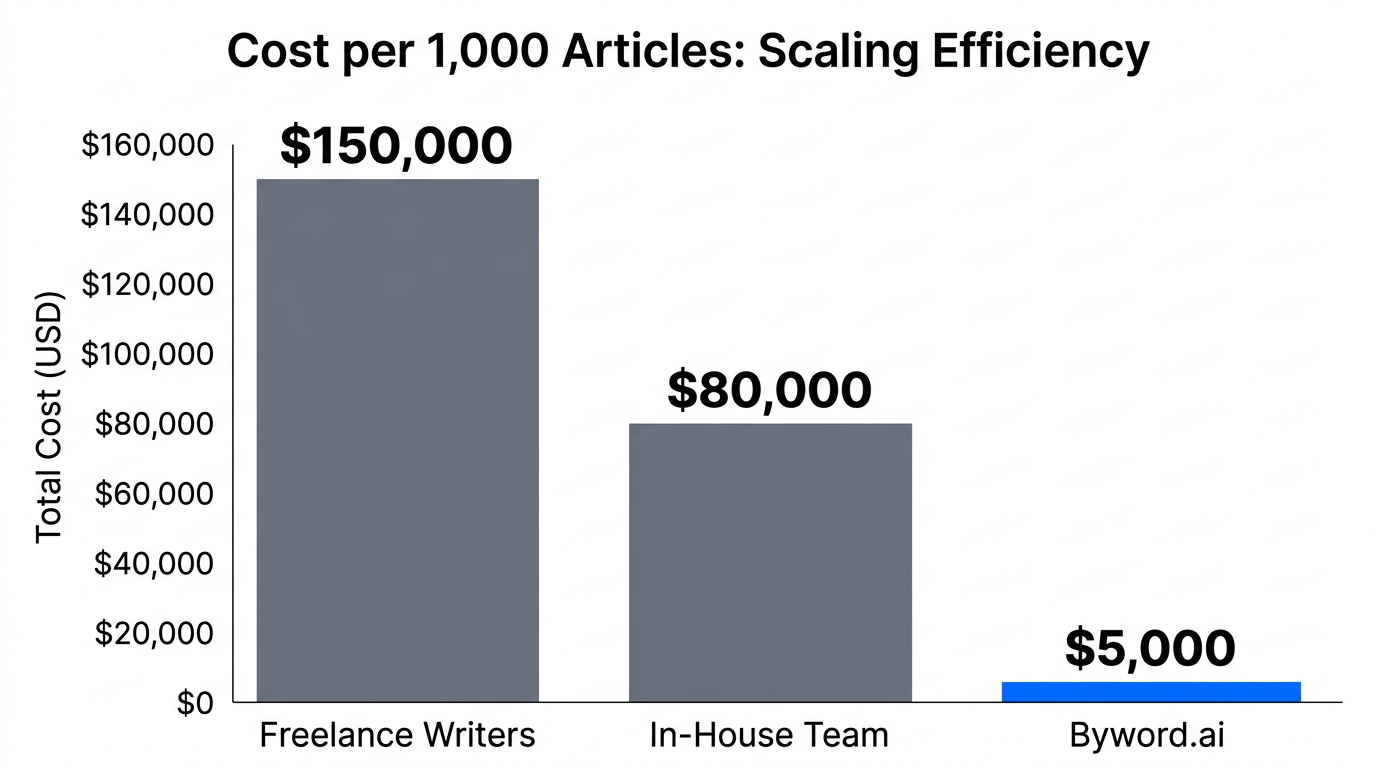
Integrating AI SEO automation tools into a modern marketing team requires a balance of speed and oversight. Byword.ai offers pricing tiers ranging from $99 to $2,499 per month, making it accessible for both startups and enterprise teams. The typical 2026 workflow looks like this:
- Query Generation: Identify 1,000+ long-tail, high-intent keywords using Semantic Mapping.
- Bulk Generation: Use Byword.ai to generate structured Markdown drafts.
- Optimization: Run drafts through Surfer SEO for entity density.
- Human Layer: Add 2-3 unique insights or expert quotes to each piece.
- Distribution: Sync with Stormy AI campaigns to ensure creator content supports the new topical authority.
"ChatGPT doesn't just read your website; it reads who talks about you. In 2026, SEO is as much about PR as it is about keywords."
Conclusion: The Future of Programmatic Growth
The era of manual, one-by-one content creation for SEO is effectively over. To scale organic distribution in 2026, you must embrace programmatic systems like Byword.ai while maintaining a rigorous standard for quality and reputation. By focusing on Semantic Completeness and ensuring your brand is mentioned across the "Trusted Sources" that AI models ingest, you can capture high-intent traffic that your competitors are losing to the zero-click revolution. Start by mapping your first 100 conversational nodes today and build the authority that search engines—both human and artificial—cannot ignore.