In 2020, a pair of seasoned Silicon Valley operators did something that most traditional venture capitalists would find insane: they bought a company with a 1.8-star App Store rating, a 19% management approval score on Glassdoor, and a forced-sale mandate from the U.S. government. That company was Grindr. While others saw a PR nightmare and technical decay, Jeff Bonforte and Rick Marini saw a glitch in the system—an opportunity to acquire a dominant market leader at a massive discount by leveraging a private equity for entrepreneurs strategy.
The Arbitrage of Perception: Buying What Others Fear
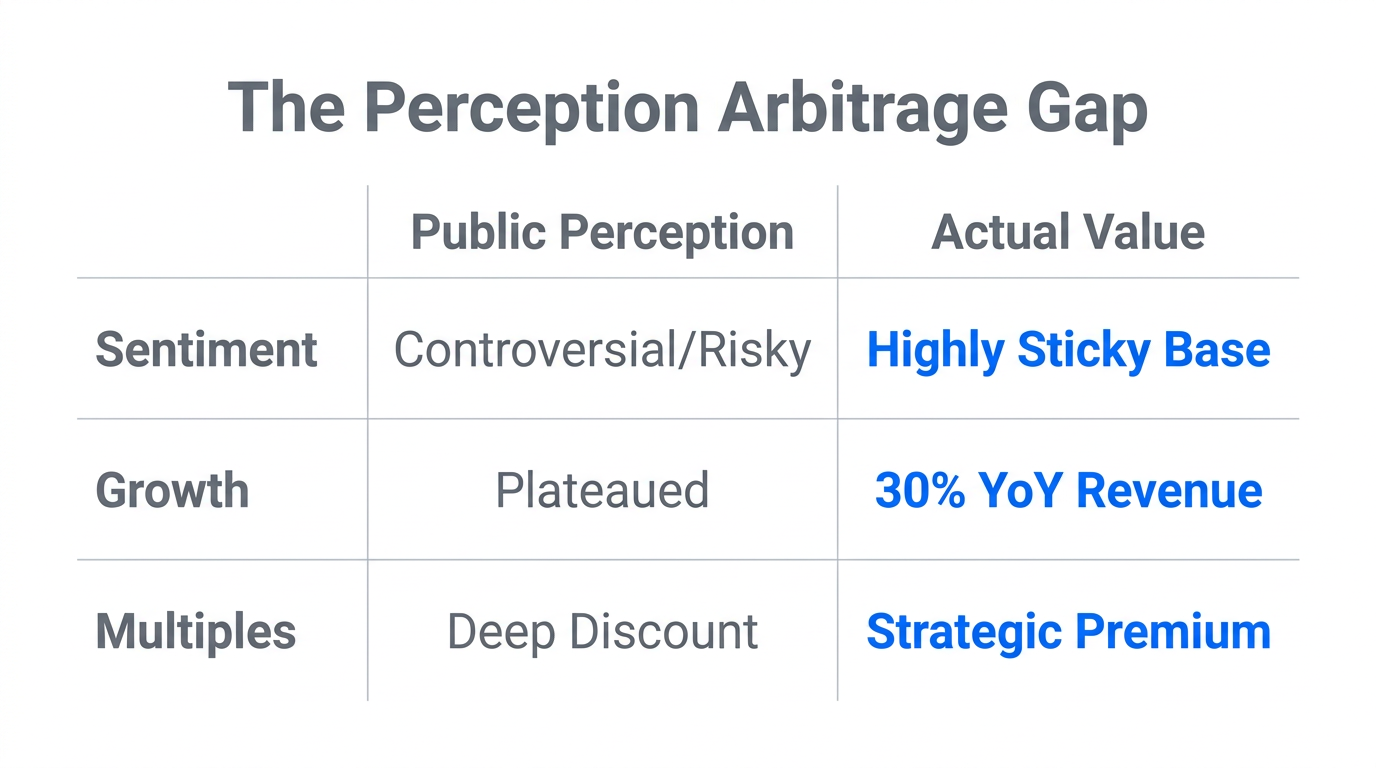
The most lucrative opportunities in business acquisition often hide behind a social or political stigma. When the Committee on Foreign Investment in the United States (CFIUS) forced the Chinese firm Kunlun to sell Grindr due to national security concerns, the buyer pool should have been deep. However, a "latent homophobia" in the investment community created a massive opening. Traditional private equity firms and conservative investment committees were hesitant to be associated with a gay dating app.
As Rick Marini noted in the research, even companies that had no issue working with Tinder refused to touch the Grindr deal. This lack of competition allowed the group to buy the business for roughly $600 million—at a multiple of about 12-13x EBITDA, while public competitors were trading closer to 20x. In tech M&A, identifying an asset that is "un-buyable" for the masses but fundamentally sound in its unit economics is the ultimate shortcut to alpha.
"We really benefited from that sort of homophobic behavior because you have this incredible company... It checks every box of what you would love in private equity, but the perception kept the price down."The 1.8-Star Opportunity: Why Bad Reviews are a Green Flag
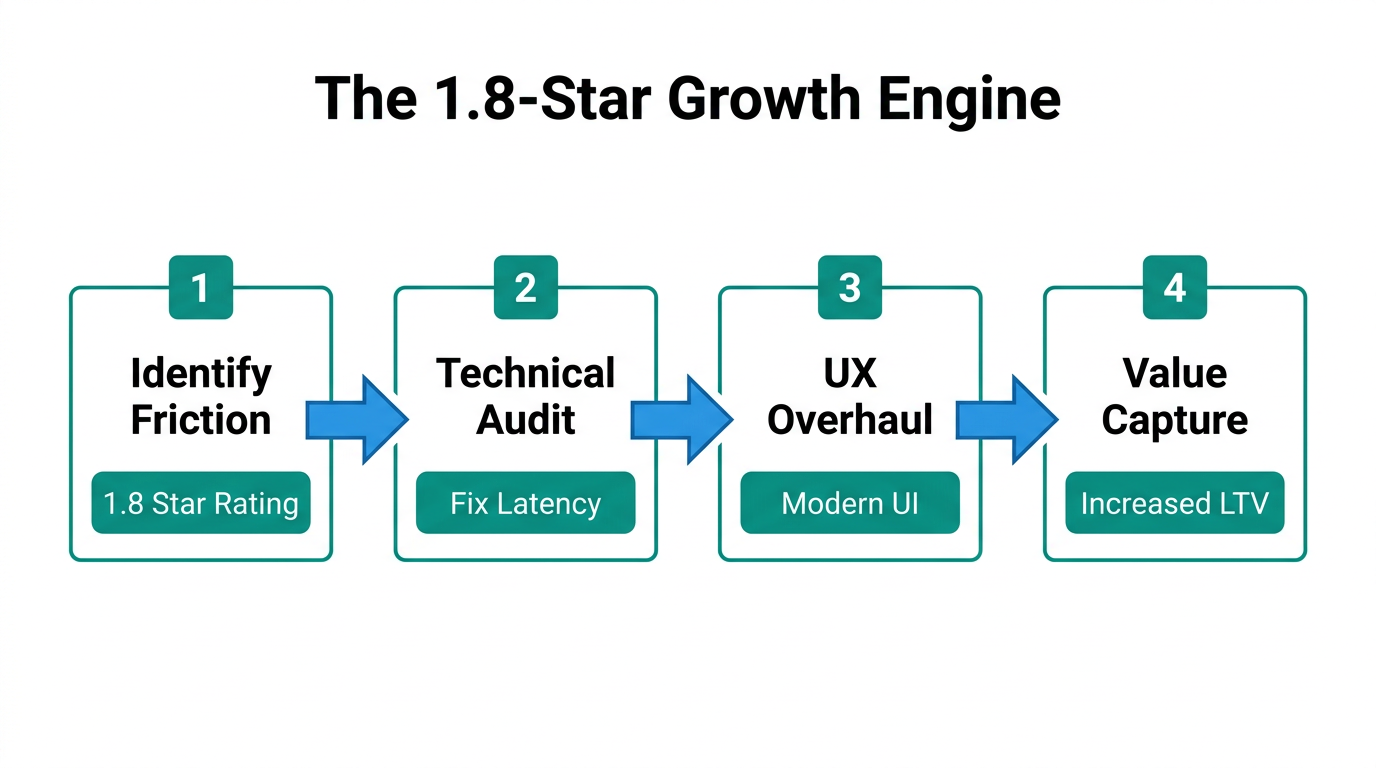
Counterintuitively, a 1.8-star rating (on a 1-5 scale) can be a signal of extreme product-market fit. If a business is generating $100 million in revenue and $45 million in profit despite users hating the interface, it means the underlying utility is so powerful that customers are willing to endure a subpar experience. This is the hallmark of a business growth through acquisition strategy: you aren't gambling on whether people want the product; you are simply betting that you can manage it better than the previous owners.
Vetting the Tech Debt
During the due diligence process, the team discovered that the engineering culture had decayed. To fix this, they eventually had to fire 70% of the staff, replacing them with high-scale engineers from places like Yahoo and Google. When you acquire an undermanaged app, your first priority is a talent reset. You need operators who have "seen the movie before" and know how to scale from 5 million to 20 million users without the tech stack collapsing.
Structuring the Deal: 9x Return on Equity
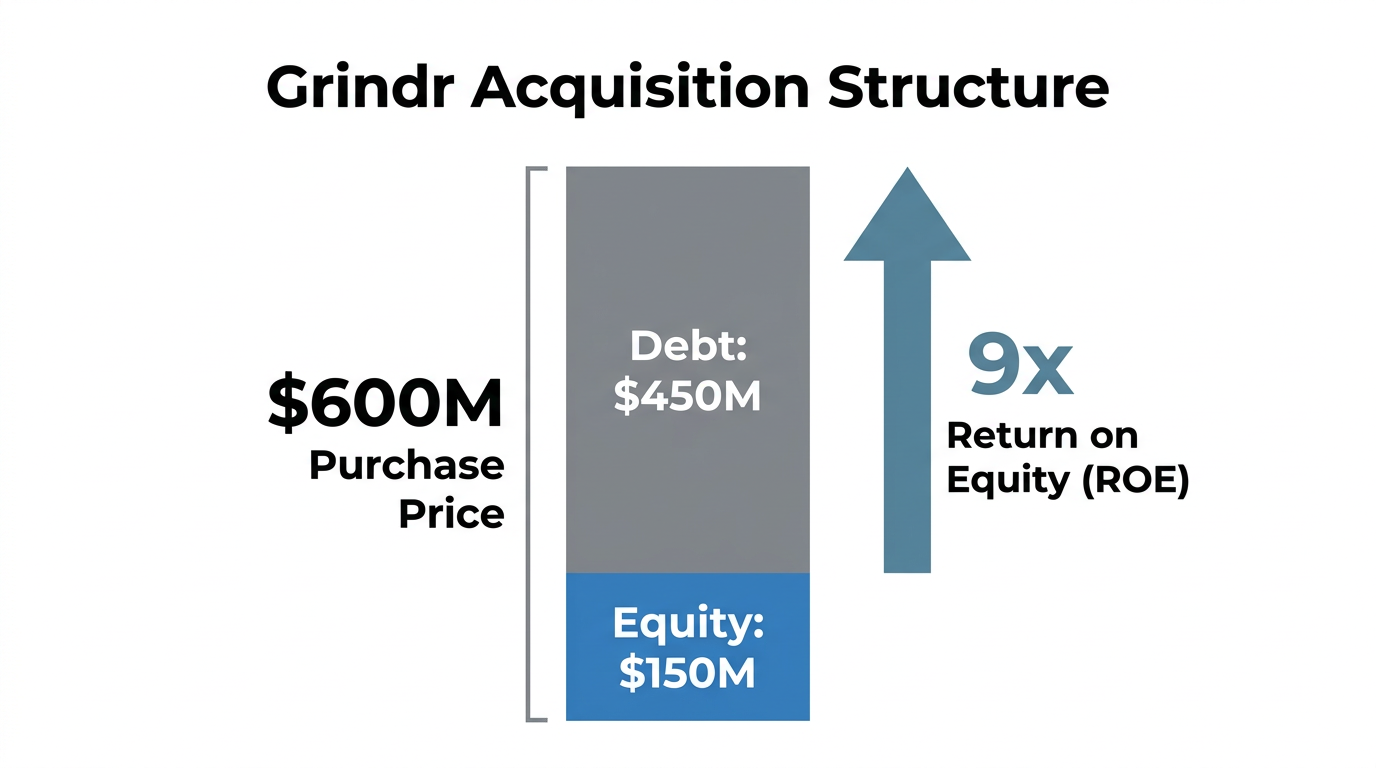
The genius of the Grindr acquisition wasn't just in the price—it was in the financial engineering. Unlike venture capital, where you use 100% equity to chase a 100x return, the team used a Special Purpose Vehicle (SPV) and a mix of debt and earn-outs to minimize their capital at risk while maximizing upside.
| Capital Component | Amount | Purpose/Source |
|---|---|---|
| Equity | $200 Million | Raised via SPV and personal capital |
| Debt | $200 Million | Provided by Fortress Investment Group |
| Earn-out | $200 Million | Paid to the seller only upon exit |
| Total Deal | $600 Million | Acquisition Price |
Two and a half years later, the company went public on the NYSE at a valuation of $2 billion. Because the debt stayed on the business and the earn-out was paid from the proceeds, the initial $200 million in equity transformed into $1.8 billion of value—a staggering 9x return on equity in less than 36 months.
"In private equity, you can't take zeros. In angel investing, you can take zeros. The math of PE is about reducing risk while using leverage to multiply the wins."Risk Reduction: Navigating Legal and Regulatory Minefields
In app acquisition, the biggest risks aren't always technical; they are often regulatory. Grindr was being sued by Attorneys General over privacy concerns and data leakage regarding HIV status. To mitigate this, the team didn't just hire lawyers—they hired a veteran Chief Privacy Officer from Yahoo who already had established trust with the regulators. This move alone neutralized a massive liability almost overnight.
When sourcing such opportunities, modern tools can help you vet the creator ecosystem surrounding an app. For brands looking to drive growth post-acquisition, platforms like Stormy AI allow you to discover and vet TikTok and Instagram creators to build a UGC engine, which is often cheaper than traditional Google Ads for apps with sensitive niches.
The Turnaround Playbook: Growth After the Close
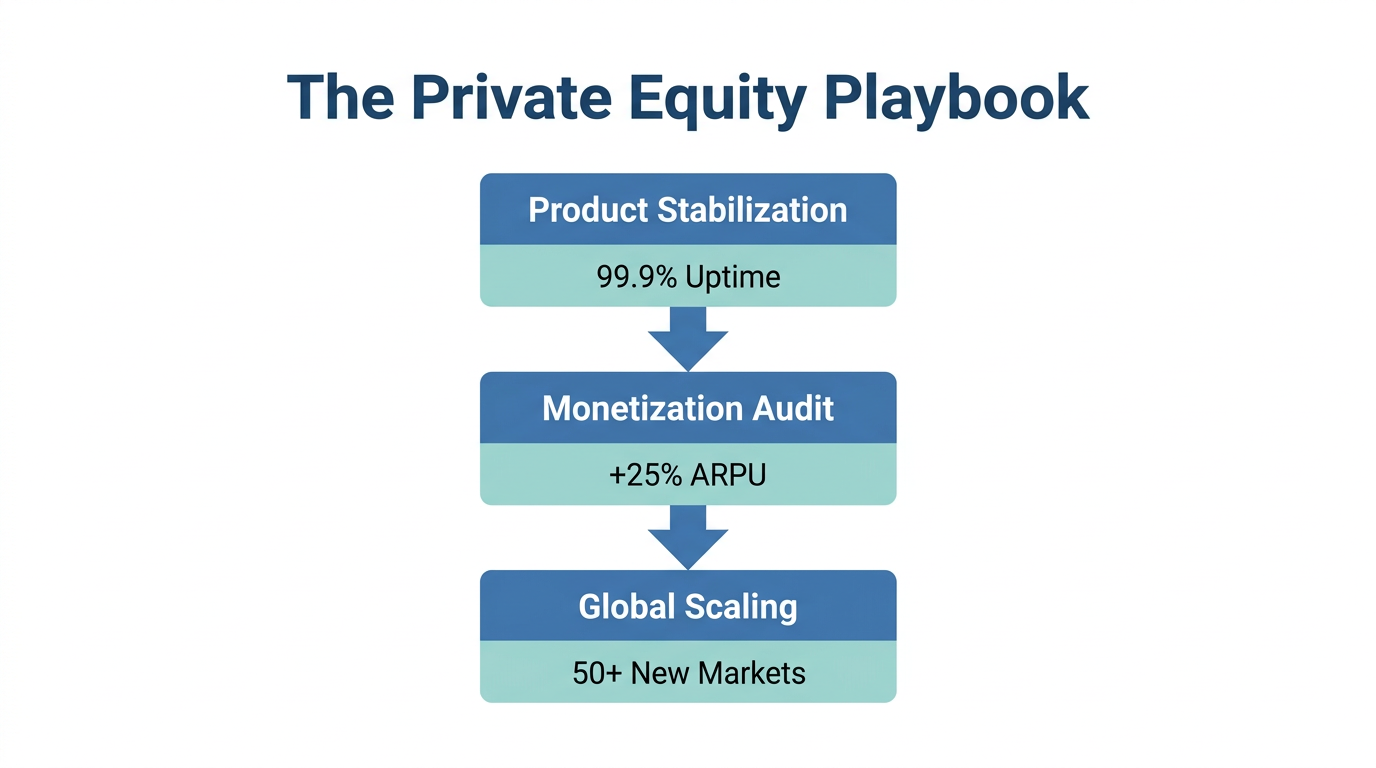
Once the talent was reset and the risks were mitigated, the team applied what they called the "Tinder Playbook." This involved a series of low-risk, high-reward product optimizations:
- Pricing Strategy: Implementing localized pricing rather than a uniform global fee.
- New Features: Introducing "Boost" features and a web version of the app.
- Ad Reduction: Temporarily removing intrusive ads to improve user retention.
- UGC Marketing: Leveraging the community to create authentic content, often managed through a Creator CRM or platforms like Stormy AI to source influencers who actually use the product.
By focusing on these "boring" optimizations, they doubled revenue from $100 million to $200 million in just two years. They didn't need a revolutionary new idea; they just needed to execute the basics of tech M&A at a high level.
Conclusion: Finding Your Own Glitch
The Grindr story serves as a masterclass in buying a business strategy. It proves that wealth is created at the intersection of expertise and courage—having the expertise to see past a 1.8-star rating and the courage to ignore the social stigma that scares away traditional buyers. Whether you are using Notion to track your deal flow or a specialized platform to source the creators who will fuel your app's growth, the lesson remains the same: focus on the pain points. Where there is anger and frustration in a market, there is usually an undervalued asset waiting for an operator to fix it.