Entrepreneurship has undergone a fundamental phase shift over the last decade. Historically, starting a business required massive upfront capital, physical infrastructure, and a tolerance for high-stakes risk that few could afford. Today, that barrier has crumbled. According to Morgan Stanley research, the digital economy continues to expand as the heavy lifting of manufacturing, hosting, and logistics can be rented on-demand. We have entered the era of the business in a box model, where founders can focus on the only two things that actually move the needle: pure design and relentless execution. For those using the right Tegus research tools to find their niche, the path from idea to revenue has never been shorter.
The Fabless Revolution: From Semiconductors to Software

To understand the modern e-commerce infrastructure, we have to look back at the history of the semiconductor industry and a man named Morris Chang. In the early 1980s, if you wanted to design a computer chip, you also had to own the factory to build it. These facilities, known as "fabs," cost billions of dollars. This high fixed cost stifled innovation because brilliant designers couldn't afford the entry fee. Morris Chang, after a long career at Texas Instruments, saw a gap in the market and founded the Taiwan Semiconductor Manufacturing Company (TSMC). His insight was simple: separate design from manufacturing.
By creating a "pure-play" foundry, TSMC allowed designers to stay "fabless." They could focus entirely on the architecture of the chip while renting TSMC's multi-billion dollar capacity. This model exploded the rate of technological progress because it lowered the cost of failure for every new designer. Today, we are seeing this exact same pattern repeat across every sector of the creator economy. Modern founders don't build server farms; they rent Amazon Web Services (AWS). They don't build custom checkout engines; they leverage the scalable business systems provided by Shopify. They don't even need a corporate office to manage their team communications when tools like OpenPhone provide a professional virtual phone system from day one.
Rented Capacity: The Foundation of the Modern Brand
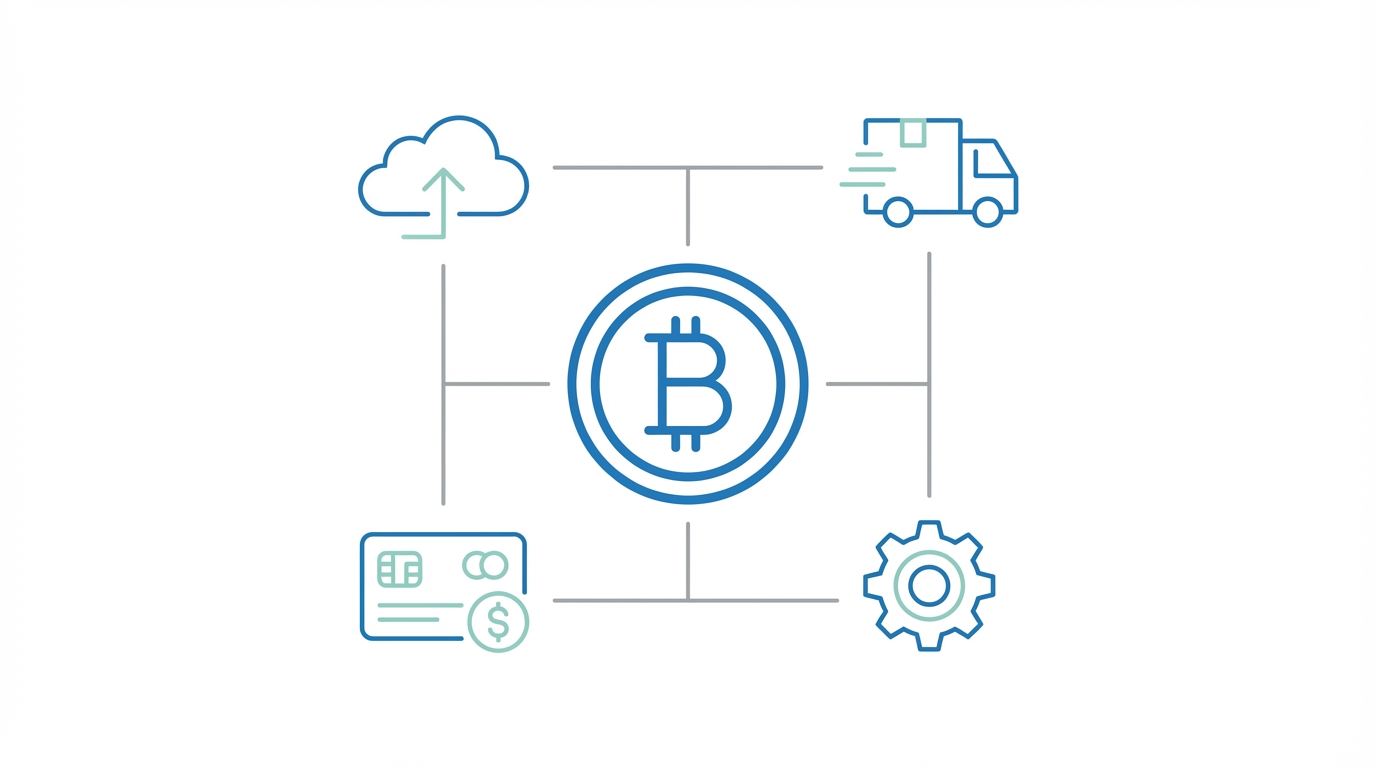
The core of the business in a box model is the transition from capital expenditure (CapEx) to operating expenditure (OpEx). In the old world, you bought the "box" (the factory, the server, the warehouse). In the new world, you rent the capacity inside the box. This shift allows for rapid prototyping and what many call the minimum viable product guide for the modern era. If you want to test a new apparel line, you don't need to sign a lease for a storefront. You can spin up a Shopify store in an afternoon, use third-party logistics (3PL) to handle fulfillment, and reach your first customer in hours.
This is what Shopify calls "arming the rebels." By aggregating the power of millions of small merchants, they can offer e-commerce infrastructure that rivals the giants. Every 28 seconds, an entrepreneur on the platform makes their first sale. These founders aren't worrying about database management or SSL certificates because that capacity is handled by the platform. Instead, they are focusing on customer relationship management and product-market fit. Even traditional service businesses are adopting this model by using virtual communication stacks like OpenPhone to separate work and personal lives while scaling a remote sales team.
A Step-by-Step Playbook for Your Scalable Business System
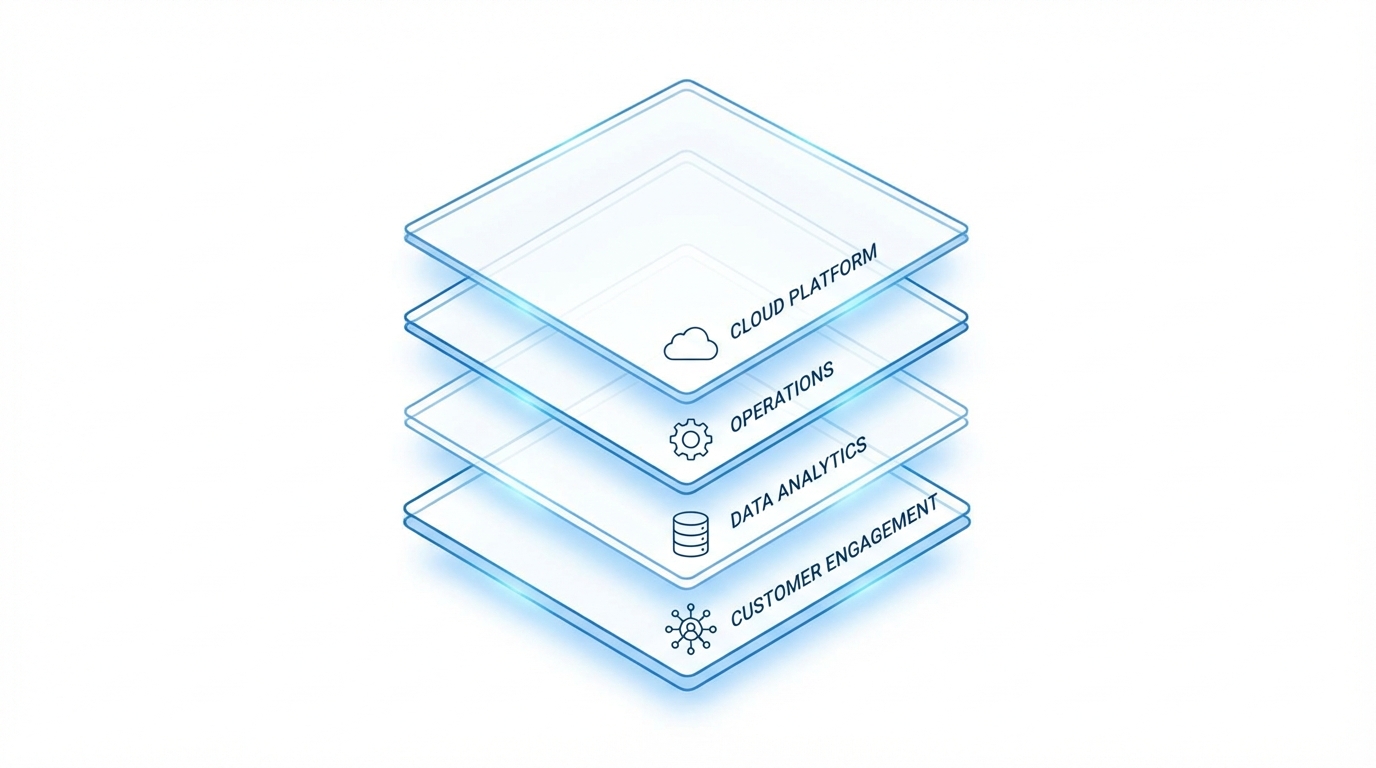
Building a brand today is less about invention and more about intelligent assembly. You are essentially a DJ, mixing different creator economy tools to create a unique value proposition. Here is the step-by-step playbook for leveraging modern infrastructure to build your own business-in-a-box.
Step 1: The Intellectual Curiosity Phase
Before building, you must identify a problem worth solving. Use high-fidelity research platforms like Tegus to dive into industry transcripts and understand where existing players are failing. Your goal is to find a niche with high demand but fragmented supply.
Step 2: Assemble the Digital Infrastructure
Once you have a hypothesis, don't build from scratch. Use scalable business systems to create your foundation. Secure your domain through Google Domains, set up your hosting on AWS for stability, and establish a professional presence with OpenPhone. This ensures your startup looks credible from the first customer interaction.
Step 3: Source and Vet Your Content Engine
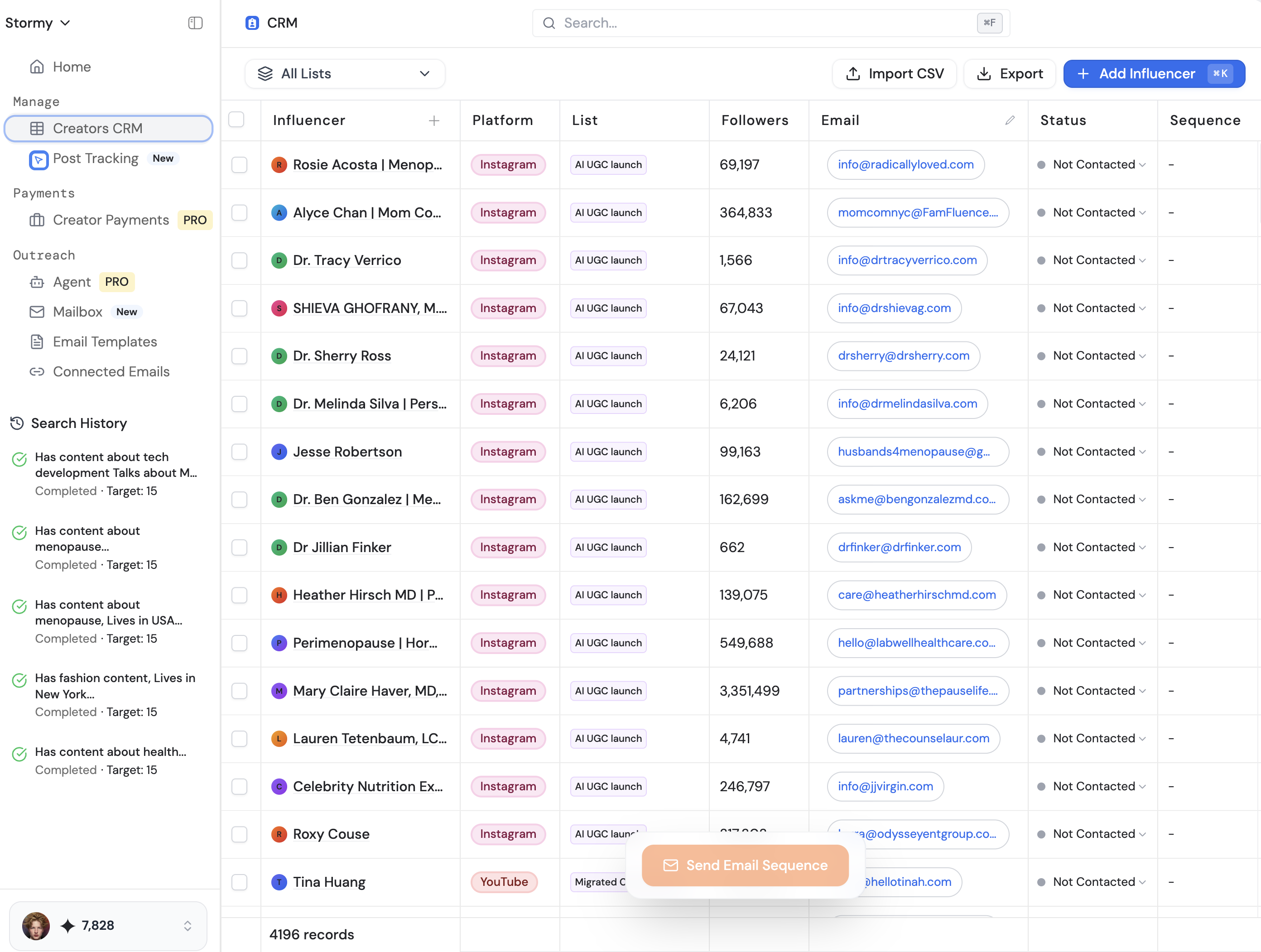
In the modern market, attention is the currency. Research from Nosto shows that user-generated content (UGC) is significantly more influential than brand-created assets. You need a steady stream of UGC and influencer partnerships to drive traffic. Platforms like Stormy AI streamline creator sourcing and outreach, allowing you to find influencers who match your niche and automatically vetting them for audience quality. This removes the manual labor of creator discovery, letting you focus on the creative brief.
Step 4: Execute the Minimum Viable Product
Launch your store on Shopify and test your core hypothesis. Are people willing to pay for this? Use the platform's built-in analytics to track conversion rates. If the experiment fails, the cost was minimal. If it succeeds, the infrastructure is already built to scale from 10 to 10,000 orders without you needing to change your backend.
The New Scarcity: Execution and the Bias for Action

If the tools are abundant and the capital is accessible, why isn't everyone a successful entrepreneur? The answer lies in the bias for action. We all have friends who text us "startup ideas" that never leave the group chat. In a world of rented capacity, the only remaining scarce resource is the person who actually pulls the trigger. Entrepreneurs like Nick Huber and Barrett O'Neill have mastered this by building holding companies that launch rapid prototypes. They don't wait for perfection; they build a minimum viable product guide, launch it in a week, and let the market tell them if it's worth pursuing.
These "bias for action" types leverage creator economy tools to run multiple experiments simultaneously. Barrett O'Neill's model involves jamming on an idea and having a prototype ready for 10 test customers within seven days. This velocity is only possible because they aren't bogged down in the "dirty work" of building servers or managing manual email threads. For modern outreach, they might use the autonomous AI agent capabilities of Stormy AI to handle creator discovery and follow-ups while they focus on the next big experiment. They understand that in the current economy, the winner isn't the one with the best idea, but the one who tests the most ideas the fastest.
Scaling Beyond the Box: Why Intellectual Curiosity is the Final Frontier
As you scale your scalable business systems, you will eventually reach a point of liquidity. Platforms like Acquire.com (formerly MicroAcquire) have created a marketplace where these small-to-medium "businesses in a box" can be bought and sold like commodities. This provides a clear exit path for the micro-entrepreneur, turning what used to be a side project into a life-changing financial event. However, to stay ahead of the curve, you must maintain a high level of intellectual curiosity. The tools will continue to evolve—from Web3 integrations to AI-driven personalization.
The transition from "centralized" to "decentralized" friend groups is a major part of this evolution. You are no longer limited to the people in your physical hometown. Your "tribe" is now found in Discord servers, WhatsApp groups, and specialized niches. By surrounding yourself with other "bias for action" individuals, you cross-pollinate ideas and stay sharp. The modern brand isn't just a product; it's an ecosystem built on rented infrastructure and fueled by a community of like-minded builders who refuse to be constrained by legacy costs.
Conclusion: The Best Time to Build is Now
The business in a box model has fundamentally changed the rules of the game. By leveraging e-commerce infrastructure from Shopify, computing power from AWS, and communications from OpenPhone, you can build a global brand from a kitchen table. The only thing standing between you and a successful launch is the willingness to execute. Don't let your ideas languish in a notes app. Use a minimum viable product guide, leverage creator economy tools to find your audience, and start building. In a world where capacity is a commodity, your execution is your greatest competitive advantage. If you're ready to find your exit, start scaling today and keep your eyes on marketplaces like Acquire.com for your eventual win.