The SaaS landscape of 2026 looks nothing like the venture-backed gold rush of the previous decade. We are currently living through the aftermath of the "SaaSpocalypse"—a massive market correction in early 2026 that saw $1 trillion in value evaporated as investors realized that traditional seat-based pricing was dead. In this new era, the most successful entrepreneurs aren't building general-purpose platforms; they are building Vertical AI Micro-SaaS tools designed to solve hyper-specific problems with surgical precision.
With the global SaaS market projected to reach up to $408 billion by the end of this year, the opportunity for solo founders has never been greater. Thanks to agentic builders like Lovable, the barrier to entry has shifted from "knowing how to code" to "knowing how to architect outcomes." This guide will show you how to build, launch, and scale a $10k/month Micro-SaaS in under 14 days.
Vertical AI: The Death of Generic Wrappers
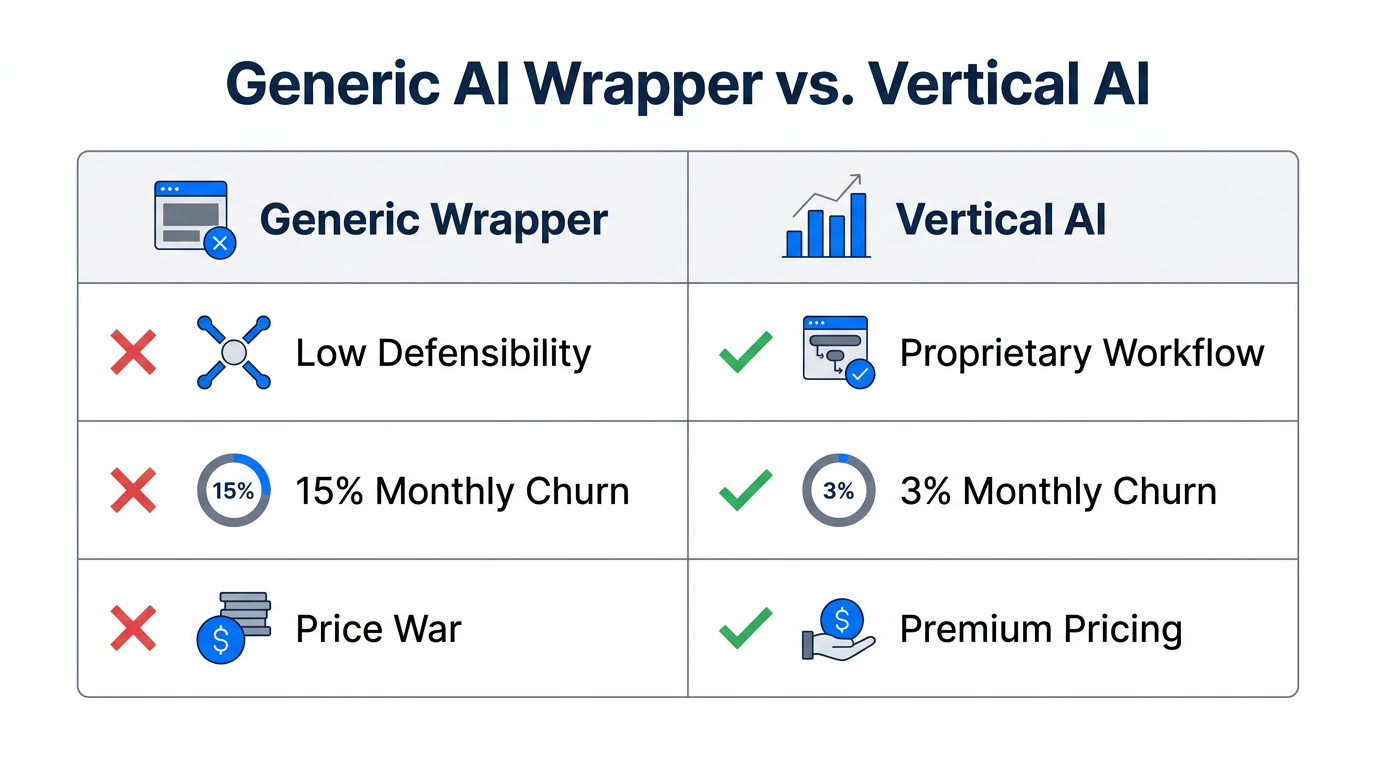
In 2024 and 2025, the market was flooded with "GPT wrappers"—simple interfaces that did little more than pass a prompt to a large language model. By 2026, these tools have faced 15% monthly churn because they lack a "moat." Success today is found in Vertical AI, which involves building tools deeply integrated into niche industry data, such as automated SEO auditors for local retailers or AI-driven compliance checkers for boutique law firms.
Vertical AI tools are more profitable because they solve "mandatory" problems. When a tool is deeply embedded in a specific workflow, it becomes "non-optional" software. Investors and savvy founders are now prioritizing the Rule of 40 (Growth Rate + Profit Margin ≥ 40%), a metric that is much easier to hit when you are charging for high-value outcomes rather than user logins.
"The gap between human-written and AI-written software is now indistinguishable. The value has shifted entirely from the code itself to the vertical industry data it processes."
The 2026 Agentic Stack: Build and Launch
Building a production-ready application no longer requires a team of five developers. The current stack is divided into "Build" agents for development and "Launch" agents for growth. At the heart of this revolution is Lovable, a tool that has reached $100 million in ARR by enabling non-technical users to generate full-stack React/TypeScript applications with Supabase backends in under 90 minutes.
| Feature | Traditional SaaS (2020-2024) | AI-Only SaaS (2026) |
|---|---|---|
| Cost to MVP | $50,000 – $300,000 | $200 – $500 |
| Time to Launch | 6 – 12 months | 2 – 14 days |
| Team Size | 3 – 10 people | 1 Solopreneur |
| Maintenance | Manual DevOps | Automated Self-Healing |
Beyond the build, founders are leveraging autonomous marketing agents to handle SEO and social media 24/7. For growth, platforms like Stormy AI have become essential for finding and outreaching to niche creators who can drive targeted traffic to these new vertical tools.
Step-by-Step: Building Your MVP with Lovable
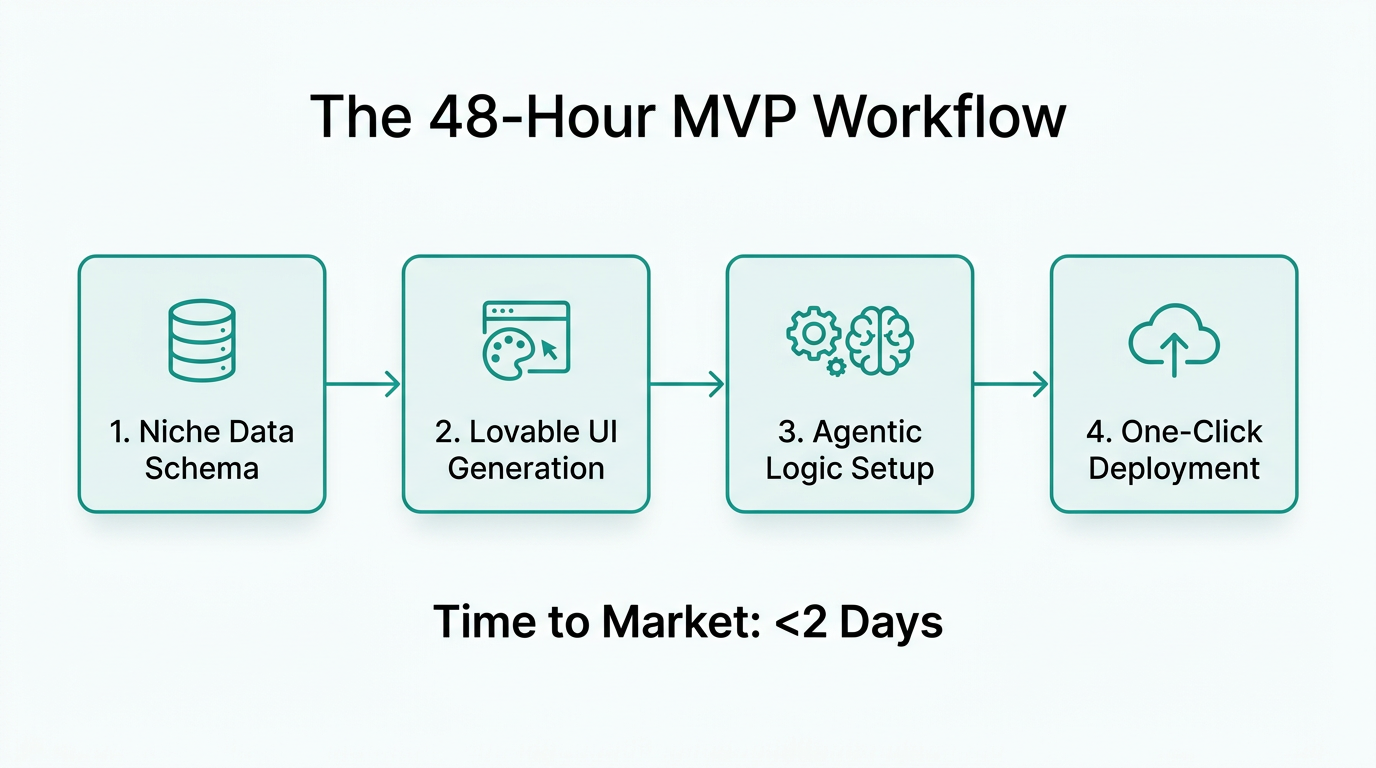
If you want to move from idea to income, follow this 90-minute sprint to create your functional React MVP using Lovable.
Step 1: Define the Vertical PRD
Don't just ask the AI to "build a CRM." Be hyper-specific. Use a high-reasoning model like ChatGPT to generate a Product Requirements Document (PRD) for a "Boutique Real Estate Lead Qualifier for the Florida Market." Detail the database schema, the API integrations needed, and the specific outcome the user expects.
Step 2: The Vibe Coding Session
Paste your PRD into Lovable. Watch as it scaffolds the frontend in React and the backend in Supabase. Unlike traditional coding, you are "Vibe Coding"—guiding the AI's aesthetic and functional direction through natural language. If a button looks wrong, tell it. If the Stripe integration needs a specific logic, describe it.
Step 3: Connect the Agentic Plumbing
To make your SaaS "agentic," connect it to the Model Context Protocol (MCP). This allows your app to talk directly to other tools like Slack or HubSpot. For 2026 apps, the ability to trigger actions in other software is a mandatory requirement for high retention.
"We're not just pairing with AI anymore; we're managing teams of them. Your job is no longer to write code, but to run the control center for your engineering agents."
Pricing for the SaaSpocalypse: Outcome over Seats
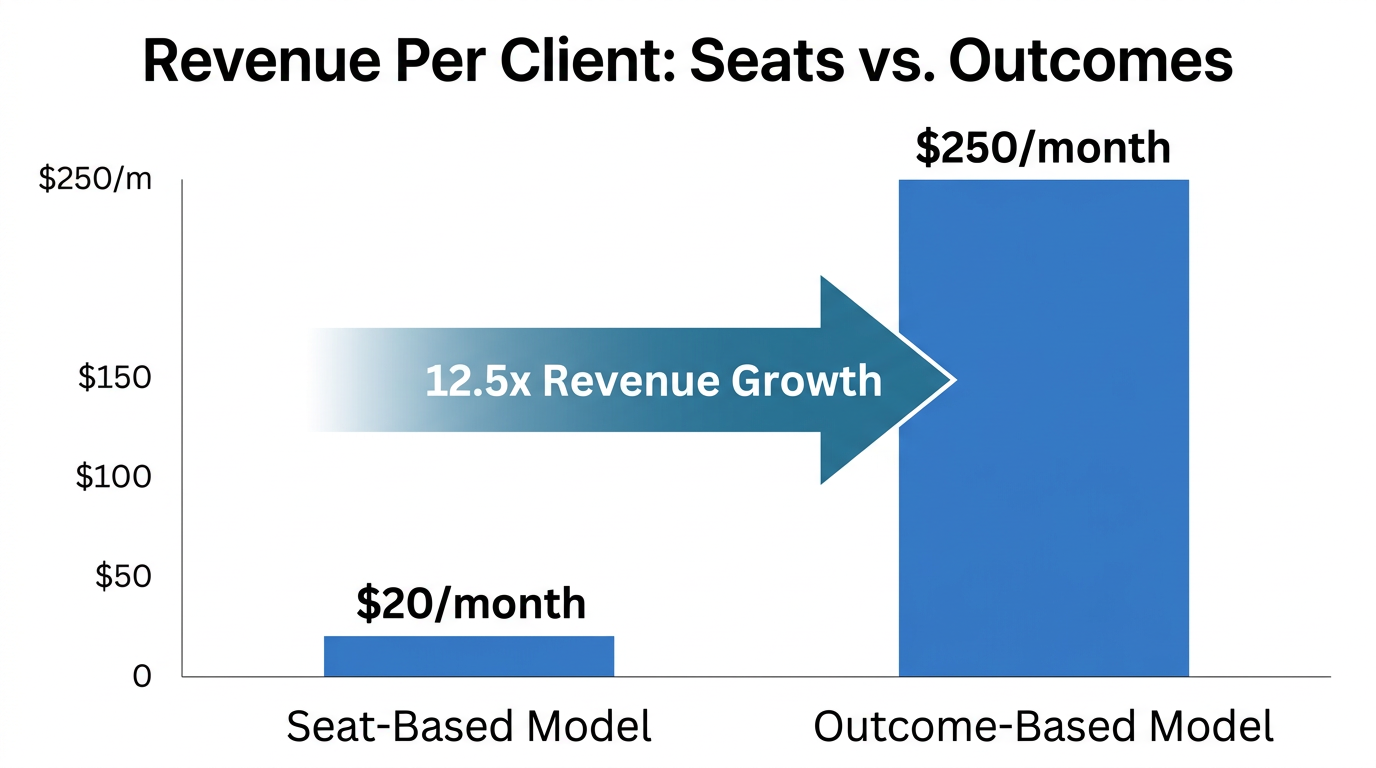
One of the biggest shifts in 2026 is the abandonment of per-seat pricing. When an AI agent can do the work of ten humans, charging per user makes no sense. The most profitable Micro-SaaS founders have pivoted to Outcome-Based Pricing.
Companies like Sierra have proven that customers are willing to pay significantly more when they pay for results. This model aligns your success with the customer's success and virtually eliminates the "optional software" churn risk. As noted by the U.S. Chamber of Commerce, small businesses are now operationalizing AI, looking for tools that provide a clear, measurable ROI rather than just "saving time."
Tactics for Maintaining 80% Profit Margins
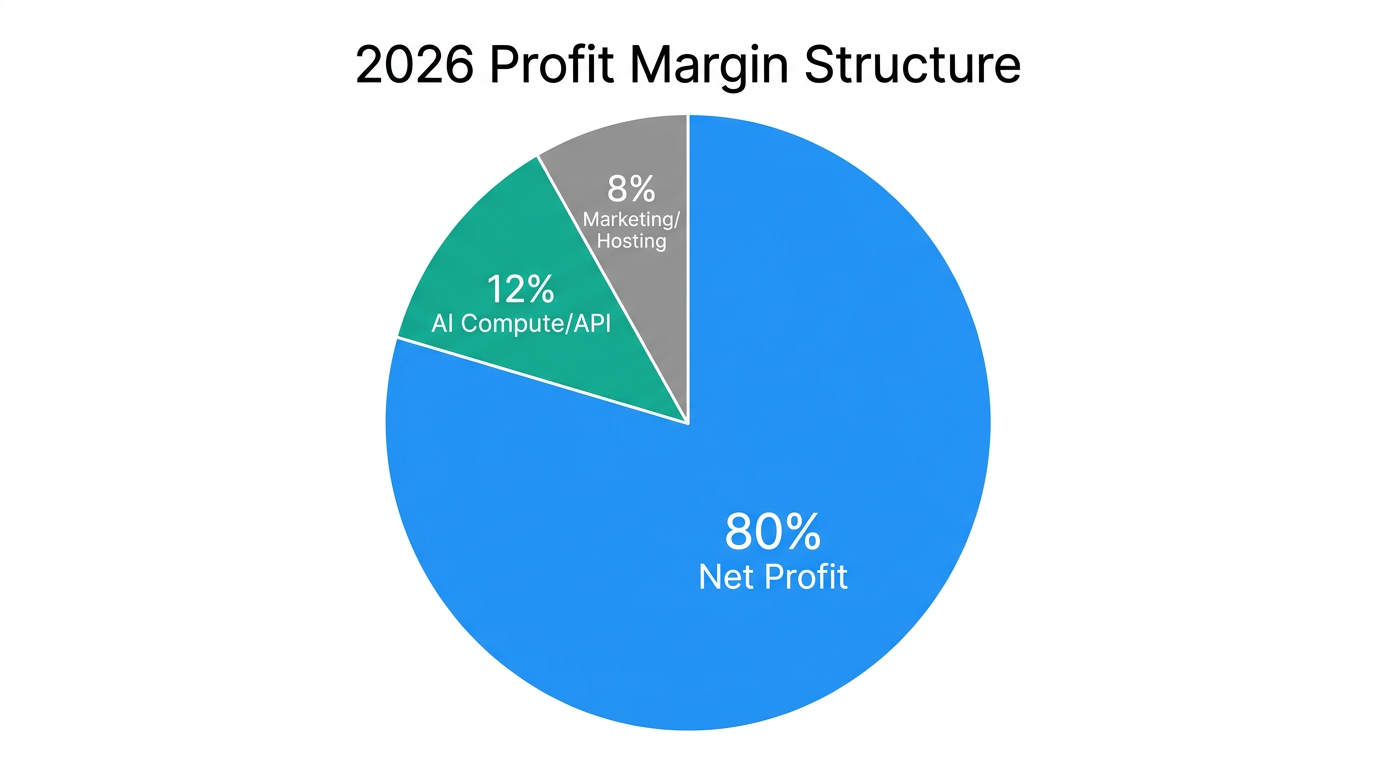
While AI-native SaaS margins can sometimes dip due to high inference costs, smart founders are using Model Routing to maintain 80% profit margins. Not every task requires the power of a GPT-5 or Claude 4.
- Tier 1 Tasks (UI tweaks, CSS, simple logic): Route these to lower-cost models like Llama 3 or o4-mini. These models cost pennies compared to their larger counterparts.
- Tier 2 Tasks (Complex reasoning, DB schema, Stripe logic): Reserve your "expensive" tokens for high-stakes operations where accuracy is non-negotiable.
By implementing this routing strategy, you can reduce your token spend by up to 80%, allowing you to scale your Micro-SaaS without your compute bill eating your profits. This tactical depth is what separates profitable entrepreneurs from those just "playing" with AI.
Navigating the Risks: Technical Debt and Hallucinations
It’s not all easy wins. 2026 has been called the "Year of Technical Debt." Because AI tools are optimized for completion rather than long-term maintenance, founders often ship 400 lines of boilerplate where 50 would suffice. This can make apps unmaintainable after the first month if not managed carefully.
Furthermore, "Action Hallucinations" remain a threat. While an AI can write the code to update a database, it might occasionally report a success when the operation actually failed. Founders must implement human-in-the-loop guardrails, using frameworks like LangGraph to ensure that critical actions require a manual node of approval.
Conclusion: The Solopreneur Era
Building a $10k/month Micro-SaaS in 2026 is no longer a pipe dream—it is a repeatable playbook. By focusing on Vertical AI, leveraging agentic builders like Lovable, and adopting outcome-based pricing, a single individual can outpace traditional software companies that are still bogged down by legacy code and seat-based models.
Success in this new economy requires a shift in mindset: stop thinking like a coder and start thinking like an orchestrator. Use tools like Stormy AI to find your first customers through influencer partnerships, and use agentic workflows to keep your overhead low. The $315 billion SaaS market is waiting for niche solutions—go build one.