Building a ‘Shopify Brain’: Data-Driven Customer Acquisition via Claude Code
Master Shopify growth hacking 2026 with Claude Code data analytics. Learn to build an 'AI Brain' for automated sales, inventory management, and customer acquisition.
In the fast-paced world of 2026, the distinction between a standard e-commerce store and a market leader is no longer just the product catalog—it is the intelligence of the underlying infrastructure. We have officially moved beyond the era of simple chatbots into the age of agentic commerce. Today, high-growth brands are building what many call a "Shopify Brain": a centralized AI layer powered by Claude Code that doesn't just chat, but autonomously manages inventory, pricing, and customer acquisition strategies through deep API integration.
As of February 2026, Anthropic has reached a staggering $14 billion annualized revenue run-rate, with its developer-centric tool, Claude Code, generating $2.5 billion of that total according to Anthropic's latest fiscal reports. With over 300,000 business customers leveraging the Claude Enterprise API, the shift toward agentic AI workflows is undeniable. This guide explores how you can leverage Claude Code business intelligence to turn your storefront into a self-optimizing growth engine.
The MCP Standard: The USB-C for Your Store's Data
The secret sauce behind the "Shopify Brain" is the Model Context Protocol (MCP). In 2026, MCP has become the universal standard for AI-to-data connectivity, functioning much like USB-C did for hardware. By utilizing an official MCP server, Claude can now "see" and "touch" your e-commerce backend in real-time, safely and securely.
For Shopify merchants, this means deploying the Shopify MCP to give Claude direct access to products, orders, and customer data via the Shopify Admin API. This isn't just about reading data; it's about action. Merchants integrating Claude into their daily operations report saving between 15 to 25 hours per week by automating tasks that previously required manual spreadsheets and cross-referencing.
"The MCP standard has transformed AI from a passive observer into an active participant in the e-commerce supply chain, allowing for sub-second decision-making across global inventories."
Identifying Underperformers with Claude Code Data Analytics
One of the most powerful applications of Claude Code data analytics is the ability to perform complex longitudinal analysis in seconds. Instead of hiring a data scientist to spend days in SQL, you can prompt Claude to identify specific trends: "Which of my high-margin products are underperforming by more than 15% compared to the same period in 2025?"
By piping your historical sales data through tools like Windsor.ai or directly via the Shopify API, Claude can cross-reference current conversion rates with inventory levels and ad spend. This allows for hyper-specific growth hacking where you focus your energy only on the products with the highest recovery potential.
Automating Sales Triggers and Inventory Deltas
Once an underperforming product is identified, the "Shopify Brain" moves into the execution phase. Using AI-driven customer acquisition strategies, you can set up automated sales triggers. For example, if a product’s inventory delta increases by 20% while page views remain stagnant, Claude can autonomously suggest and—with your approval—implement a tiered discount structure.
- Tier 1: 10% discount for repeat customers to clear initial surplus.
- Tier 2: 20% discount combined with a new TikTok Ads campaign if Tier 1 doesn't meet goals within 48 hours.
- Tier 3: Flash sale trigger via Mesa automation for remaining stock.
| Strategy Component | Manual Workflow (Old) | Agentic Workflow (2026) |
|---|---|---|
| Data Mining | Manual Export to CSV | Autonomous MCP Query |
| Pricing Logic | Human intuition/weekly meetings | Real-time Inventory Deltas |
| Campaign Launch | Manual Briefing of Creative Team | AI-generated Ad Feeds |
Advanced Customer Behavior Mining: Beyond Shopify
While Shopify is the leader for many, enterprise brands using Adobe Commerce (Magento) require more robust data mining capabilities. Platforms like Mirasvit have launched specialized MCP connectors that allow Claude to perform complex SQL queries on Magento databases using natural language.
This is where Shopify growth hacking 2026 meets enterprise-level business intelligence. By connecting Claude to your SQL database, you can uncover hidden customer behaviors, such as the exact "churn point" in a subscription lifecycle or the specific product combinations that lead to the highest Customer Lifetime Value (LTV). For those looking to scale even faster, using data enrichment techniques on Medium and other platforms helps build a more comprehensive view of the market.
"Mining SQL data with natural language isn't just a convenience—it's a competitive moat. It allows non-technical founders to act like veteran CTOs."
Avoiding the 'Isolated Integration' trap
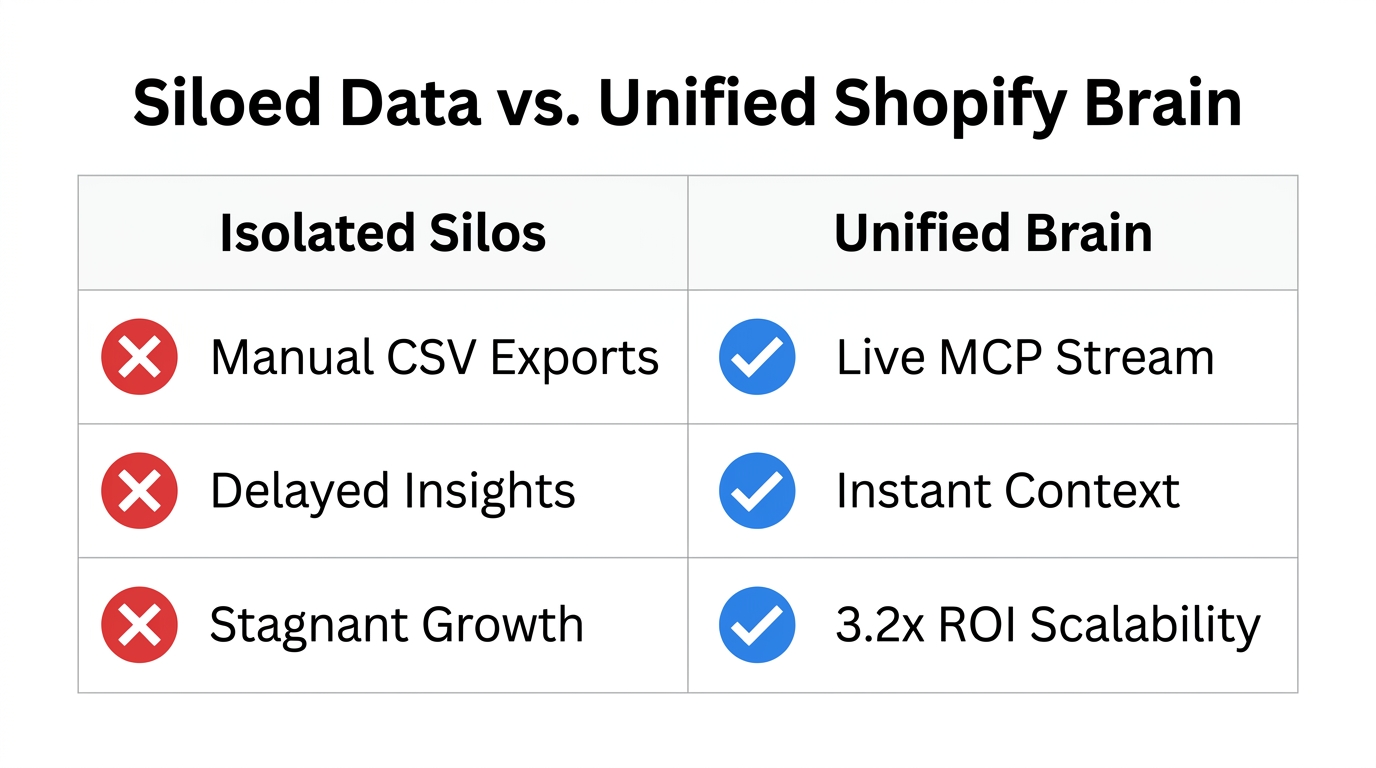
A common mistake in AI implementation is treating the AI as a standalone chatbot. To build a true "Shopify Brain," you must avoid the Isolated Integration trap. If your AI cannot see your real-time stock levels, your Meta Ads performance, and your influencer marketing data simultaneously, it will hallucinate and make poor recommendations.
A unified growth stack ensures that your AI layer has a 360-degree view. For instance, when sourcing creators for a new campaign, platforms like Stormy AI provide essential data on creator performance and audience demographics. By feeding this influencer data into your Claude-powered CRM, the AI can correlate specific influencer posts with real-time inventory spikes in your Shopify store, refining your acquisition strategy on the fly.
Governance: Secure and Profitable Automated Discounting
Before you let an AI agent manage your pricing, you must establish Architecture Decision Records (ADRs). These are the "guardrails" that ensure Claude operates within your brand’s safety and profitability limits. In 2026, tools like Archgate are used to feed these coding and business rules to Claude before it writes a single line of integration code.
Establishing Your E-commerce ADRs
- Define Profit Floors: Never allow the AI to set a discount that brings the gross margin below 15%.
- Rate Limiting: Ensure the AI respects API rate limits of your e-commerce platform to avoid site crashes.
- Human-in-the-Loop (HITL): Require manual approval for any discount tier exceeding 30%.
By following these governance steps, you can safely deploy agentic features in platforms like Medusa or Shopify, knowing that your bottom line is protected by code-level enforcement.
The Playbook: Setting Up Your AI Brain in 2026
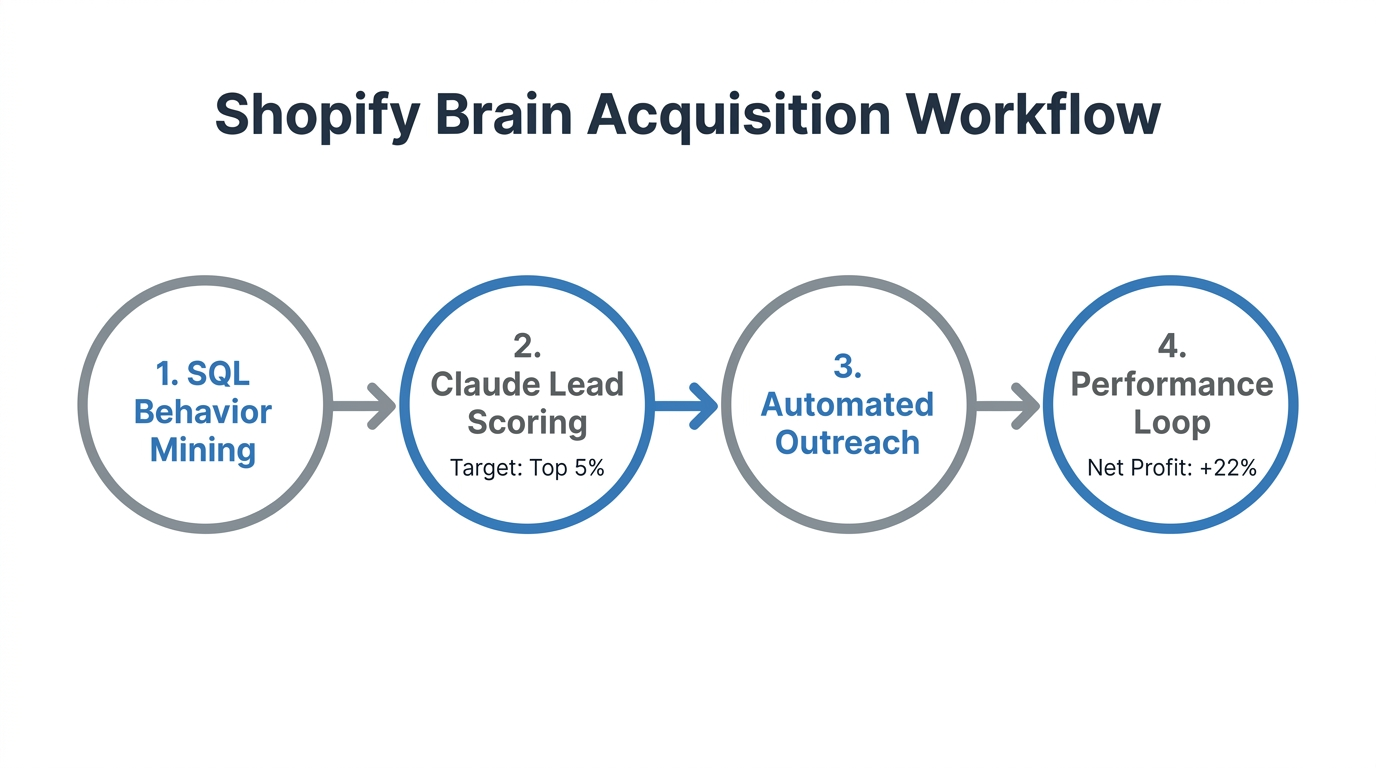
Building your own e-commerce intelligence layer requires a structured approach. Follow this 2026 playbook to integrate e-commerce sales automation into your brand.
Step 1: Deploy an MCP Server
Start by choosing the protocol-compliant server for your platform. Use the BigCommerce MCP or the Shopify equivalent to establish the data bridge. This gives Claude the "hands" it needs to interact with your store.
Step 2: Initialize a CLAUDE.md File
Think of the CLAUDE.md file as the project's long-term memory. Store your API documentation, rate limits, and brand voice guidelines here. This prevents the AI from losing context between sessions and ensures consistency in automated customer communications.
Step 3: Create Custom Skills
Develop specialized .claude/skills for frequent tasks. A sync-inventory skill, for instance, can check your warehouse API via Alloy Automation and update your storefront only when a significant inventory delta is detected.
Step 4: Scale Content with AI-Enriched Feeds
For large catalogs, use tools like WP Sheet Editor to bulk-generate thousands of SEO-optimized product descriptions. By piping WooCommerce or Shopify data through the Claude 3.7 or 4.x API, you can ensure every product page is optimized for 2026 search trends in seconds.
"The brands winning in 2026 are those that treat AI as a core system capability, not just a tool for writing emails."
Conclusion: The Future of Agentic Commerce
Building a "Shopify Brain" is no longer a futuristic concept—it is a business necessity. By leveraging Claude Code data analytics and the Model Context Protocol, you can automate the tedious aspects of store management and focus on what truly matters: creative strategy and brand building.
As you integrate these AI-driven customer acquisition tools, remember to keep your data unified. Whether you are tracking influencer performance via Stormy AI or managing complex SQL mining on Magento, the goal is a seamless flow of information. The era of manual e-commerce is over; the era of the agentic store has begun. Start building your brain today, and let the AI handle the growth hacking while you handle the vision.