The transition from manual campaign management to autonomous growth is no longer a futuristic concept; it is the current standard for high-performance Go-To-Market (GTM) teams. As we look at the landscape in 2025, the global AI in marketing market, valued at $20.44 billion in 2024, is projected to surge to $82.23 billion by 2030, according to data from Grand View Research. This explosive growth is driven by a fundamental shift in how we perceive software. We are moving away from "copilots" that require constant human prompting and toward autonomous agents that follow a Perceive-Think-Act loop. For GTM leaders, the challenge is no longer just finding an AI agent for paid ads, but orchestrating a multi-agent stack that connects CRM intelligence with real-time ad distribution.
The Multi-Agent Orchestration Paradigm: Creative vs. Bidding Agents
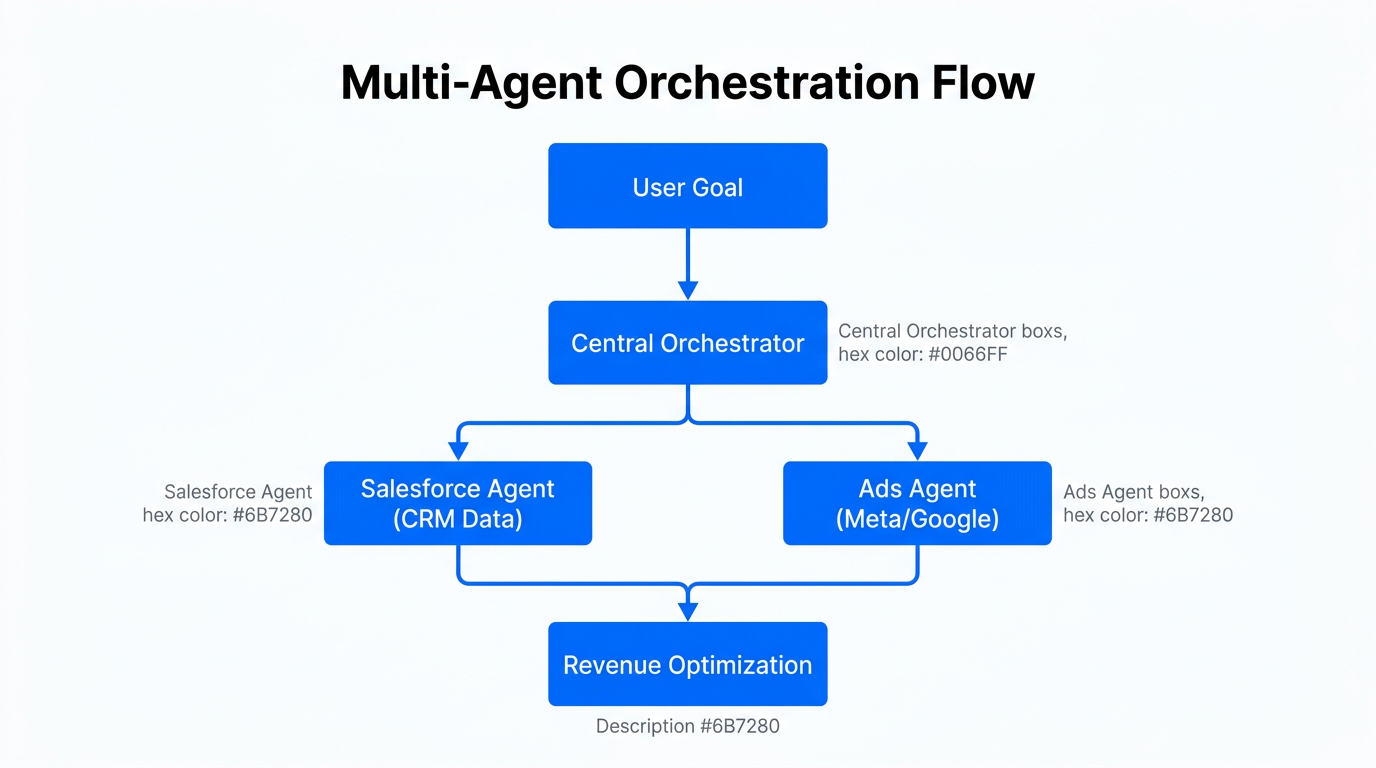
In a traditional setup, a marketing manager manually adjusts bids and swaps creatives. In a modern multi-agent orchestration environment, these tasks are split between specialized agents that communicate with one another. This modular approach allows for what experts call "constrained autonomy," where each agent excels at a specific domain while staying within global brand guardrails. Roughly 88% of organizations are already exploring these agentic workflows, as noted by SellersCommerce, recognizing that the era of the single-purpose tool is ending.
| Feature | Traditional Automation | Multi-Agent Orchestration |
|---|---|---|
| Logic Type | If-Then Rules | Autonomous Reasoning |
| Data Source | Static CSVs/API feeds | Live CRM & Performance Data |
| Efficiency Gain | 10-15% | Up to 61% |
| Optimization Goal | Click-through Rate (CTR) | Pipeline & Revenue (ROI) |
Creative agents focus on generating thousands of variations of ad copy and visuals, matching the "vibe" of trending content in real-time. On the other side, bidding agents monitor the Google Ads and TikTok Ads Manager interfaces 24/7, reallocating budget based on performance. By separating these concerns, teams can achieve an average 8:1 ROI, a massive leap from the 2:1 ROI seen with legacy automation, according to AI integration research from Latenode.
"The Agent Revolution is as significant as the cloud or mobile revolutions, moving software from something we use to something that works for us."
Connecting Salesforce Agentforce to Your Paid Ad Stack
The most significant hurdle in ad optimization has always been the "Data Silo" problem. Ad platforms optimize for clicks or on-site conversions, but they rarely know if those leads actually turned into revenue. This is where Salesforce Agentforce becomes a game-changer for GTM strategy. By embedding agentic capabilities directly into the CRM, Salesforce allows your AI agent for paid ads to see the full journey from first click to closed-won deal.
As Salesforce CEO Marc Benioff highlights in recent Salesforce reports, agents are moving to the center of the tech stack. When you connect Agentforce to your bidding agents, the system can autonomously pause a high-CTR campaign that is generating low-quality leads, shifting that budget to a campaign that is driving actual enterprise value. This revenue-based optimization is what allowed companies like Unilever to reduce their Cost-Per-Acquisition (CPA) by 30% through agentic targeting.
The Playbook: Building Custom Agents with Relevance AI and Zapier Central
You don't need a team of data scientists to build a multi-agent stack. Low-code builders have democratized access to agentic workflows. Here is a step-by-step playbook for implementing a custom stack using Relevance AI marketing tools and automation platforms.
Step 1: Define the Perception Layer
Your agents need eyes. Connect your data sources—Meta Ads Manager, Google Analytics, and Salesforce—to a central hub. Tools like Relevance AI allow you to create "data hooks" that feed real-time performance metrics into an LLM like Claude 3.5 or GPT-4o.
Step 2: Design the Reasoning Engine
Use Zapier Central to define the logic. Instead of simple triggers, give the agent a "Brand Style Guide" and a set of KPIs. For example: "If ROAS drops below 2.0 on any Meta ad set, analyze the creative. If the sentiment in the comments is negative, draft three new ad variations and send them to the creative team for approval."
Step 3: Source and Manage High-Quality Inputs
An agent is only as good as the assets it has to work with. For brands scaling UGC, tools like Stormy AI can source and manage creators, while agents handle the distribution and performance tracking. This ensures the creative agent has a library of high-quality, vetted content to pull from when testing new iterations.
Step 4: Implement Action Hooks
The final step is the "Act" part of the loop. Connect your agents to your ad platforms via APIs. This allows the agent to autonomously adjust bids, swap out creatives, or reallocate budgets between Shopify-driven social campaigns and search ads. Platforms like n8n.io are excellent for orchestrating these complex, cross-platform movements.
"In 2025, AI moved from the side of the tech stack to the center, taking over entire workflows like campaign routing and performance leveling."
Solving the 'Data Silo' Problem with Revenue-Driven Intelligence
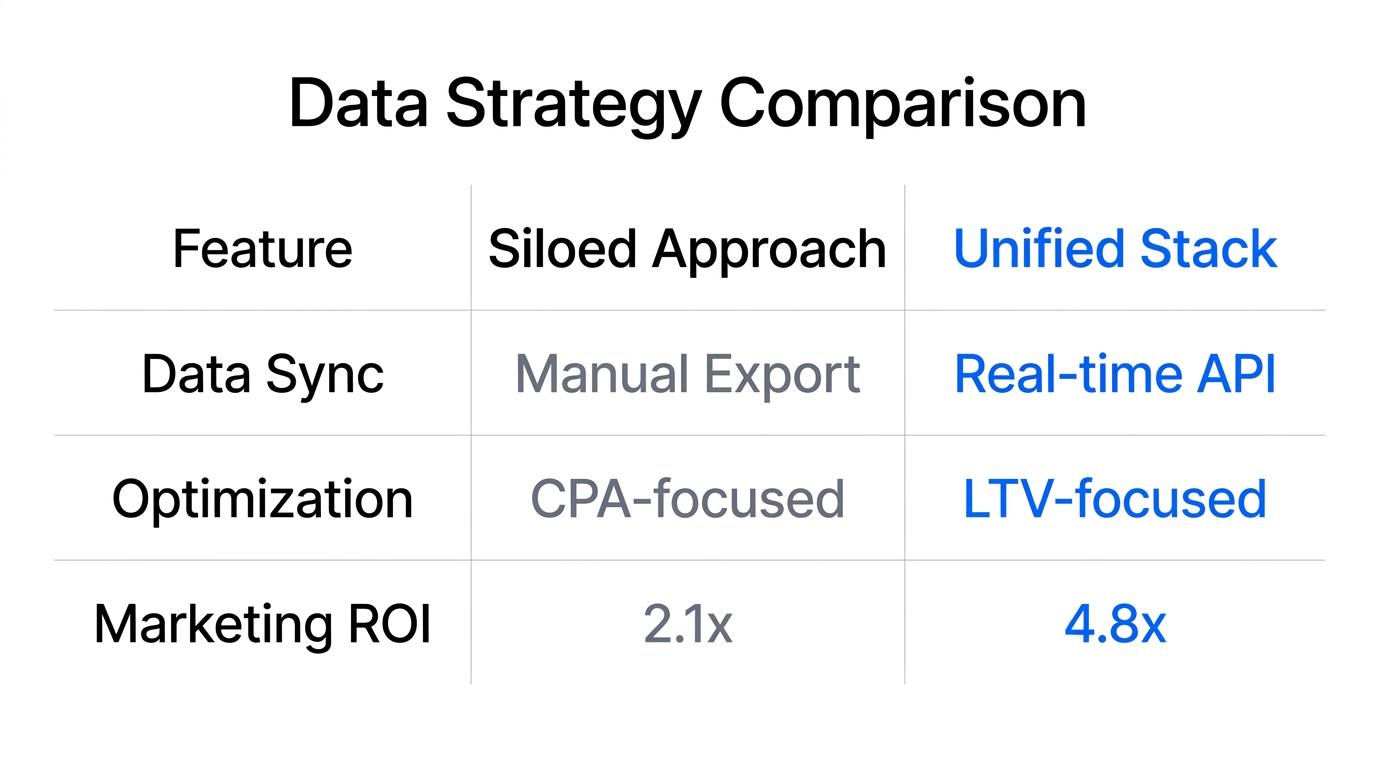
One of the most common mistakes in GTM strategy is the "set-it-and-forget-it" mentality. Even autonomous agents can suffer from "drift"—where their logic slowly diverges from the brand's ultimate goals. This often happens because the agent is only seeing half the picture. If your bidding agent is trained solely on Google Analytics click data, it might double down on a keyword that brings in thousands of visitors who never buy anything.
By training agents on CRM data, you enable multi-touch attribution analysis. This was demonstrated in a case study involving a job marketplace that used Nyra AI to achieve a 26% CTR by optimizing for deep-funnel actions rather than surface-level interest. When your Salesforce Agentforce implementation talks to your paid ad agent, the bidding logic updates based on real-world contract values.
Implementing PII Filtering for Secure Agentic Analysis
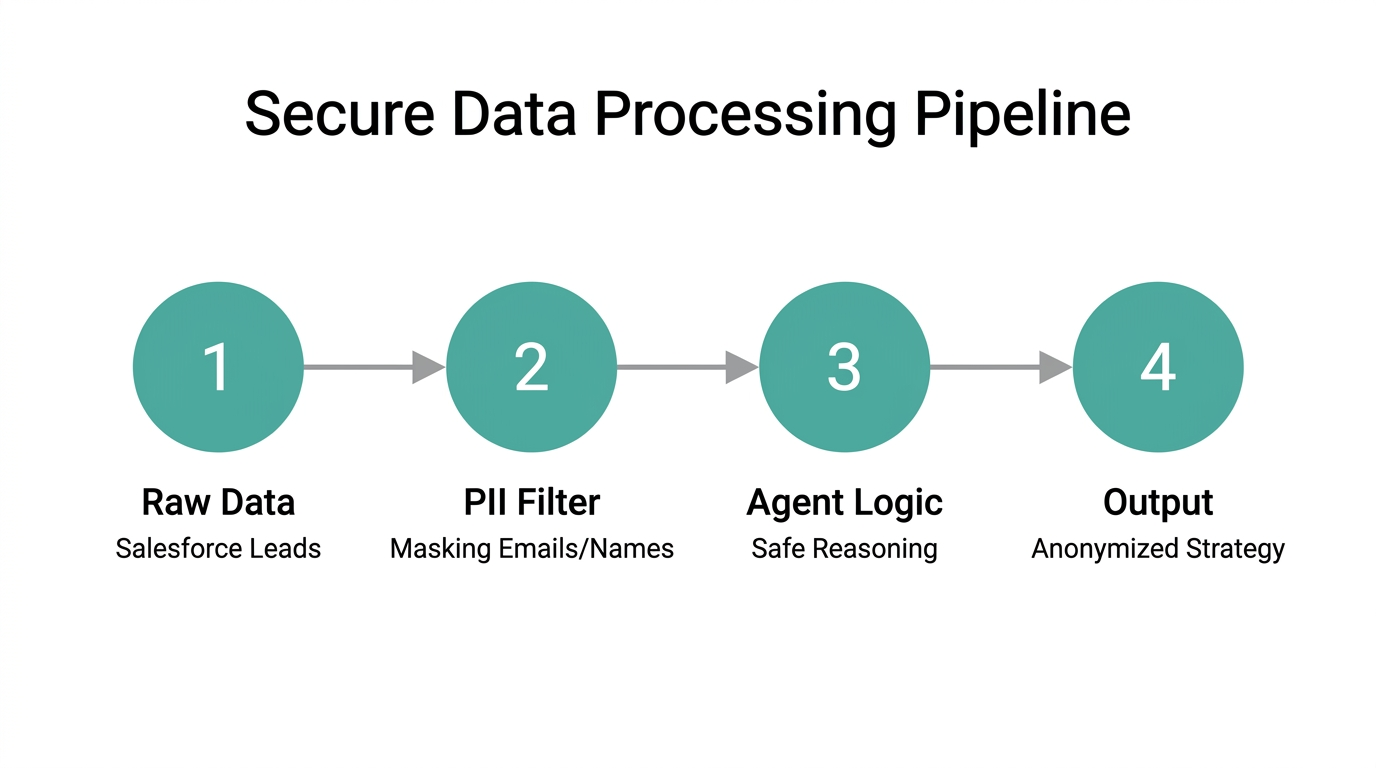
As agents become more autonomous and integrated with CRM data, privacy and security become paramount. Sending raw customer data to an LLM for analysis is a significant compliance risk. To mitigate this, GTM leaders must implement PII (Personally Identifiable Information) filtering layers within their multi-agent orchestration.
- Anonymization: Before data is sent to the reasoning engine, agents should scrub names, emails, and phone numbers, replacing them with unique IDs.
- Safety Pre-hooks: Implement "kill switches" that prevent agents from increasing budgets by more than 20% without human intervention.
- Brand Guardrails: Feed the agent a strict system prompt to ensure ad copy doesn't stray into "hallmark-style" or generic content, which 71% of consumers find frustrating, as noted in reports on Demand Gen Report.
For organizations managing large-scale creator campaigns, using a platform like Stormy AI helps maintain this balance by centralizing creator vetting and outreach, ensuring that only approved, compliant data enters the automated workflow.
"The consensus in 2025 is 'constrained autonomy'—agents should be extremely capable but work within safety pre-hooks to prevent budget overruns."
Conclusion: The Future of the Agentic GTM Stack
Building a multi-agent marketing stack is no longer an optional experiment for GTM leaders; it is a competitive necessity. By combining the enterprise-grade CRM intelligence of Salesforce Agentforce with specialized agents for creative and bidding, brands can move beyond simple automation into true autonomous growth. The path forward requires a GTM strategy that prioritizes revenue-based optimization, secure data handling, and the right mix of low-code tools like Relevance AI and high-impact discovery platforms.
As you scale, remember that the goal of these agents is not to replace the marketer, but to free them from the manual levers of distribution. By leveraging an AI agent for paid ads to handle the 24/7 heavy lifting of bidding and testing, you can focus on what truly matters: strategy, storytelling, and building a brand that resonates in an increasingly automated world. Start small by automating a single channel, and eventually, move toward a fully orchestrated multi-agent ecosystem that drives multi-agent orchestration across your entire marketing funnel.