In July 2022, David Bressler was a senior professional with a full-time job and a second child on the way. Most people would use paternity leave to catch up on sleep; David used his six-week window to build a software company. What started as a simple AI-powered "itch" is now Formula Bot (formerly Excel Formula Bot), a Micro-SaaS powerhouse generating $226,000 in monthly recurring revenue (MRR) with over 750,000 users. His journey provides a masterclass in building a no-code SaaS business without a technical co-founder or a venture capital safety net.
Identifying 'The Itch': Finding Profitable Micro-SaaS Ideas
Every great Micro-SaaS begins with a recurring frustration. For David, the realization came from his daily 9-5 grind. As a senior leader, he was constantly interrupted by junior analysts asking for help with complex Excel formulas. He realized that while the logic for these formulas existed, the translation from natural language to syntax was a significant bottleneck for most workers.
At the time, OpenAI had already released the underlying technology that would eventually power ChatGPT, but no one had specialized it for the world of spreadsheets. David scoured the internet for hours and found a massive gap in the market. Scratching your own itch is the most reliable way to ensure product-market fit because you are your own primary user.
The No-Code Stack: Why David Chose Bubble over Traditional Code
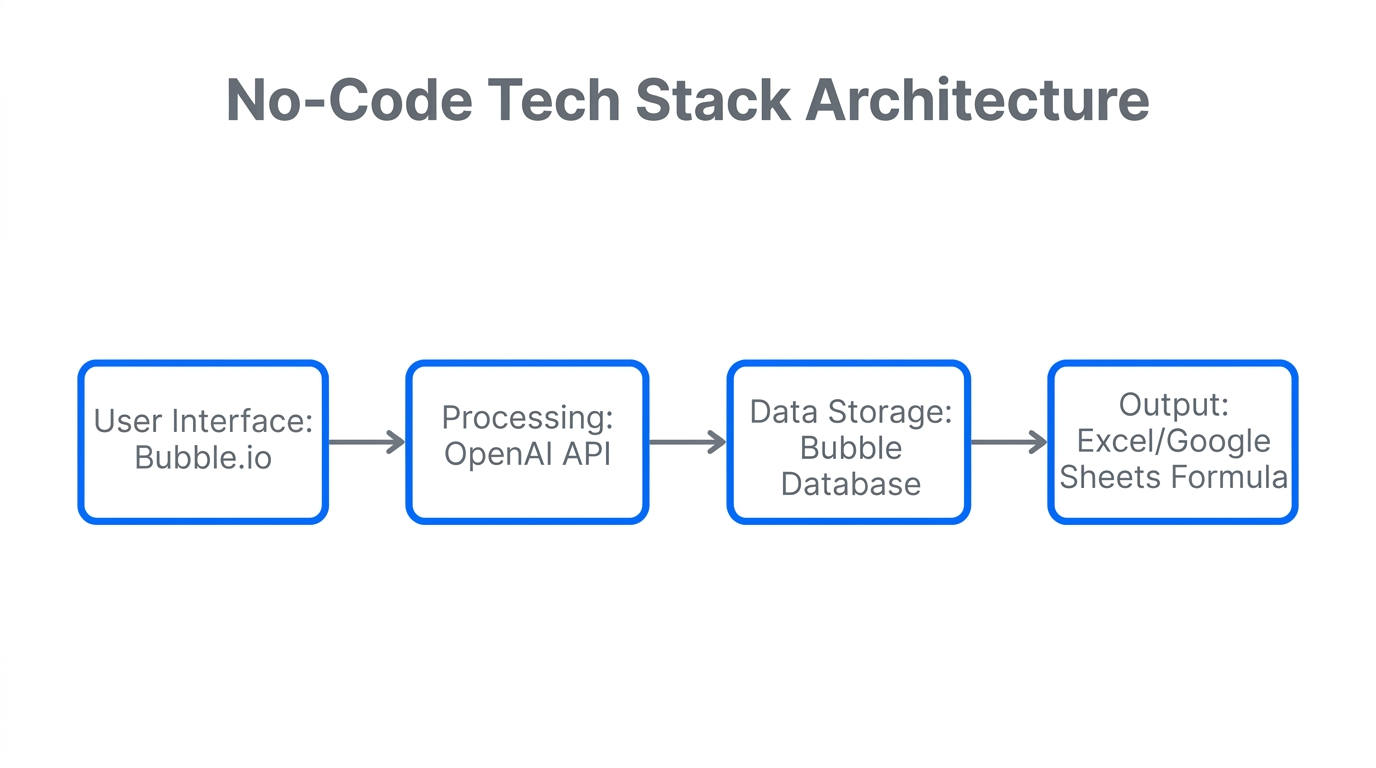
David had zero experience in software development. He could recognize snippets of JavaScript or HTML, but building a functional application from scratch was out of reach. To build a million dollar app no-code, he turned to Bubble.io, which he identified as the most robust platform for non-technical founders.
The decision to use Bubble was driven by two factors: speed and cost. Traditional development would have required hiring a developer or spending months learning to code—luxury resources David didn't have. Instead, he relied on "YouTube University," consuming free tutorials from high-quality Bubble developers to solve specific technical hurdles as they arose.
| Feature | Traditional Development | No-Code (Bubble.io) |
|---|---|---|
| Time to MVP | 3-6 Months | 2-3 Weeks |
| Initial Cost | $10k - $50k+ | <$50/month |
| Technical Barrier | High (Requires CS degree/years of practice) | Medium (Logic-based learning curve) |
| Flexibility | Infinite | High (with some scaling limitations) |
The 6-Week Development Timeline: Balancing 9-5 and Family
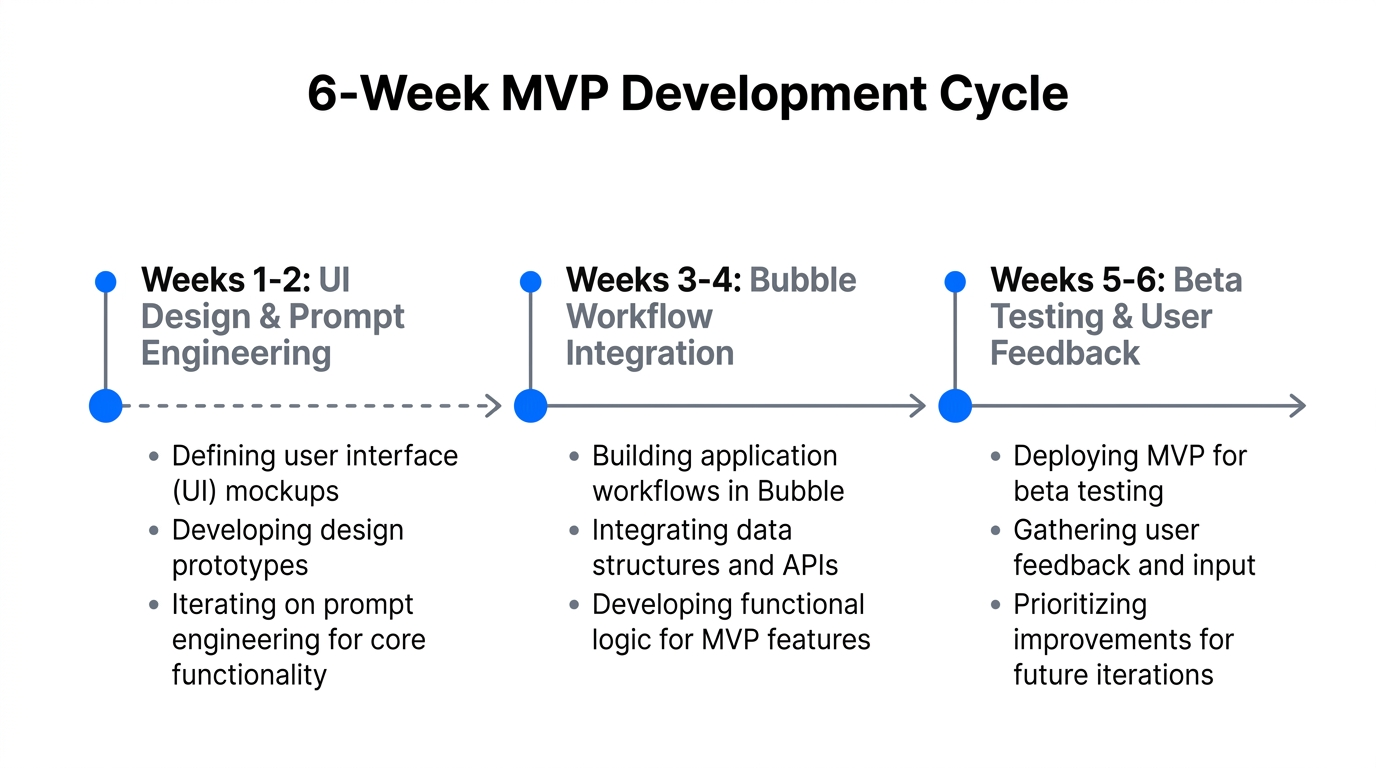
The most impressive part of the Formula Bot story is the timeline. David executed the MVP in just a couple of weeks, working late nights and during his newborn's nap times. He stayed "on the grid" for his senior-level job while mentally processing the app's architecture at coffee shops. This period of intense execution required sacrifice—often surviving on just a few hours of sleep—but the speed of delivery was his competitive advantage.
"It really took me just a couple of weeks... and then that really kind of speaks to the power of no-code, because if you were to code it, it would take much longer."
By the time his paternity leave ended, the core functionality—a box that turned text prompts into Excel formulas using the OpenAI API—was live. He didn't wait for a perfect UI; he launched a single-page tool that solved one specific problem exceptionally well.
Viral Distribution: The Reddit Kingmaker Strategy
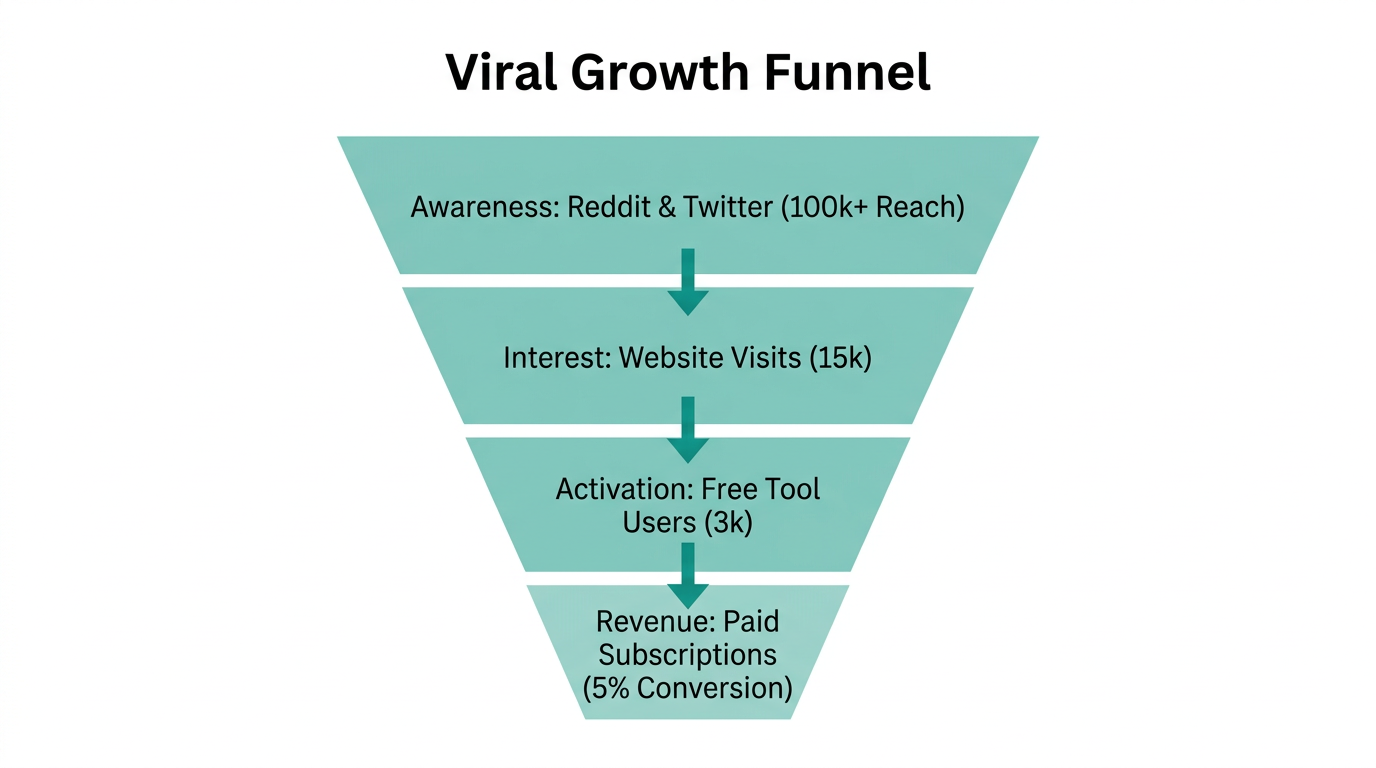
Building the app was only half the battle; getting users was the next. David’s micro-SaaS growth strategy didn't involve a massive marketing budget. Instead, he went where his target audience lived: Reddit.
He posted on the r/excel subreddit with a simple, non-salesy title: "AI Excel Formula Generator." The post exploded, quickly becoming the top post of the week. Following a suggestion in the comments, he posted to the r/internetisbeautiful subreddit, which triggered a massive viral loop that brought in thousands of users within hours. This organic surge proved the demand was real and immediate.
From Donations to $226k MRR: The Monetization Journey
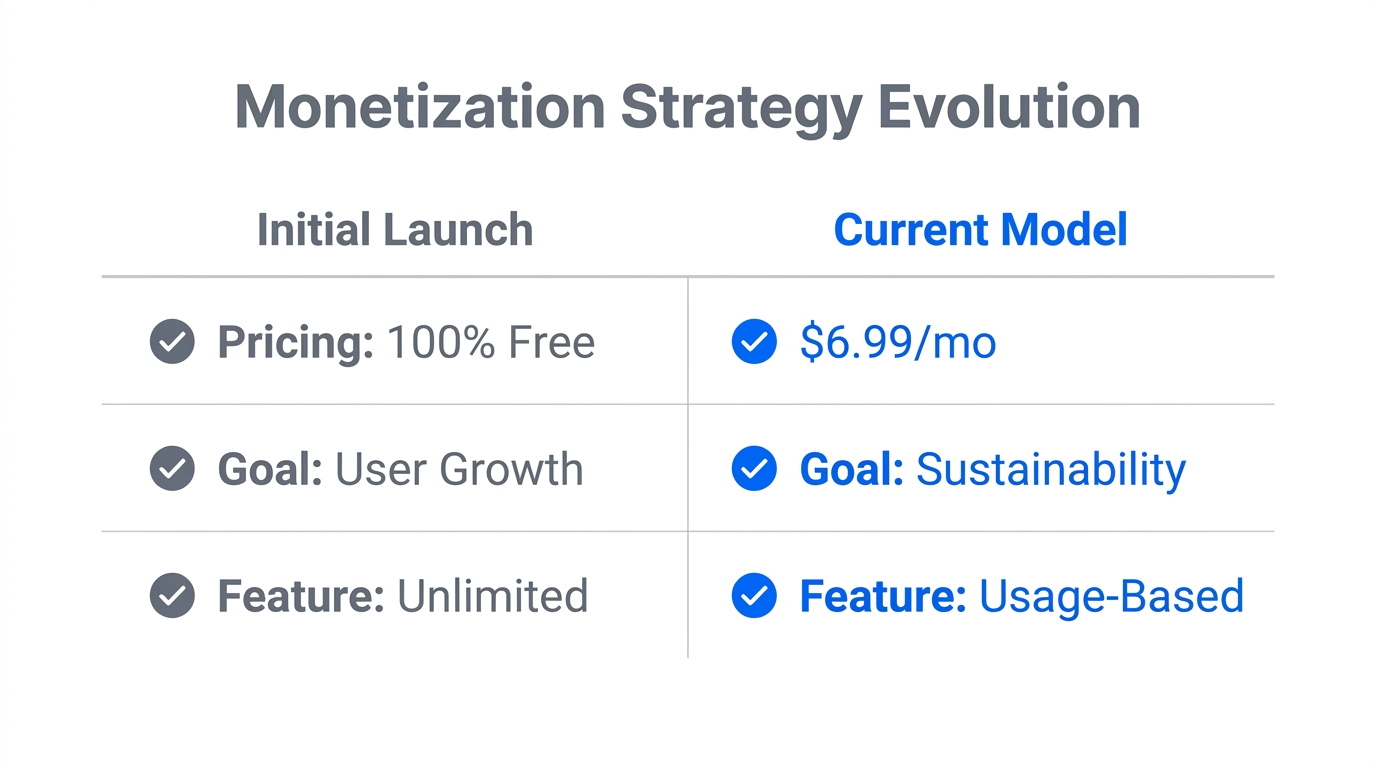
Scrappiness is a prerequisite for any Micro-SaaS founder. To recoup his initial API costs, David first added a Stripe donation link. To his surprise, users who found value in the tool were happy to contribute. He then experimented with Google Ads and even a unique sponsorship deal with an ESPN-televised Excel competition.
Eventually, he transitioned to a subscription model. He started at a low price point of $3/month, which has since evolved into a tiered structure of $6.99 to $9/month. Today, with 5,000 paying subscribers, the business model is highly stable. As the business scaled, David also shifted his tech stack. While the app started as 100% no-code, it has transitioned to a hybrid model where approximately 5-10% of the platform uses custom code to handle complex data processing that goes beyond Bubble's native capabilities.
Sustaining Growth Through Creator Partnerships
As Formula Bot grew, it faced a new challenge: competitors. Dozens of "carbon copy" sites emerged within weeks. To stay ahead, David had to move beyond being a simple wrapper and build a brand. For modern SaaS founders, this often means leveraging the creator economy to build trust and authority.
When you reach a stage where organic Reddit posts are no longer enough, platforms like Stormy AI can help streamline creator sourcing and outreach to manage UGC at scale. Instead of manually searching for productivity influencers on TikTok or LinkedIn, founders can use AI-powered search to find creators who specifically talk about Excel tips or office productivity. Managing these relationships through a creator CRM ensures that your marketing remains as automated and efficient as your no-code backend.
Building a "ChatGPT-Proof" Moat
With the release of ChatGPT and Microsoft’s integration of AI into the Office suite (Copilot), many analysts predicted the end of Formula Bot. David’s response was to innovate faster than the giants. He pivoted from a simple generator to an all-in-one data analytics platform.
His new flagship product, the Data Analyzer, allows users to upload datasets and perform complex modeling, charting, and analysis through natural language. This moves the value proposition from convenience (not having to leave Excel) to capability (doing things even ChatGPT can't easily handle with raw files). By talking to his customers—even jumping on calls to do their work for them in exchange for feedback—he identified that users didn't just want formulas; they wanted answers from their data.
"My vision moving forward is to build something that cannot be replicated both in ChatGPT as well as Microsoft."
The Formula Bot Playbook: Steps for Success
If you are looking to replicate David's success as a non-technical founder, follow this step-by-step Micro-SaaS playbook:
- Find a specific, high-frequency pain point: Don't try to build the next Facebook. Build a tool that saves a specific professional 15 minutes a day.
- Validate with No-Code: Use Bubble or similar tools to build a functional MVP in weeks, not months.
- Leverage Reddit for distribution: Find the niche community that suffers from the problem you solved. Be helpful, not promotional.
- Monetize early: Even a simple donation button or a low-cost subscription can help cover API costs during a viral surge.
- Build a hybrid moat: As you grow, add features that require deeper data integration or specialized workflows that general AI tools like ChatGPT lack.
Conclusion
The story of Formula Bot is a testament to the democratization of software. By leveraging the power of no-code and AI, a single individual was able to compete with tech giants and create a life-changing business while maintaining his family life and 9-5 responsibilities. Whether you are a marketer, an analyst, or an entrepreneur, the message is clear: the barriers to entry have never been lower. Stop waiting for a technical co-founder and start building today.