For years, growth marketers have been trapped in a cycle of fragmentation. You spend your morning researching keywords in one tab, drafting ad copy in another, and manually updating a messy spreadsheet of experiment results in a third. When you turn to an AI for help, you’re forced to copy-paste data into a chat window, only for the AI to "forget" the context of your previous campaign three prompts later. This is the Context Death Spiral—a productivity killer that prevents AI from becoming a truly data-driven growth marketing partner. But a shift is happening. With the release of Claude Code and the Model Context Protocol (MCP), marketers are finally moving from "Chat AI" to "Action AI," creating persistent, data-aware assistants that live in your terminal and remember every success and failure across your entire stack.
Understanding Model Context Protocol for Marketing
The Model Context Protocol (MCP) is essentially a universal "USB port" for artificial intelligence. In the past, if you wanted an AI to read your SQL database or your CRM, you had to build custom, fragile integrations or wait for a third-party plugin that might never come. MCP changes the game by providing an open standard that allows tools like Claude Code to securely connect to external data sources. For a growth team, this means your AI agent isn't just guessing; it’s looking at your actual lead scores, your conversion rates, and your historical campaign data in real-time.
According to recent industry benchmarks, organizations using this "Action AI" framework for complex tasks like SEO audits report an average 75% time saving. What used to be an 8-hour manual audit can now be transformed into a 2-hour automated workflow. This efficiency stems from the AI's ability to navigate your local file system, run terminal commands, and query your marketing experiment database without human intervention. As Claude currently holds approximately 32% of the enterprise AI application market share, its superior reasoning on these multi-step tasks makes it the ideal engine for this new era of Engineering-First Marketing.
"The bottleneck in 2026 is no longer building features; it's the speed of marketing execution. MCP turns your AI from a junior copywriter into a senior growth architect."
Building a Marketing Memory: The MARKETING.md Framework
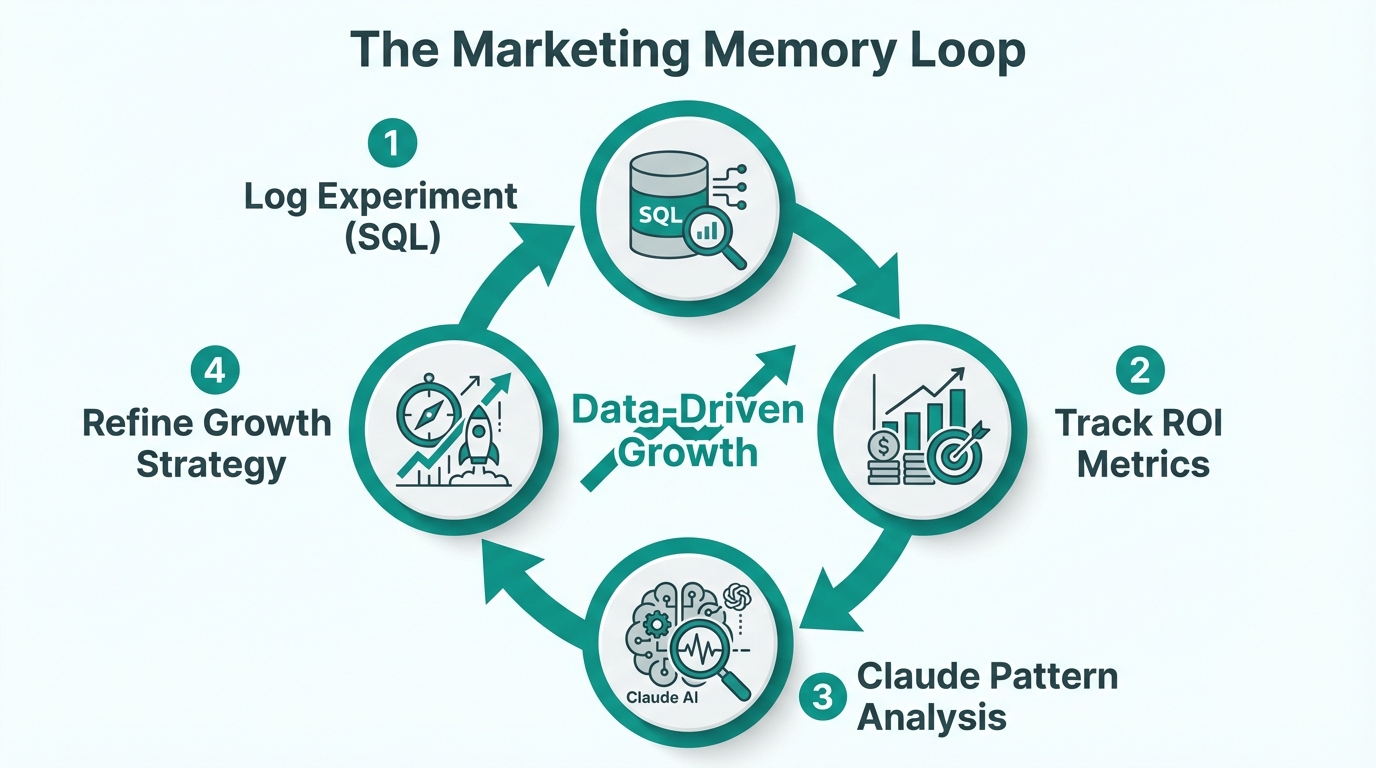
One of the most powerful strategies for modern growth teams is the creation of a persistent "memory file"—a local MARKETING.md file that serves as a living record of your department's institutional knowledge. When you use Claude Code, it has the ability to read and write to your local files. By maintaining a structured Markdown file that documents every experiment, Claude can reference past failures to ensure you never make the same mistake twice.
Your MARKETING.md file should include:
- Hypothesis Log: What you expected to happen in your latest A/B test.
- Failure Post-Mortems: Why a specific campaign didn't hit its KPIs.
- Brand Voice Guidelines: Specific "Do's and Don'ts" that Claude must follow when generating copy.
- Technical Debt: A list of tracking pixels or broken links that need fixing.
This approach prevents the "Context Death Spiral." Instead of starting every chat from scratch, you simply tell Claude Code to "Read the latest entries in MARKETING.md and suggest a new hypothesis based on our last three failed LinkedIn ads." This level of context persistence is why many teams are moving away from browser-based chats and toward terminal-based agents that understand the full history of a project.
Connecting Claude to the Source: SQL and CRM Integration
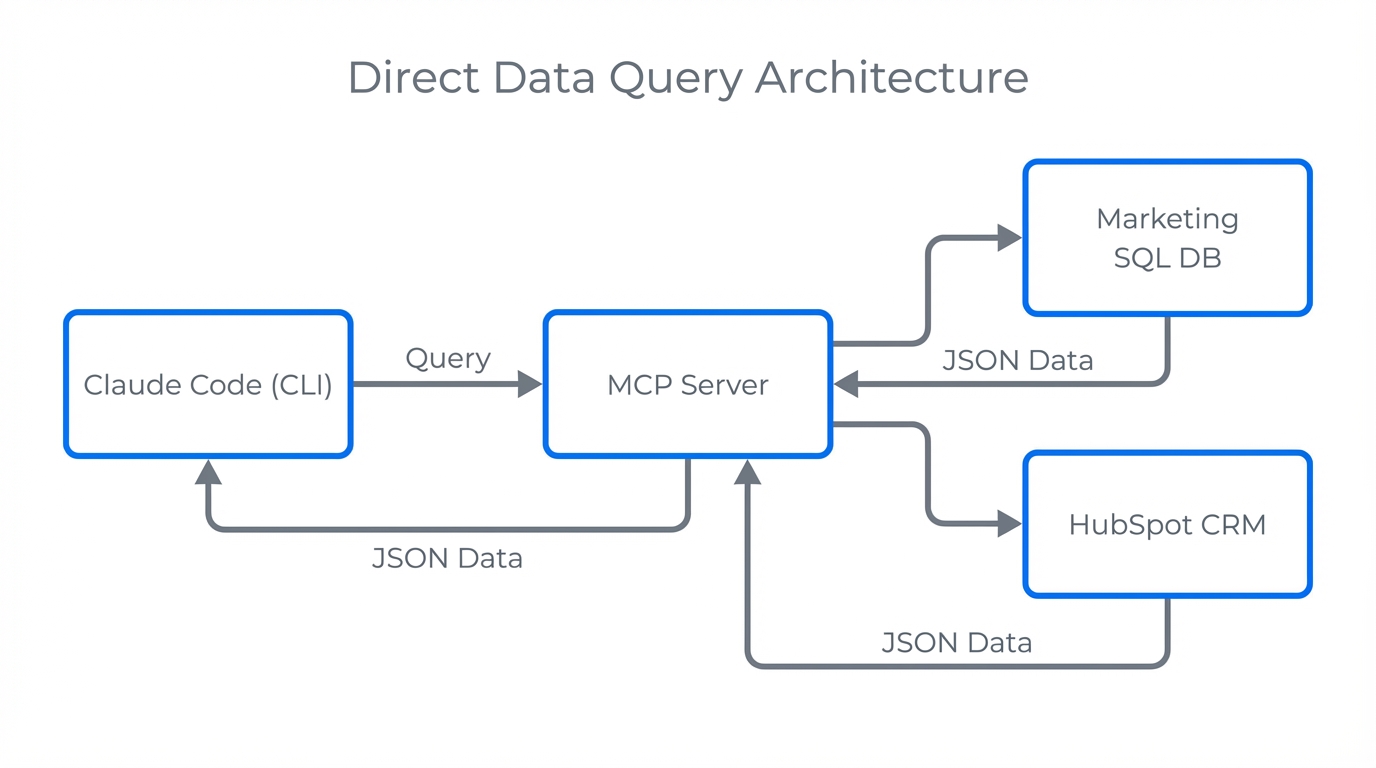
The true power of a Claude Code MCP guide lies in the ability to connect to your source of truth. Most growth data is locked away in SQL databases or CRMs like Salesforce or other enterprise platforms. By using an MCP server for SQL, you can allow Claude Code to query your database directly. For example, you could ask: "Find the top 500 leads who signed up in the last 30 days but haven't been contacted, and score them based on their industry and company size."
| Capability | Legacy Chat AI | Claude Code + MCP |
|---|---|---|
| Data Access | Manual copy-paste (Static) | Direct SQL/CRM Query (Real-time) |
| Context | Lost after session ends | Persistent local memory (MARKETING.md) |
| Actionability | Text output only | Executes terminal scripts & code |
| Security | Public LLM exposure | Enterprise-grade (AWS Bedrock) |
This setup allows for real-time lead scoring and analysis that evolves as your data changes. Instead of waiting for a weekly report from the data science team, a growth marketer can use Claude Code to build internal tools—such as custom scripts for Google Ads Editor—that automate the production of ad variations based on what’s actually converting in the CRM. Anthropic’s own growth team reportedly used these methods to reduce the time to produce ad variations from 30 minutes to just 30 seconds per variant.
Automated SEO and Technical Audits at Scale
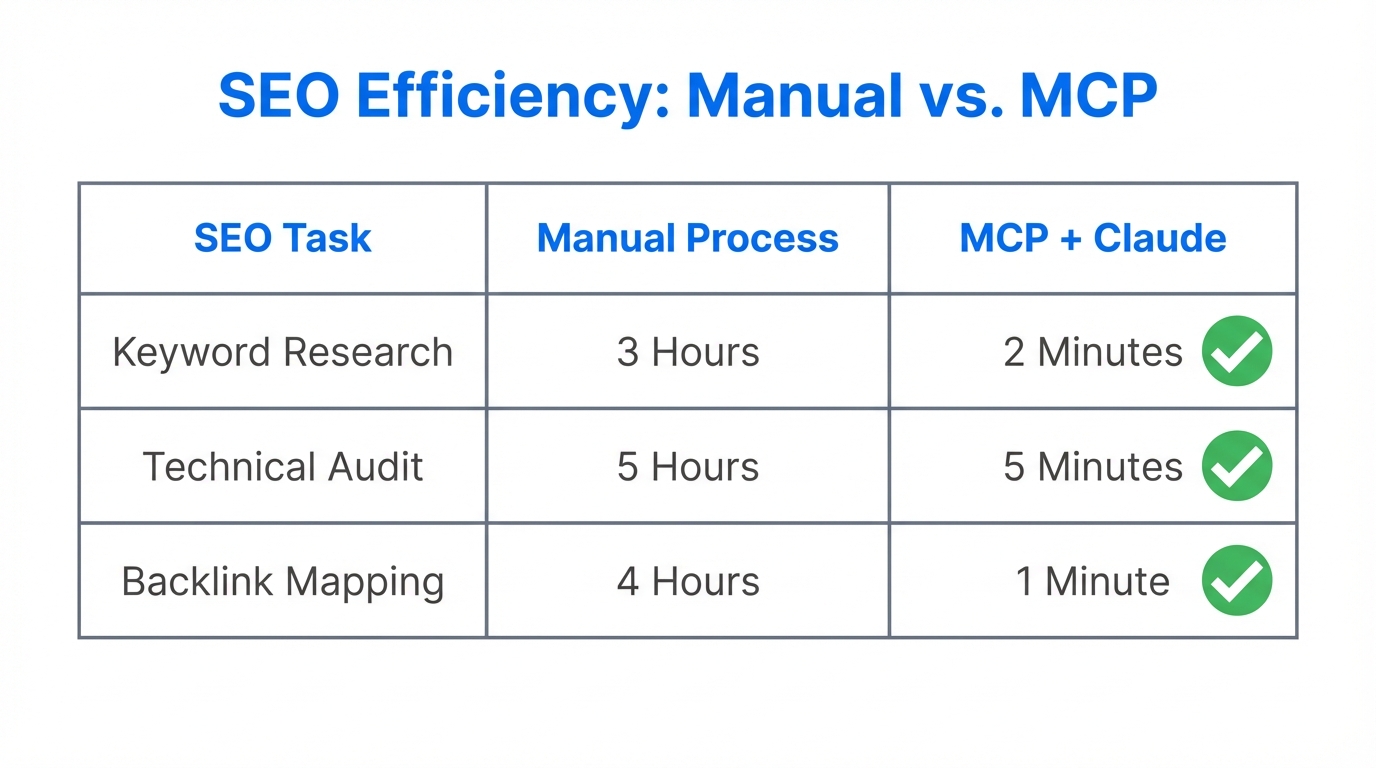
Growth marketing isn't just about ads; it’s about the underlying infrastructure. By combining Claude Code with browser automation tools like Puppeteer or Playwright, you can turn your AI into a technical SEO specialist. You can command Claude to "Crawl our top 50 landing pages, check for missing H1 tags, broken schema, and mobile responsiveness issues, and then write the fixes directly to our GitHub repository."
This level of Agentic Growth Engineering is what separates top-tier marketers from those still stuck in manual execution. Agencies like Animalz are already using similar "Content Intelligence" systems to process massive analytics exports that would exceed standard chat token limits. When you need to scale these efforts—for instance, sourcing hundreds of creators for a UGC campaign—platforms like Stormy AI streamline creator sourcing and outreach by providing the same level of AI-powered vetting and discovery that Claude Code provides for technical tasks.
"Stop treating AI as a vending machine for copy. Start treating it as a junior engineer that can write, test, and deploy your entire growth stack."
Data Security: Navigating the Risks of AI Marketing
As you integrate AI more deeply into your AI CRM integration, security becomes paramount. Uploading sensitive customer lists to public LLMs is a significant risk. To mitigate this, enterprise-grade marketers are turning to platforms like AWS Bedrock or Google Vertex AI. These services allow you to use Claude’s models within your own secure cloud perimeter, ensuring that your customer data is never used to train public models.
Furthermore, avoiding "AI Slop" is essential for long-term SEO health. Google is increasingly de-prioritizing generic, robotic content. The value of Claude Code isn't in generating thousands of generic blog posts; it's in the logic and strategy it provides. Use it to analyze keyword rankings and build a 12-month SEO roadmap in 20 minutes, but let your human experts refine the final creative output to ensure brand compliance.
The Growth Marketer’s Claude Code Playbook
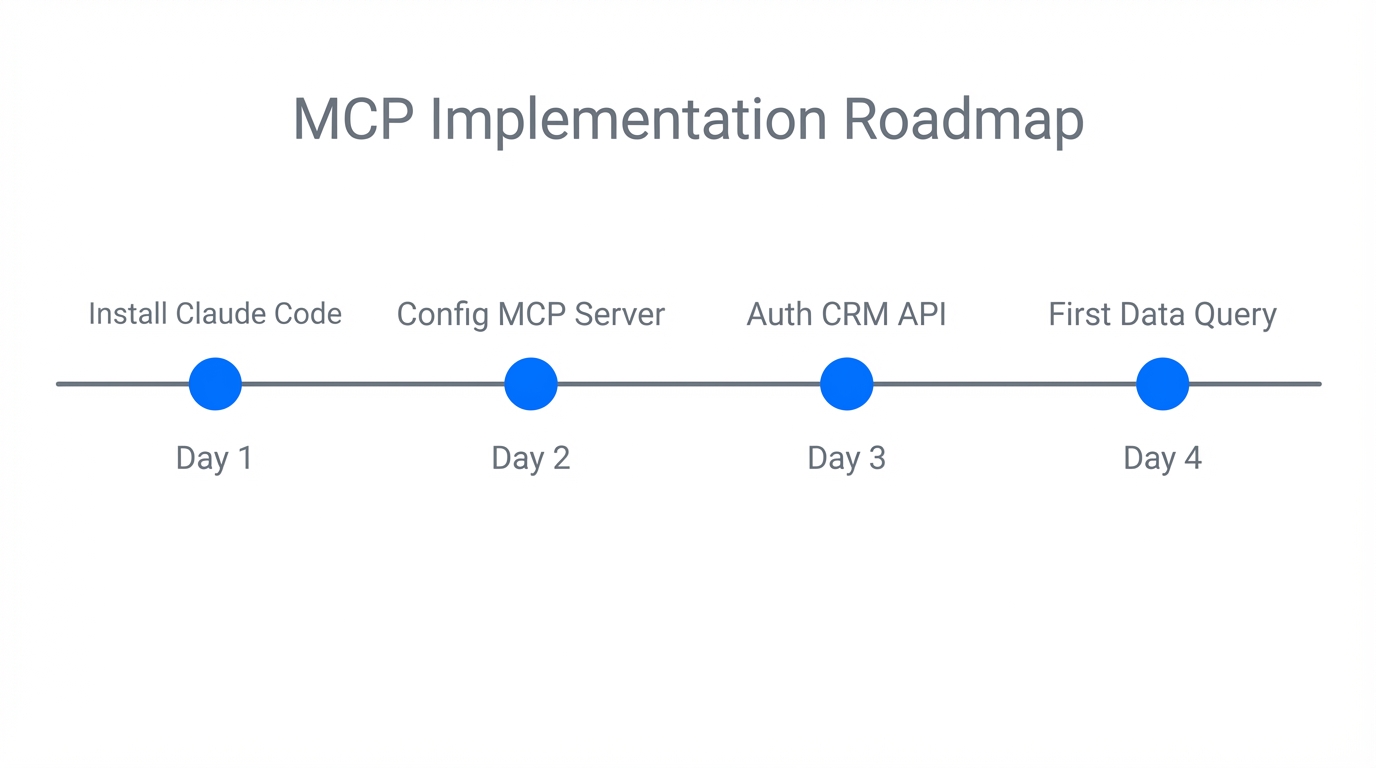
Ready to move beyond basic prompts? Follow this step-by-step playbook to set up your persistent marketing memory and data-driven assistant.
Step 1: Set Up Your Environment
Install Claude Code via your terminal and initialize a dedicated folder for your growth project. If you prefer a visual editor alongside your CLI, consider using Cursor as a companion tool to see your code changes in real-time.
Step 2: Initialize Your Marketing Memory
Create your MARKETING.md file. Use Claude Code to populate it with your current brand guidelines and historical performance data. This ensures that every subsequent prompt is grounded in your specific business context.
Step 3: Connect Your Data Sources via MCP
Configure MCP servers to connect to your SQL database or CRM. This is where you move into data-driven growth marketing. Start with simple queries, like analyzing the correlation between blog views and sign-ups, before moving to automated lead scoring.
Step 4: Automate Creative Scaling
Use Claude Code to write a script that connects to the Figma API. This allows you to automate the production of creative assets, taking your top-performing ad copy and generating multi-platform variations instantly.
If your campaign requires high-volume influencer content, you can simultaneously use Stormy AI to discover creators who match your brand's niche, allowing the AI to handle the outreach while you focus on high-level strategy.
Step 5: Schedule and Monitor
Deploy your marketing scripts using GitHub Actions. This allows your "Action AI" to run audits or generate reports overnight, providing you with a fresh set of insights every morning.
Conclusion: The Future of Agentic Growth
The transition to Model Context Protocol for marketing represents a fundamental shift in how growth teams operate. We are moving away from the era of "Vibe Marketing"—where decisions are made based on gut feelings and disconnected chat windows—and toward a future of Agentic Growth Engineering. By leveraging Claude Code to build a persistent marketing memory and connecting it directly to your CRM, you create a system that grows smarter with every experiment. The speed of execution is now your primary competitive advantage. Start building your marketing memory today, and stop letting your most valuable campaign insights disappear into the void of a closed chat window.