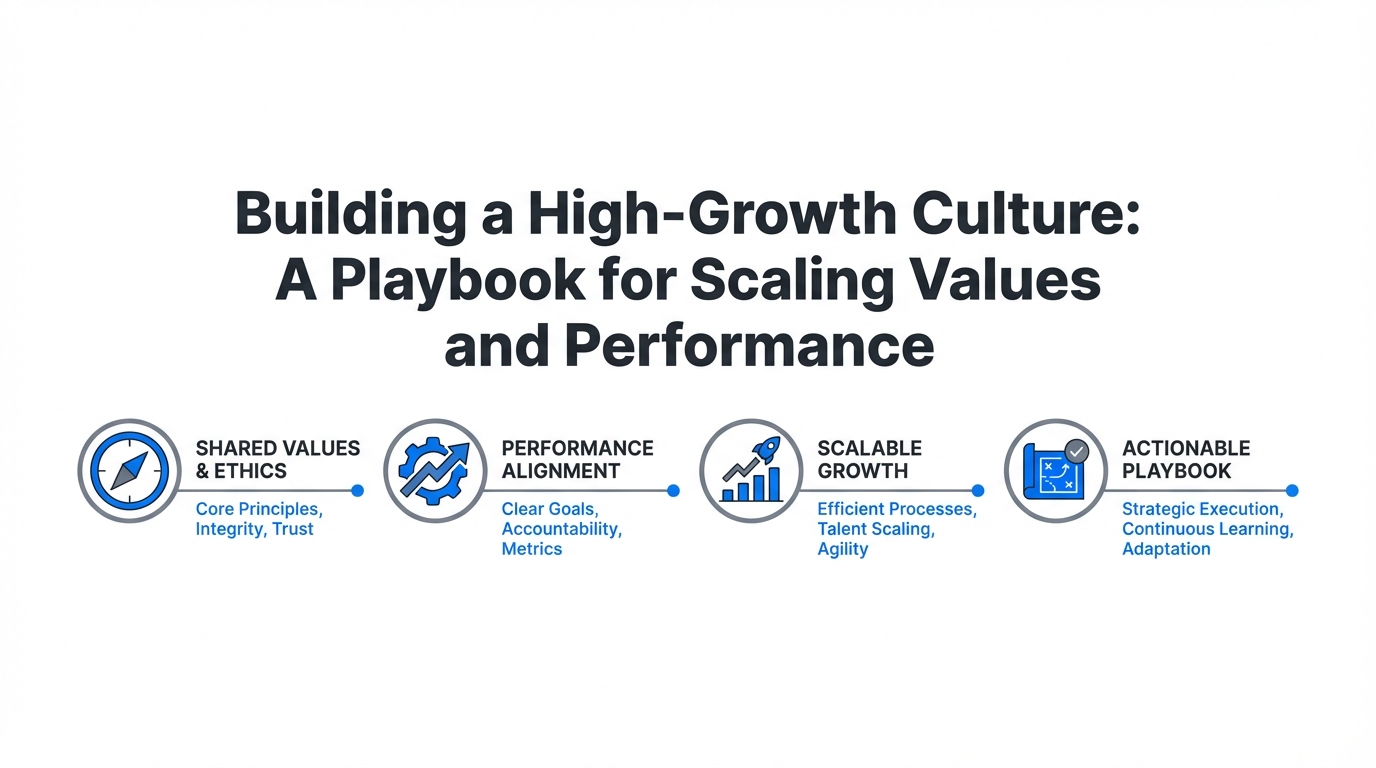
Every founder eventually hits a wall where brute force no longer works. In the early days, you can muscle your way to the first $1 million in revenue through sheer willpower and late nights. But as you cross the $3 million mark and head toward $10 million and beyond, the mechanics of growth change fundamentally. At this stage, your company’s growth is no longer limited by your market size or your product features—it is limited by your personal growth as a leader. As the saying goes, the bottleneck of any business is the psychology of the founder. To scale, you must stop being the person who does the work and start being the person who builds the culture that does the work.
The CEO Bottleneck: Why Your Business is a Mirror
Your business is essentially a mirror of your strengths and weaknesses. If you are disorganized, your operations will be chaotic. If you avoid conflict, your team will harbor unspoken resentments. Recognizing this is the first step toward building a high performance culture. Most founders realize this too late, usually when they are exhausted from trying to manage every freelancer and employee through micro-management.
The shift from the "brute force" stage to the "leadership" stage requires a mindset change regarding delegation. Many CEOs fall into the trap of abdication rather than delegation. Abdication is when you hand over a task, mentally relieve yourself of the duty, and then get frustrated a month later when the numbers haven't moved. True delegation, however, involves a structured framework of What, How, When, and Motivation. It means training a salesperson for two hours every week for months, reviewing their calls, and correcting scripts until they are better than you are.
"Your business is a mirror of your strengths and weaknesses. If you aren't growing, the company can't grow."The RACI Model: Eliminating the 'Dropped Ball' Syndrome
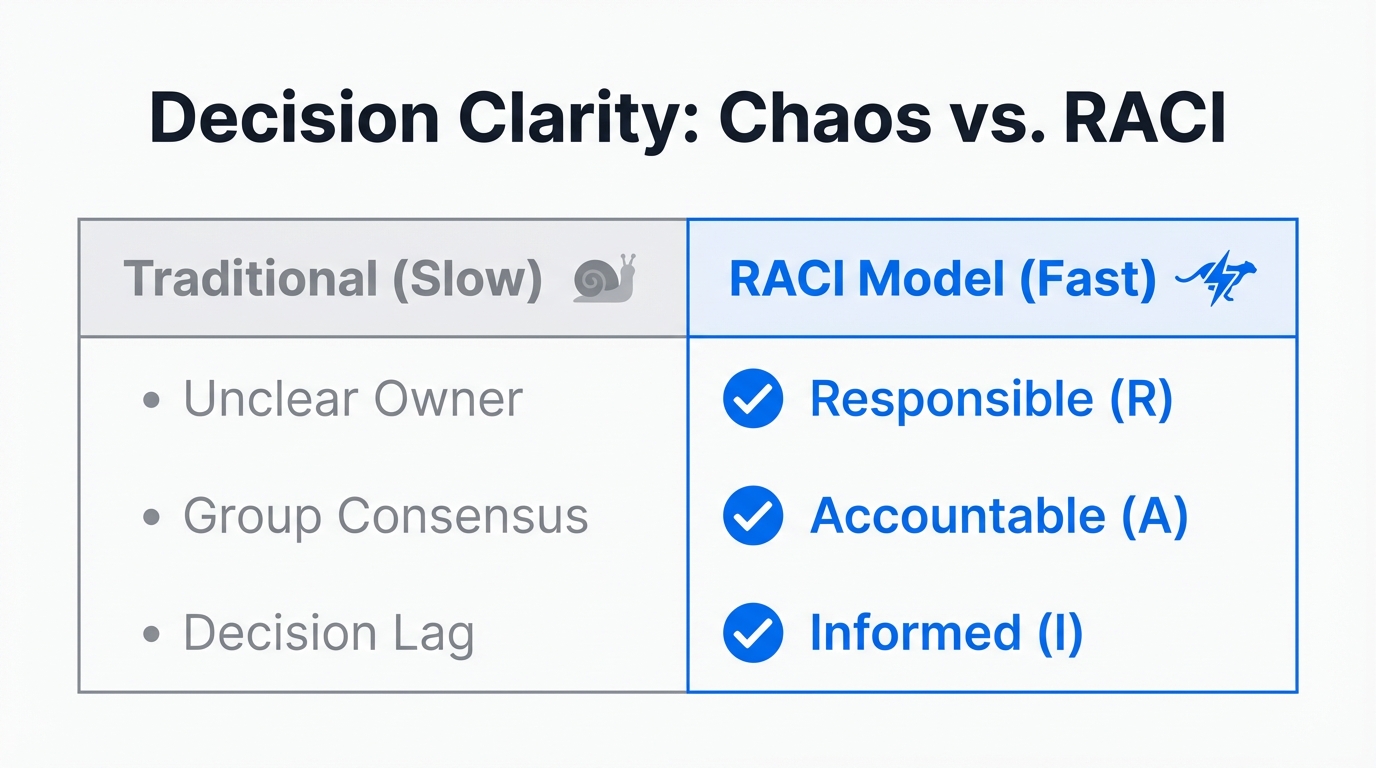
As a team grows from three people to seven, and then to twenty, the risk of "dropped balls" increases exponentially. When only one person is in the room, they have to catch the ball. When there are seven, everyone assume someone else has it. To solve this, high-growth startups often adopt the RACI model to define roles with surgical precision during project planning.
| Role | Definition | Function |
|---|---|---|
| Responsible (R) | The person driving the action. | The "doer" who executes the task. |
| Accountable (A) | The person where the buck stops. | Usually the manager who ensures the R succeeds. |
| Consulted (C) | The subject matter experts. | People whose input is needed before a decision. |
| Informed (I) | The stakeholders kept in the loop. | People who need an FYI but don't provide input. |
By using tools like Asana or Monday.com to track these roles, you prevent the resentment that builds when people feel ignored or overloaded. This clarity is essential for scaling company culture because it removes the "sharp elbows" dynamic where people fight for control or, conversely, stand around doing nothing.
The 'Baby Naming' Method: Why You Should Define Values Late
Most startups rush to put values like "Integrity" or "Innovation" on their website before they even have a product-market fit. This is a mistake. Company values should be discovered, not invented. A better approach is the "Baby Naming" method: get to know your business for a year or two before you give it a permanent identity.
Think of it like Jack Smith’s approach to naming his child: he refused to name his baby for the first year because he wanted to see her personality first. Similarly, by waiting to define your values, you can observe which behaviors actually lead to success in your specific environment. When you eventually name them, they feel authentic rather than like a "corporate prison" you built for yourself at age 26. For example, if you find that your team thrives on silliness and unconventional marketing, "Fun" becomes a legitimate value that guides your hiring and content strategy on platforms like TikTok.
Designing Values with Explicit Trade-offs
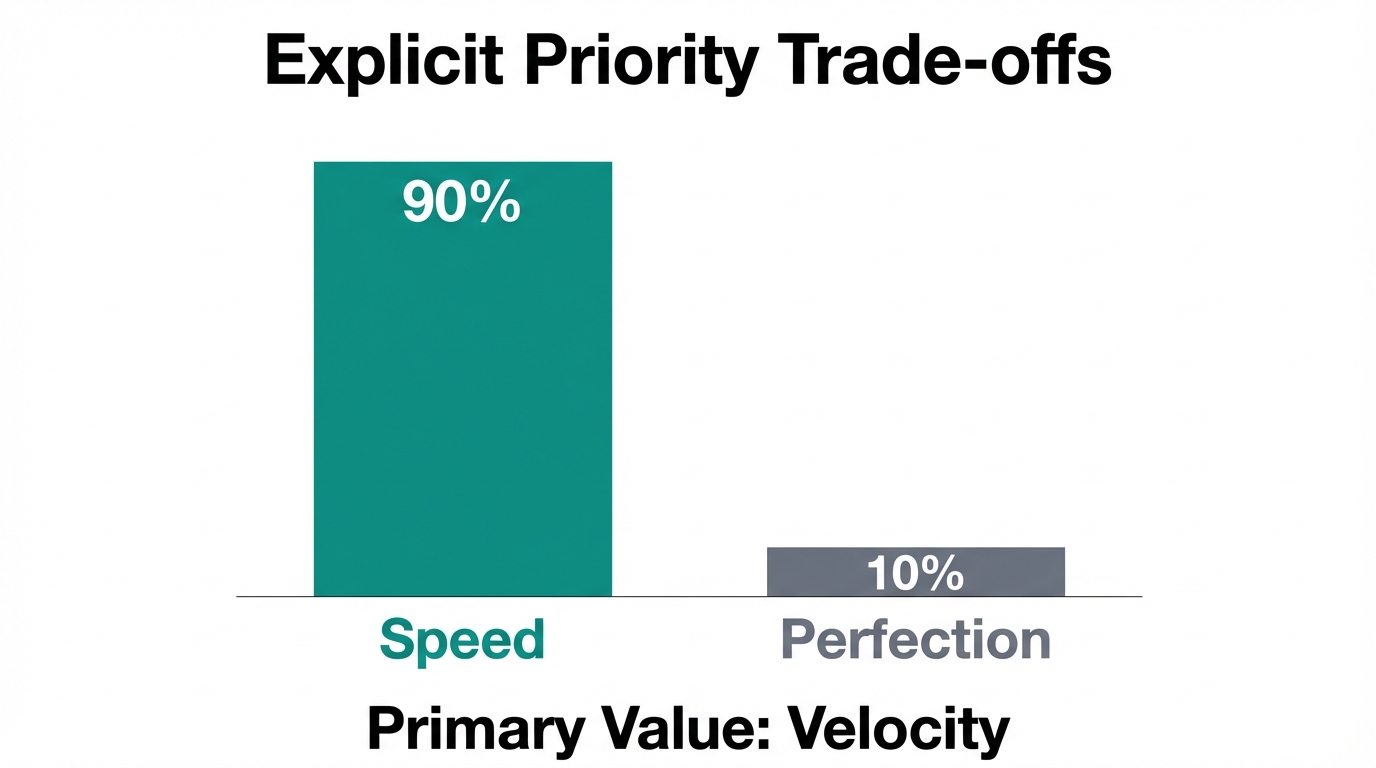
A value that everyone agrees with is not a value; it is a platitude. To create a growth mindset for CEOs and their teams, values must have uncomfortable trade-offs. Mark Zuckerberg famously used "Move fast and break things." The trade-off was explicit: we value speed more than we value a perfectly stable, bug-free system.
If your value is just "Speed," everyone will nod their heads. No one wants to move slow. But if you define it as "Uncomfortably Fast," you are acknowledging the trade-off. It means that when a project usually takes six weeks, you ask, "What would it look like to do this in two weeks?" This makes people uncomfortable, but it filters for the "cracked" talent that thrives in high-pressure environments. When sourcing talent or even vetting external partners, using tools like Stormy AI can help maintain this speed by automating the discovery and outreach process for creators, allowing your team to move at a pace that traditional manual methods simply can't match.
"A value isn't real unless it costs you something or forces a difficult trade-off."The Pride, Speed, and Fun Framework
One effective employee engagement strategy for startups is to anchor the culture around three pillars: Pride, Speed, and Fun. This framework creates a brand that attracts top-tier marketing and sales talent who want to win but also want to enjoy the process.
- Speed: Reducing lead response times from 60 minutes to 15 minutes. Constantly asking "how can we cut the timeline in half?" according to Harvard Business Review research.
- Pride: Having pride in the craft. This means paying vendors the day they invoice (even if you have Net-90 terms) because it feels right. It means dressing with pride for events and ensuring every customer touchpoint feels special, not boilerplate.
- Fun: Not just "having a ping pong table," but allowing the brand to be quirky. If a marketing campaign feels silly but exciting, you do it because it aligns with the soul of the company.
When these values are lived, they become a competitive advantage. For instance, a company that takes immense pride in its creator relationships will naturally see better results in UGC campaigns. By using a creator CRM like the one found in Stormy AI, teams can manage those relationships with the same high standards they apply to their internal culture, ensuring that every influencer feels like a true partner rather than a line item.
Productizing Culture: The WWE Belt Strategy
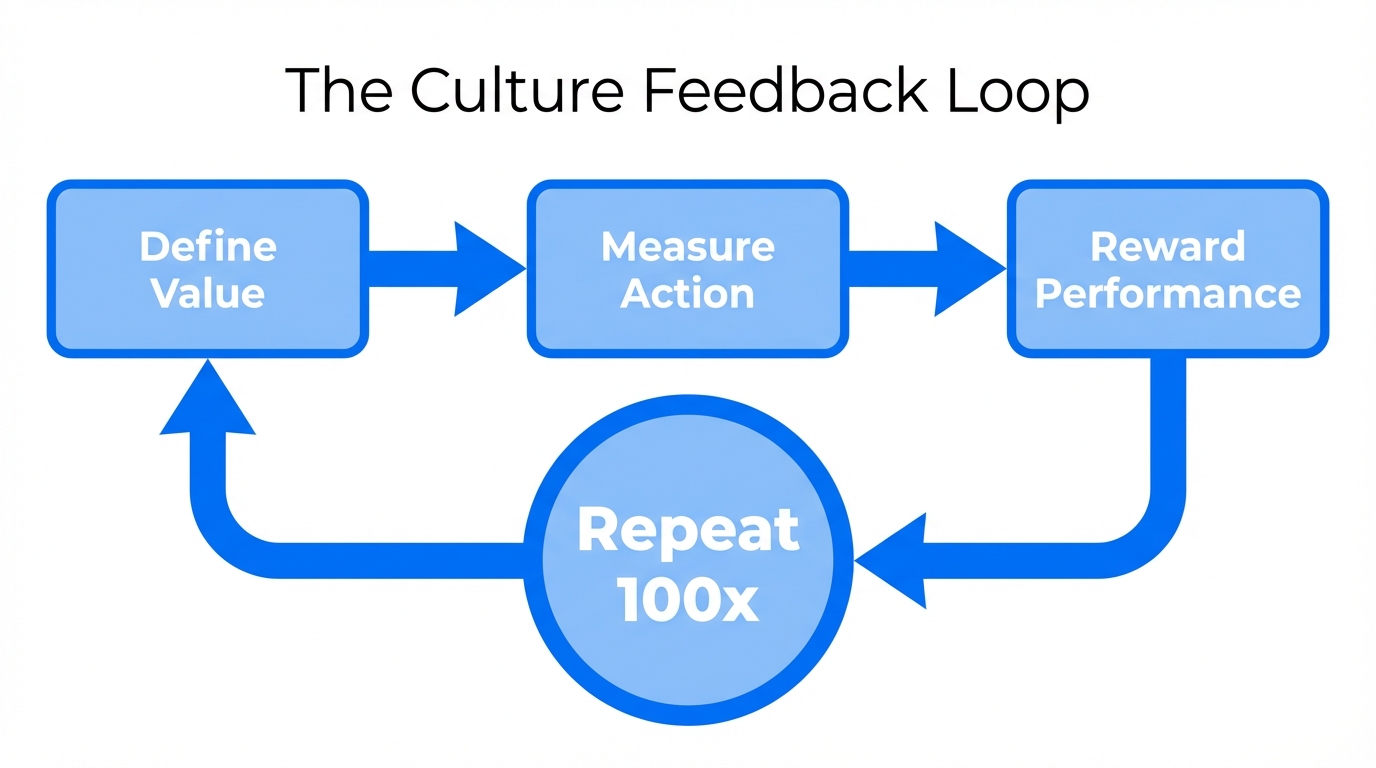
Culture is not what you write in a handbook; it is what you reward. To maintain high-tempo execution, you must "productize" your internal rewards. A famous example is the WWE Championship Belt ritual popularized by The Hustle. Every Friday, the team gathers, and the CEO hands a replica championship belt to the person who best exemplified the company values that week.
This isn't just a pat on the back. It’s a public narrative. The CEO tells the story of the specific behavior that earned the belt, reinforcing the "legend" of what it takes to succeed there. Adding a "story-worthy" cash prize—money that must be spent on something fun that can be reported back to the team—further cements the behavior. This turns culture into a game that everyone wants to win. You are not just teaching values; you are rewarding the outcomes of those values in a way that is visible and aspirational.
The Philosophy of Reminding Over Teaching
A common mistake leaders make is assuming that if a team member fails to do something, they need more training. In reality, most high-performing employees don't need to be taught; they need to be reminded. We all know the "best practices" for our roles, but in the heat of a high-growth environment, it is easy to slip into old habits.
This is where the theory of marginal gains comes in. Like the British cycling team that improved every tiny detail by 1% to win the Tour de France, a CEO’s job is to stack small improvements. Constant reminders about responding to CRM leads faster or refining a Meta Ads headline might seem like nitpicking, but they are the "lead bullets" that eventually overwhelm the competition. Repetition is the mother of mastery in startup culture.
"Culture is the accumulation of marginal gains. It is not one big speech; it is 1,000 small reminders."Conclusion: Speedrunning Your Way to Success
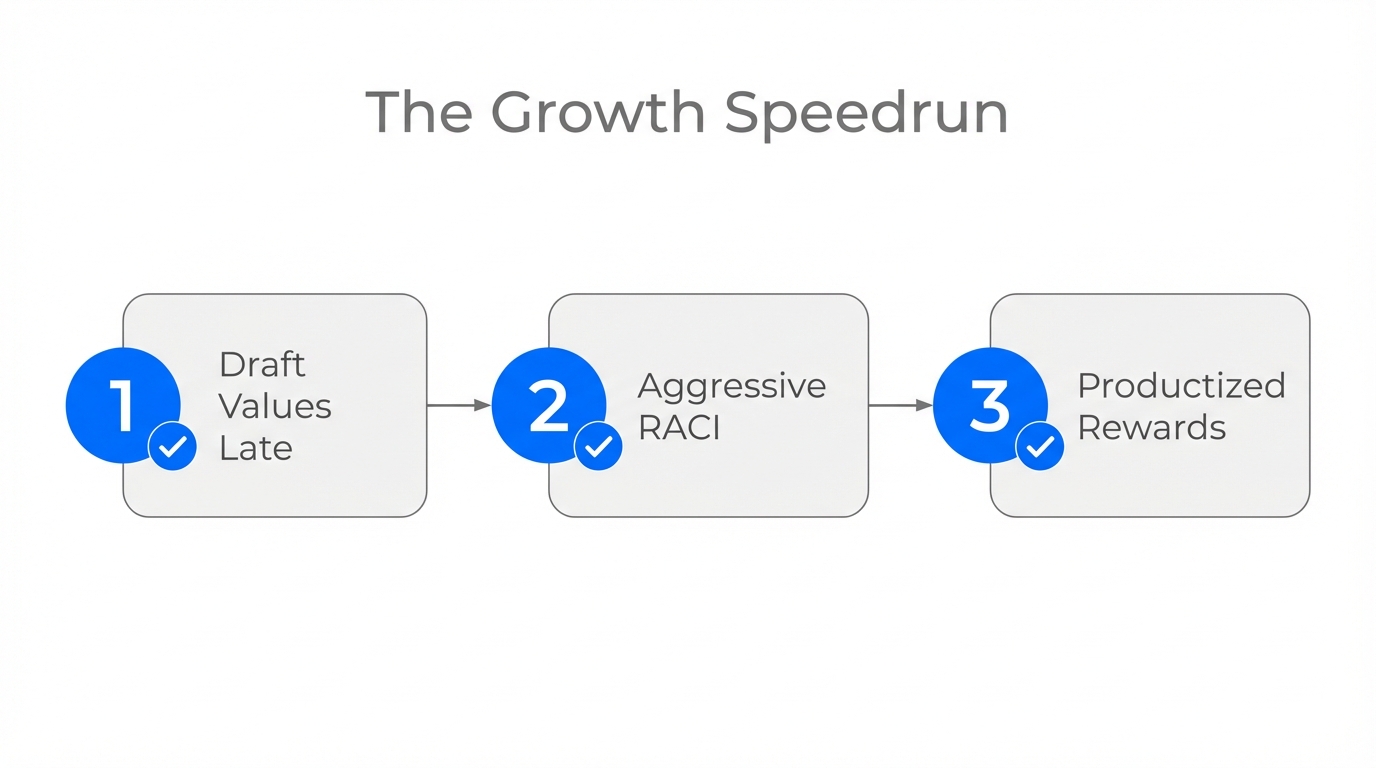
Building a high-growth culture is about more than just hitting revenue targets; it’s about creating a machine that can speedrun the levels of business. Whether you are launching a new e-commerce brand on Shopify or a new tech platform, having a repeatable playbook for values and performance allows you to win faster each time. By defining your values late, embracing trade-offs, and productizing your rewards, you turn culture from an abstract concept into a tangible growth lever. Start by looking in the mirror: are you the leader your company needs to reach the next mountain? If not, it’s time to start your own personal growth journey.