In 2026, the ecommerce landscape has officially shifted from "AI-enabled" to "AI-first." The days of static landing pages and generic product grids are fading. Today, the most successful brands are leveraging Claude AI and its revolutionary Artifacts feature to build interactive micro-apps that capture leads and drive sales in minutes. With traffic from generative AI sources to retail sites surging by 4,700% year-over-year according to Adobe Analytics, the brands that win are those that provide instant, interactive utility to their customers.
For non-technical marketers, the barrier to entry for building custom software has vanished. Whether you are running a boutique skincare line or a global apparel brand, Claude AI Artifacts allow you to deploy high-converting ecommerce micro-apps without writing a single line of code. This guide provides a comprehensive playbook for mastering ecommerce conversion rate optimization through AI-driven interactivity.
The Claude Advantage: Why Artifacts are the Secret Weapon for 2026 Ecommerce
While various LLMs exist, Anthropic’s Claude 3.5 Sonnet has become the industry standard for marketers due to its superior structured data performance and its unique "Artifacts" window. According to the Brex AI Report, Claude has seen a 55% month-over-month growth in enterprise spending because it handles complex, rules-based instructions with higher fidelity than its competitors.
Unlike standard chatbots, Claude Artifacts allow you to see code, documents, and interactive apps rendered in real-time. For an ecommerce founder, this means you can describe a tool, see it function immediately, and export the code to your store. This capability is critical as the AI-enabled ecommerce market is projected to reach $22.60 billion by 2032, as noted by Anchor Group.
"Claude wins for long-form, on-brand content because it can ingest a 100-page brand guide and maintain that tone perfectly across thousands of product descriptions." - Marketing Strategy Analysts.The 10-Minute Playbook: Building a High-Converting Skincare Quiz
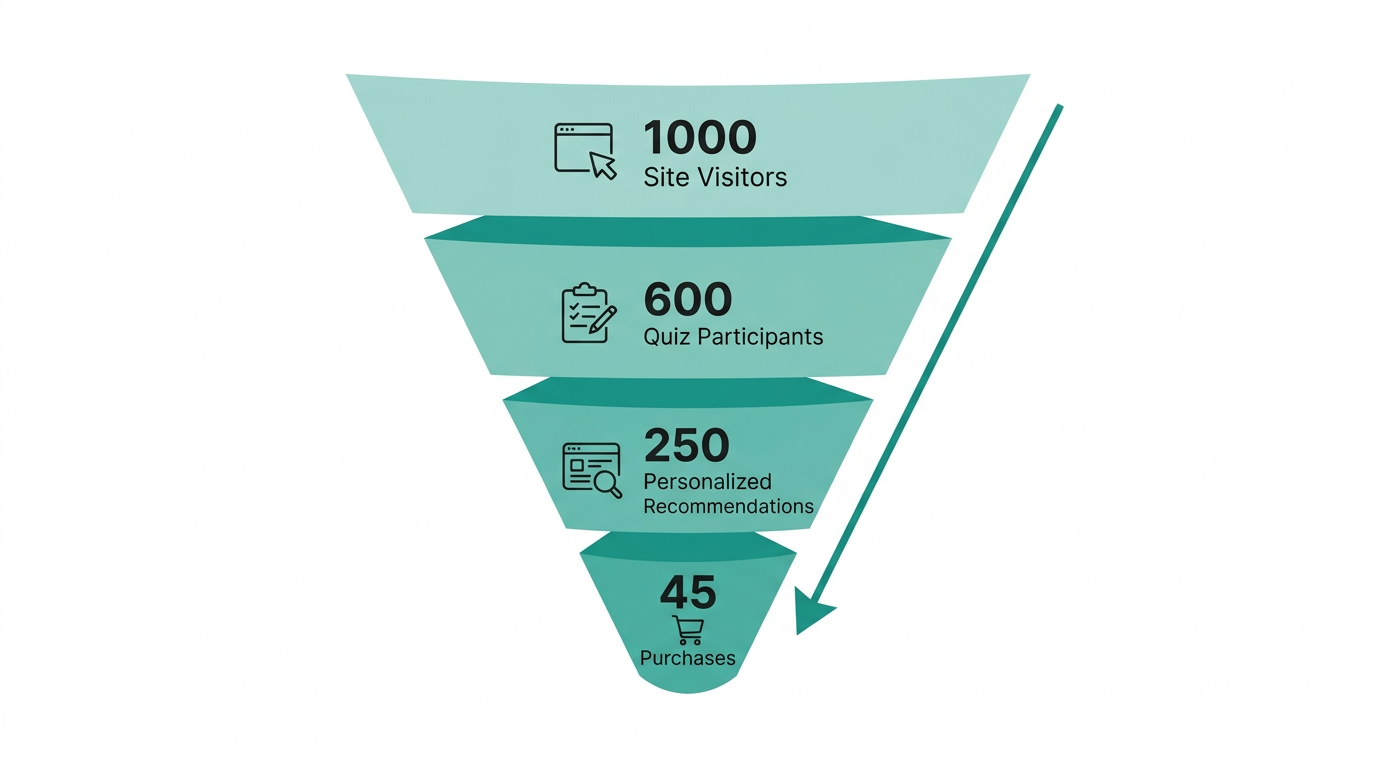
Interactive quizzes are one of the most effective AI lead generation 2026 strategies. Instead of asking a user to browse 50 serums, you provide a 30-second assessment that recommends the perfect match. This reduces choice paralysis and builds immediate trust.
Step 1: The Product Feed Upload
Start by uploading your product catalog (CSV or PDF) to a Claude Project. This gives the AI the specific context of what you sell, including ingredients, pricing, and benefits. Do not rely on generic prompts; use your real data to avoid "AI slop."
Step 2: The React Prompt
Use a prompt like this: "Create an interactive React-based skincare routine builder for my store based on these 10 products. Include questions about skin type, concerns (acne vs. aging), and preferred texture. The final screen should show a 'Recommended Routine' with buy buttons for each product."
Step 3: Refine and Embed
Claude will generate the Artifact. You can ask for adjustments like "make the buttons brand-color #FF5733" or "add a progress bar at the top." Once satisfied, you can take the React code and embed it into your Shopify or BigCommerce site using a custom liquid block or HTML section.
Beyond Quizzes: Custom Size Calculators and Personalization Tools
One of the biggest drivers of returns in ecommerce is incorrect sizing. A no-code ecommerce growth hack is to build a custom size calculator tailored specifically to your brand’s unique measurements. For example, a denim brand can build a "Fit Finder" that asks for height, weight, and the fit of other popular brands (e.g., "I wear a 32 in Levi's").
By using Claude’s visual reasoning and logic, the micro-app can calculate the exact SKU the customer needs. This level of hyper-personalization is what distinguishes market leaders from laggards. Expert data from Pippit AI suggests that these types of tools can reduce cart abandonment by up to 25% by removing the "will it fit?" anxiety.
"The micro-app is the new landing page. In 2026, utility is the highest form of marketing."Visual Reasoning: The Secret Hack for Competitor Conversion Analysis
Claude 3.5 Sonnet isn't just a text generator; it can "see." This allows you to perform deep ecommerce conversion rate optimization analysis on your competitors. Take a screenshot of a competitor’s high-converting checkout flow or a landing page from a top-tier brand in your niche.
Upload the image to Claude and ask: "Identify the psychological triggers, social proof placements, and conversion elements used in this layout. Suggest three specific improvements for my own landing page to beat this conversion rate." Claude can identify subtle cues like "scarcity timers," "free shipping thresholds," and "trust badges" that you might have overlooked. You can also ask Claude to analyze how your products appear in AI search engines like Perplexity.
Generating Passive Revenue with Digital Product Artifacts
Ecommerce isn't just for physical goods. Many brands are scaling passive revenue by selling digital companions to their physical products. A fitness apparel brand might sell a "90-Day Habit Tracker," or a home decor brand might offer a "Digital Room Planner."
Using Claude Artifacts, you can generate production-ready PDFs and interactive web-planners in under 10 minutes. Creators are already generating $100+/day in passive revenue using this exact workflow, as reported by Clinton McLaughlin. By bundling these digital products with physical ones, you increase your Average Order Value (AOV) with zero additional fulfillment cost.
The Non-Techie's Guide to Deployment
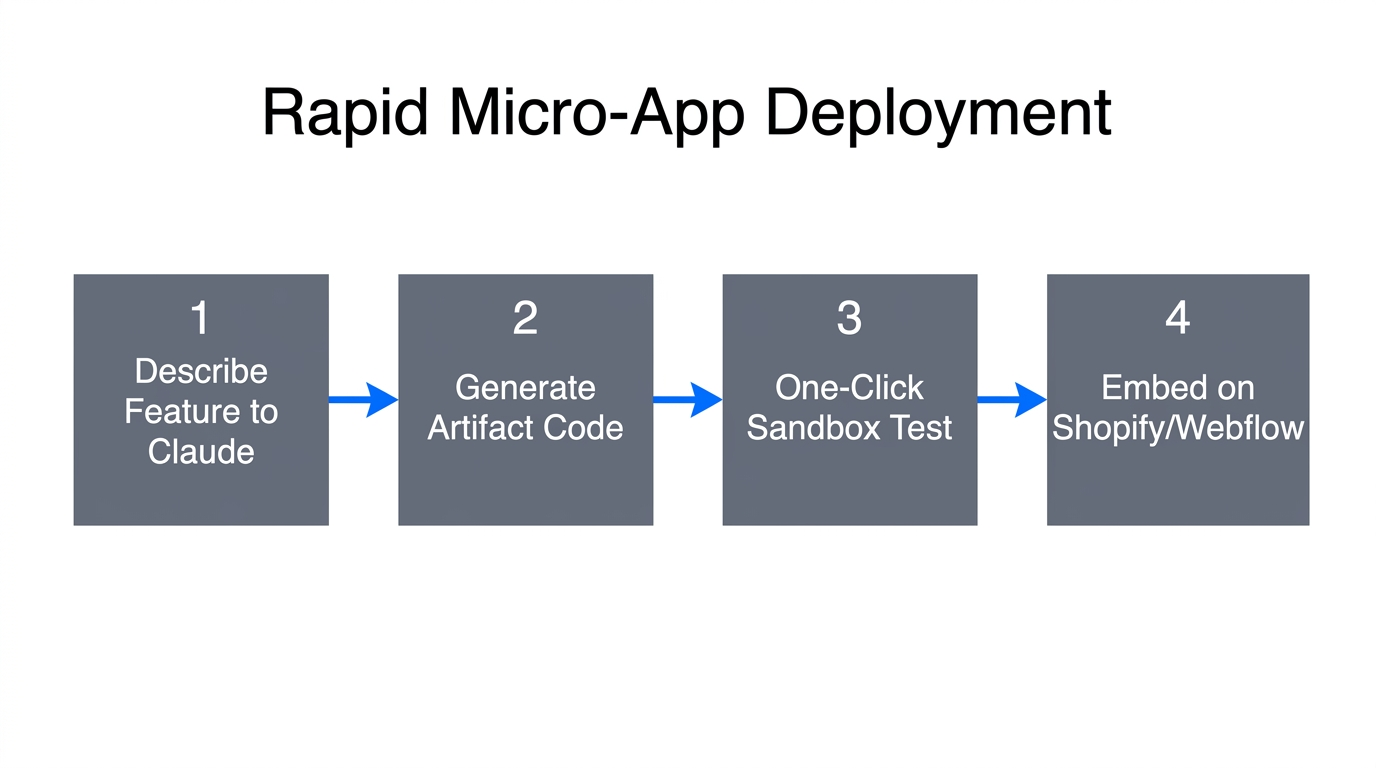
You don't need a developer to deploy these interactive ecommerce tools. Most modern platforms allow for easy integration of custom code snippets. Here is the standard workflow for 2026:
- Generate the Code: Ask Claude to provide the final version of the code in a single file (HTML/CSS/JS).
- Create a New Page: In your store admin, create a new landing page.
- Insert Custom HTML: Look for the "Custom Liquid" (Shopify) or "HTML Code" block.
- Paste and Publish: Paste the code provided by Claude.
- Connect Leads: Ensure your form fields in the micro-app send data to your CRM or email platform like Klaviyo.
For those managing complex ad campaigns alongside these tools, platforms like Stormy AI can help automate the discovery and outreach of creators to drive traffic to your new micro-apps, ensuring your conversion tools are seen by the right audience.
Avoiding the AI "Slop" Trap: Best Practices for 2026
While AI is powerful, over-automation without human review is a recipe for failure. According to Salesforce, 68% of customers will abandon a brand after a single bad experience with a generic, unhelpful AI bot.
- Avoid "Stateless" Experiences: Ensure your tools remember user preferences across sessions.
- Check for AI Slop: Audit your text for over-used AI phrases like "delve" or "tapestry."
- Prioritize Privacy: With 81% of consumers concerned about data usage according to Pew Research, always ensure your micro-apps are GDPR/CCPA compliant.
- Build a Knowledge Base: Use Claude Projects to store your brand voice and past winning ad copies so the AI never produces generic content.
The Ultimate 2026 Ecommerce Growth Hacking Stack
| Category | Recommended Tool | Core Value |
|---|---|---|
| Foundation AI | Claude AI | Best-in-class Artifacts for micro-app building. |
| Email Marketing | Klaviyo | Industry standard for lifecycle automation. |
| Creator Discovery | Stormy AI | AI-powered influencer discovery and outreach. |
| Creator CRM | Stormy AI | Managing high-value creator relationships and campaigns. |
| Ad Automation | TikTok Ads | Scaling UGC campaigns with AI-driven bidding. |
Conclusion: From Static Storefront to Interactive Powerhouse
The transition to interactive ecommerce tools is not just a trend—it is a requirement for survival in 2026. By using Claude AI Artifacts, non-technical marketers can build sophisticated, high-converting micro-apps that were previously the domain of expensive development agencies. Start small by building a simple recommendation quiz, analyze your competitors' flows with visual reasoning, and scale your revenue with digital companions. The future of ecommerce belongs to the brands that provide the most interactive value in the shortest amount of time.