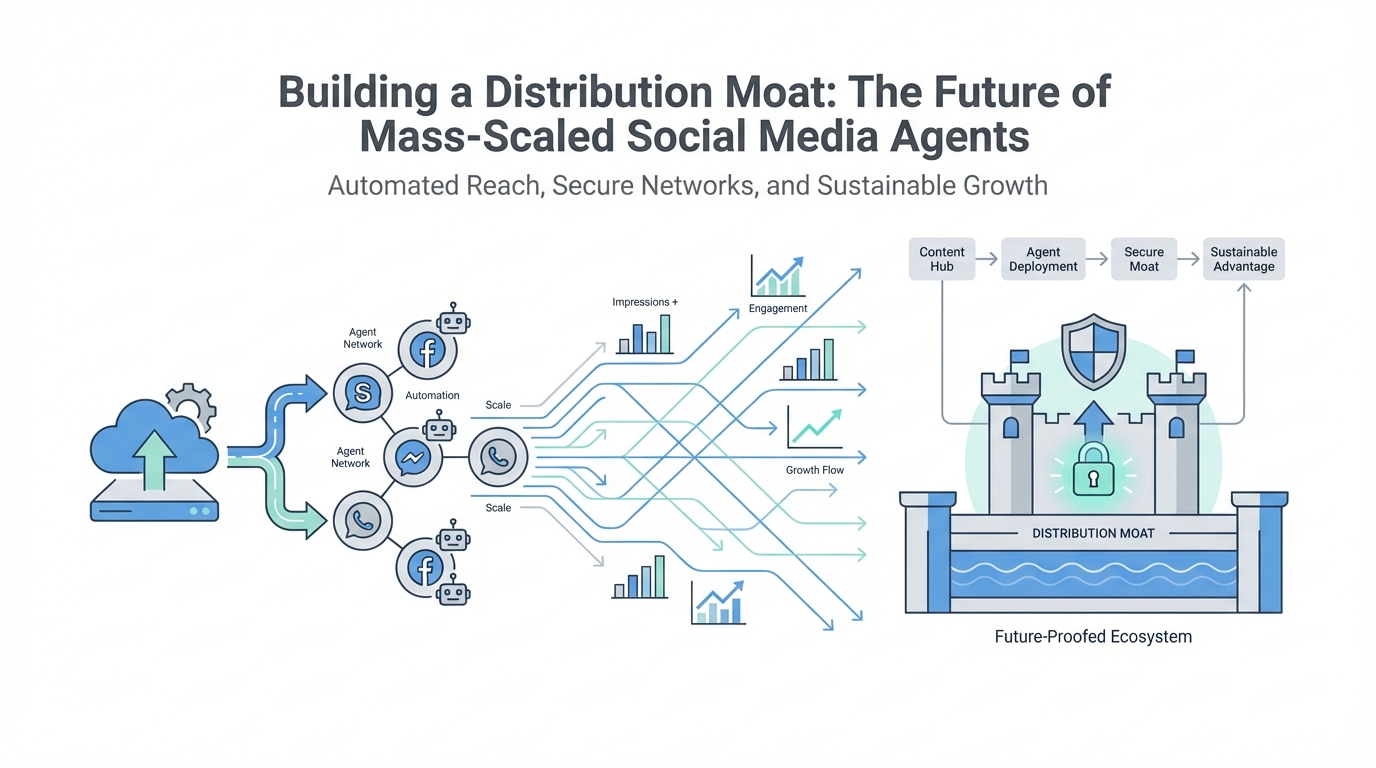
For years, the gold standard of app growth has been User-Generated Content (UGC). Founders have spent thousands of dollars hiring creators, hoping for that one outlier video that generates a massive spike in installs. But what if the secret to organic growth wasn't just making content, but making comments at a scale that seems virtually impossible? Imagine a single campaign generating 300,000 Instagram comments, resulting in 7,000 high-intent clicks. This isn't a pipe dream; it is the reality of a new frontier in social media distribution that leverages physical hardware automation and AI-driven agents to create a technical moat your competitors simply cannot replicate.
The Limitations of the UGC Lottery
Most app founders view organic social media as a lottery. You post five videos a week to Meta or TikTok, praying the algorithm picks one up. This dependency on viral variance is a significant bottleneck for growth. If your creative fails, your distribution dies. Even if a video does go viral, the lifespan of that traffic is often short-lived, forcing you back into the expensive cycle of content production.
Traditional UGC strategies are also limited by human bandwidth. Managing a team of 100 virtual assistants to manually engage with users is a logistical nightmare. People are inconsistent, they get tired, and they cannot operate 24/7. To achieve true marketing automation at scale, you have to move beyond human-reliant processes and look toward the infrastructure of the future: mobile device farms. By automating the physical hardware itself, growth hackers are now able to bypass the traditional limitations of software emulators, which are easily detected and banned by sophisticated platform algorithms.
Building a Physical Moat: The Mobile Device Farm

The core of this new distribution strategy lies in a hardware-first approach. Most botting attempts fail because social media platforms detect that the traffic is coming from a virtual machine or a cloud server. To counter this, elite growth teams use a mobile device farm for marketing, such as AWS Device Farm or private setups consisting of hundreds of physical Android devices. By creating a custom version of Android that can load and unload the ROM of the entire device, each social media account essentially lives on its own "unique" phone.
While building a hardware moat is essential for scale, platforms like Stormy AI provide the foundation by allowing brands to discover the right creators using an AI-powered search engine across TikTok, Instagram, and YouTube. The distribution moat is built when those creator videos are amplified by an army of automated agents. These agents don't just post content; they live in the ecosystem. They scroll, they like, and they engage just like real users. This technical infrastructure is incredibly difficult to build, creating a barrier to entry that protects those who master it. When you control the hardware, you control the trust score of your accounts, allowing for automated growth hacking that remains undetected by anti-botting measures.
The Math of Mass-Scaled Social Media Distribution

The scale of this operation is what truly separates it from traditional marketing. Let’s look at the math behind a 1,000-device setup. If one phone can handle 60 active accounts, and each account posts 45 comments a day, you are looking at 2.7 million comments per month. If those accounts also post three videos a day, that is 1.5 million monthly videos.
To put this in perspective, that volume of engagement allows an app founder to respond to virtually every single comment on a major influencer’s feed within a month. While your competitors are fighting for a sliver of attention through Google Ads, your automated agents are blanketing the comment sections of every trending video in your niche. This level of ai in social media marketing ensures that your brand name is omnipresent without the fluctuating costs of traditional Apple Search Ads.
Account Warm-Up: The Science of Digital Authenticity
You cannot simply fire up 1,000 phones and start blasting links. Just like cold email requires warming up inboxes to avoid spam filters, social media agents require a rigorous warm-up protocol. Before scaling outreach, it's vital to vet your target list. Using Stormy AI, marketers can instantly analyze creator profiles to detect fake followers and engagement fraud, ensuring every dollar spent on distribution is reaching real audiences.
The warm-up process involves training the AI to behave like a normal human consumer. This includes:
- AI-Driven Browsing: Using prompts to analyze the "For You Page" and only engaging with content relevant to the target niche.
- Non-Promotional Engagement: Posting "harmless" comments that have no call-to-action (CTA), merely discussing the video content to build account authority.
- ROM Swapping: Regularly rotating the device identity to ensure no single hardware ID is overused.
By mimicking human behavior, these accounts earn a high trust score. Only after this score is established do the agents begin shifting toward the "soft pitch" strategy. This method mirrors the technical precision found in platforms like Superwall, where every interaction is optimized for the highest possible conversion rate.
High-Conversion Copywriting: The "Soft CTA" Strategy
The biggest mistake in marketing automation at scale is using spammy, copy-pasted comments. The modern social media user is highly attuned to bot-like behavior. To convert, comments must be context-dependent and provide genuine value or entertainment first. Interestingly, being upfront about your status as a founder often performs better than trying to hide the advertisement.
Consider the Founder/Friend Angle: A comment like, "I actually co-founded this fitness app with my buddies because we were tired of tracking calories manually. Glad people find this pancake recipe useful!" is transparent and human. This approach often sees a 15% click-through rate from the profile visit to the link-in-bio. Instead of a hard sell, you are initiating a conversation. You can find high-performing creative hooks by analyzing profitable experiments at paywallexperiments.com to see what psychological triggers drive users to take action.
Why Platforms Crave Quality Supply
It is a common misconception that Instagram and TikTok are actively trying to kill all automated content. In reality, these platforms are starving for quality supply. Only a tiny fraction of users actually create content; the vast majority are passive consumers. Social media companies need an endless stream of engaging material to keep users on the app so they can serve more ads via Google Ads or their own internal networks.
If your automated agents provide high-quality comments that spark further discussion, you are actually helping the platform's metrics. When a comment gets 800 likes, it keeps people in the comment section longer, increasing the total time spent on the app. As long as the content is relevant and engaging, the algorithm is incentivized to promote it. The goal is to fill the void of missing content in underserved niches, creating a win-win for the growth hacker and the platform.
The Synergy: AI Production Meets Automated Distribution

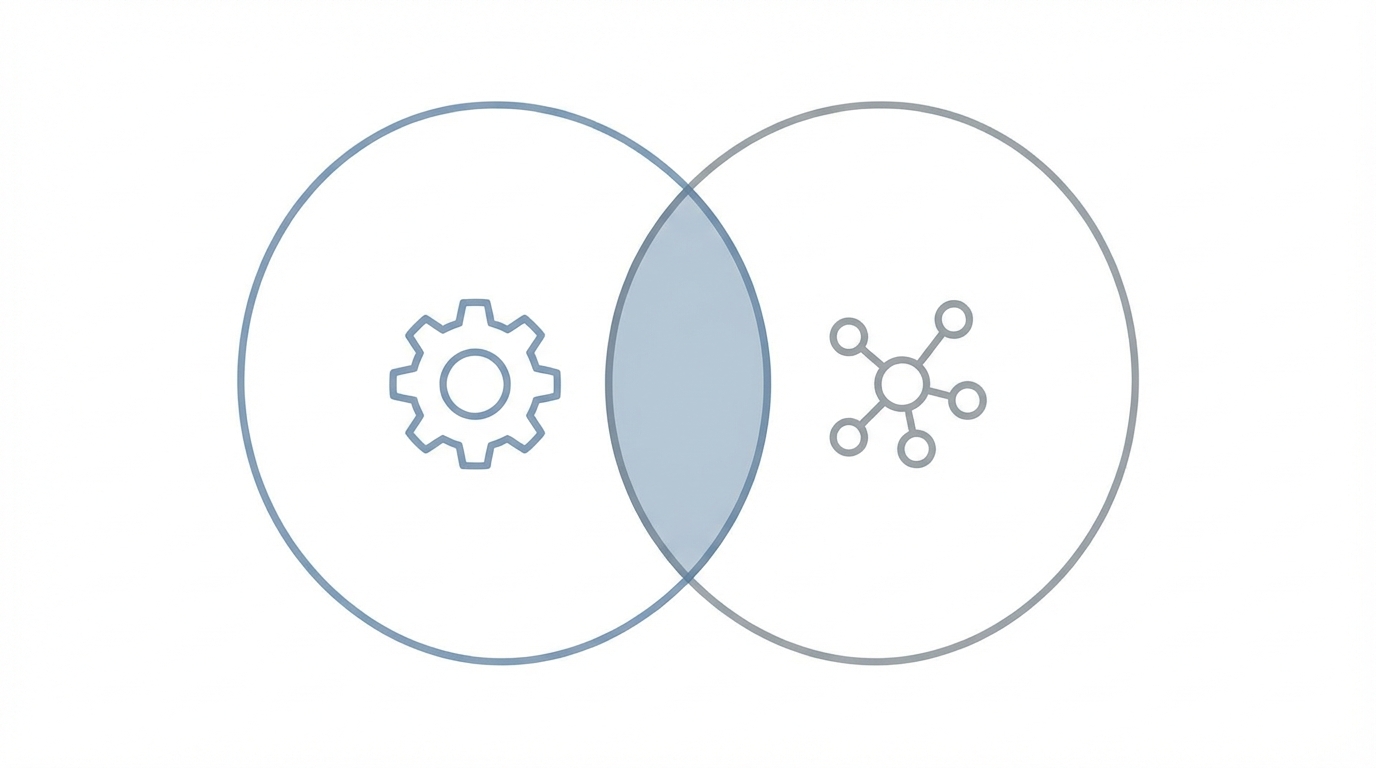
The next evolution of this strategy involves the marriage of automated production and automated distribution. While agents handle the engagement, AI video generators are beginning to handle the content creation. By partnering with advanced video AI teams, founders can soon generate custom UGC-style videos that are specifically designed to go viral, then use their device farms to ensure those videos get the initial traction they need.
This creates a closed-loop system where ai in social media marketing handles the entire funnel: from identifying trending topics to generating the video and finally distributing it through thousands of comments. By using Stormy AI for automated outreach and email enrichment, founders can contact hundreds of creators instantly with hyper-personalized emails, effectively bridging the gap between hardware automation and human-centric creator relationships.
The Automated Growth Playbook for App Founders
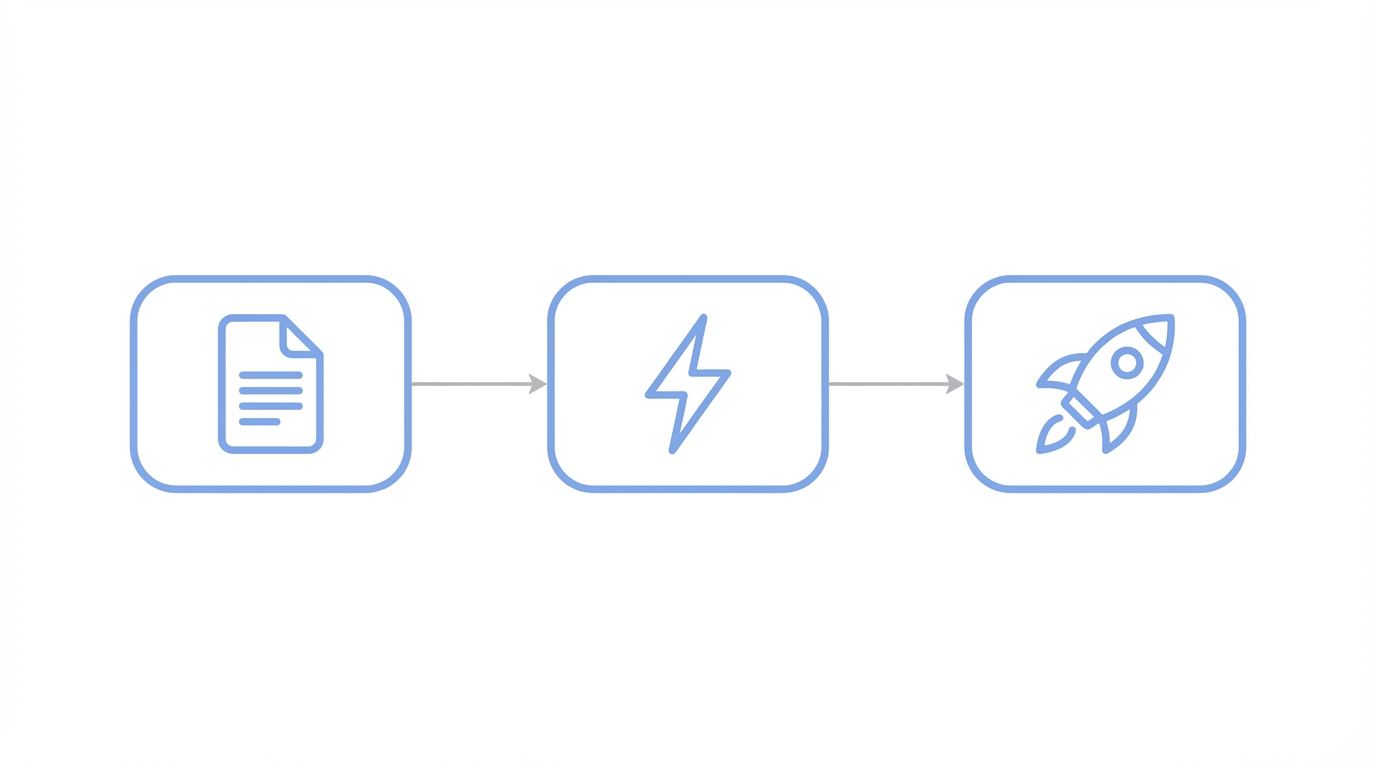
If you want to move away from the UGC lottery and toward a distribution moat, follow this step-by-step playbook:
Step 1: Identify Your "Social Agents"
Decide on the personas for your accounts. Are they "interns" at your company? Are they the "founders"? Or are they just "super-fans" of the niche? To keep these personas organized, a robust Stormy AI creator CRM allows you to track every interaction, negotiation, and collaboration history in one central hub.
Step 2: Build or Access Hardware Infrastructure
Avoid virtual emulators. To achieve marketing automation at scale, you need physical devices or a partner that provides access to a mobile device farm. Each device should be configured with a unique ROM and a residential proxy to mimic a genuine mobile user.
Step 3: Implement the Warm-Up
Don't post links for the first 7-14 days. Let the accounts engage with viral content in your niche. Use AI to generate contextual comments that don't look like ads. This builds the "trust score" necessary to avoid shadowbanning.
Step 4: Execute the Soft-CTA Commenting Strategy
Start targeting trending videos in your niche. Use AI to analyze the video transcript and generate a comment that fits the conversation. End with a soft mention of your app. Track your profile-visit-to-install ratio to refine your copy.
Step 5: Scale to the Thousand-Phone Mark
Once you find an angle that converts, replicate it. Scaling from 60 phones to 1,000 allows you to dominate entire categories. At this stage, your distribution becomes a technical moat that competitors cannot easily buy their way into with traditional ad spend.
The Future of Distribution
The era of "post and pray" organic social media is coming to an end. As platforms become more saturated, the advantage shifts to those who can command mass-scaled social media distribution through technical ingenuity. By treating social media engagement like a cold email campaign—focused on volume, warm-up protocols, and technical infrastructure—app founders can build a growth engine that is predictable and scalable.
Whether you are using automated growth hacking to launch a new app or scaling an existing one to millions of users, the move toward physical hardware and AI agents is inevitable. Don't leave your distribution to the lottery of virality. Build a moat, automate your engagement, and take control of your app's growth trajectory.