Building Custom SEO and PPC Command Centers with Claude Code: A 2026 Playbook
Learn how to use Claude Code for SEO audits and automated PPC reporting Python scripts. This 2026 playbook covers building agentic marketing tools for growth.
In 2026, the barrier between a performance marketer and a software engineer has effectively vanished. We are no longer in the era of waiting for IT tickets to be resolved or begging the data science team for a custom dashboard. As Andrej Karpathy famously noted,
"The hottest new programming language is English."This shift is most visible in the rapid adoption of agentic coding tools like Claude Code, which has turned the marketing department into a hub for "Citizen Developers." By leveraging these tools, technical SEOs are reducing 40-hour manual audits to 15-minute automated processes, while PPC managers are deploying self-healing bid management scripts that react to competitor pricing in real-time.
The Rise of the Marketing Engineer in 2026
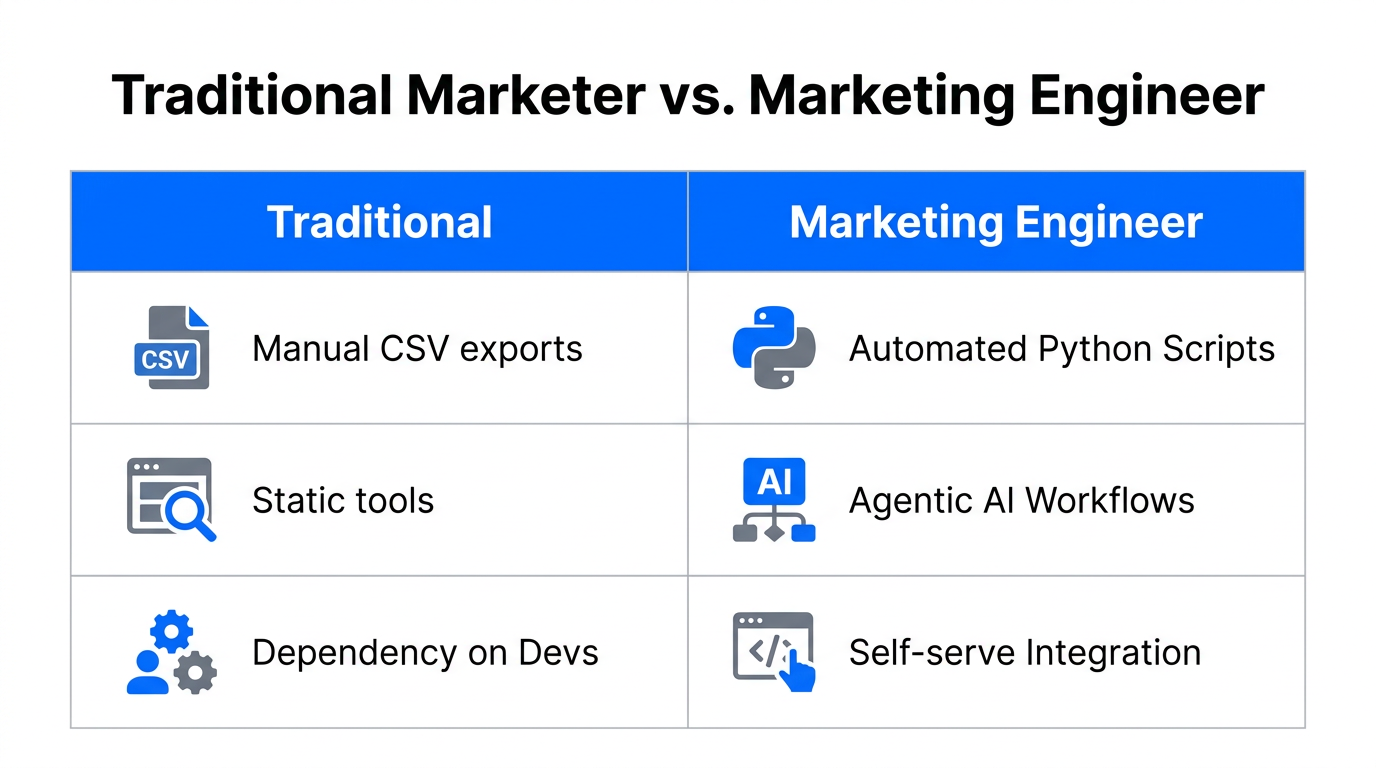
The global AI code assistant market has skyrocketed from $4.3 billion in 2023 to over $27.17 billion in 2026, according to Fortune Business Insights. This isn't just growth within engineering teams; it is the "shadow IT" segment—marketers and analysts—that represents the fastest-growing cohort. Recent data from GitHub's Octoverse report shows that non-technical engagement for script writing has seen a 10x increase, driven by models like Claude 3.7 Sonnet.
Why is this happening now? Because agentic workflows allow marketers to delegate tasks rather than just accelerate typing. Tools like Claude Code don't just suggest a line of code; they research the Google Ads API documentation, write the authentication script, and execute the data export locally on your machine. This capability has led to companies reporting a 15–20% reduction in Customer Acquisition Cost (CAC) through bespoke automation, as highlighted by McKinsey & Company.
Automating SEO Audits: From 40 Hours to 15 Minutes
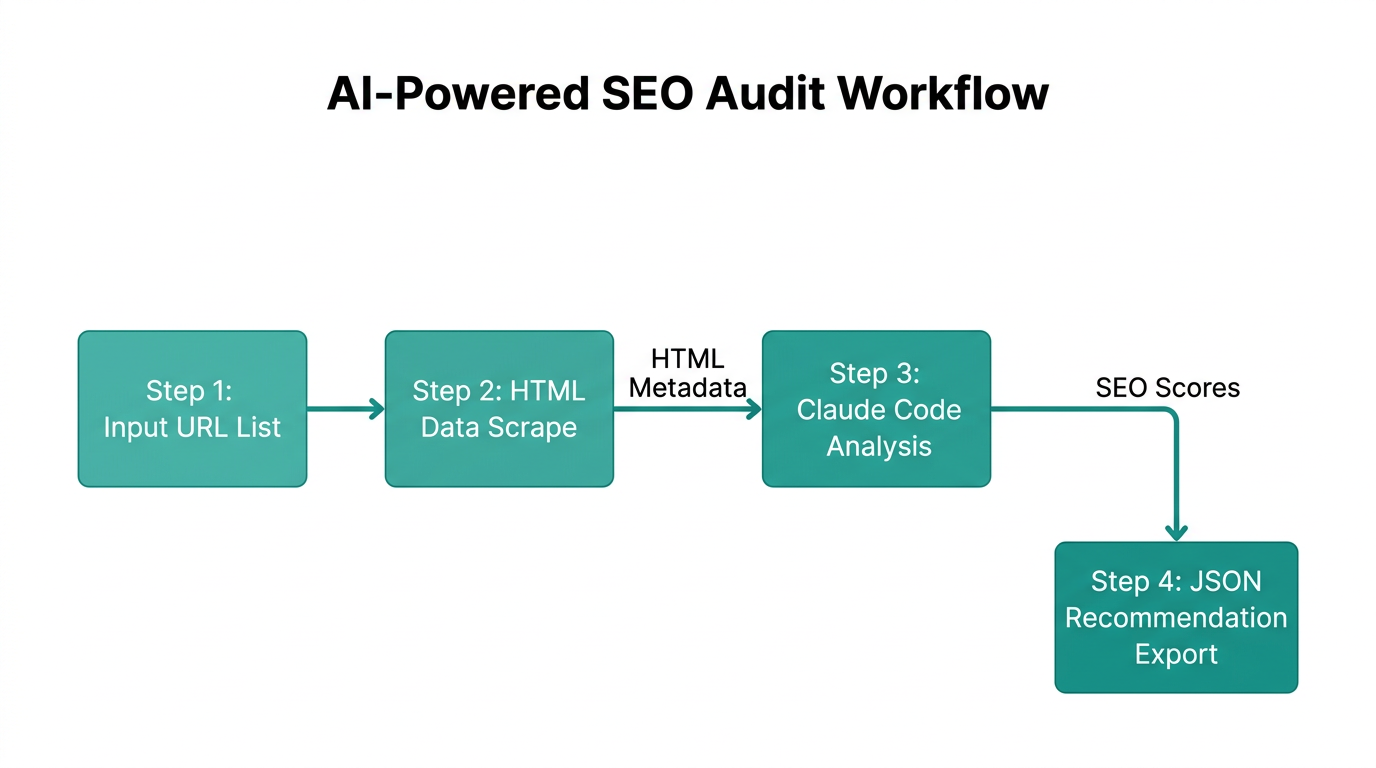
Traditional technical SEO audits have historically been labor-intensive, requiring manual crawls and cross-referencing with Google Search Console. In 2026, Claude Code for SEO audits has become the gold standard. Instead of clicking through spreadsheets, marketers use the CLI to initiate agentic crawls that analyze thousands of URLs for content gaps and technical errors simultaneously.
The Agentic Crawl Workflow
By integrating tools like Firecrawl with Claude Code, you can build a custom audit tool in minutes. A content agency recently reported that this exact setup allowed them to audit 1,000+ URLs, identify SEO gaps, and suggest internal linking structures in just 15 minutes—a task that previously took a senior specialist a full work week.
- Initialize the session: Open your terminal and type
claude. - Define the Intent: "Crawl my domain and cross-reference pages with low impressions in Search Console but high keyword difficulty."
- Automated Execution: Claude Code uses its 200K context window to "see" the entire site structure and generate a prioritized fix list.
For more complex semantic analysis, marketers are now using advanced LLM patterns to ensure their custom tools can handle massive datasets without losing context. This level of technical SEO automation ensures that your site stays ahead of algorithm updates without constant manual monitoring.
PPC Automation: Writing Python Scripts for Competitive Dominance
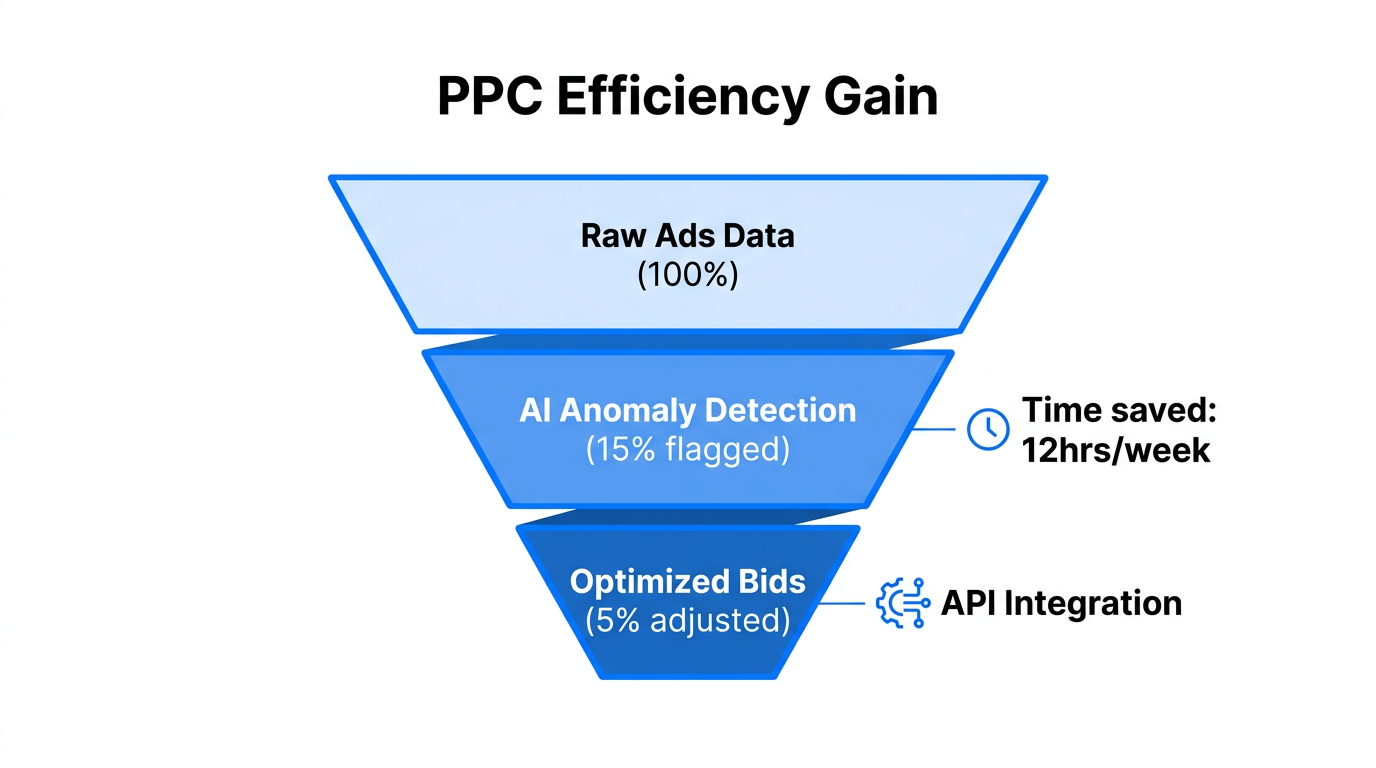
The competitive landscape of 2026 requires more than just standard Meta Ads Manager features. High-growth brands are building proprietary tools to bridge the gap between their storefront and the ad auction. Automated PPC reporting Python scripts are now being used to scrape competitor pricing and instantly adjust Shopify Plus product bids via API.
"The 'No-Code' revolution is being swallowed by the 'AI-Code' revolution. Marketers won't use drag-and-drop builders; they will use agents like Claude to generate custom code." — Scott Brinker, Chiefmartec
One Shopify case study revealed that an e-commerce brand saved 10 hours a week by using Claude Code to write a script that monitored competitor price drops. When a competitor lowered a price, the script automatically increased the ad spend for that specific SKU to capture the high-intent traffic while the brand was still price-competitive. This resulted in an 8% increase in conversion rates and a significantly higher ROI on ad spend.
| Feature | Claude Code (CLI) | Cursor (Editor) | GitHub Copilot |
|---|---|---|---|
| Core Strength | Autonomous Task Execution | Rapid UI/Code Iteration | Code Completion |
| Context Window | 200K (1M Beta) | 70K - 120K | Variable/Low |
| User Level | Intermediate (CLI) | Beginner-Friendly | Enterprise-Focused |
| Agentic Ability | High (Runs Terminal) | Medium (Composer) | Low |
Bridging Local Data with Model Context Protocol (MCP)
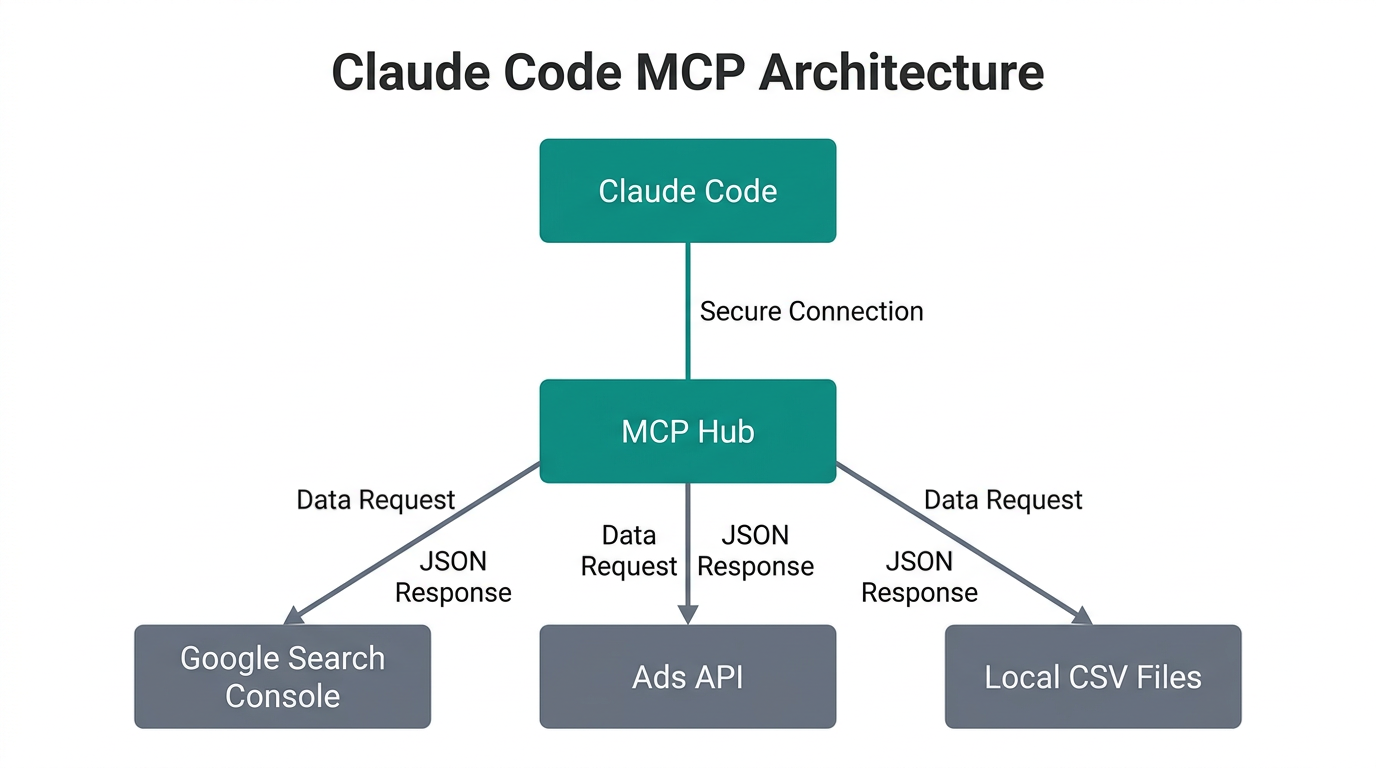
The biggest challenge for custom marketing tools has always been data silos. How do you get your local CSV of lead data to talk to your cloud-based AI? In 2026, the answer is Model Context Protocol (MCP). This open standard allows Claude Code to securely access local databases and marketing files without uploading them to a third-party server.
By setting up an MCP server, a performance marketer can say: "Look at my historical lead data in this SQL database and tell me which TikTok Ads campaigns produced the highest LTV (Lifetime Value)." Claude Code then writes the query, analyzes the result, and provides a strategy. This creates a fully proprietary marketing command center that keeps your data secure while giving you the insights of a $150k/year data scientist.
Practitioners emphasize that the setup is simpler than most expect. Using a single universal command like npm install -g @anthropic-ai/claude-code is often the only barrier between a marketer and a fully agentic stack.
Maintaining Infrastructure: The /doctor Command
One of the primary fears of the "Citizen Developer" is the Black Box Problem—building something that breaks and not knowing how to fix it. Claude Code solves this with its built-in /doctor command. This feature runs a self-diagnostic on your marketing tools, identifying broken API connections, expired tokens, or environment mismatches.
/doctor command to ensure your environment is patched and secure, as noted by IT Pro.This "self-healing" capability is what allows lean marketing teams to manage complex infrastructure. If a Meta pixel breaks or a Make.com automation fails, the agentic layer can often detect the error and deploy a fix before the marketer even notices a drop in the reporting dashboard.
Deploying Intent-Based Dashboards
The final step in the 2026 playbook is moving from terminal prompts to live multi-channel reporting. Using tools like Lovable or Bolt.new, marketers can take the Python scripts generated by Claude Code and wrap them in a beautiful, reactive web interface.
Imagine saying: "Build me a multi-touch attribution dashboard that pulls from GA4 and Search Console, and host it on my local network." Claude Code handles the backend, while a tool like Cursor helps you refine the UI. This combination of custom marketing tools with Claude Code and visual app builders is creating a new class of "Marketing Engineers" who own their data end-to-end.
"The 'biggest risk' is not buggy code, but the model being tricked into executing unauthorized commands. Security is the new prerequisite for marketing automation." — CPI Consulting
Future-Proof Your Marketing: The Next Steps
As we move deeper into 2026, the reliance on rigid SaaS platforms is diminishing in favor of flexible, AI-generated proprietary tools. While platforms like Stormy AI remain essential for specialized tasks like AI-powered influencer discovery and outreach, the "connective tissue" of your marketing stack is now your responsibility to build and maintain.
To start your journey into growth marketing automation, follow these steps:
- Master the Basics: Install Claude Code via the official Anthropic documentation or community guides.
- Start Small: Use Google Ads API scripts for beginners to automate simple weekly spend reports before moving to complex bid management.
- Build Local Context: Use MCP to connect your local CSVs and databases to the Claude CLI.
- Stay Human-in-the-Loop: Always verify agentic output. While Claude Code succeeds on its first attempt about 33% of the time on complex coding benchmarks, its ability to fix its own mistakes makes it a formidable partner for any technical marketer.
The transition from "Vibe Coding" to production-ready automation is here. By building your own SEO and PPC command centers, you aren't just saving time—you are building a competitive moat that no off-the-shelf software can replicate.