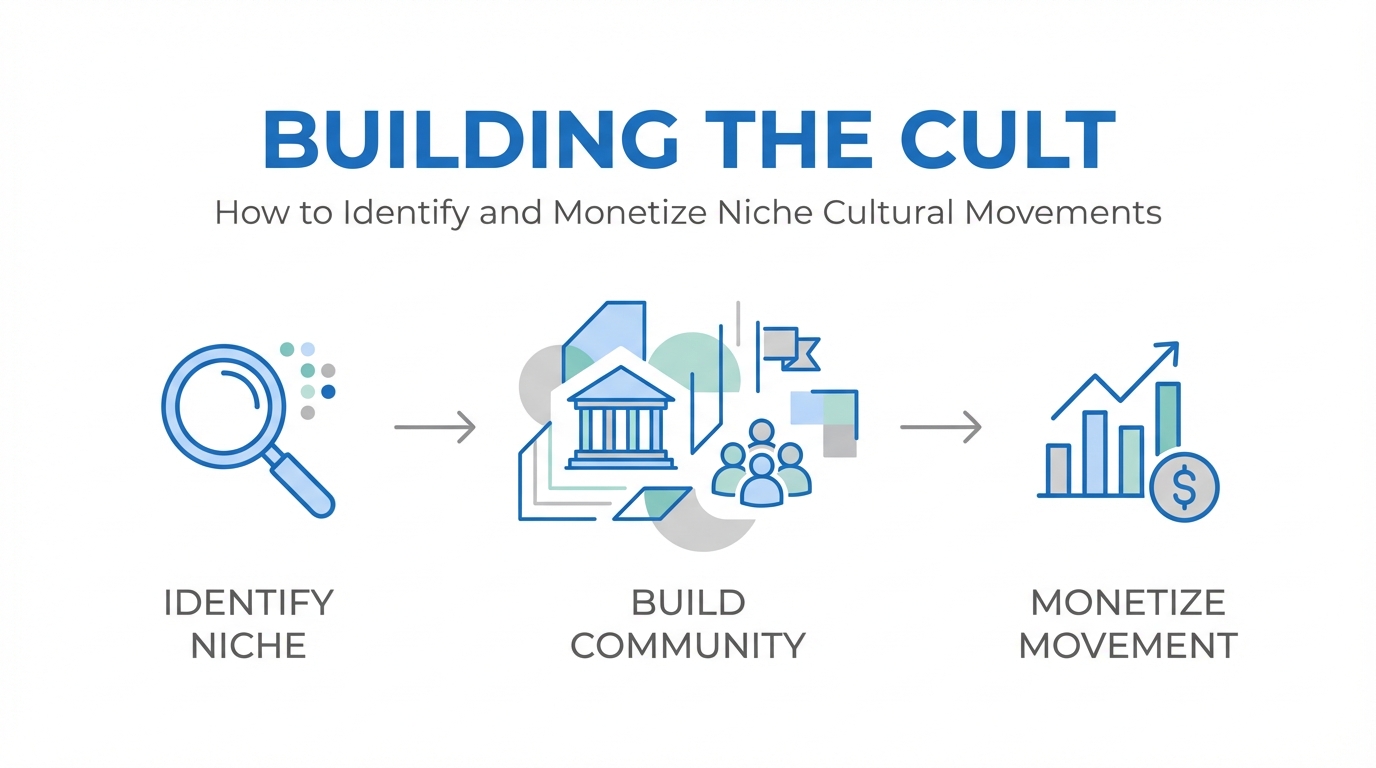
When Dan Quan launched Shepherd, a Bible study app gamified with the mechanics of a Tamagotchi, he wasn't just building a software product; he was tapping into a surging spiritual revival. In just 14 days, the app hit $75,000 in Monthly Recurring Revenue (MRR) and secured over 100,000 downloads. This wasn't a fluke of the algorithm. It was the result of a precise niche marketing strategy that prioritizes cultural movements over feature sets. Most founders spend months refining code; Quan spends those months performing a social media trend analysis to find out what people are already obsessed with—or what they are collectively beginning to hate. By the time the first line of code is written, the 'cult' of the product already exists.
Finding the Cult vs. Building the Cult

The fundamental divide in market research for startups is between creating a community from scratch and stepping into an existing one. For many, building a brand means fighting for every inch of attention on Instagram or TikTok. However, the fastest path to product-market fit is finding a group that already possesses a high 'cringe factor' or a deep emotional investment in a specific outcome. Whether it's the anime community’s obsession with leveling up or a student’s frustration with university bureaucracy, these are ready-made 'cults' looking for a leader.
When you find a cult, you don't need to explain the value proposition. You simply provide the tool that solves their specific grievance. This is why platforms like Stormy AI are becoming essential for modern marketers. Stormy is an all-in-one AI search engine across TikTok, Instagram, and YouTube that lets you type natural-language prompts to find matching influencers instantly. Instead of guessing what might work, you can identify UGC creators who already speak the language of these subcultures. By observing identifying consumer trends within these small, high-density pockets, you can launch products that feel like an inevitable evolution of the community itself, rather than an external advertisement.
The 'Enemy' Strategy: Positioning Against Giants

One of the most effective ways to trigger viral growth is to identify a common enemy. For Quan’s first major success, Kunch AI, the enemy was pointless university bureaucracy and the rise of AI detection tools like GPTZero. By positioning Kunch as the 'bypass' tool for students burdened by busywork, he tapped into an existing resentment. The result? A single video generating 30 million views and the company reaching $1 million in ARR within 30 days.
This 'us vs. them' narrative was repeated with Shepherd. At the time of its launch, the language-learning giant Duolingo was facing backlash for its pivot toward AI-heavy instruction. Quan capitalized on this 'momentum wave' by branding Shepherd as 'God first, lamb over the AI-first owl.' This positioning created a binary choice for the user: support a faceless corporate AI or join a mission-driven community focused on faith. When performing social media trend analysis, look for moments where a major player in an industry leaves a flank exposed through a controversial decision.
Identifying Momentum Waves in Niche Subcultures


A momentum wave is a temporary surge in cultural interest that provides a massive tailwind for new products. These waves often originate in three key areas: Anime, Religion, and Education. For example, the launch of Arise, a fitness app, was timed perfectly with the season finale of Solo Leveling. By creating a product that allowed fans to experience the 'system' from the anime in real life, the team rode a wave of fan-generated content that was already flooding X (formerly Twitter).
The Anatomy of a Momentum Wave:
- High Emotional Resonance: The community must feel that the topic is central to their identity.
- Platform Specificity: Different waves peak on different platforms. Snapchat is often where the 'real' culture starts before bubbling up to TikTok.
- Timing: You must ship the product during the peak of the conversation. Quan suggests a 'two-week build, two-week growth sprint' model to ensure you don't miss the window.
To execute this, you need a product market fit guide that prioritizes speed over perfection. Using Stormy AI to find creators who are already part of these niche waves can shave weeks off your marketing cycle. The platform provides deep audience demographics and detects fake followers automatically, ensuring your partnerships are authentic. If you can partner with an influencer who is already the 'face' of a subculture, your app doesn't just get views—it gets authority.
The 'Frankenstein' Playbook for Viral Content
You don't always need to film new content to go viral. In fact, some of the most successful ads are 'amalgamations' of existing high-performing clips. This process, which Quan calls 'Frankensteining,' involves taking a hook from one video (e.g., a teacher yelling at a student) and overlaying it with the audio or demo of your own product. This leverages the pre-validated engagement of the original clip while redirecting the attention to your SaaS or app [source: TikTok for Business].
The goal is to make the content feel native and scrappy. High-production values often signal 'advertisement' to Gen Z and Gen Alpha audiences, who have developed a sixth sense for corporate polish. Instead, use 'Snap-style' captions and lower-resolution footage. If a video looks like it was filmed natively in the Snapchat app, it carries a subconscious layer of authenticity. This niche marketing strategy relies on the 'realistic pillar'—making the viewer feel like they are looking at a friend’s story rather than a sponsored post on Meta Ads Manager.
Gamification Tactics: Lessons from TikTok Shop and CPG
Gamification is not just for fitness apps or language learning; it is a fundamental shift in how e-commerce operates. Looking at the success of Final Boss Sour on TikTok Shop, we see a masterclass in 'founder-led' gamification. They didn't just sell candy; they sold a character-driven experience with limited drops and flash sales that mimicked streetwear culture. This created an environment where users weren't just buying a product—they were playing a game to see if they could snag a variety box before it sold out.
App founders can learn from the CPG (Consumer Packaged Goods) space by treating their App Store Optimization (ASO) like a product shelf. High-contrast hero images, clear value indicators, and a sense of scarcity can drive click-through-to-conversion rates that defy industry averages. Before touching Google Ads, you should ensure that your organic 'viral engine' is already converting at a high rate. You can use Stormy AI to track accounts, monitor individual videos, and analyze campaign performance across all platforms to see what is sticking. Quan advises against paid spend until you have cracked at least five winning organic formats.
The 0-to-1 Viral Engine Playbook
- Step 1: Identify the Fissure. Use social listening to find a group that is angry, obsessed, or underserved.
- Step 2: Define the Enemy. What is your product fighting against? (e.g., Boring school, overpriced candy, or spiritual stagnation).
- Step 3: Frankenstein Your Content. Take hooks that are already viral on TikTok and re-contextualize them for your product.
- Step 4: Scale via Creators. Use a tool like Stormy AI to set up an autonomous AI agent that discovers, outreaches, and follows up with creators on a daily schedule—fully automated.
- Step 5: Optimize Social Loops. Build features like 'prayer buddies' or 'system challenges' that force the user to invite others to participate in the 'cult.'
Conclusion: The Founder is the Influencer
The ultimate takeaway from Dan Quan's success is that the founder must be the biggest influencer for their own product. Whether you are using AI to bypass detection or building a gamified Bible, your ability to articulate an opinion is what builds the movement. Market research for startups should not be a dry academic exercise; it should be an immersive dive into the 'vibes' of your target demographic. By identifying consumer trends and riding momentum waves, you can achieve in two weeks what traditional marketing takes two years to accomplish. Stop building apps in a vacuum—start finding the cult that is already waiting for you to lead them.