In the rapidly evolving landscape of 2026, the traditional influencer marketing model is undergoing its most significant transformation yet. While human connection remains a cornerstone of digital trust, a new breed of creators is dominating the attention economy. As the global influencer marketing industry surges past $32.55 billion, according to data from Statista, brands are increasingly shifting their focus from "renting" human audiences to "owning" their distribution through brand-owned virtual creators.
The $37.8 Billion Pivot: Why Virtual Influencers Rule 2026
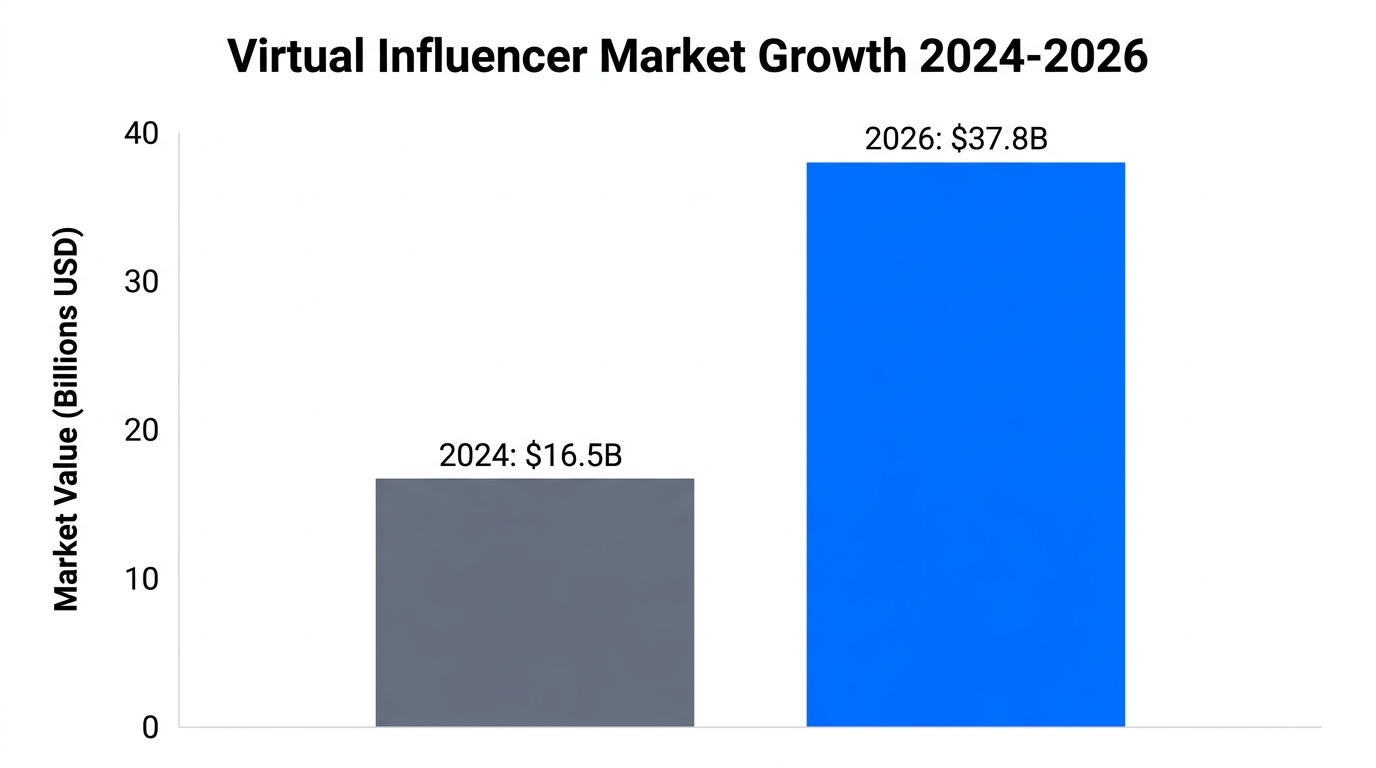
The numbers are no longer theoretical. The virtual influencer market is currently forecasted to hit $37.8 billion by 2030, as reported by Emergen Research. But the real story isn't just the market size; it's the performance. Virtual personalities like Lil Miquela or Aitana Lopez are seeing engagement rates 2.8x higher than human influencers. This discrepancy exists because virtual creators are not bound by the physical limits of reality, allowing for hyper-stylized, high-frequency storytelling that resonates deeply with Gen Z marketing trends in 2026, which prioritize digital-first experiences on platforms like TikTok Shop.
By leveraging platforms like Quso.ai, companies are now moving beyond one-off partnerships and instead developing AI avatar branding strategies that function as permanent brand ambassadors. This shift represents a fundamental change in how brand equity is built: moving from volatile human relationships to stable, digital assets that the brand controls entirely.
Ownership vs. Rental: The Quso.ai Advantage
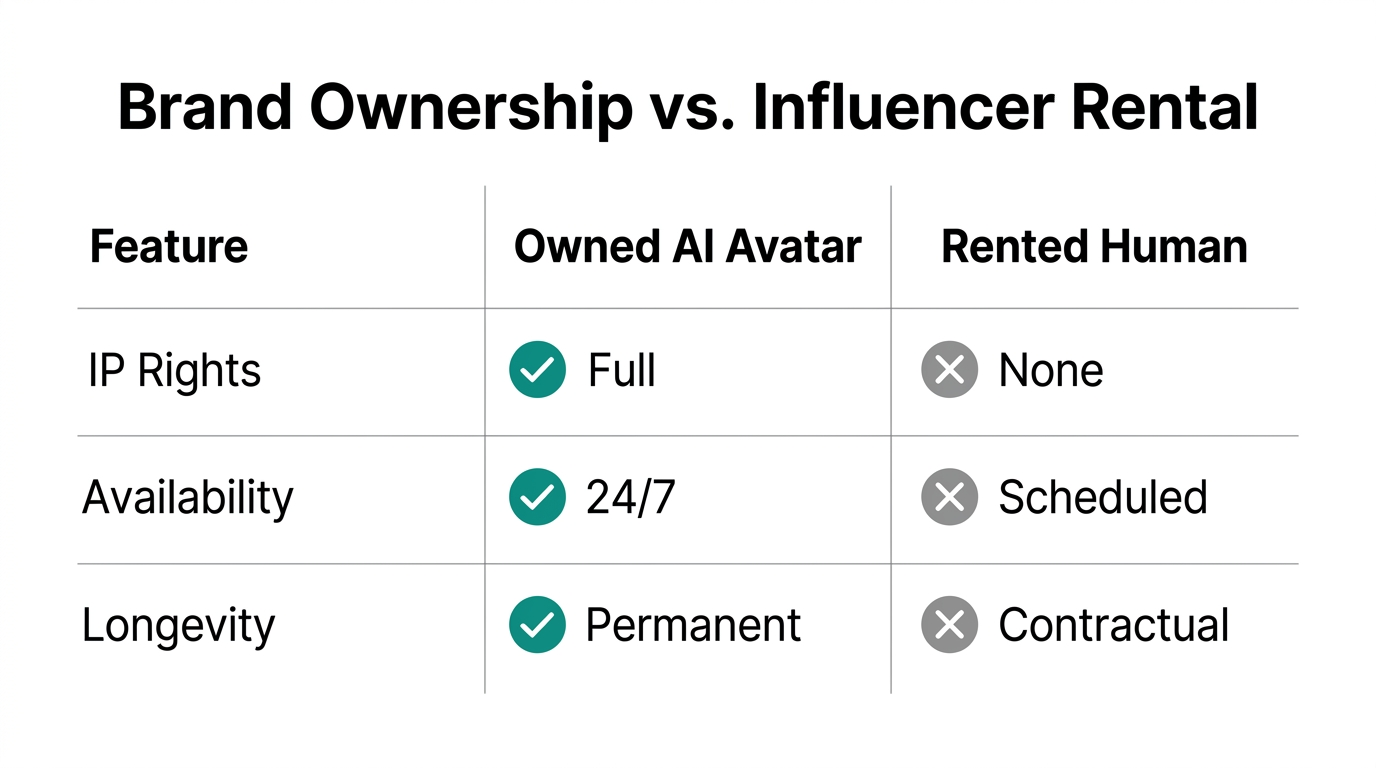
Historically, brands have been at the mercy of human creator schedules, PR scandals, and shifting loyalties. If a top-tier influencer faces a public relations crisis, the brand associated with them suffers immediate collateral damage. However, by utilizing Quso.ai to develop custom brand avatars, companies eliminate human-related PR risks while ensuring 100% brand alignment. Every word, every background detail, and every interaction is meticulously crafted to fit the brand's core values.
"In 2026, the most valuable social asset a brand can own is a custom AI avatar that never tires, never ages, and never deviates from the brand's voice."
This level of control is particularly vital for enterprise brands that need to maintain strict compliance across global markets. As highlighted in research by Marketing Dive, the risk of "content slop" or generic AI output is high; however, with a platform like Quso.ai, the output is intentional, high-fidelity, and designed to pull against the median of low-quality automation.
Why Brands Are Switching to Virtual Avatars
- Zero Burnout: Virtual creators can post 10 times a day across 5 different platforms without exhaustion.
- Global Scalability: An AI avatar can speak 40+ languages fluently, localized for every market instantly using tools like Descript for voice cloning.
- Creative Freedom: Want your avatar to do a product reveal on the moon? It costs the same as a reveal in a living room.
- Cost Efficiency: After the initial development on Quso.ai, the cost per content piece drops by over 80% compared to human talent fees.
Lessons from Samsung x Lil Miquela: 126 Million Organic Views
One of the most successful implementations of a virtual influencer marketing strategy was the Samsung #TeamGalaxy campaign. By integrating the virtual influencer Lil Miquela into their storytelling, Samsung successfully repositioned their brand for a younger, tech-savvy audience. According to data analysis of the Samsung #TeamGalaxy campaign, the initiative generated a staggering 126 million organic views and over 24 million engagements.
| Metric | Human Influencer Avg (2026) | Virtual Creator (Samsung Case) |
|---|---|---|
| Engagement Rate | 2.1% | 5.8%+ |
| Organic Reach | Medium | Extremely High |
| Brand Safety | Variable | 100% Guaranteed |
| Production Cost | High (Travel/Logistics) | Low (Post-Development) |
This case study proves that audiences in 2026 don't just tolerate virtual creators—they are captivated by them. The key to Samsung's success was not just the technology, but the virtual storytelling. They treated Miquela as a real person with a narrative arc, making her an integral part of the brand's community rather than just a billboard. This aligns with findings from McKinsey, which notes that community-driven AI content outperforms transactional AI content every time.
Hyper-Personalization: Matching Avatars to Purchase Intent
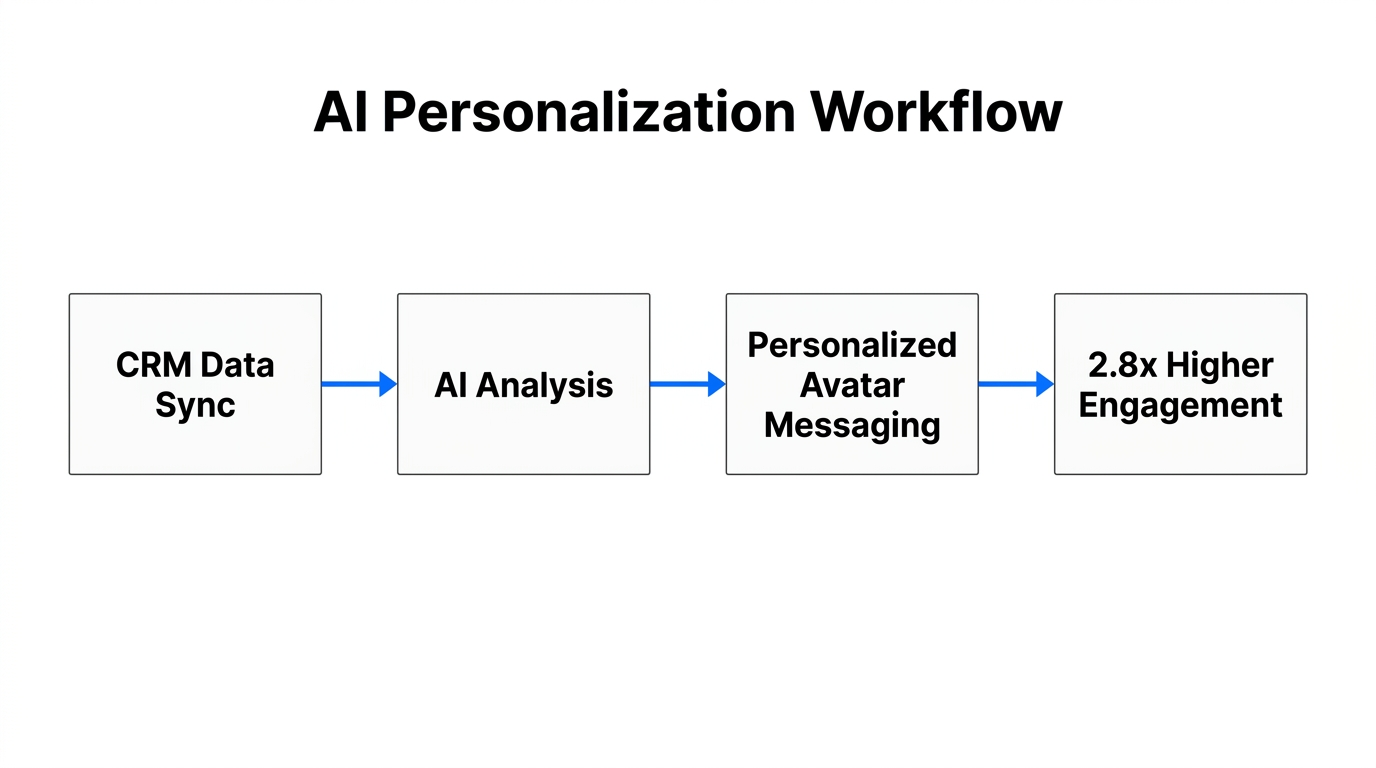
The true power of brand-owned virtual creators lies in their ability to integrate with a brand's data stack. In 2026, AI algorithms analyze "Behavioral Overlap" to match virtual creator behavior with specific CRM purchase intent data. If your data shows a segment of customers is interested in sustainable fashion but hesitant about price, your Quso.ai avatar can pivot its content strategy in real-time to address those specific concerns.
This level of hyper-personalization is impossible with human creators, who cannot change their personality or interests on a per-segment basis. By using AI to drive the avatar's narrative, brands can ensure that their marketing messages are perfectly synchronized with the customer journey on storefronts like Shopify. To manage the human side of these creator relationships and find the right balance between AI and real-world advocates, tools like Stormy AI can help brands discover which human niches provide the best "seed" data for their virtual counterparts.
"The future of CRM isn't an email sequence; it's a virtual creator that knows your preferences and talks to you through your social feed."
The 2026 Compliance Checklist for AI Creators
With great power comes great regulatory responsibility. As of 2026, both the FTC and the EU have implemented strict disclosure requirements for AI-generated creators. Failing to label your brand-owned virtual creators can result in massive fines and permanent brand damage. To stay safe, follow this checklist derived from the latest guidelines at the Federal Trade Commission (FTC):
- Clear Disclosures: Every post must include a visible #AI or #VirtualInfluencer tag in the first two lines of the caption.
- Profile Transparency: The account bio must explicitly state that the character is AI-generated and owned by the brand, as per EU AI Act regulations.
- No Deceptive Realism: Brands must avoid claiming the AI creator has "tried" physical products (like tasting food) in a way that implies a human biological experience.
- Ethical Data Sourcing: Ensure the training data for your Quso.ai avatar respects intellectual property and likeness rights.
By following these rules, brands can build long-term trust without sacrificing the innovative edge that virtual influencers provide. For brands managing a mix of AI and human talent, platforms like Stormy AI provide the necessary post-tracking and analytics to ensure that all disclosures are being met across every campaign post.
Conclusion: Owning Your Digital Future
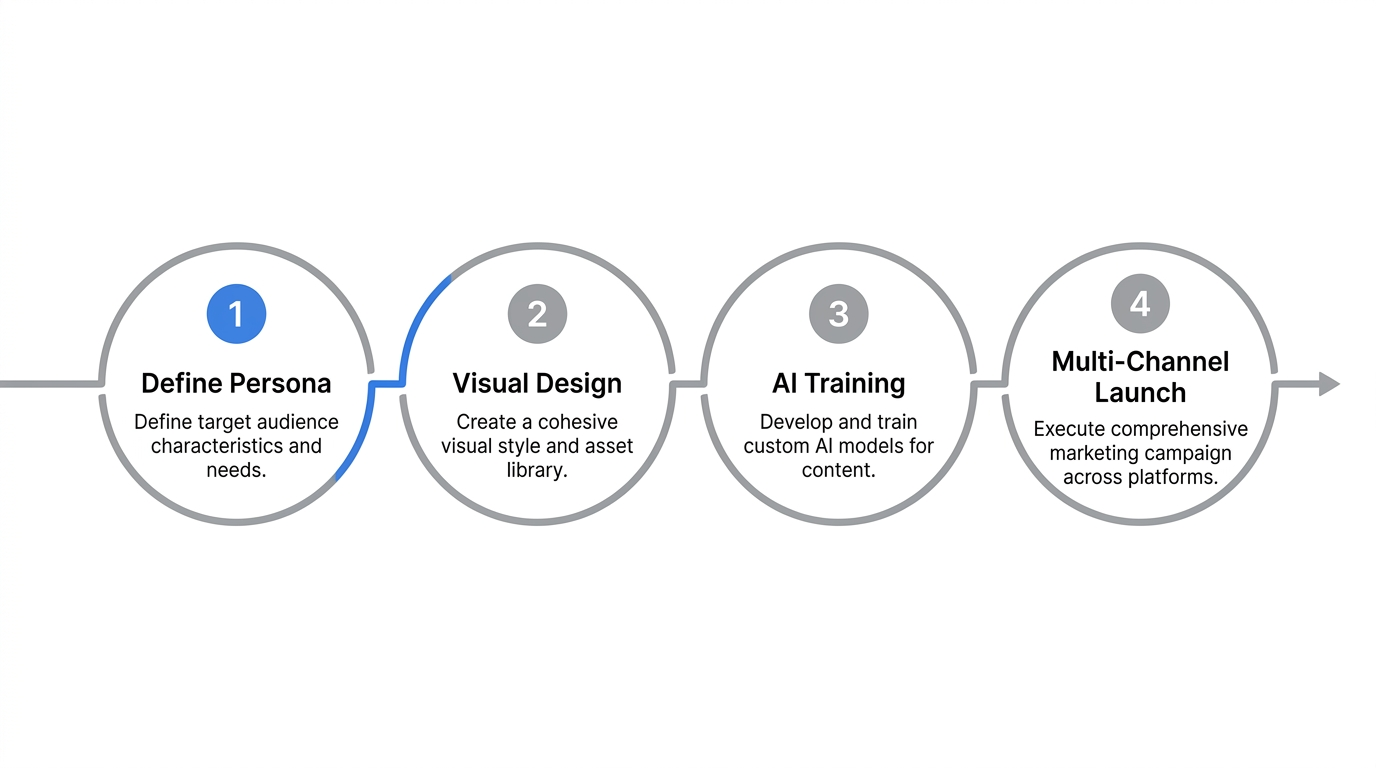
Building brand equity in 2026 requires a bold shift toward digital ownership. While human influencers will always have a place in the marketing mix for their authenticity, Quso.ai virtual influencers offer a level of scalability, risk mitigation, and engagement that is simply unmatched. By creating a custom avatar, your brand isn't just following a trend—it's building a permanent, high-performance asset that will grow alongside your community.
Start by identifying your brand's core character traits and use Quso.ai to bring them to life. Combine this with the vetting and search capabilities of Stormy AI to find the right human influencers to support your virtual launch. In 2026, the brands that own their icons will be the ones that own the future of commerce.