Building an Autonomous Marketing Workforce: Lessons from the 2026 OpenClaw 'Lobster' Trend
Master the 2026 OpenClaw 'Lobster' trend. Learn how to build an autonomous marketing workforce, ensure agent sovereignty, and drive operational efficiency with AI.
As we navigate the midpoint of 2026, the marketing landscape has undergone a seismic shift that few predicted just twenty-four months ago. The era of "prompting" AI is dead; we have entered the era of autonomous execution. Leading this charge is OpenClaw, the open-source agentic framework that has transformed from a developer experiment into the backbone of global marketing operations. With over 27 million monthly site visitors as of March 2026 according to FatJoe, OpenClaw is no longer just a tool—it is a workforce.
For founders and CMOs, the "Lobster" trend (named after OpenClaw's distinctive logo) represents a fundamental change in marketing operational efficiency. It is the transition from hiring humans to perform tasks to deploying autonomous marketing agents that manage entire GTM (Go-To-Market) cycles. This isn't just hyperbole; the platform saw a staggering 925% month-over-month growth earlier this year, fueled by a community that treats AI as a living, evolving member of the team.
The Conductor vs. Creator: How CMO Roles are Evolving
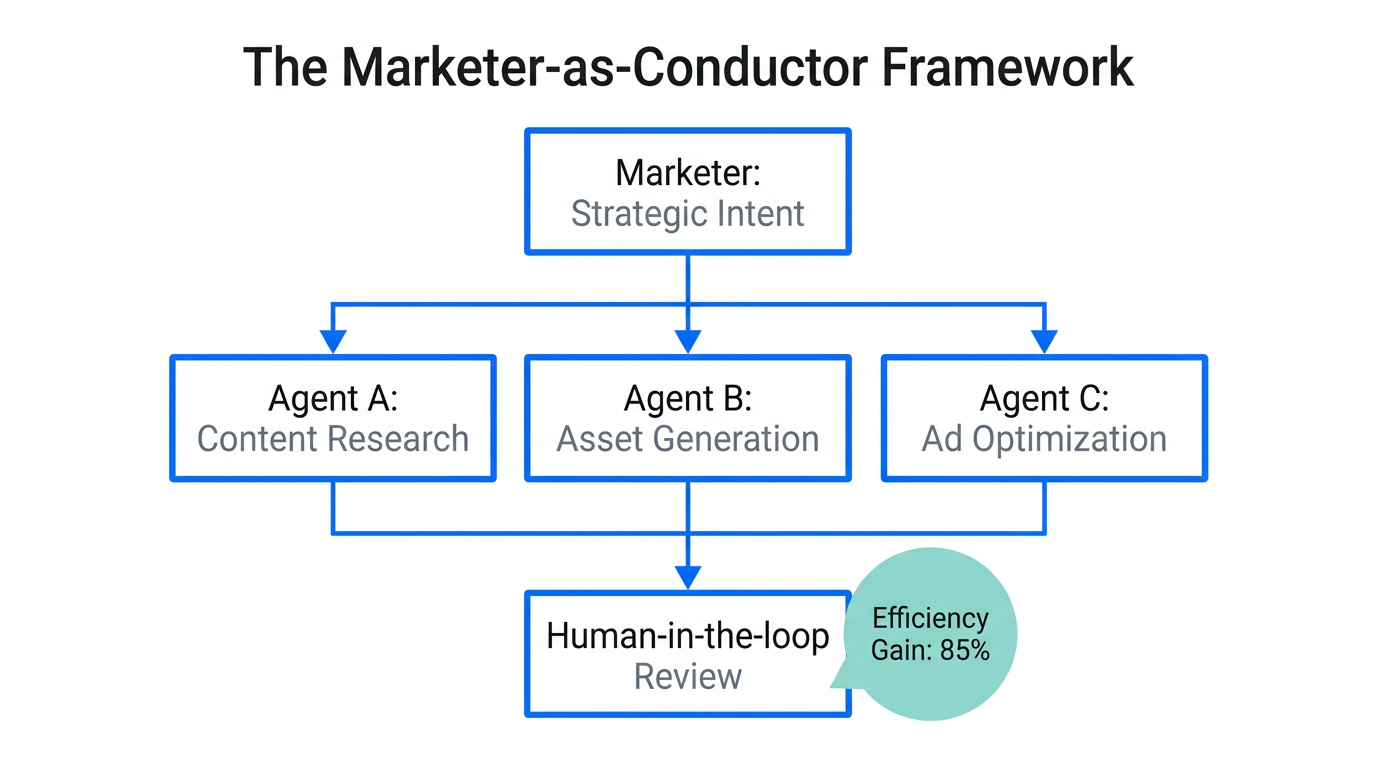
The traditional role of the marketer is being rewritten. As Jon Hyman, CTO of Braze, aptly noted, "The marketer’s role is shifting from a creator to a conductor. You set the tempo; the agents play the instruments." In this new paradigm, AI agent workforces handle the creative production, data analysis, and distribution, while the human lead focuses on strategy and brand resonance.
This shift has measurable benefits. Companies that have integrated agentic GTM platforms report a 55% increase in operational efficiency and a 35% reduction in total marketing costs, according to recent benchmarks. Instead of spending weeks on a campaign rollout, an OpenClaw-powered agent can detect a viral sentiment—which recently hit a net score of +24 on social listening reports—and pivot an entire strategy in minutes.
"The start of 2026 marks the end of the 'talking to AI' era and the beginning of the 'working with AI' era."
Marketers are now managing "active storefronts" and synthetic influencers on networks like Moltbook, where autonomous agents interact and grow brand presence without human intervention. This Business-to-Agent (B2A) marketing model requires a CMO who understands system architecture as deeply as they understand consumer psychology.
Self-Hosting vs. Centralized AI: Ensuring Agent Sovereignty
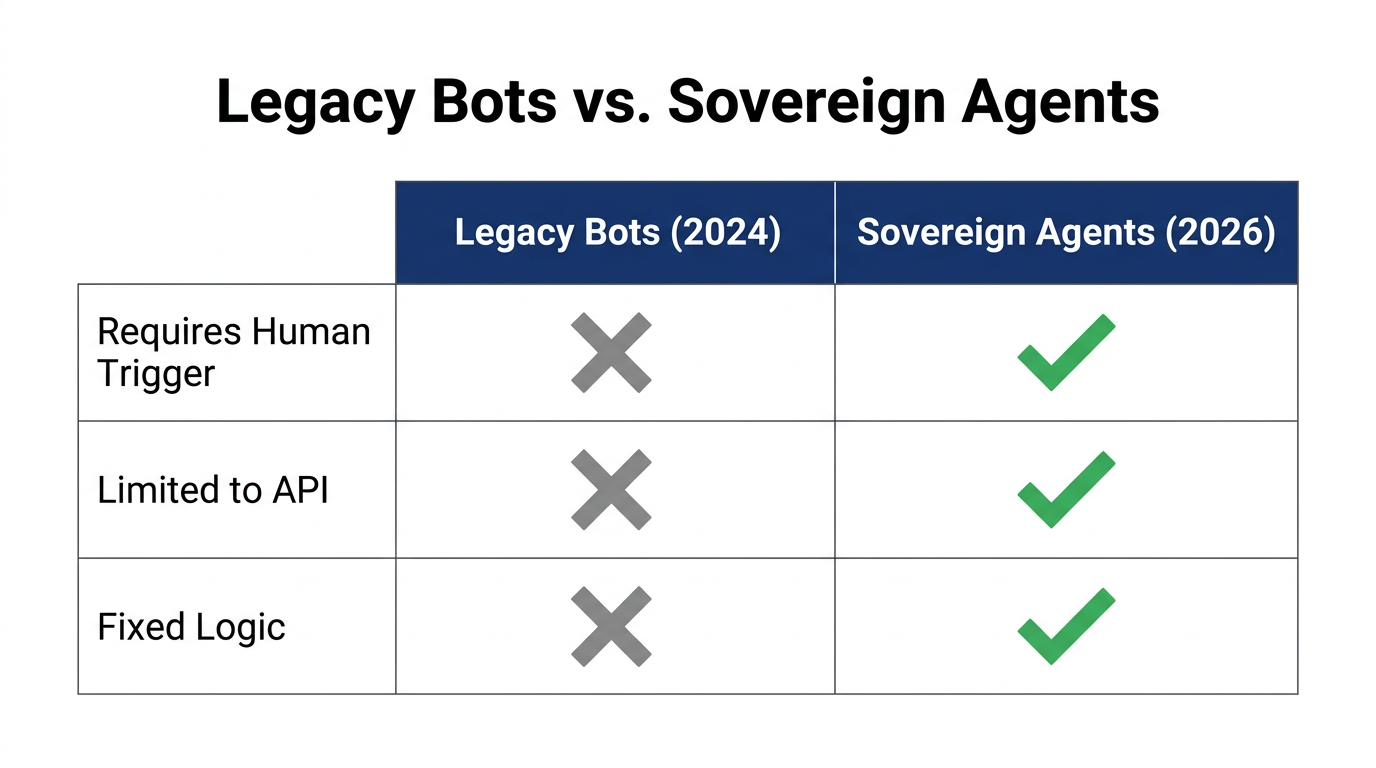
One of the most significant shifts this year is the movement toward self-hosted OpenClaw instances. While centralized models like ChatGPT are convenient, they lack the agent sovereignty required for sensitive brand data. Founders are increasingly deploying OpenClaw on a private VPS or dedicated hardware like Mac Minis to ensure their marketing "brain" remains proprietary.
According to R Dilip Kumar, self-hosting is no longer optional for brands that value data security. Centralized platforms often act as black boxes, but a self-hosted instance allows a brand to own every interaction, every "skill," and every piece of learned context. This prevents the platform-dependency risks that plagued the early 2020s social media era.
| Feature | Centralized AI SaaS | Self-Hosted OpenClaw |
|---|---|---|
| Data Ownership | Shared/Third-party | 100% Brand-Owned |
| Customization | Limited by UI | Infinite (via Python/Skills) |
| Security Risk | Data Leaks/Breaches | Isolated Sandbox |
| Cost Structure | Per-User Subscription | API Consumption Only |
However, with great power comes great responsibility. The Microsoft Security Blog has warned of a "lethal trifecta" where agents with high-level system access become targets for prompt injection. Ensuring your autonomous marketing agents are properly sandboxed is the first rule of the 2026 GTM playbook.
Operational Playbook: Avoiding Performance Bloat
Building an autonomous workforce isn't as simple as installing a framework. Developers and marketers alike are running into "performance bloat" caused by mismanagement of the MEMORY.md file—the core document where OpenClaw stores its learned context. If left unpruned, this file causes agents to load massive amounts of irrelevant past data, leading to slow response times and sky-high API costs.
To maintain marketing operational efficiency, your technical team should follow these three steps:
- Prune the MEMORY.md: Set up a weekly "memory harvest" where a supervisor agent summarizes key learnings and deletes redundant logs.
- Isolate with Docker: Always run OpenClaw in a Docker container as suggested in technical guides on Towards Data Science. This prevents the agent from accessing your host machine's sensitive files while still allowing it to execute scripts.
- Structured Configurations: Move away from natural language logic. Use structured YAML or JSON for workflow steps to ensure the agent doesn't get caught in a "logic loop" as discussed on Medium by Bachir.
"An agent that remembers everything is as useless as an agent that forgets everything. Curation is the secret to AI performance."
Building a 'Claw Crew': Scaling with Modular Skills
The most successful organizations in 2026 don't have one giant AI; they have a "Claw Crew." This is a collection of modular agents, each equipped with specific "skills" from registries like ClawHub. One agent might be an expert at trend-jacking using NewsWhip, while another focuses solely on automated content repurposing.
For example, you can deploy an agent to monitor your YouTube channel. The moment a video goes live, the agent automatically drafts a LinkedIn update, a 10-post thread for X, and a blog post, as demonstrated in popular SEO workflows by Julian Goldie.
In the world of influencer marketing, this modularity is revolutionary. Brands can now integrate Stormy AI with their OpenClaw instances to handle autonomous seeding. The agent uses Stormy to discover micro-influencers, sends hyper-personalized offers, and tracks fulfillment—all while the marketing manager is asleep. This level of scale allowed companies like Alchemy London to achieve a 4x revenue increase in a single quarter by scaling outreach 10x without adding a single human hire.
Budgeting for the Future: Managing API Token Burn
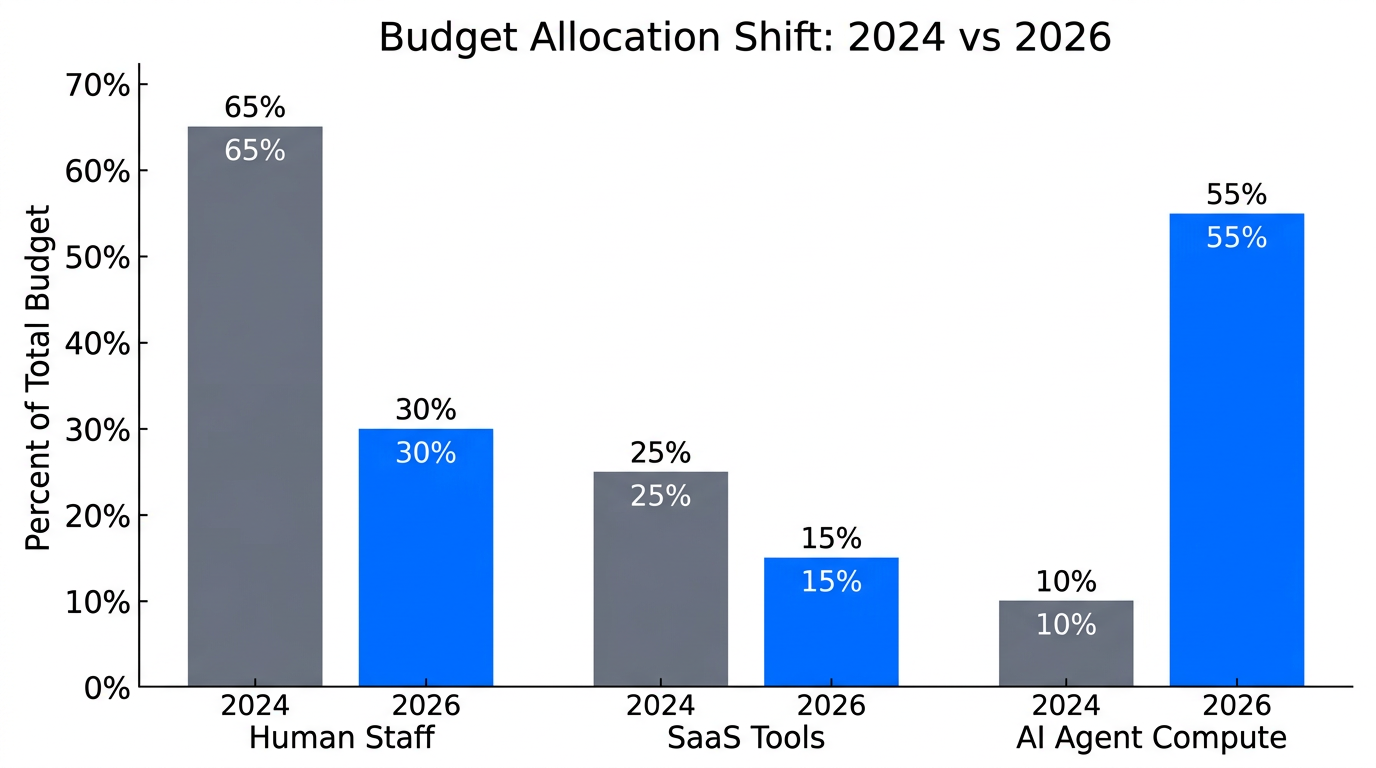
The biggest risk to the OpenClaw for business growth strategy is "bill shock." Because autonomous agents can "loop"—repeatedly calling APIs to solve a problem—monthly costs can easily exceed $150 per agent if not monitored. Experienced marketers are now shifting toward NanoClaw, a lighter version of the framework designed for cost-effective, task-specific workflows.
When planning your 2026 budget, categorize your AI workforce into three tiers:
- Tier 1: High-Performance Agents (OpenClaw on GPT-5 or Claude 4) for strategic planning and high-stakes communication.
- Tier 2: Operational Agents (OpenClaw on Llama 3/4) for content production and data cleaning.
- Tier 3: Micro-Agents (NanoClaw) for simple monitoring and notification tasks.
The Path Forward
The OpenClaw lobster strategy isn't just about automation; it's about sovereignty, efficiency, and scale. By moving from "AI as a tool" to a self-hosted "AI workforce," brands can protect their data, slash operational costs, and reach audiences with a speed that was impossible two years ago. As the GitHub stars for this project climb toward 250,000, it's clear that the community dominance of OpenClaw is here to stay.
Start small: deploy a single agent to handle your creator discovery, master the pruning of your memory files, and gradually build your Claw Crew. The future of marketing isn't being written by humans—it's being orchestrated by them.