In the hierarchy of digital ventures, the marketplace business model is often whispered about as the ultimate 'god tier' outcome. When you look at giants like Airbnb or eBay, you aren’t just looking at software; you’re looking at a self-sustaining ecosystem where supply and demand dance in a virtuous cycle. However, as many founders discover, building the next great platform is like trying to solve a Rubik’s Cube where the stickers keep moving. The median success case is elusive, and the road is littered with 'ghost town' platforms that failed to solve the initial liquidity crisis.
To scale a marketplace successfully, you must transition from a simple service provider to a primary mental shortcut for your users. This is what industry veterans call 'Verb Status.' But achieving this requires more than just a slick UI. It demands a rigorous platform growth strategy that balances customer acquisition cost (CAC) against the inherent volatility of a two-sided network. In this guide, we will break down the mechanics of marketplace growth, from matching supply and demand to navigating the 'hidden' regulatory risks that can destroy your margins overnight.
The Holy Grail: Reaching 'Verb Status'
The most successful marketplaces share a common trait: they have become the default synonym for the service they provide. When you think of renting a home, the word Airbnb pops into your head instantly. You don't search for 'short-term vacation rentals'; you 'Airbnb it.' This mental real estate is the most defensible moat a business can own. It bypasses the traditional search funnel, drastically reducing your long-term customer acquisition cost because users navigate directly to your URL.
"Reaching 'verb status' means your brand has become the primary mental shortcut for the consumer. At that point, you aren't just a platform; you're a toll road for an entire industry."
However, reaching this status is incredibly difficult. Most founders attempt to build broad aggregators that try to be 'the Airbnb of X.' The reality is that horizontal marketplaces are often a trap for early-stage startups. To build a brand that resonates as a verb, you often need to dominate a specific, high-friction niche first. Whether it’s Etsy for handmade goods or Twitch for live streaming, specificity is the precursor to scale.
Solving the Chicken-and-Egg Problem: Supply and Demand Marketing
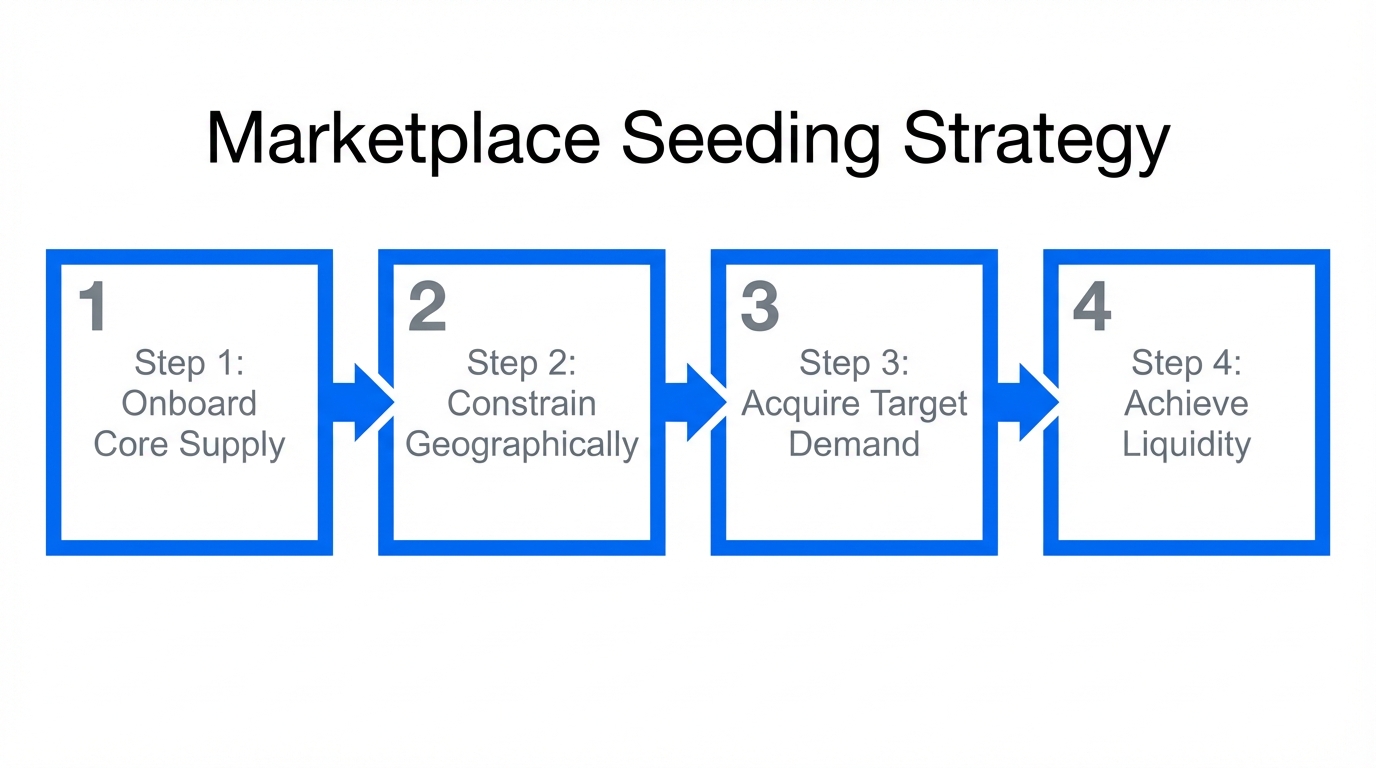
The most common reason marketplaces fail is the 'chicken-and-egg' problem: suppliers won't join without customers, and customers won't visit without supply. To navigate this, your supply and demand marketing must be lopsided in the beginning. Most successful platforms start by seeding one side of the market—usually the supply side—manually.
For example, in the early days of Uber, they focused heavily on ensuring drivers were available in a single city before trying to attract riders. They understood that if a user opens an app and sees 'No Cars Available,' the trust is broken forever. You have to manufacture the illusion of a bustling marketplace until the organic growth takes over.
| Growth Phase | Primary Focus | Key Metric |
|---|---|---|
| Phase 1: Seeding | Manual Supply Acquisition | Supply Liquidity |
| Phase 2: Traction | Niche Demand Capture | Match Rate (%) |
| Phase 3: Scaling | Efficiency & Retention | LTV / CAC Ratio |
| Phase 4: Maturity | Network Effects | Organic Search Volume |
A common mistake is trying to scale both sides simultaneously across multiple geographies. Instead, focus on hyper-local density. A marketplace that works perfectly in one zip code is more valuable than one that works poorly across an entire country. Once you've perfected the unit economics in a single node, you can use tools like Meta Ads Manager or TikTok Ads Manager to replicate that success in new markets.
The Danger of Platform Risk: Regulatory Traps
While scaling a marketplace offers massive upside, it also carries a unique form of 'platform risk.' This isn't just about technical downtime; it's about regulatory shifts that can destroy your margins overnight. We’ve seen this play out in cities like Vancouver and San Francisco, where short-term rental regulations changed mid-game.
Imagine owning an apartment in Vancouver. You're making a fortune on Airbnb, providing a valuable service to travelers. Then, the city government passes a law stating you can only rent out your primary residence, or limits rentals to 90 days a year. Suddenly, your cash cow is dead. This is the peril of building on top of shifting legal sands. If your marketplace depends on assets that are subject to local government whims, you are essentially 'renting' your business model from the city council.
"Regulatory risk is the silent killer of marketplace margins. You can have the best tech in the world, but if a city councilor changes a zoning law, your business model disappears."
When evaluating a new marketplace niche, you must ask: How much of my success depends on the status quo of local laws? Marketplaces that facilitate digital goods or services often have higher defensibility because they aren't tied to physical real estate or local labor laws that are prone to sudden, drastic changes.
Why Vertical Marketplaces Outperform Broad Aggregators
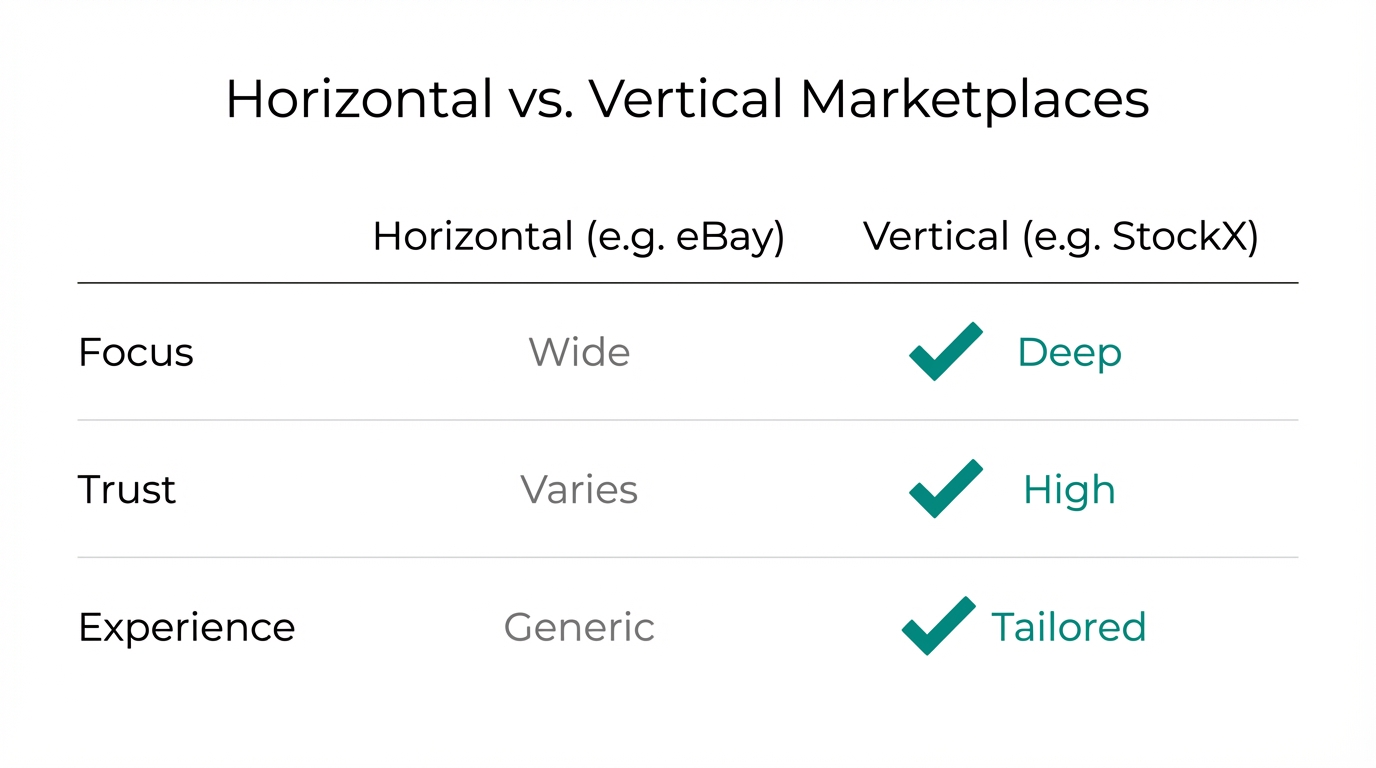
In the current economy, vertical-specific marketplaces are often superior to broad aggregators. Consider a business like Serato. While not a traditional 'consumer marketplace' in the Airbnb sense, it functions as a mission-critical platform for DJs. By integrating deeply with hardware manufacturers like Pioneer, they created a hardware moat that is incredibly difficult to disrupt.
Horizontal marketplaces like Amazon have already won the 'everything' game. To compete, you must offer a superior experience for a specific niche. A vertical marketplace for construction tools, for example, can provide specialized insurance, logistics, and verification that a generalist platform cannot match. This specialization allows you to charge higher commissions because you are providing more than just a connection—you are providing an end-to-end industry solution.
When you are sourcing these specialized suppliers or influencers to kickstart your vertical marketplace, it helps to use AI-driven tools. For instance, platforms like Stormy AI allow you to discover and vet creators in specific niches like fitness or tech, ensuring your 'supply' side is high-quality before you spend a dime on demand generation.
The Playbook: Identifying High-Friction Industries
Are you looking to build the next major platform? Use this step-by-step playbook to identify industries ripe for a marketplace business model.
Step 1: Identify Fragmented Supply
Look for industries where there are thousands of small providers but no central hub. If a consumer has to call ten different people to get a quote, that industry is begging for a marketplace. Think about HVAC, pest control, or niche consulting. Fragmented supply is the raw material of marketplace growth.
Step 2: Find the 'High Friction' Points
A great marketplace doesn't just connect people; it solves a problem. Is the payment process broken? Is there a lack of trust/verification? Use tools like Stripe to handle payments and build trust through reviews. If you can remove the 'headache' of the transaction, you can justify your take rate.
Step 3: Build a Hardware or Workflow Moat
As we saw with Serato, the best platforms are deeply integrated. Can you provide the software the supplier uses to run their entire business? If you are the CRM (like Salesforce for general business) and the marketplace simultaneously, your retention will be near-perfect.
Step 4: Scale Through Hyper-Personalized Outreach
Once you have identified your suppliers, you need to bring them onto the platform. This is where automated, personalized outreach becomes a competitive advantage. Using Stormy AI, you can set up AI agents to discover and contact potential partners or UGC creators daily, building your supply side while you sleep.
- Audit the current industry leaders and find their biggest customer complaints.
- Target a specific geographic or categorical niche to ensure early liquidity.
- Incentivize early adopters with lower take rates or featured placement.
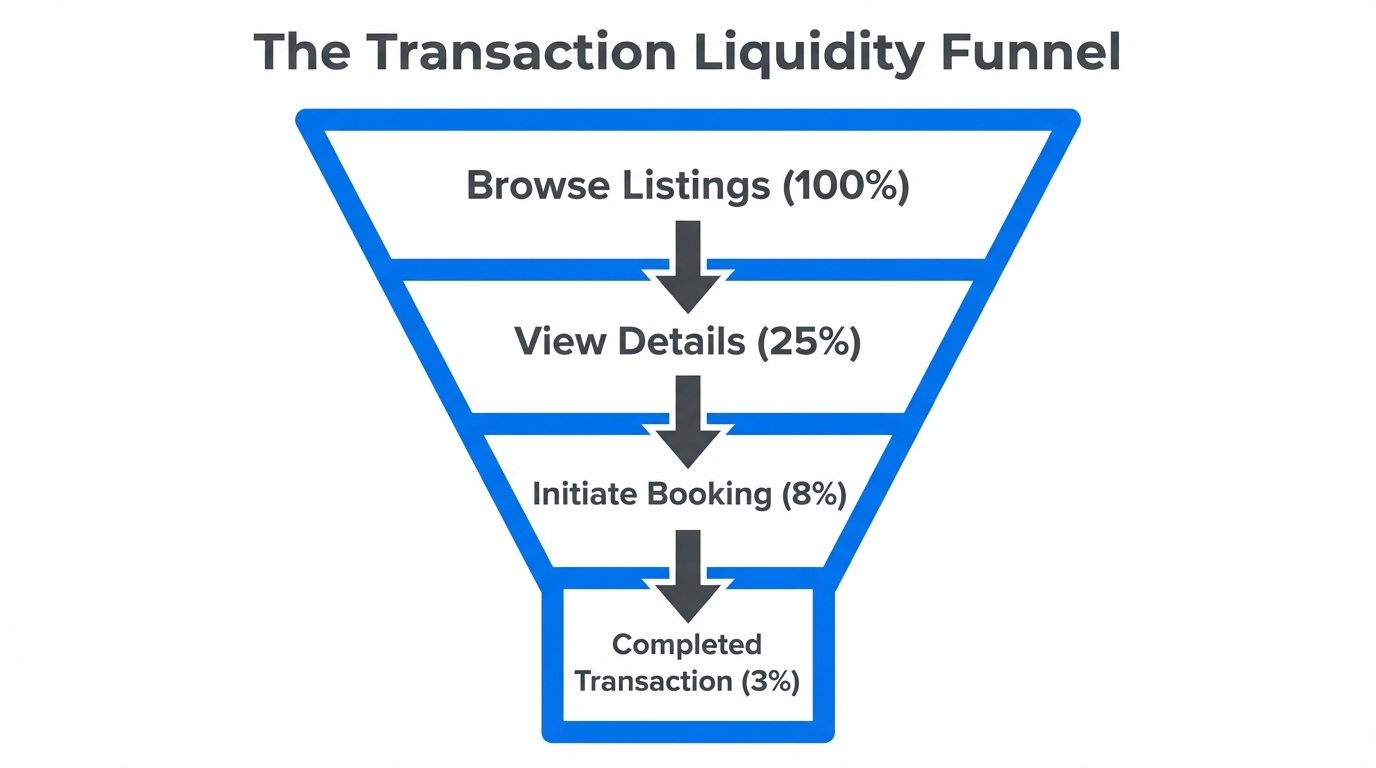
- Analyze your data using platforms like Google Analytics to see where users are dropping off in the funnel.
Conclusion: The Road to Marketplace Dominance
Building a marketplace is not for the faint of heart. It is a Rube Goldberg machine of business—a million things have to go right for a single transaction to occur. You have to wake up every day and balance the needs of two entirely different groups of people while navigating the constant threat of regulatory shifts and competition.
However, the rewards for those who succeed are unparalleled. A functioning marketplace is permanent capital. It is a compounding asset that grows more defensible with every new user. By focusing on vertical specificity, reaching for 'verb status,' and utilizing modern AI tools for outreach and discovery, you can turn a lumpy, high-friction industry into a streamlined, high-margin platform.
Ready to start sourcing the creators and suppliers that will power your next platform? Explore how Stormy AI can help you automate your discovery and outreach, letting you focus on the big picture of scaling your marketplace.