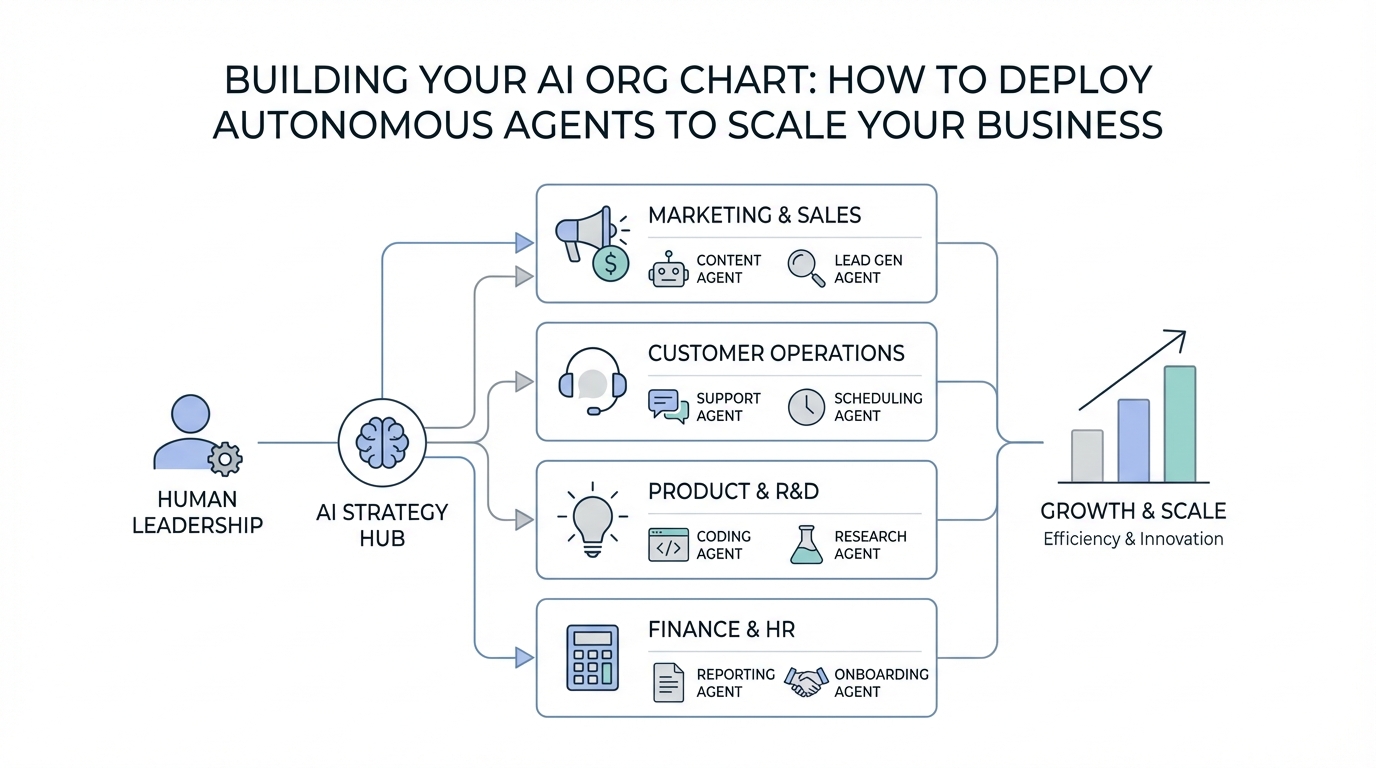
When Sam Altman, the co-founder of OpenAI, predicted that we would soon see a one-person, billion-dollar company, the tech world paused. It sounded like science fiction. Historically, reaching a billion-dollar valuation required an army of middle managers, high-rise offices, and thousands of human hours. But today, that paradigm is shifting. We are entering the era of the AI-first company, where a single founder manages a digital workforce of autonomous agents to achieve massive output. This guide provides the operational blueprint for building your AI org chart and leveraging AI agents for business to scale with unprecedented efficiency.
The Shift to AI-First Thinking
The traditional company structure is built on humans managing humans. A VP of Sales manages a sales team; a VP of Marketing manages content creators. In an AI-first company, the founder sits at the top, managing autonomous agents workflow rather than people. This is a fundamental mindset shift from human capital to compute leverage. As Altman noted, the future of startups might just be one person and 10,000 GPUs, where AI engineering agents and marketing bots handle the heavy lifting while you sleep.
The old path to building a startup involved fundraising from friends and family, hiring a team, and hoping the product worked. The new path is leaner and faster. It starts with building an audience on platforms like TikTok or X (formerly Twitter), using tools like Cursor to "vibe code" a product, and then deploying AI marketing automation to scale. This process allows you to validate ideas in real-time before ever hiring a human employee.
Defining Your AI Org Chart: The Five Essential Agents
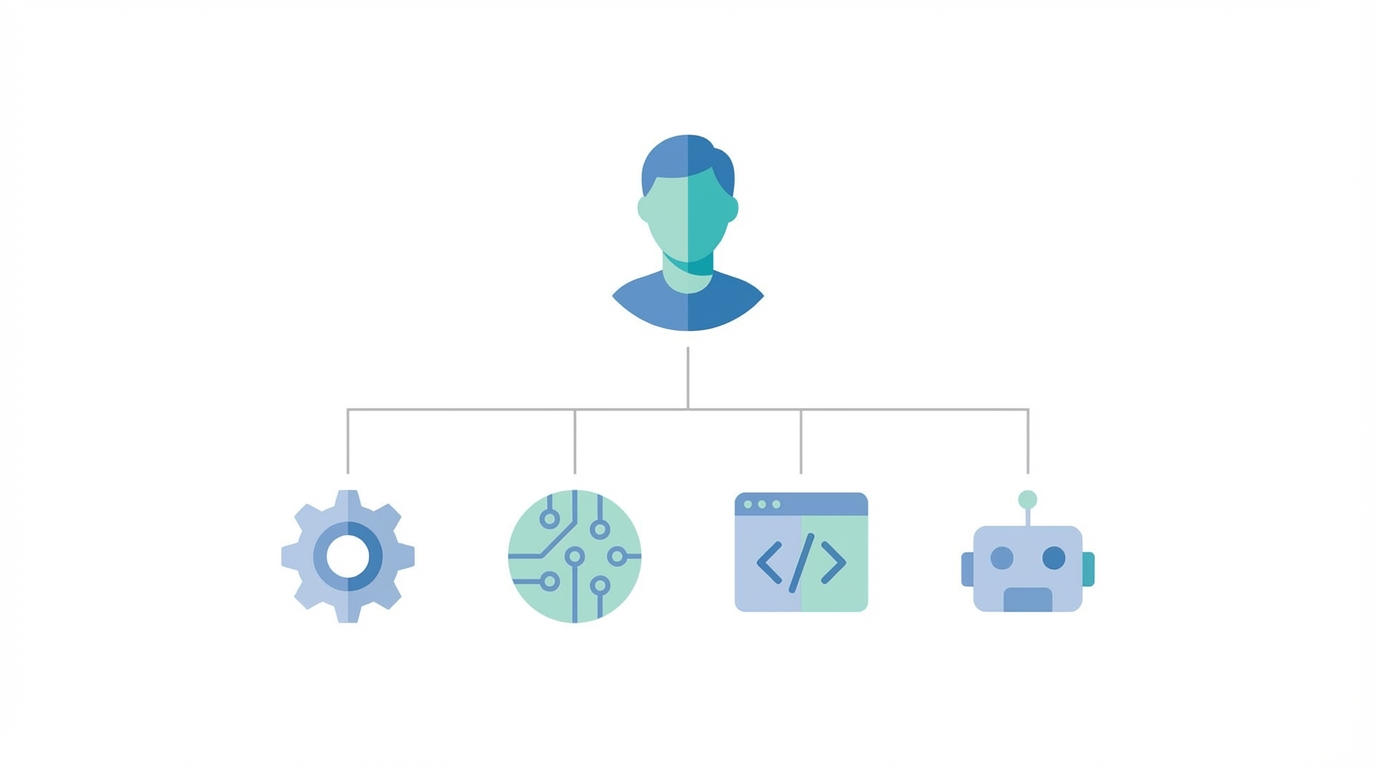

To scale a business solo, you must view your Large Language Models (LLMs) as functional departments. You are no longer just a "founder"; you are the Orchestrator of an automated hierarchy. A robust AI org chart typically consists of five core agent types:
- Engineering Agents: Responsible for code generation, automated testing, QA, and DevOps. Using AI engineering agents allows non-technical founders to build complex software by describing features in natural language.
- Design Agents: These handle UI/UX creation, brand assets, and mobile app design. Tools can now generate high-fidelity prototypes based on simple text prompts.
- Marketing Agents: They manage content creation, AI marketing automation, SEO, and social media scheduling. They analyze what is trending on Instagram and adapt your strategy accordingly.
- Sales Agents: These agents handle lead qualification, cold outreach, and demo booking. They act as a 24/7 SDR (Sales Development Representative).
- Support & Data Analyst Agents: They manage ticket triage and process customer feedback loops into actionable product metrics.
Step 1: Vibe Coding and Rapid Product Development
One of the most powerful shifts in the AI era is the rise of "Vibe Coding." This refers to using AI-powered code editors like Cursor to build products without being a professional developer. By providing the "vibe" or the high-level intent of a feature, the AI handles the syntax and architecture. This allows you to build a Micro SaaS—a software with a single high-value feature—in a fraction of the time it used to take.
Consider the case study of Idea Browser. It started as a simple series of tweets about startup ideas. The founder noticed traction and used AI agents for business to automate the research process. Today, it uses agents to search for what people are "screaming for" online and delivers high-quality data trends to users. This transition from a manual service to an automated platform is the hallmark of modern scaling with AI.
Step 2: Setting Up Autonomous Feedback Loops
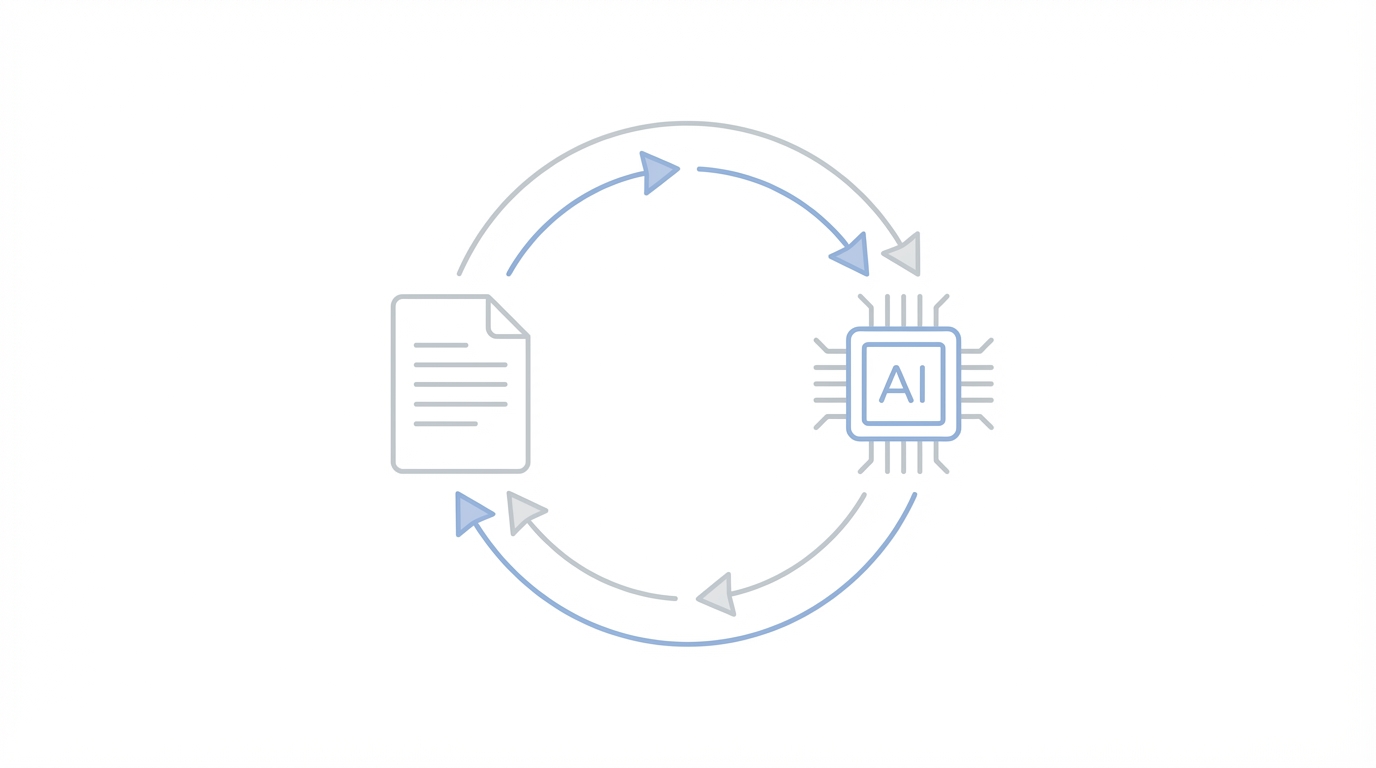
Replacing human experience growth requires autonomous agents workflow that learn from data. In a traditional company, a social media manager gets better over time by seeing which posts get likes. In an AI org, you must feed that data back into your agents. Your researcher agent feeds data to your creator agent, who generates content; then, your analyst agent processes the metrics and sends a report to your strategist agent.
This 24/7 cycle creates a self-optimizing business. For example, if you are running an influencer marketing campaign, you need to know which creators are driving the most app installs. Tools like Stormy AI can help source and manage UGC creators at scale, providing the data necessary to refine your outreach strategies. By using AI marketing automation to vet influencers and track post performance, you ensure that your agents are always working with the best possible information.
Step 3: Automating Outreach and Sales at Scale
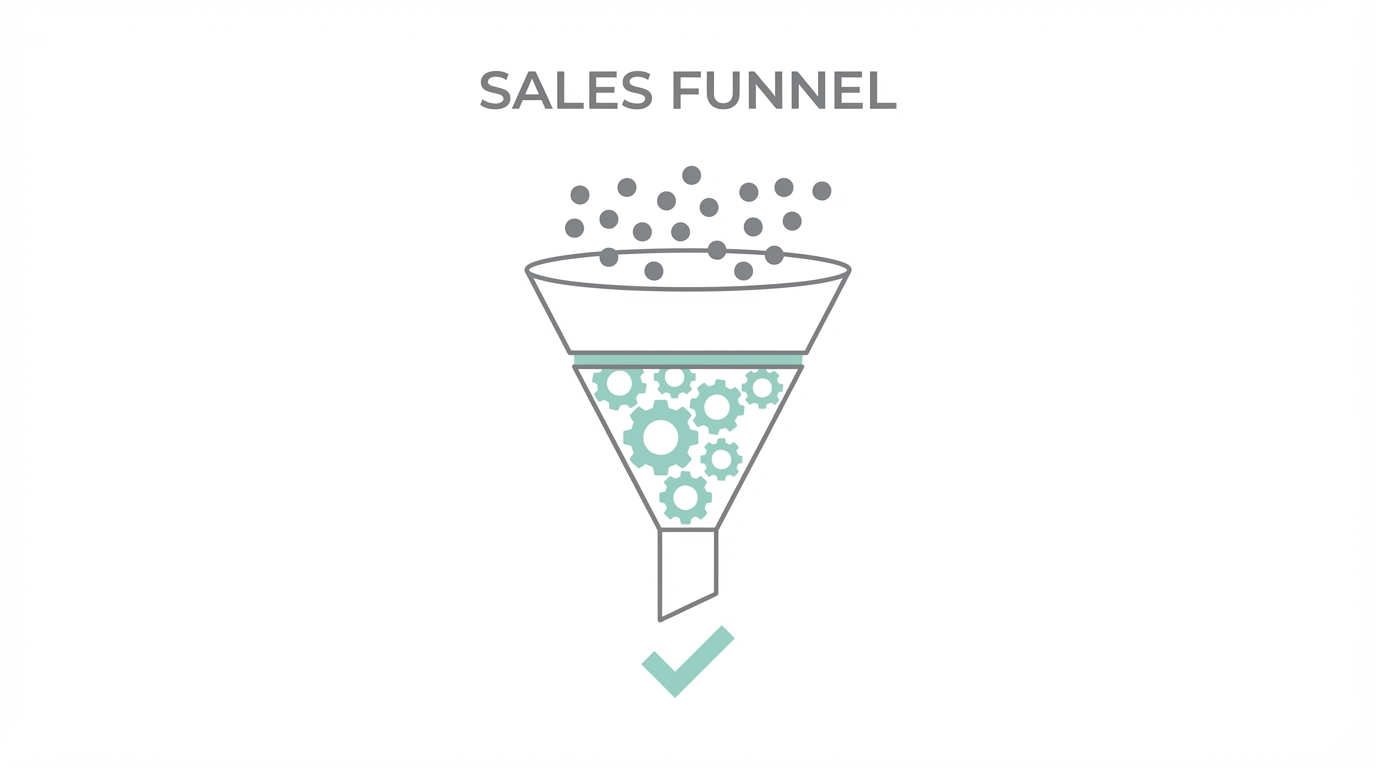
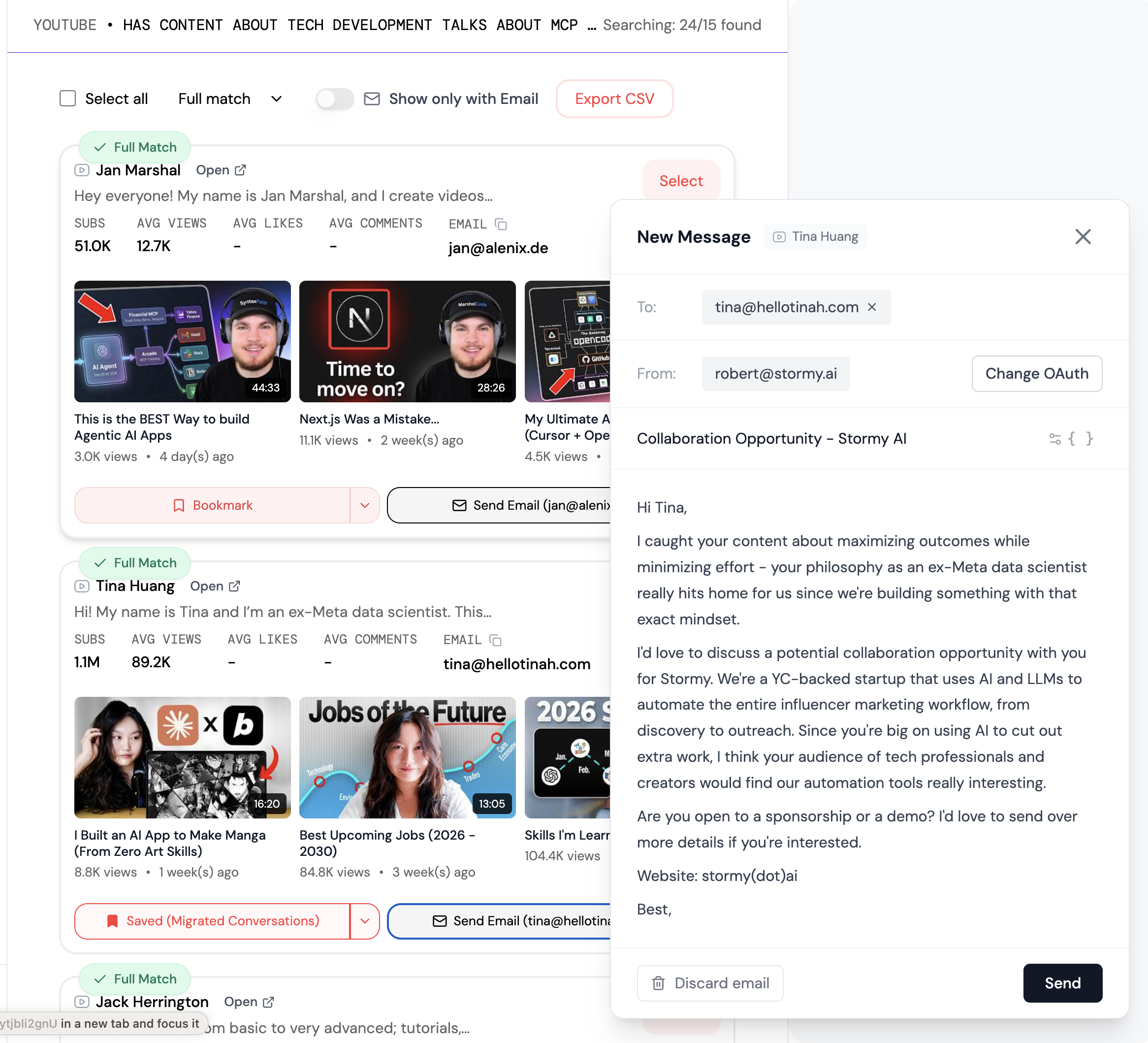
Once your product is built, you need distribution. The AI org chart relies on automated sales agents to find customers. This involves more than just sending spam; it requires hyper-personalization. Modern agents can now research a potential lead, understand their pain points, and craft a bespoke email that feels human.
For founders looking to leverage influencer discovery and management, Stormy AI offers an AI-powered search engine across TikTok, YouTube, and Instagram. You can set up an autonomous AI agent within the platform that discovers and follows up with creators on a daily schedule. This effectively replaces a full-time marketing team, allowing you to maintain capital leverage while reaching thousands of potential partners. By automating the "boring" parts of outreach, you can focus on high-level strategy and community building.
Step 4: Choosing the Right Pricing Model for AI Services
Scaling to a billion dollars requires a pricing strategy that matches your autonomous agents workflow. Unlike traditional SaaS, which often uses seat-based pricing (like Slack or Figma), AI businesses are moving toward usage-based or outcome-based pricing.
- Usage-Based: Customers pay for what they consume (e.g., tokens, API calls).
- Outcome-Based: Customers pay for a specific result. An example is Intercom's Fin, a customer support agent that charges per successful resolution.
Outcome-based pricing is the fastest way to build trust and scale a one-person billion-dollar company. It aligns your incentives with the customer’s success. If your agent doesn't deliver the result, the customer doesn't pay. This model is perfectly suited for AI marketing automation and lead generation services where the value is easily quantifiable.
Risk Management: Avoiding the "Loss of Human Touch"
While scaling with AI offers immense leverage, it comes with risks. Over-automating can lead to a loss of brand identity and "human touch." If your agents produce generic, low-quality content, your business will eventually cap out. To avoid this, your "rules" and "prompts" must be extremely dialed. You need to provide continuous context to your agents so they evolve just like a human employee would.
Another major pitfall is regulatory requirements. Businesses in fintech or healthcare require heavy compliance that AI cannot yet fully handle solo. If you are building in these niches, you will likely still need human specialists. However, for digital products, B2B SaaS, and consumer apps, the path to a solo-run empire is clear. Focus on network effects and digital distribution to ensure your growth isn't hampered by physical constraints.
The Future of the Solopreneur: A Billion-Dollar Reality
The 1990s gave us the computer revolution; the 2010s gave us mobile and SaaS. The 2020s are the era of the "Idea Guy." Because services are becoming software, you can now access billions of dollars in R&D through platforms like Supabase, Shopify, and Stripe with the click of a button.
Building an AI org chart is about more than just efficiency; it’s about leverage. By combining code leverage, audience leverage, and capital leverage, a single individual can now command the power that once belonged only to large corporations. Whether you are building a Micro SaaS or a massive data platform, the tools to automate your way to the top are already here. Start by defining your agents, vibe coding your MVP, and letting autonomous agents handle the rest while you focus on the vision.