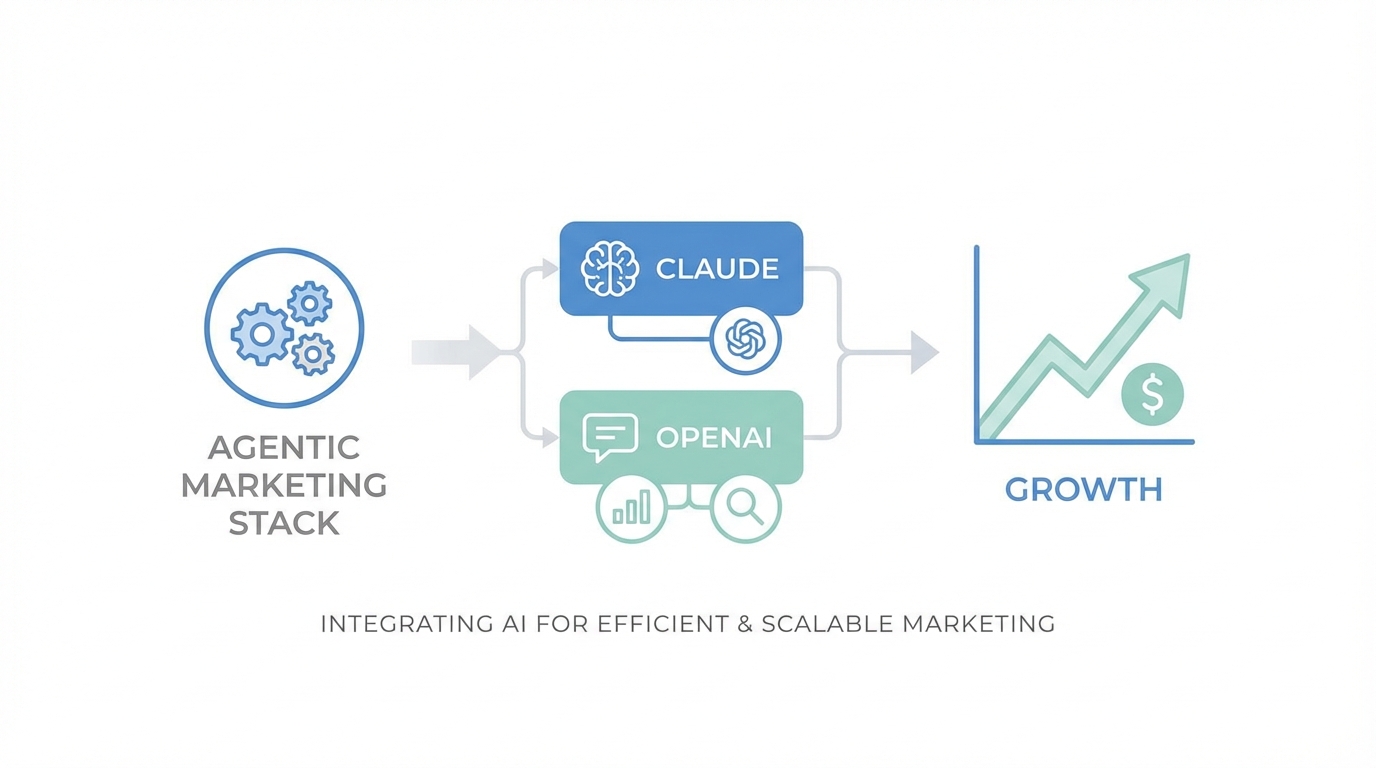
The era of AI as a simple chatbot is over. In 2024, we saw marketers use Large Language Models (LLMs) to draft emails and summarize meetings. But as we move deeper into 2025, the industry has undergone a fundamental shift toward agentic workflows for business. This isn't just about generating text; it is about building a marketing technology stack 2025 that executes, audits, and rebalances itself without constant manual intervention. By integrating the creative nuance of Claude with the technical precision of OpenAI, growth teams are achieving 45% increases in campaign effectiveness and drastic reductions in overhead.
Defining the Agentic Layer in 2025 Marketing
In the previous generation of AI marketing automation, a human had to prompt a tool, copy the result, and paste it into an ad manager. Today, we are seeing the rise of the "Agentic Layer." This refers to AI agents that possess "agency"—the ability to use tools, browse the web, and interact with software interfaces to complete multi-step goals through capabilities like function calling.
Key players like Claude Code and OpenAI Operator are the foundation of this new movement. Instead of asking for a list of ad headlines, a marketer might tell their agent: "Audit our Meta Ads account, find any creative with a CPA 20% above the average, and replace it with three new variants based on our brand style guide." This level of autonomy is why AI-influenced digital ad spend is projected to reach $81.6 billion by 2033.
The Multi-Model AI Strategy: Claude vs. OpenAI
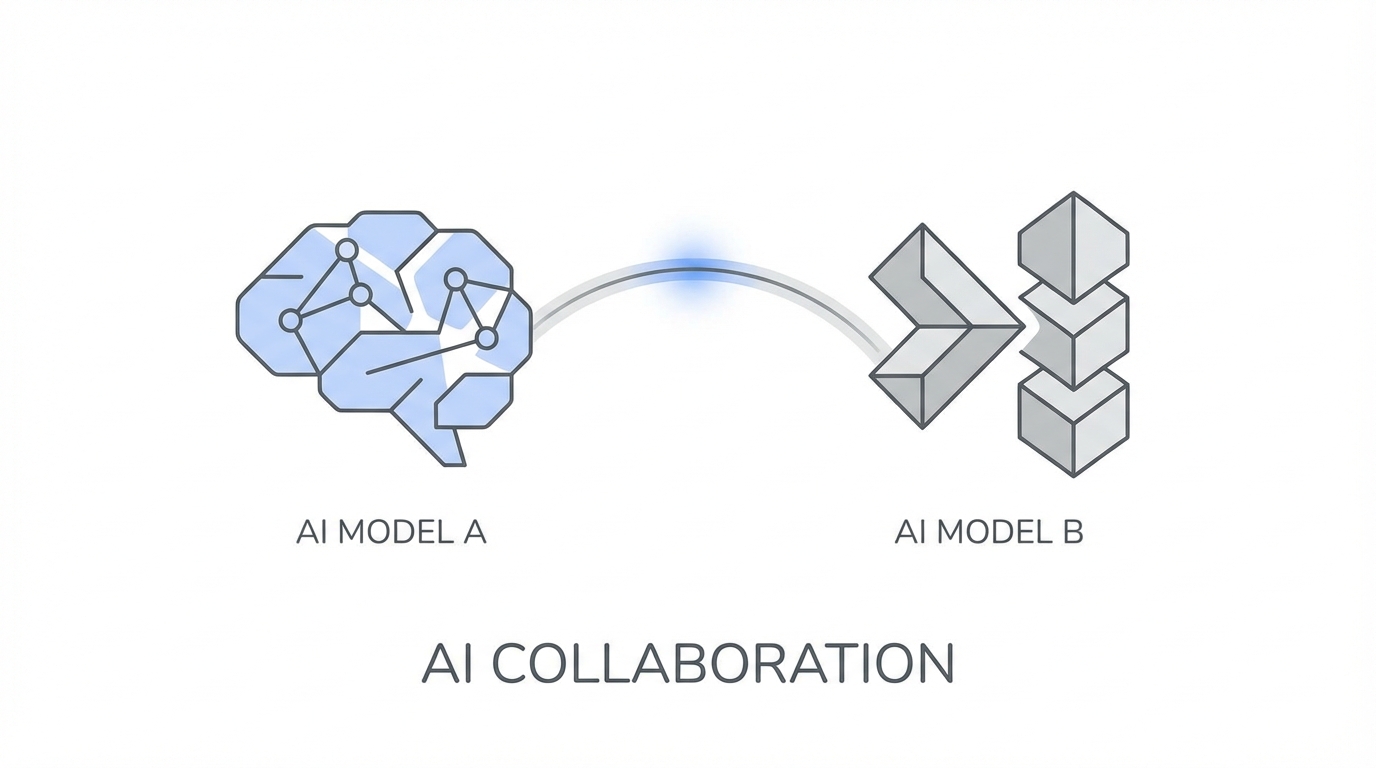
The most successful enterprise teams are no longer choosing between models; they are implementing a multi-model AI strategy. While OpenAI remains a powerhouse for data-heavy execution, Claude has rapidly gained market share, now accounting for 32% of enterprise workloads according to Codebrand. The key is understanding the unique strengths of each model to optimize your enterprise AI marketing efforts.
Claude for Creative Strategy & Brand Voice
Claude (specifically versions 3.5 and 4.5) is widely regarded as the superior "thinking partner." With a context window ranging from 200K to 1M tokens, Claude can ingest an entire brand's history, previous winning ad copy, and customer personas to generate content that feels human. Experts at Optmyzr note that Claude avoids the "robotic fluff" typical of other models, making it ideal for writing 50+ unique headlines for a Meta Ads Advantage+ campaign.
OpenAI for Data Analysis and Technical Execution
Conversely, OpenAI’s GPT-4o and o3 models excel at math, logic, and web research. When you need to analyze a massive CSV of ad spend data or write a complex Google Ads script, OpenAI is the tool of choice. It serves as the "technical nervous system" of your stack, capable of managing complex operations and integrating deeply with search-based ad environments.
"Claude acts as the creative brain, while OpenAI serves as the data-driven nervous system of a modern agentic stack."
How to Build a Cross-Model Automation Playbook
Building an agentic stack requires an orchestration layer that connects your ad platforms to your LLMs. You can achieve this using no-code tools like Make or Zapier to create a seamless flow of data and actions.
Step 1: Data Ingestion and Alerting
Set up a trigger in Make.com that activates whenever a new performance report is generated in your ad dashboard. Instead of just sending this data to a spreadsheet, send it to the OpenAI API for a logic-based audit.
Step 2: Technical Auditing with OpenAI
Use OpenAI to identify performance anomalies. For example, use a prompt to "Write a script that identifies campaigns where the CPA is 50% higher than the daily budget for 3 consecutive days." This ensures that your budget rebalancing happens in real-time, preventing wasted spend. This type of automation has helped marketers reduce CPA by 30% on average, as reported by Marketing LTB.
Step 3: Creative Iteration with Claude
Once a low-performing ad is identified, the workflow triggers Claude. By utilizing Claude Projects as a "Brand Hub," the AI analyzes why the previous ad failed and generates five new variants based on proven psychological triggers. This "chained" approach to prompting can reduce a task that used to take 2.5 hours down to just 30 minutes.
Enterprise Success: Saving Millions with AI Agents
The impact of agentic workflows for business is most visible at the enterprise level. Companies are no longer just testing AI; they are building massive internal infrastructures around it. For instance, the telecommunications giant TELUS leveraged Claude to build over 13,000 internal AI tools. This initiative saved the company over 500,000 hours and resulted in $90 million in realized benefits, according to Data Studios.
Similarly, the fintech firm Brex integrated Claude via Amazon Bedrock to automate 75% of their transaction processing and expense compliance. This allows their marketing and finance teams to focus on high-level strategy rather than manual data entry. These results prove that a multi-model AI strategy isn't just a trend—it's a competitive necessity for any marketing technology stack 2025.
"The shift from generative to agentic means AI is no longer just writing your ads; it’s auditing your budget and rebalancing your spend in real-time."
Scaling Human-Centric Growth with Stormy AI
While agentic stacks excel at data and copy, modern growth often requires a human element—specifically User-Generated Content (UGC) and influencer partnerships. This is where managing the "human" side of the agentic layer becomes critical. For brands looking to source and manage creators at scale, platforms like Stormy AI streamline creator sourcing and outreach, ensuring your AI-driven campaigns have a steady stream of authentic assets.
By using the AI-powered creator discovery features within Stormy AI, you can find influencers who match your brand's specific niche and audience quality. These creators provide the authentic video assets that Claude can then analyze to generate scripted variants, creating a feedback loop between human creativity and AI-driven scale.
The Risks of Over-Automation: Brand and Fatigue
Despite the efficiency gains, moving too fast toward a "set-and-forget" mentality is dangerous. One of the most common mistakes is a disjointed brand experience caused by using different bots for different campaign elements without a unifying style guide. If your Google Search ads sound like a technical manual (OpenAI) while your Instagram captions sound like a poetic essay (Claude), your brand identity will fragment.
Furthermore, AdGPT warns that AI lacks deep cultural empathy. Over-automation without a human-in-the-loop often leads to generic ads that suffer from rapid audience fatigue. This is why the 80/20 rule is essential: automate 80% of the repetitive execution, but keep 20% of your resources dedicated to human strategy, empathy, and final creative approval.
Conclusion: The Future is Agentic
Building an agentic marketing stack in 2025 requires a shift in mindset from "How can I use AI to write this?" to "How can I build a system that manages this?" By leveraging multi-model AI strategies that combine Claude’s creative intelligence with OpenAI’s technical prowess, brands can achieve levels of efficiency that were previously impossible. However, the most successful enterprise AI marketing will always be those that balance automation with human oversight.
As you scale your AI marketing automation, remember to audit your models regularly, maintain a central brand hub, and never lose sight of the emotional connection that only humans (and human creators) can provide. The future of growth isn't just automated—it's agentic.