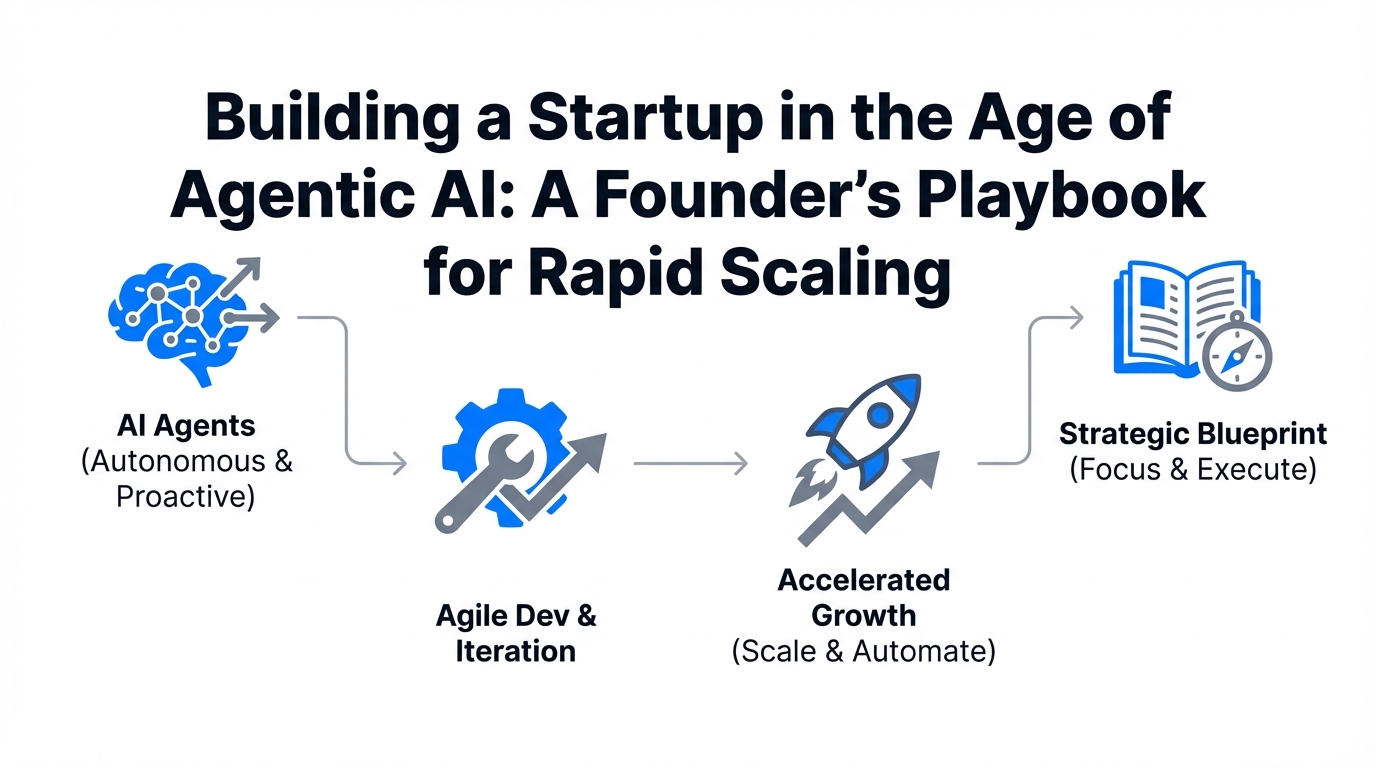
The traditional startup blueprint—raise seed capital, hire a dozen engineers, and spend eighteen months building a Minimum Viable Product (MVP)—is becoming obsolete. We are entering the era of agentic AI, where the distance between an idea and a production-ready application is no longer measured in months, but in hours. For the modern founder, success is no longer about managing people; it is about orchestrating autonomous systems that can plan, code, and self-correct. This startup growth strategy leverages the power of delegation over simple code completion, allowing lean teams to achieve the output of global enterprises with a fraction of the overhead.
The Fundamental Shift: From Autocomplete to Autonomous Delegation
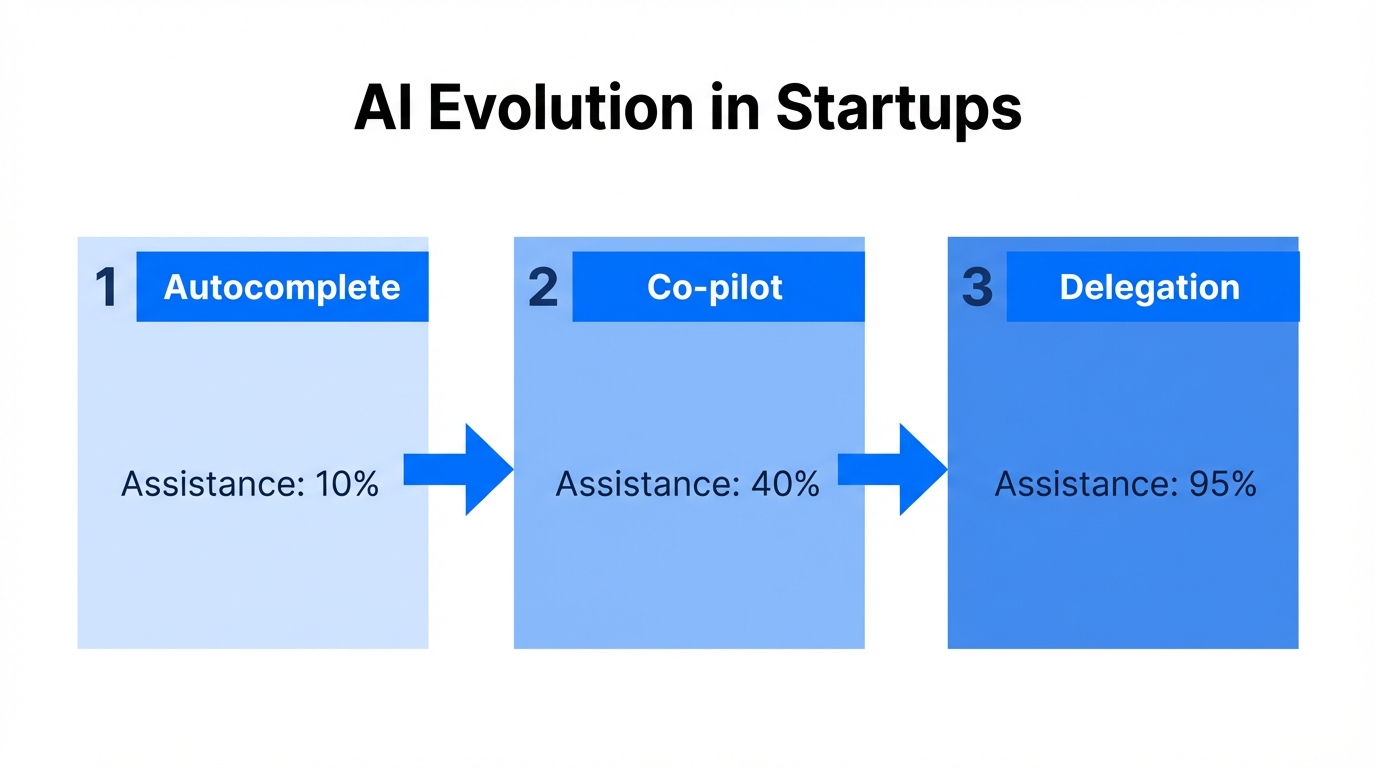
For the last few years, AI in business was largely about "autocomplete"—tools like GitHub Copilot suggesting the next line of code or ChatGPT drafting an email. In 2026, the paradigm has shifted to delegation. According to industry insights from CodeWeek, agentic AI for business now involves systems that don't just predict text, but execute multi-step plans across entire file systems.
Founders can now treat AI as a CTO or lead engineer. This isn't hyperbole; the performance of frontier models has reached a tipping point. For instance, Anthropic’s Claude 3.5 Sonnet has demonstrated a solve rate of 77.2% on the SWE-bench, a rigorous benchmark for solving real-world GitHub issues. This level of autonomy allows a solo founder to focus on business logic and customer discovery, while the AI handles the heavy lifting of technical implementation.
"The bits contributed by the human programmer are becoming increasingly sparse as AI handles the architectural heavy lifting."
By early 2026, nearly 92% of US-based developers have integrated AI tools into their daily workflows, according to the latest GitHub Octoverse reports, with agentic platforms like Claude Code capturing over 55% of the market mindshare among high-growth startups, as noted in recent developer surveys on Dev.to. This is the foundation of lean startup automation: replacing departmental silos with specialized AI agents.
Managing the Productivity Paradox in AI-Driven Entrepreneurship
While the speed of agentic AI is staggering, it comes with a hidden cost known as the "Productivity Paradox." A study by METR found that while developers felt 20% faster, they often took 19% longer to complete tasks in mature codebases because of the intense "review and verify" overhead. Scaling a startup solo requires a disciplined approach to this verification process.
To navigate this paradox, founders should adopt a Plan → Execute → Verify loop. Never let an agent touch your production code without first entering a "Plan Mode." Platforms like Claude Code allow users to enter this mode by pressing Shift+Tab twice, forcing the AI to describe its architectural approach before making changes. This prevents "spaghetti code" and ensures the output aligns with your long-term business goals, as recommended by DevelopersVoice.
| Strategy | Traditional Startup | Agentic AI Startup |
|---|---|---|
| Team Structure | 10-15 Engineers | 1 Founder + AI Agent Swarm |
| Development Time | 6-12 Months for MVP | 1-2 Weeks for MVP |
| Capital Required | $500k+ Seed Round | $5k - $10k (Bootstrap) |
| Scaling Speed | Linear (Hiring based) | Exponential (API based) |
The 'Project Brain' Strategy: Standardizing AI Output
One of the biggest mistakes in ai-driven entrepreneurship is treating the AI as a magic button that doesn't need context. To ensure your AI agents adhere to brand standards and complex business logic, you must implement a Project Brain. This is typically a centralized documentation file, such as CLAUDE.md, located in your project's root directory.
Expert advice from DevGenius suggests the 150-Rule: keep your instructions under 150 lines. Frontier models tend to lose compliance as instructions grow too long. Your Project Brain should focus on:
- The "Why": The core business objectives and user personas.
- The "How": Coding standards (e.g., "Always use TypeScript").
- Anti-Patterns: Explicitly listing mistakes that might pass a linter but break production, such as using raw SQL instead of an ORM.
By treating context as infrastructure, you create a "source of truth" that allows multiple agents to work in harmony without drifting away from your vision, a technique championed by Humanlayer.
Building 'Agent Teams' to Replace Departmental Silos
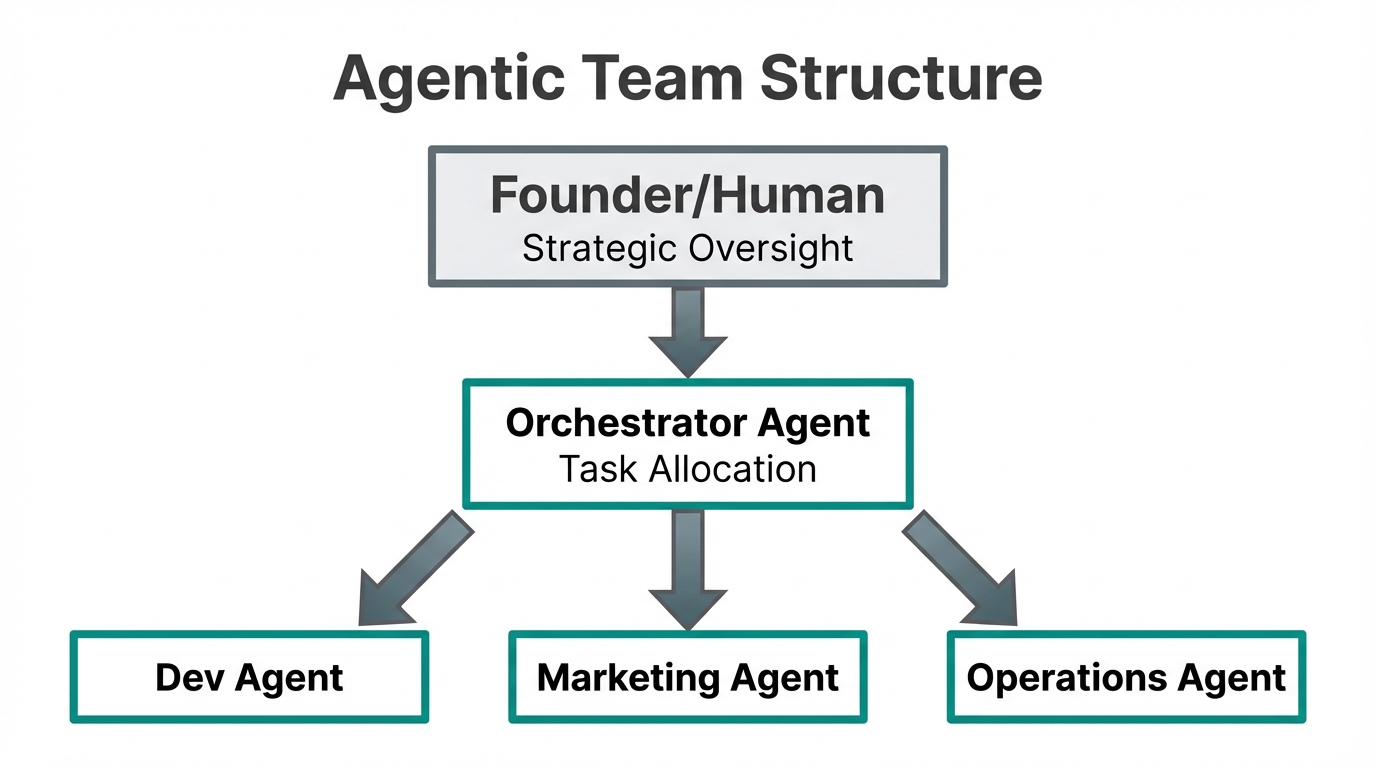
2026 is the year of swarming. Instead of using a single generalist AI, founders are now orchestrating specialized Agent Teams. You can spin up parallel sessions for UX, security, and backend development that peer-review each other's work. For example, a security agent can audit the code produced by the backend agent before it reaches your repository.
"A Google Principal Engineer reduced a one-year project roadmap to a one-hour proof-of-concept using autonomous agents."
This case study features Jaana Dogan, who reported that Claude Code generated a complex distributed agent orchestrator in just one hour—a task previously estimated at a full year of manual labor. This level of rapid scaling is the hallmark of a modern startup growth strategy.
Once your product is built, the same logic applies to growth. Platforms like Stormy AI can help source and manage UGC creators at scale, ensuring your marketing efforts match the exponential speed of your development. By using AI to discover influencers and automate outreach, you maintain the lean, high-output philosophy across every department of your startup.
Integrating Your Tech Stack via Model Context Protocol (MCP)
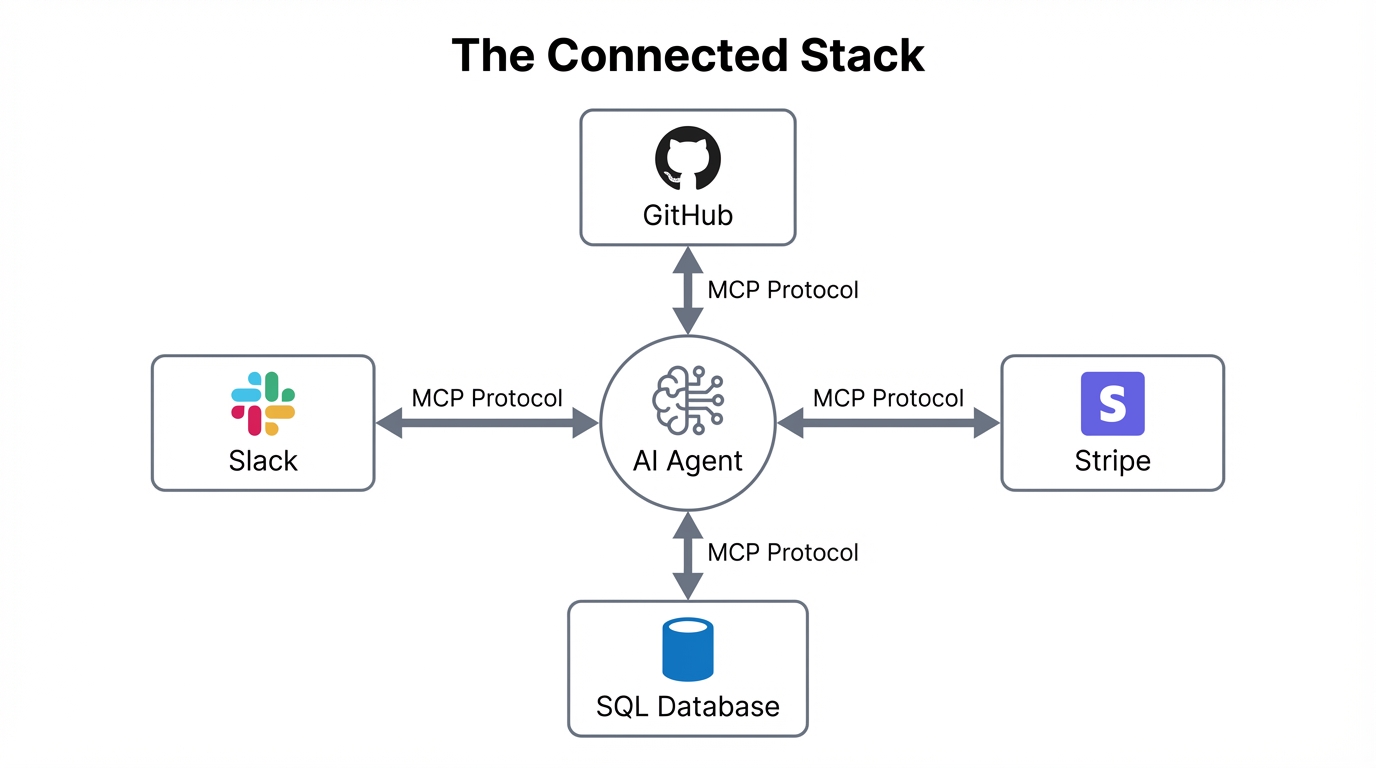
To be truly autonomous, your AI needs to interact with the world. This is where the Model Context Protocol (MCP) becomes essential. MCP servers act as bridges between your AI and your actual business tools. Essential integrations for the modern founder include:
- GitHub MCP: For automated PR reviews and CI/CD management.
- Sentry MCP: Allowing agents to pull real-time error logs and suggest fixes instantly via Sentry, as noted on AI-Stack.
- Playwright MCP: Enabling browser automation for end-to-end UI testing.
By connecting these tools, your AI agents move from being simple code generators to active participants in your DevOps and QA pipelines. This connectivity is what enables the scaling of a startup solo, as the AI can now handle production incidents while you sleep.
! pytest) to inject terminal output directly into the AI's context window. This saves tokens and keeps the agent focused on real-time data rather than hallucinated results.The Founder's Checklist: Mistakes to Avoid
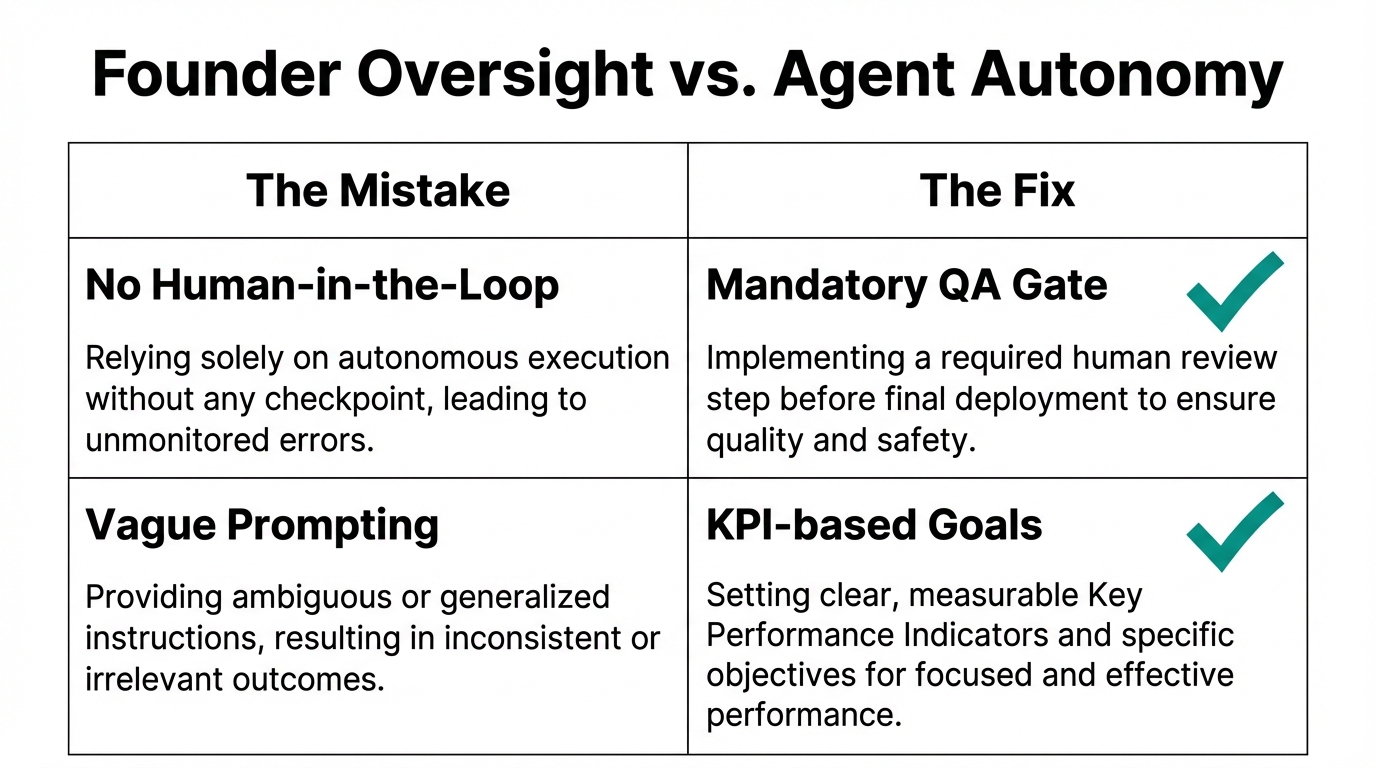
Even with the best lean startup automation, things can go wrong. Founders must be vigilant about context bloat. Dumping an entire codebase into a prompt often destroys the AI’s attention span. Research on long-context model performance suggests that context quality degrades significantly once you reach 20-40% of the model's capacity, as highlighted by Serenities AI. Use the /clear command aggressively between tasks to keep your agent sharp.
Security is another critical concern. Early versions of agentic tools were known to expose API keys in debug logs. Ensure you are always running the latest version of your tools (e.g., npm update -g @anthropic-ai/claude-code) to protect your intellectual property and sensitive data, as warned by technical contributors on Dev.to.
Conclusion: The Era of the Individual Giant
The barrier to entry for building a global tech company has never been lower. By mastering agentic AI for business, a single founder can now wield the power of an entire engineering organization. The key to this startup growth strategy is not to find better code completion, but to build better delegation frameworks. Use a Project Brain for context, orchestrate specialized agent teams, and integrate your stack via MCP. As your technical infrastructure scales, remember to scale your growth operations with Stormy AI to ensure your market presence keeps pace with your innovation. The future belongs to the founders who can move at the speed of thought.