In 2026, the barrier to entry for building a multi-million dollar software business has never been lower, yet the threshold for "quality" has never been higher. The era of generic cold emails is dead, buried by sophisticated 2026 spam filters and AI-driven inbox gatekeepers. To succeed this year, entrepreneurs are turning to an AI sales outreach agent—a virtual SDR that doesn't just send messages, but thinks, researches, and iterates like a high-performing human. By leveraging the latest reasoning capabilities of ChatGPT Pro and the real-time data depth of Perplexity AI, you can build a $5 million ARR business with a skeleton crew and a specialized AI agent at the core.
The 2026 Virtual SDR Model: From Tools to Agents
The core difference between previous automation and the automated lead generation 2026 landscape is the shift from linear workflows to autonomous agents. A "Virtual SDR" in 2026 acts as a junior McKinsey analyst, performing deep research into prospects before a single word is drafted. According to recent sales data, 66% of sales reps confirm that AI sales agents help them better understand customers and personalize outreach at a level previously impossible for humans alone. This is no longer about templates; it is about dynamic content generation based on a prospect's latest 10-K filing, recent podcast appearances, or LinkedIn activity.
"In 2026, an AI agent isn't just a tool you use; it's a team member you manage. The moat isn't the code—it’s the data network effect of knowing exactly which messaging yields a reply in a specific niche."
The 2026 model relies on a data network effect. Every interaction—whether it’s a reply, a click, or a meeting booked—is fed back into the agent. This allows the system to learn which hooks work for SaaS founders in Berlin versus Fintech VPs in New York. For those looking to mirror this success in the influencer marketing space, platforms like Stormy AI have already pioneered this agentic approach, allowing brands to discover and outreach to creators using similar autonomous logic.
Researching the Opportunity: ChatGPT Pro vs. Perplexity AI
 1:13
1:13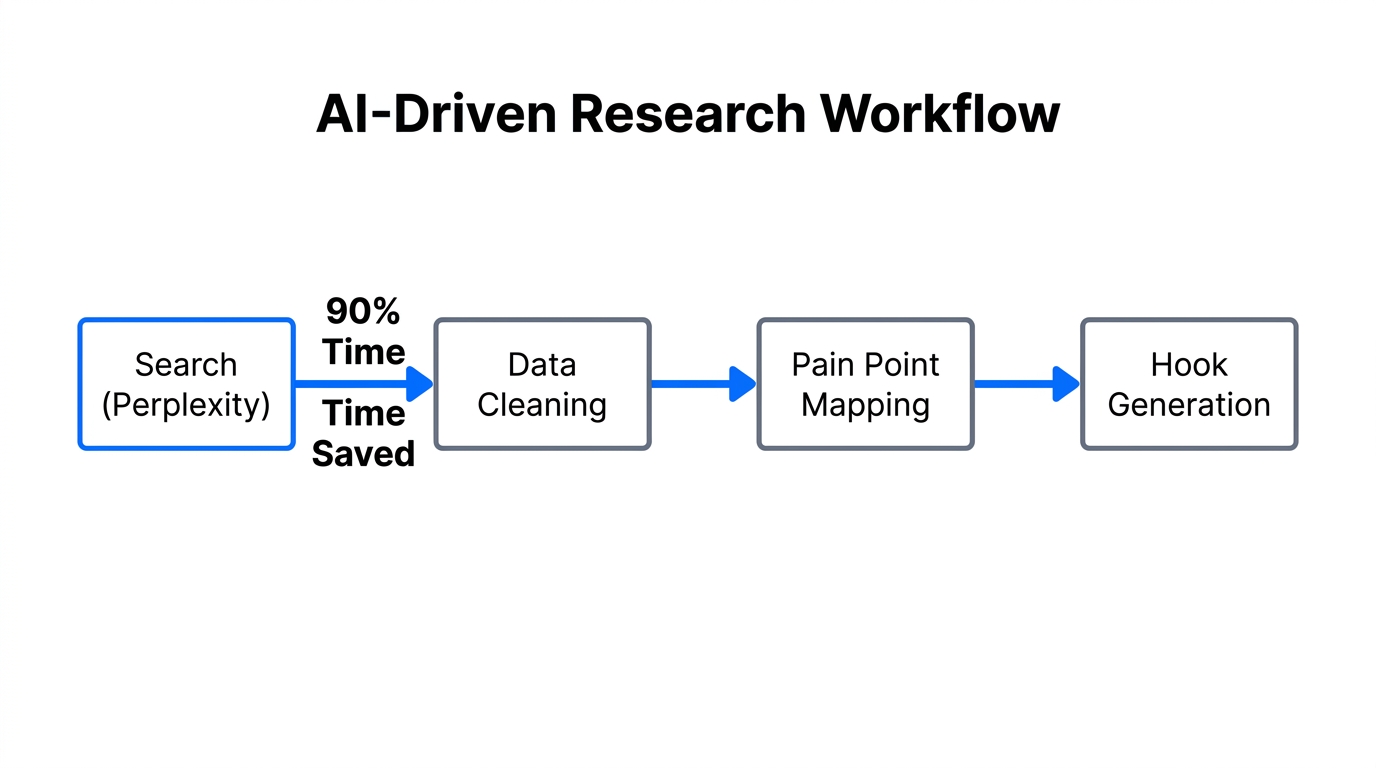
Before building your AI sales outreach agent, you must identify an underserved niche. In 2026, generalist tools get crushed by specialized agents. Using "Deep Research" features on both ChatGPT Pro and Perplexity AI, you can find market gaps in minutes that used to take weeks of manual analysis. While Perplexity excels at real-time competitive analysis and technical documentation, ChatGPT Pro provides superior reasoning for business modeling and narrative strategy.
| Feature | ChatGPT Pro (Deep Research) | Perplexity AI (Deep Research) |
|---|---|---|
| Speed | Slower (4-8 minutes) | Fast (1-2 minutes) |
| Depth | High (Multi-page reports) | Moderate (Actionable summaries) |
| Source Accuracy | Verified sources + reasoning | Direct citations (30+ sources) |
| Business Logic | Superior (Case studies & Moats) | Actionable (Opportunity matrices) |
When searching for Perplexity AI business ideas, the model recently identified that corporate legal teams waste 23% of their time reviewing boilerplate contracts. This insight, echoed in Thomson Reuters research, suggests that a "Legal SDR"—an agent that outreaches to law firms offering automated redlining audits—could be a massive $5M opportunity. By using these tools to validate your virtual SDR playbook, you ensure you aren't just building a "wrapper" but a solution to a verified, high-value pain point.
Step-by-Step MVP Roadmap: Launching for Under $5,000
20:01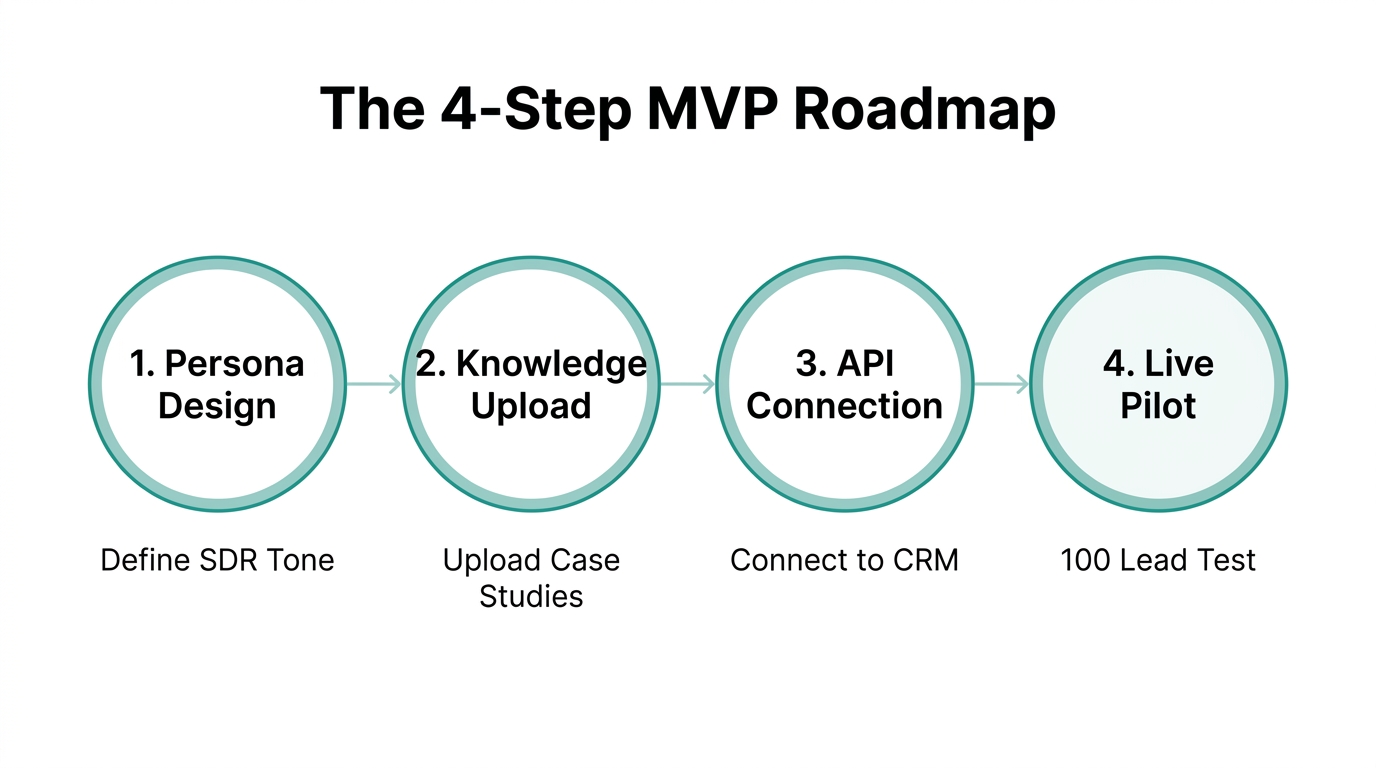
You do not need a $100,000 seed round to build a top-tier sales agent in 2026. By utilizing low-code tools and off-the-shelf APIs, you can launch a minimal viable product (MVP) for less than $5,000. The goal is to prove the "human-in-the-loop" model before scaling to full autonomy.
Step 1: The Tech Stack
Use OpenAI's GPT-5/6 API for text generation and Perplexity's API for real-time prospect research. Connect these via Zapier or Make.com to your database. For the UI, use a low-code builder like Webflow or Framer paired with a simple Chrome extension for CRM integration.
Step 2: Niche Data Enrichment
Build a specialized scraper that looks for non-obvious triggers. Instead of just "hiring," look for "mentions of new product launches in industry newsletters." This level of automated lead generation 2026 allows your agent to open emails with: "I saw your recent interview on the Long-Tail Tech podcast where you mentioned expanding into the EMEA market..." This bypasses the skepticism that 2026 buyers have toward AI-generated fluff.
Step 3: Human-in-the-loop (HITL)
Initially, set the system to "Draft Only." A human SDR reviews the AI's suggestions, clicks send, and the system learns from the edits. This reduces the risk of hallucinations and builds the proprietary dataset that becomes your long-term moat. Tools like Stormy AI use a similar approach for influencer vetting, ensuring that AI-found creators meet strict brand safety standards before outreach begins.
The $5M Growth Playbook: Viral Loops and Self-Serve Tiers
21:51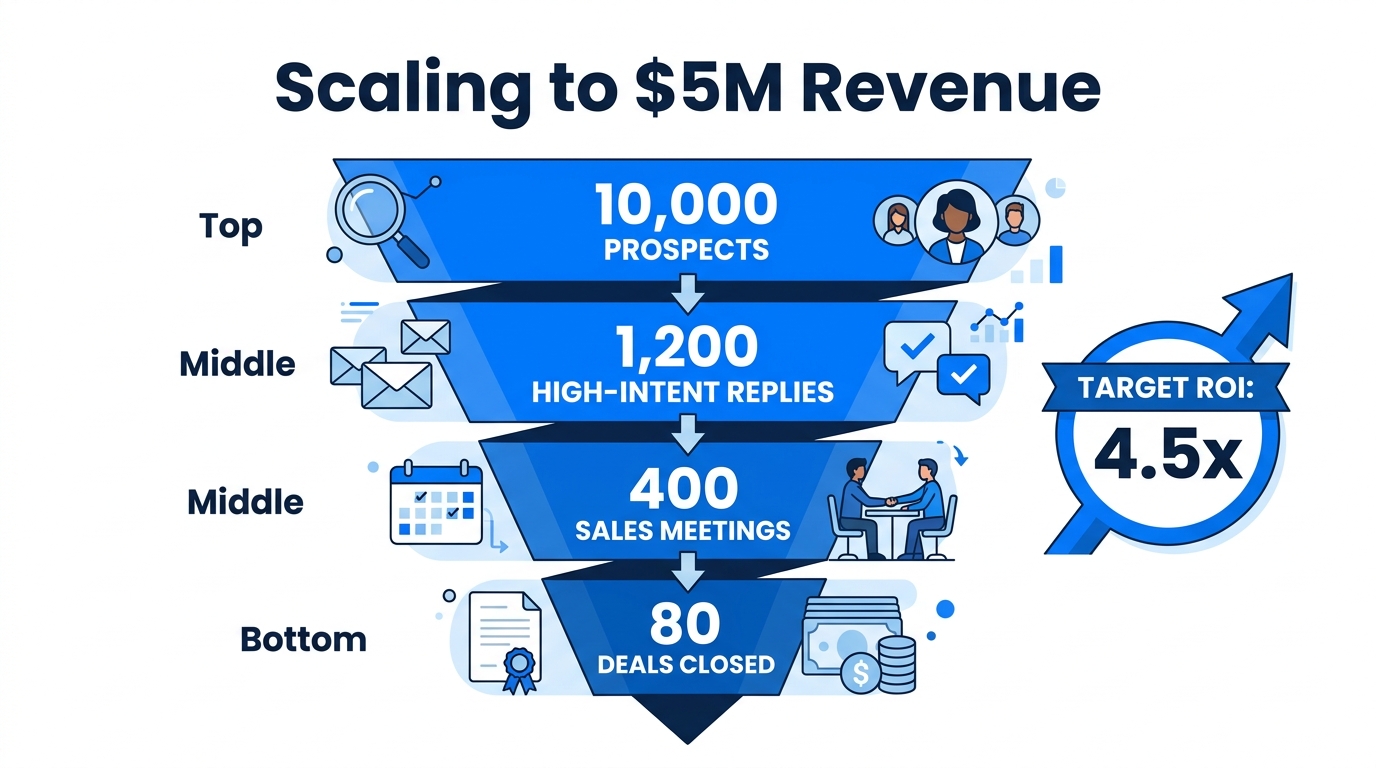
Scaling to $5M ARR requires a shift from founder-led sales to product-led growth (PLG). In 2026, the most successful AI startups, such as Jenni AI and Cursor, have scaled by focusing on individual user adoption that bubbles up into enterprise deals.
- Self-Serve Free Tier: Offer 50 AI-generated research briefs or emails per month for free. This allows individual sales reps to test the tool without needing CFO approval.
- Viral Success Loops: Every time the agent books a meeting, the user is prompted to share the success in their team's Slack or Teams channel. "This meeting was booked by my AI agent while I was at lunch" is the ultimate social proof.
- Marketplace Distribution: List your agent in the HubSpot App Marketplace and Salesforce AppExchange. In 2026, being where the data already lives is the fastest way to achieve $1M ARR in year one.
"The key to $5M is 'Land and Expand.' Start with one rep using a free tool, and within six months, the whole team is running on a usage-based tier because the ROI is undeniable."
Monetization: Moving to Usage-Based AI Tiers
25:31Traditional seat-based pricing is struggling in 2026 because AI agents do the work of multiple people. Instead, move toward usage-based or performance-based pricing. This aligns your revenue with the value delivered—meetings booked or high-quality leads generated.
| Phase | Strategy | Target Revenue |
|---|---|---|
| Year 1 | 200 Small Teams at $500/mo (Standard Tier) | $1.2M ARR |
| Year 2 | 150 Mid-Market Firms + Usage Overages | $3.1M ARR |
| Year 3 | 300+ Enterprise Embedded Instances | $5.4M ARR |
To support this growth, ensure your AI sales outreach agent integrates with existing stacks. Whether it's tracking leads in HubSpot or managing sequences via Lemlist, the agent must feel like a seamless extension of the current workflow. If you are building for the influencer niche, your agent should connect directly to a Creator CRM to track long-term partnership value and payment history.
Conclusion: The Unfair Advantage of the Early Adopter
Building a $5M business in 2026 doesn't require a massive engineering team; it requires a deep understanding of virtual SDR playbooks and the discipline to implement them. By using ChatGPT Pro for sales strategy and Perplexity AI for business research, you are effectively hiring an executive-level strategy team for less than $300 a month. For more tactical deep dives and community support, entrepreneurs are joining networks like Startup Empire to stay ahead of the curve. The window of opportunity for "Agentic SaaS" is wide open—it's time to stop prompting and start building.