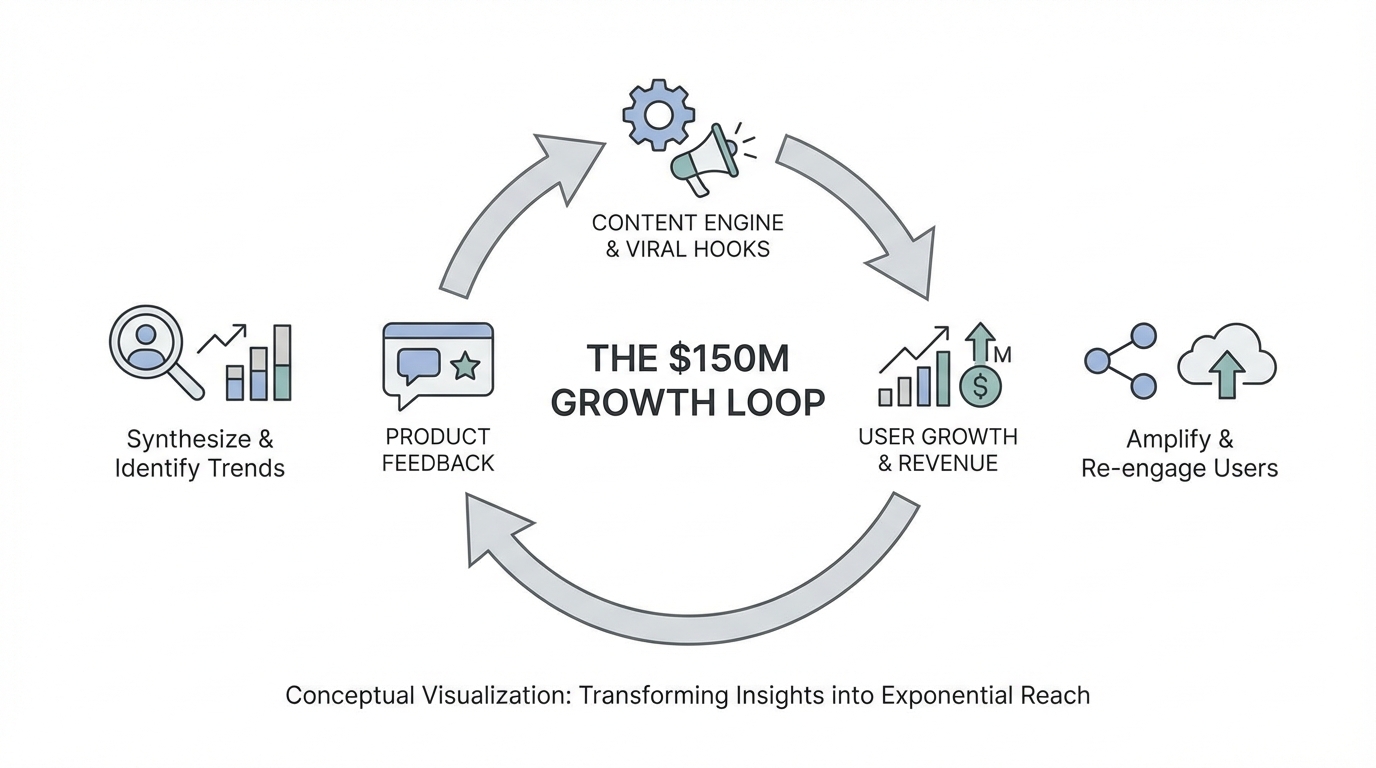
In the high-stakes world of software development, the difference between a forgotten startup and a $150 million powerhouse often comes down to a single mechanism: the velocity of your growth loops. While many founders burn through venture capital chasing expensive customer acquisition, others quietly build self-sustaining engines where product usage naturally fuels community led growth. The story of Guillaume Moubeche and the meteoric rise of Lemlist is a masterclass in this philosophy. Starting with just $1,000 and a series of failed ventures behind him, Guillaume didn't just build a tool; he engineered a system where user success stories became the primary driver for brand expansion, turning a simple SaaS product into a viral marketing phenomenon.
The Anatomy of a High-Velocity Growth Loop
To understand how to scale to a $150M valuation, you must first deconstruct the anatomy of a successful growth engine. Unlike a traditional marketing funnel, which is linear and requires constant top-of-funnel investment, a growth loop is circular. For Guillaume, the process was iterative: Product Usage -> Success Stories -> Community Content -> User Feedback -> Product Improvement. This cycle creates a compounding effect where every new customer potentially attracts the next three. By focusing on product led growth, you ensure that the value of the software itself does the heavy lifting in your content marketing strategy.
In the early days of Lemlist, Guillaume acted as the primary catalyst for this loop. He didn't just wait for users to figure out the software; he used LinkedIn and outbound sales to find people who had a specific pain point: low meeting booking rates. He realized that if he could tie his software directly to the revenue his customers were making, the product would become synonymous with success. This deep integration between product performance and customer ROI is the bedrock of any sustainable user feedback loop.
Securing Your First 100 'Content-Ready' Customers

The hardest part of building a growth loop is getting the wheel to turn the first time. Guillaume’s approach was hands-on and unscalable, which is exactly why it worked. He focused on securing his first 100 customers through live demos and hyper-personalized outbound. He offered a unique deal: if they bought a subscription, he would personally write their cold email campaigns. In exchange, he asked for the right to feature their results as success stories. This transformed early adopters from passive users into high-value case studies that could be distributed across social channels.
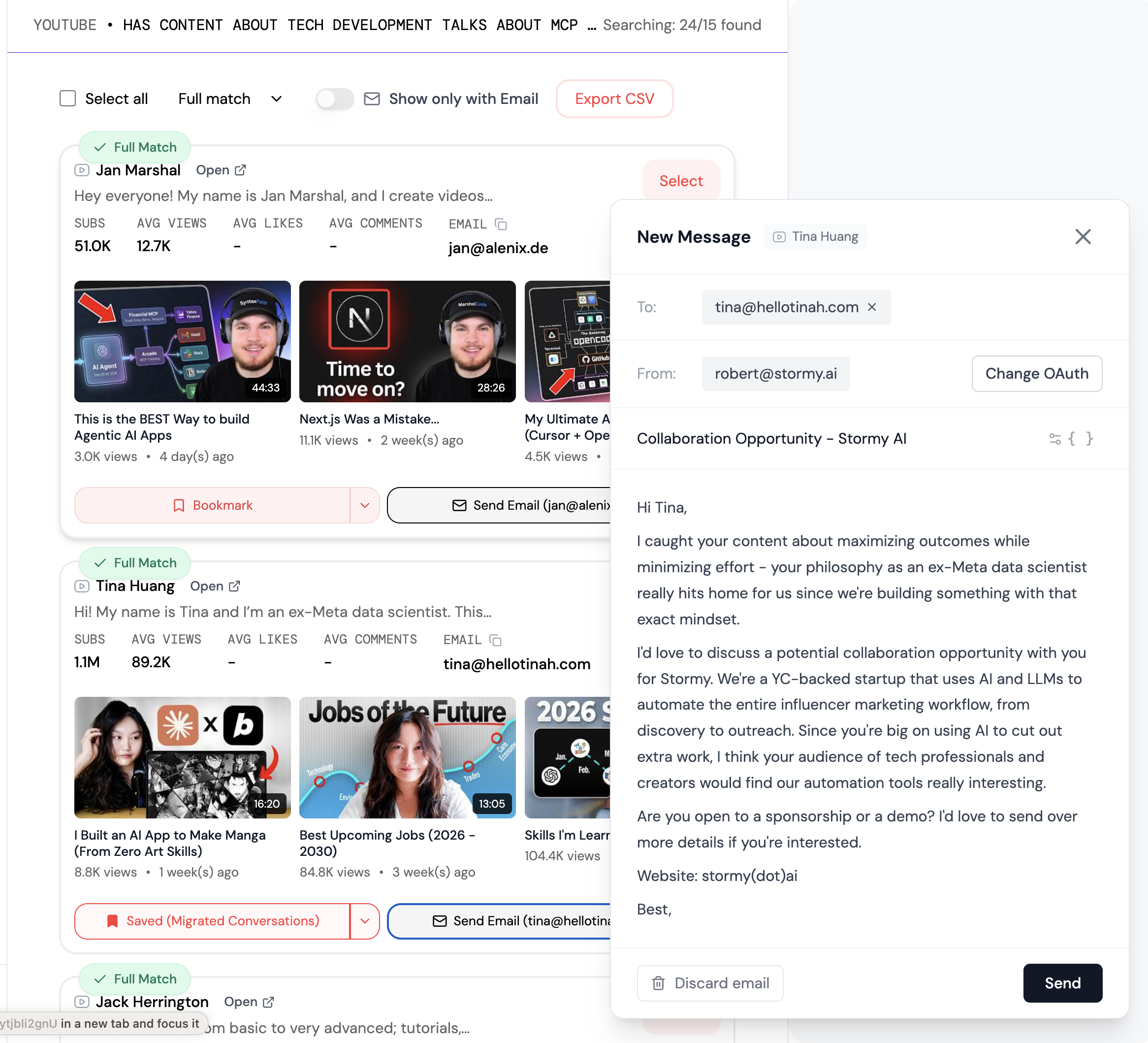
For modern marketers looking to replicate this, the manual search for those first 100 "perfect" users can be daunting. This is where AI-native tools change the game. Instead of manually scouring platforms, you can use Stormy's AI search to instantly find influencers and power users in your niche who are already talking about similar problems. By identifying these high-leverage individuals across TikTok, YouTube, and LinkedIn, you can target your outreach to those most likely to generate viral community content.
Once you've identified these prospects, the key is personalization. Guillaume’s success was built on making sales "more human." Modern platforms like Stormy AI allow you to scale this human touch by generating hyper-personalized emails for each potential creator or customer, including automated AI follow-ups that handle the heavy lifting while you sleep. This ensures that your initial growth loops are populated by people who actually care about your solution, rather than generic leads who will churn within thirty days.
Leveraging Success Stories as Your Unfair Advantage
In a "Red Ocean" market—one filled with established competitors—you cannot win by simply having the same features. You win by having a better story. Guillaume realized that while his competitors had more features, he had a more compelling narrative of user success. He used his own product to create templates, shared those templates in public communities, and then documented the results. This created an "unfair advantage" because he wasn't just selling software; he was selling a proven methodology for growth based on competitive differentiation.
By pushing success stories into a central community, you trigger a community led growth effect. Potential customers see real people achieving real results, which lowers the barrier to entry significantly. If you are struggling to find which of your users are actually the most "viral" or have the best reach, Stormy AI's influencer vetting can help you analyze your own user base. By pasting the social profile URLs of your top users, you can instantly detect fake followers and analyze audience demographics, allowing you to prioritize high-quality accounts for collaborative content or UGC campaigns.
The 60% Growth Pivot: Turning Negative Feedback into Momentum

Not all parts of the user feedback loop are pleasant. Guillaume faced a crisis when a major product redesign led to a massive backlash. His activation rate—the percentage of users who actually launched a campaign—was a dismal 15%. When he tried to fix it, existing customers revolted, posting public messages like, "Yesterday I loved Lemlist, today I hate it." This could have been the end, as growth plummeted from 40% month-over-month to 0% in a single month.
However, Guillaume’s response is a playbook for community management. He didn't hide from the feedback; he embraced it. He spent his nights on Zoom calls with angry users until 4:00 AM, seeking to understand the core of their frustration. He discovered that while he had improved the architecture, he had removed vital features that users relied on. By fixing these issues based on direct feedback, he raised the activation rate from 15% to 35%. The following month, the company saw a 60% growth spurt. This proves that negative feedback, when handled with transparency, is actually a fuel source for product led growth.
The 'Document, Don't Create' Philosophy for Founders
A major hurdle in any content marketing strategy is the pressure to create "perfect" content. Guillaume bypassed this by following the "Document, Don't Create" philosophy popularized by Gary Vaynerchuk. He documented his struggles, his failures, and his experiments in real-time. This transparency built a level of trust that polished marketing could never achieve. When you document the process of building your company, you invite your audience to be part of the journey, which is the purest form of community led growth.
To keep this documentation organized and effective, founders need to track how their stories are landing. Using Stormy's post tracking and analytics dashboard allows you to monitor which parts of your story—whether it's a technical rebuild or a personal milestone—are driving the most engagement and views. This data informs the next step in your growth loops, ensuring you double down on the narratives that resonate most with your target audience across TikTok and Instagram.
Breaking Through the Plateau: The Magnet Persona Strategy

Every company eventually hits an S-curve plateau. For Lemlist, this happened around the $10 million ARR mark. Guillaume realized that to break through, he needed to focus on a "Magnet Persona"—a specific segment of the market that attracts others by association. For Apple, it was designers. For Lemlist, it was sales reps. By becoming the go-to tool for high-performing sales teams, they created a gravitational pull that brought in entire companies.
Managing these high-value relationships requires more than just a spreadsheet; it requires a dedicated Stormy AI creator CRM. As your growth loop scales, tracking every interaction, negotiation, and success story becomes impossible without automation. A specialized CRM ensures that as you attract more "Magnet Personas," you can manage those relationships at scale, preventing the churn that often kills growth at the $10M+ level. This focus on retention and high-value personas is what allowed Lemlist to scale to its current $30M ARR and $150M+ valuation.
The Path to a Self-Sustaining Empire
Building a $150M company isn't about a single viral moment; it’s about the relentless execution of growth loops. From the early days of manual outbound to the sophisticated product led growth strategies of a global SaaS, the core remains the same: listen to your users, document the journey, and turn their success into your best marketing asset. By integrating a tight user feedback loop with a robust content marketing strategy, you can create an engine that grows even while you sleep.
If you're ready to start your own journey, you can research proven models using resources like the 52 Micro-SaaS ideas database or join a community like the Starter Story Academy to find your first 100 customers. Remember, the goal is to be patient with results but impatient with your actions. Start building your loop today, and let the compounding power of community and product quality take you to the next level.