In the high-stakes world of digital growth, the transition from a solitary newsletter to a $10 million content conglomerate isn't just about writing more—it’s about architecting a system. By 2026, the landscape of content entrepreneurship has shifted from chasing viral hits to building diversified portfolios that insulate founders against platform volatility. As we look at the blueprints of modern giants, the secret isn't a massive team or venture capital; it's the relentless application of writing as an operating system to fuel communities, SaaS products, and high-ticket education.
The 'Writing as the OS' Framework: Why Writing is the Foundation
Explore why mastering writing is the essential operating system for modern digital entrepreneurs.
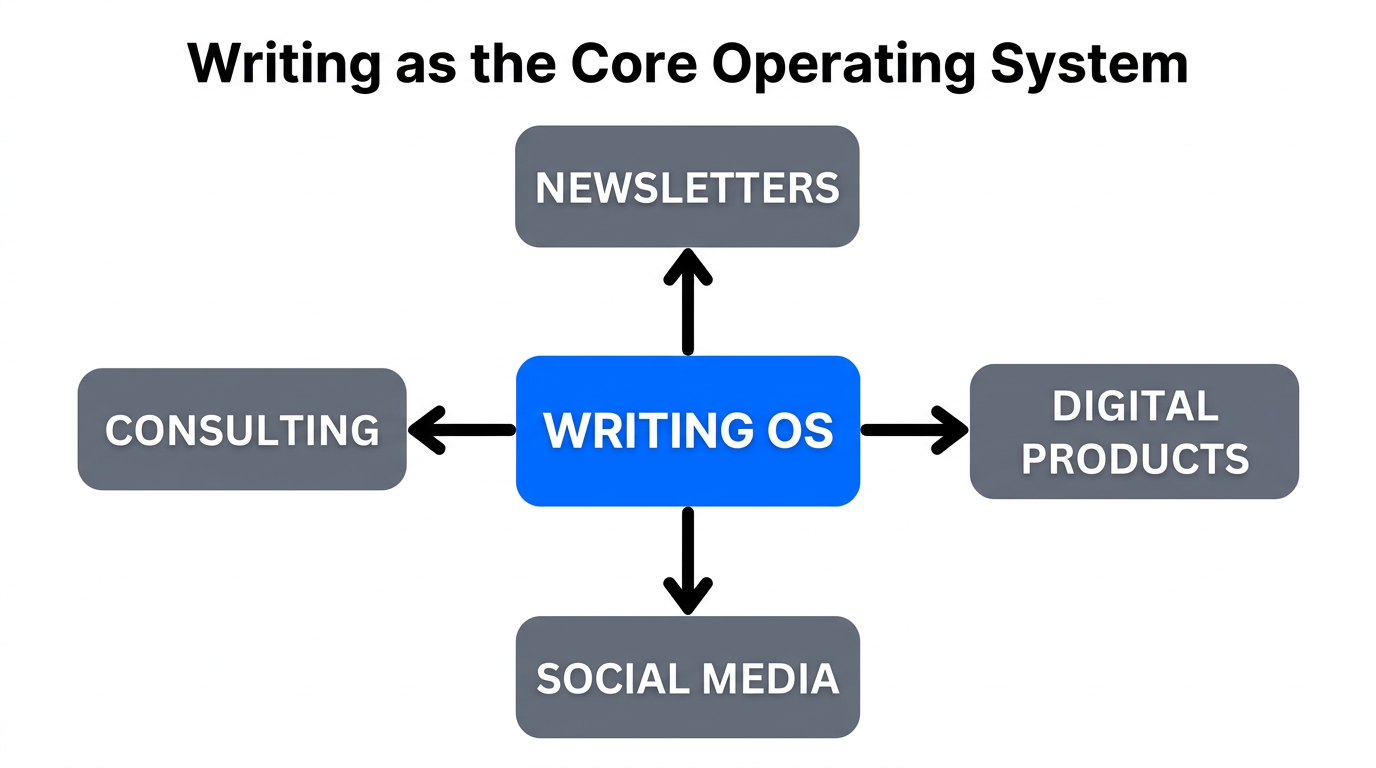
By 2026, the most successful creators have realized that every video script, Meta Ads Manager campaign, and product landing page begins with a single skill: writing. This is the 'Writing as the OS' framework. It treats written content not as a final product, but as the raw material for all other marketing channels. When you master the art of writing in a persuasive and compelling way, you essentially write your income ticket for the rest of your life.
As noted in the journey of Dicky Bush, who transitioned from a Wall Street hedge fund trader to a $10M content entrepreneur, schools often fail to teach the version of writing that matters in the real world. In the digital economy, writing isn't about five-paragraph essays; it's about empathetic problem-solving. The reader doesn't care about your word count; they care about how quickly you can solve their problem. Whether you're using Canva for visual hooks or Notion for knowledge management, the logic remains: clear writing equals clear thinking, which equals high conversion.
"The reader does not care about you or how much time you spent. They care about what the writing can do for them. Solve their problem in two minutes, and you win." [Source: Nicolas Cole]
The 4-Pillar Business Model for Multi-Channel Scaling
Understand the portfolio strategy behind scaling a content business to eight figures.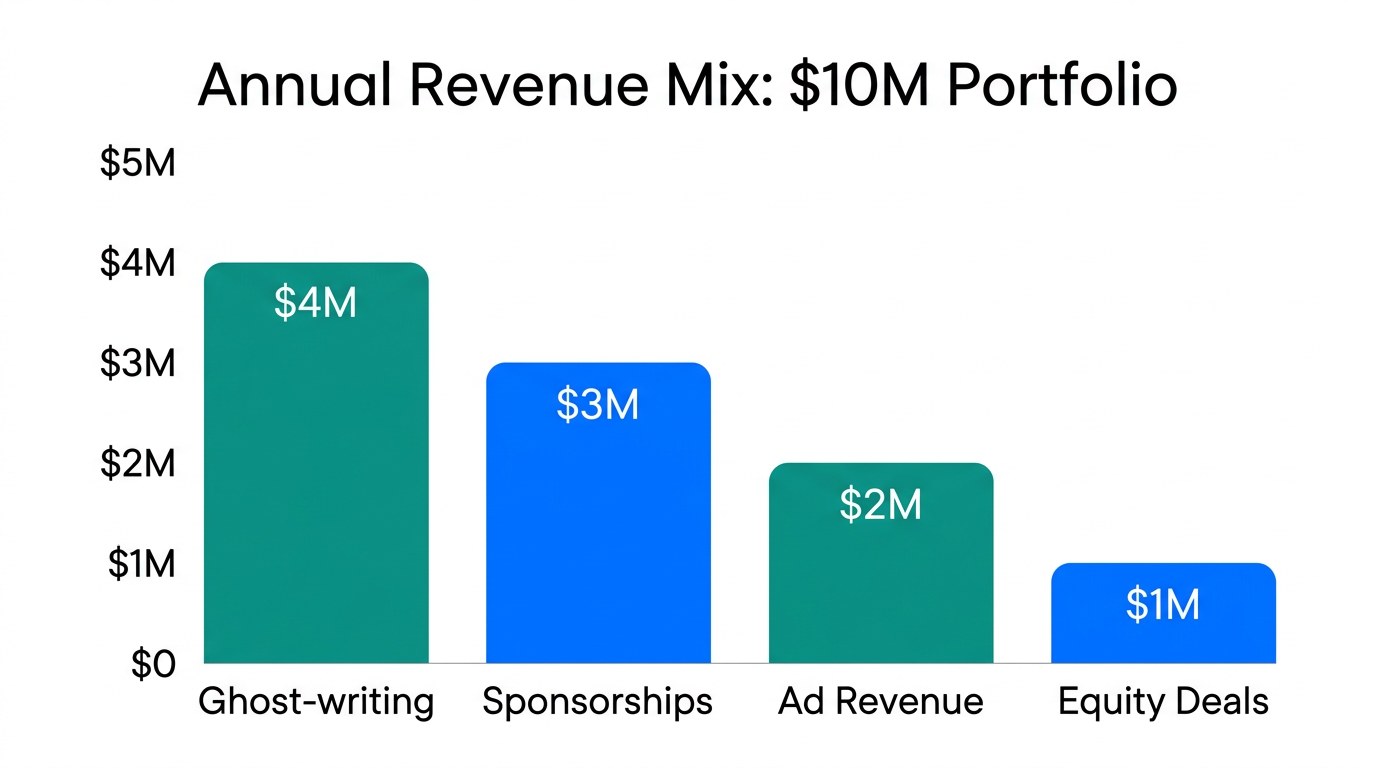
To hit a $10 million run rate, you cannot rely on a single revenue stream. A multi-channel marketing strategy requires a portfolio that balances low-friction entry points with high-ticket backend offers and recurring SaaS revenue. In 2026, the gold standard for this is a four-pillar model that captures different segments of the market simultaneously.
| Pillar | Example Product | Primary Function | Est. Annual Revenue |
|---|---|---|---|
| Community | Ship 30 for 30 | Entry-level cohort-based learning and accountability. | $3,000,000 |
| High-Ticket Education | Premium Ghost Writing Academy | Group coaching for specialized professional skills. | $5,000,000 |
| SaaS (Software) | Type Share | Productivity tools that solve the creator's workflow pains. | Scalable/Recurring |
| Paid Newsletters | Write with AI | Niche training and recurring low-cost education. | $500,000 |
This ecosystem approach allows you to move a customer from a free newsletter to a $99 community, eventually upselling them into a $5,000+ specialized academy. Each pillar feeds the next. For instance, using TikTok Ads Manager to drive traffic to a free writing challenge creates a top-of-funnel flow that eventually populates the SaaS and high-ticket pillars.
The Fastest Path to $10k/Month: Borrowing Audience
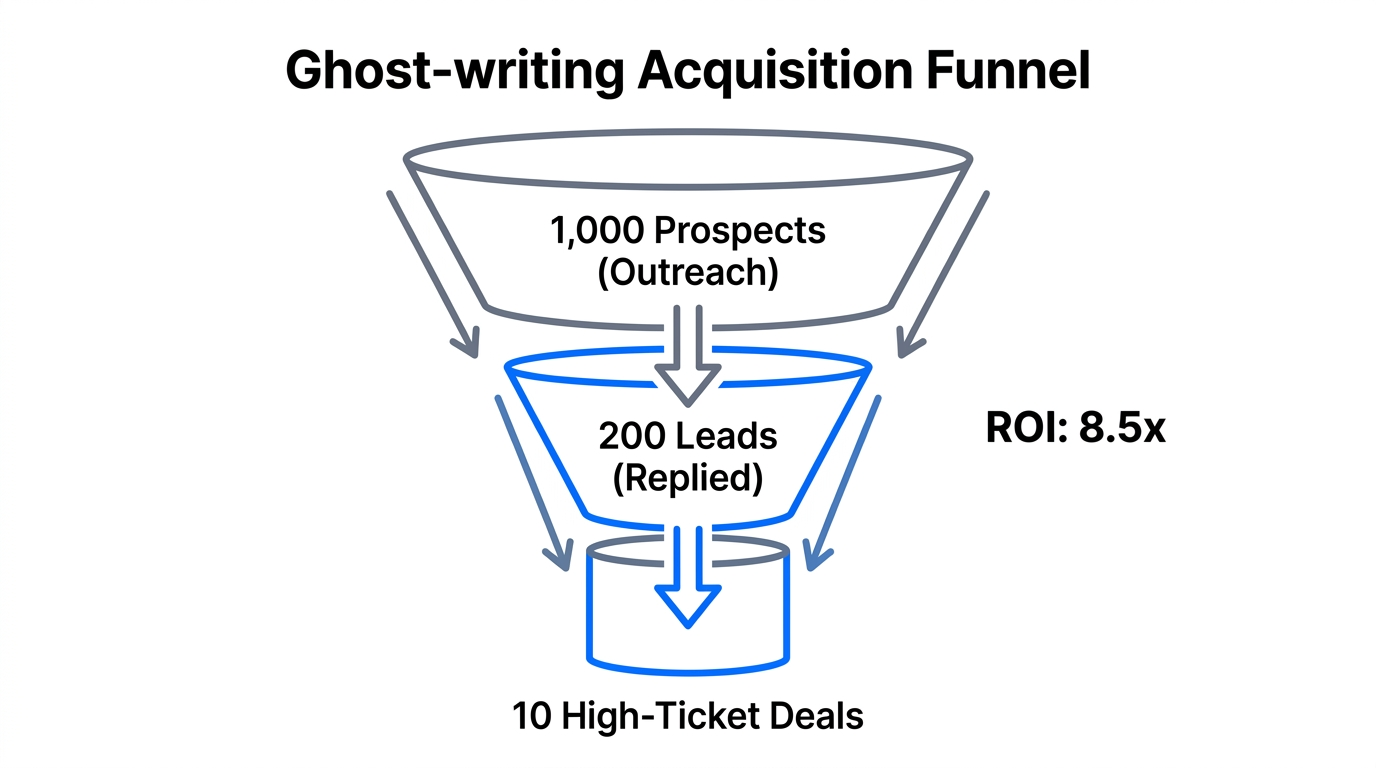
For beginners in 2026, the fastest way to monetize content entrepreneurship is not building your own brand from scratch—it's ghostwriting. The strategy is simple: build the skill yourself, then borrow someone else’s audience. By positioning yourself as a Premium Ghostwriter, you can charge $5,000 or more for a single client project, even with a small social media following.
This approach provides an abundance mindset. Instead of operating from scarcity while trying to grow a newsletter, you generate immediate cash flow. This allows you to invest in tools like Stormy AI to find other creators to collaborate with or study, identifying which niches are currently underserved. Once your service income hits $5k-$10k per month, you have the financial runway to pursue passion projects or build your own scalable digital products.
"I earned my first $5,000 ghostwriting when I only had 1,000 followers. You don't need a massive audience to build a massive business; you need to solve a massive problem for someone who already has one."
Monk Mode vs. Maintenance Mode: Seasonal Productivity Cycles
Insights into deep work through weekend immersion to accelerate your creative projects.Scaling a digital product business to $800k monthly revenue requires intense periods of output, but no founder can sustain 100% intensity indefinitely. In 2026, top-tier entrepreneurs utilize seasonal productivity cycles. They alternate between Monk Mode (high-intensity sprints) and Maintenance Mode (strategic recovery).
- Monk Mode: 5:00 AM wake-ups, scheduled meals, two-a-day workouts, and 4-6 hours of deep work. This happens 3-4 times a year to launch a new product or overhaul a system.
- Maintenance Mode: 9 hours of sleep, more time spent in leisure (like the beach or travel), and focusing on creative incubation. This is where the next $10M idea is usually born.
Just-in-Time Learning: Acquiring Skills as the Business Demands
Learn why selective reading and just-in-time learning outperform traditional front-to-back study.One of the biggest traps in scaling a digital product business is "productive procrastination"—reading books on leadership before you have a team, or studying Klaviyo automation before you have an email list. To reach the $10M mark, you must shift to Just-in-Time Learning.
Instead of learning "just in case," learn only what the current bottleneck requires. If you need to improve your open rates, read the single chapter on subject lines in a copywriting book and apply it immediately. This surgically precise approach to education ensures that every hour spent learning results in a direct increase in revenue or efficiency. In the 2026 creator economy, speed of implementation is the only competitive advantage.
Automating Distribution to Hit $800k Monthly Revenue
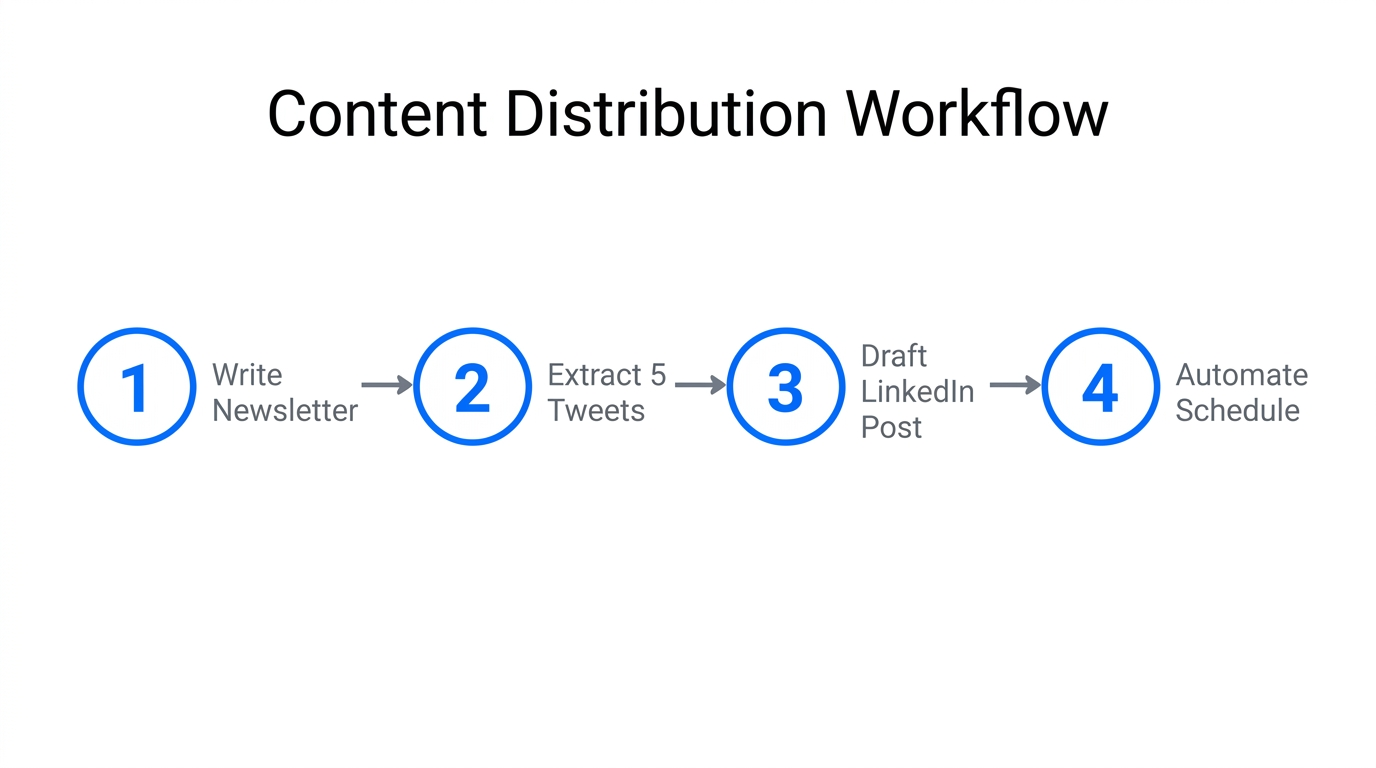
A lean team can manage a $10M portfolio if they leverage AI and automation effectively. Distribution is the heartbeat of this model. By using tools like Beehiiv for newsletter scaling and Stormy AI for creator discovery and automated outreach, founders can maintain a massive presence without a massive headcount.
For instance, an autonomous AI agent can be set up to discover, outreach to, and follow up with UGC creators on a daily schedule. This allows a brand to scale its multi-channel marketing strategy across TikTok, LinkedIn, and YouTube while the founder remains in "Monk Mode" on product development. By automating the vetting of fake followers and engagement fraud, platforms like Stormy AI ensure that the creators you partner with are high-quality, further protecting the brand's reputation and ROI.
The 2026 Conclusion: Start Today
The journey from a 9-to-5 job to a $10 million content portfolio isn't a straight line, but it is a repeatable process. It starts with a commitment to online writing, moves into high-value services like ghostwriting, and eventually scales into a diversified ecosystem of education, community, and software.
The biggest obstacle isn't the technology—it's the fear of what your peers will think when you start. In 2026, those people are too busy thinking about themselves to worry about your Twitter threads. Stop waiting for the "perfect time." Kill your "wants" and replace them with actions. Whether you are using Google Ads to jumpstart your traffic or manually writing your first newsletter on Apple Notes, the only way to build a $10M business is to hit publish today.