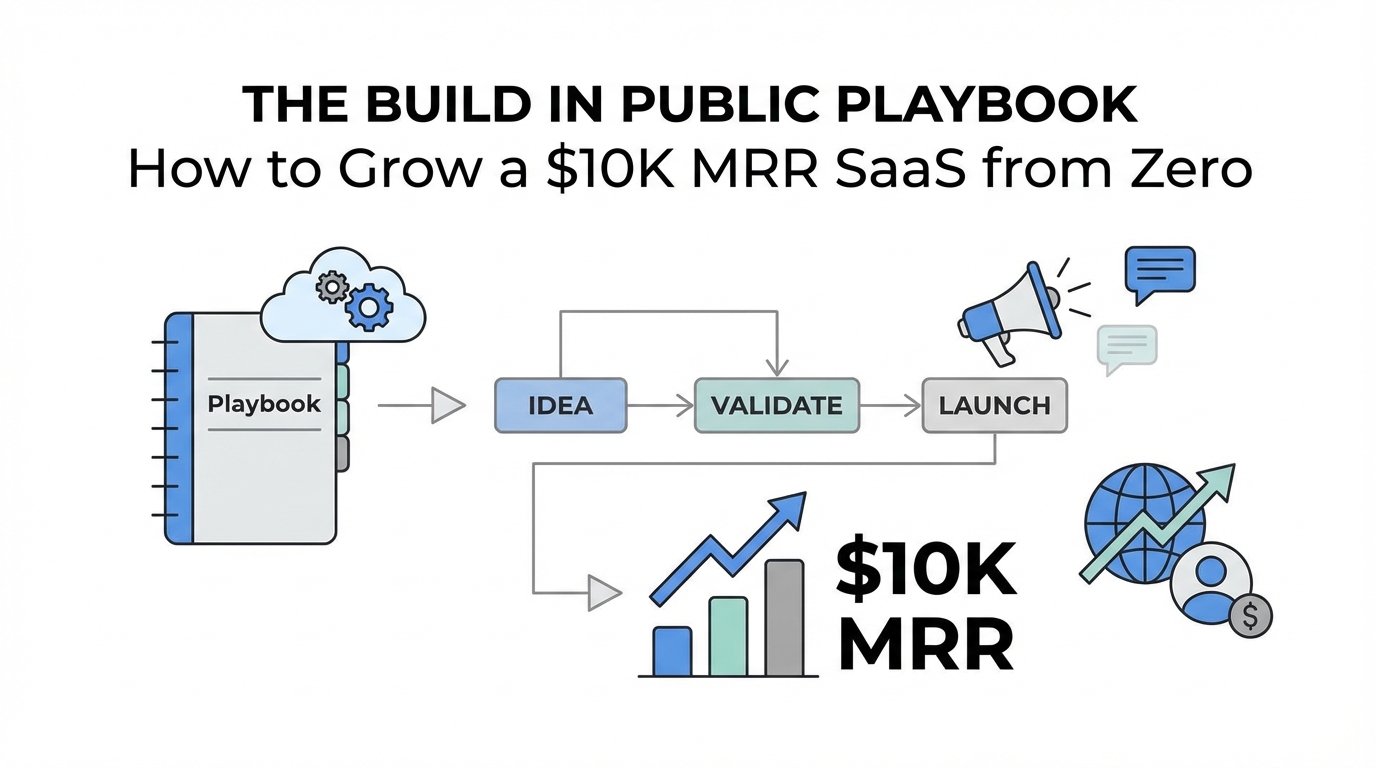
For years, the standard startup advice was to stay in "stealth mode" until your product was perfect. You’d toil away in a dark room, terrified that someone might steal your idea, only to launch to the sound of crickets. In 2025, that strategy is dead. The most successful founders are doing the exact opposite: they are broadcasting their failures, sharing their bank balances, and documenting every line of code written. This build in public strategy isn't just a trend; it is a primary saas distribution channel that builds an uncopyable trust moat. When everyone has access to the same AI tools to generate software, your personality and your journey become your only true competitive advantages.
Why Building in Public is the Ultimate Distribution Channel
The traditional marketing funnel is broken. Consumers are fatigued by polished ads and corporate speak. Instead, they are gravitating toward founders like Rob Hallum, who scaled his SaaS, SuperX, from zero to over $13,000 in monthly recurring revenue (MRR) in just four months. Rob’s secret wasn't a massive ad budget or a PR firm; it was a commitment to founder transparency marketing on X (formerly Twitter).
By sharing the "wins, losses, and everything in between," Rob transformed a simple Chrome extension into a thriving business. Building a startup in public works because it humanizes the product. When people see the struggle behind the code—the 3:00 AM bug fixes and the anxiety of zero revenue—they don't just become users; they become advocates who are rooting for your success. This narrative arc creates a "trust moat" that AI-generated content simply cannot replicate.
Step 1: Setting the Foundation (The X Profile)
Before you send your first tweet, you must treat your profile as a high-converting landing page. If you are learning how to grow a saas on twitter, your profile is the top of your funnel. According to the Starter Story playbook, you need three critical elements:
The Friendly Face
Ditch the abstract logo or the AI-generated avatar. People want to connect with a human. Use a high-quality, friendly photo of your actual face where you are smiling. Consistency is key here—don't change it often. Your face is your brand, and followers need to recognize it instantly in their feed.
The Clear One-Sentence Bio
Your bio shouldn't be a list of credentials or vague platitudes. It needs to state exactly what you are doing right now. For example: "Building SuperX to help you grow on X the right way." This tells a visitor exactly what value you provide in under five seconds.
The High-Stakes Pinned Post
Your pinned post is your elevator pitch. It should outline your goal and the stakes involved. Rob Hallum used a post stating he left his job and his home to live on savings while building his dream SaaS to $10K MRR. This creates an immediate compelling narrative arc. Visitors don't just see a product; they see a mission they can join.
Step 2: Picking a Specific, Public Goal
Vague updates like "working on my app today" are boring. To master building a startup in public, you need a specific, measurable, and time-bound goal. Whether it is "$0 to $10,000 MRR in 6 months" or "launching 12 products in 12 months," a public goal creates a story. It gives your audience a reason to check back daily.
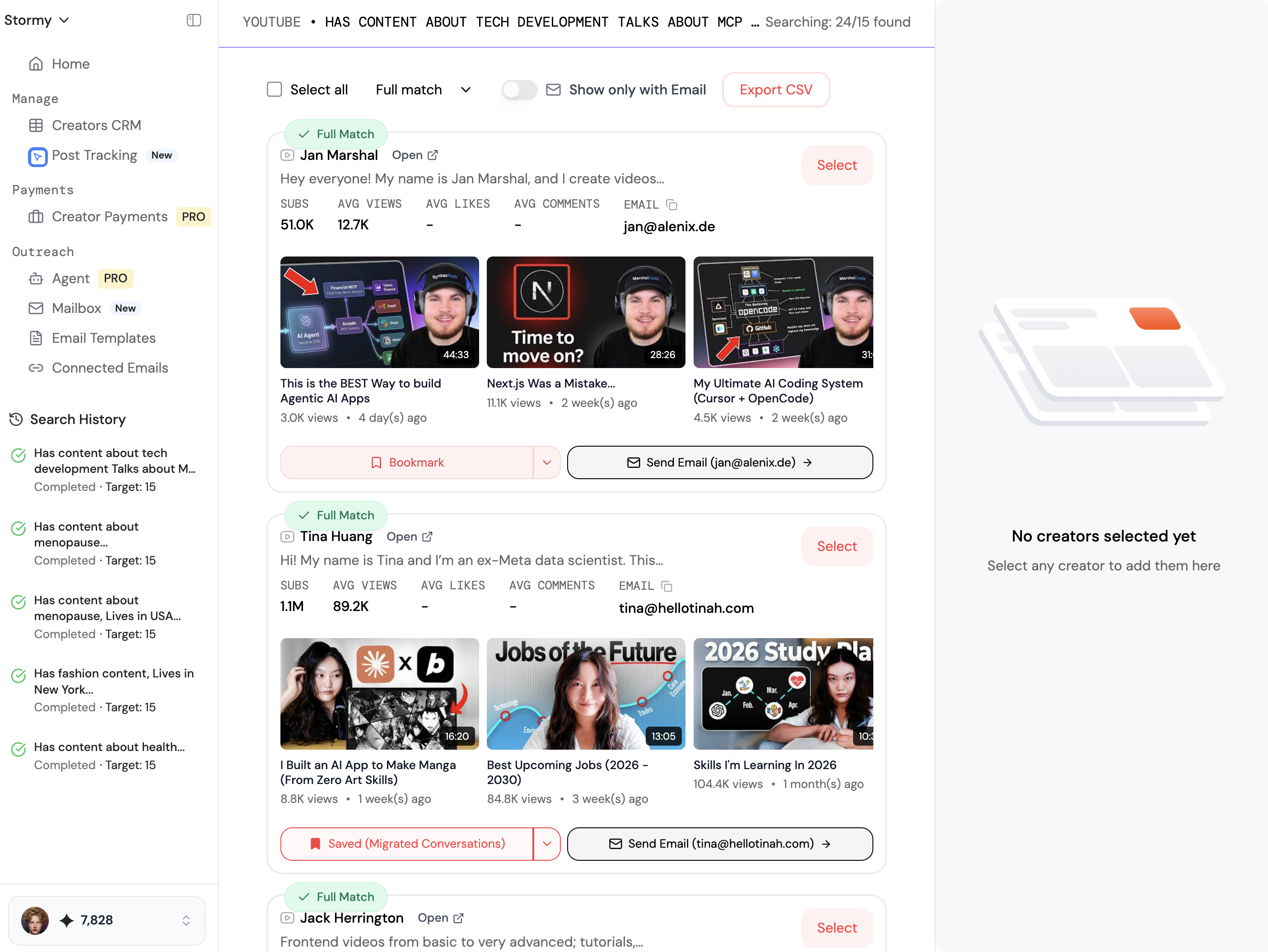
Platforms like Stormy AI understand that creators who share a clear journey often see higher engagement because the audience feels like they are part of the "insider" team. Stormy AI is an AI-powered search engine across TikTok, YouTube, and Instagram that lets you find influencers by typing simple natural-language prompts. When you hit a milestone, the audience celebrates. When you fail, they offer advice. This founder transparency marketing turns a solitary endeavor into a community-driven movement.
Step 3: The Content Loop (Entertain, Educate, Inspire, Sell)
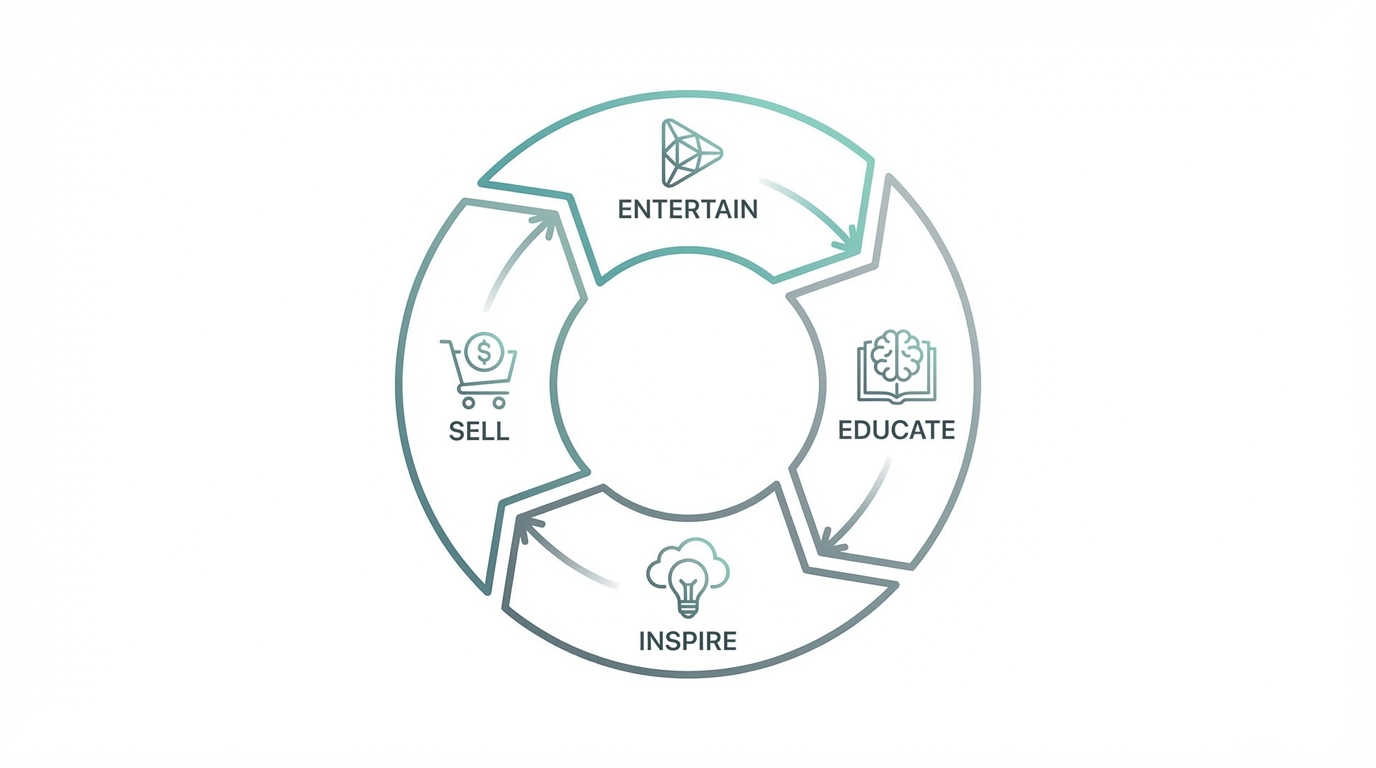
You cannot just pitch your product every day. That is the fastest way to get muted. Instead, use a systematic content loop to keep your audience engaged while driving revenue. This loop ensures you are providing value before asking for a sale.
- Entertaining: These are your viral "hooks." Share something funny, relatable, or a high-energy video. This gets you into the algorithm's good graces.
- Educational: Now that you have their attention, teach them something for free. Explain how you solved a technical problem or share a marketing insight.
- Inspirational: Share the personal meaning behind your work. Why did you quit your corporate job? This builds deep emotional resonance.
- Convincing: This is where you sell. Link to your product, show a demo, or share a customer testimonial.
By rotating through these types of content, you sell without being annoying. You might use Stormy AI to discover creators who are already succeeding with this format to find inspiration for your own loops.
Step 4: Systemizing Virality with Data

Don't guess what will work. Successful build in public strategies rely on data. Analyze what is already going viral in your niche and identify the concept, not the specific words. For instance, if "algorithm simulators" are trending, build a small feature or write a post around that concept in your own style.
Rob Hallum used his own tool, SuperX, to track which of his posts were hitting 100,000 impressions per day. He found that video demos with high energy and "headbanging" music outperformed static text by 10x. You can use the post tracking and analytics features in Stormy AI to monitor views, likes, and engagement for your own accounts and your competitors to see what's actually moving the needle.
Step 5: The Vulnerability Paradox
One of the hardest parts of founder transparency marketing is sharing the low points. Rob famously shared his experience of being hospitalized with food poisoning in Guatemala while his servers were crashing. It felt "uncomfortably vulnerable," but those posts drove some of his highest engagement.
In the age of AI-generated "perfection," vulnerability is a superpower. Sharing your hospitalizations, your relationship struggles, or your bank account hitting $0 creates a human connection point. It shows your audience that you are a real person facing real stakes. This builds a level of trust that no amount of paid advertising can buy.
Step 6: Converting Attention into Recurring Revenue

Attention is the top of the funnel, but $10K MRR requires conversion. Interestingly, polished "launch posts" often perform worse than casual "personality posts." Rob noted that a simple selfie taken at his laptop, announcing a small feature, drove more signups than his highly produced launch trailer.
Use your revenue data from Stripe or Lemon Squeezy to track which posts actually move the needle. You’ll often find that 95% of your traffic comes from just a few viral moments. The goal is to use those spikes to drive users into a high-converting trial. For SuperX, a 30% trial-to-paid conversion rate was achieved by being relentlessly helpful in the DMs and comments following a viral spike.
Step 7: Building Real Connections
Growth isn't just about the algorithm; it’s about people. Many founders make the mistake of using AI to spam generic replies like "Great post!" under every tweet. This is a waste of time. Instead, focus on building intentional, real friendships.
Reply with actual value. Ask thoughtful questions. Mention other creators you admire. When you treat your followers like friends rather than metrics, you build a community that will support you through multiple product pivots. If you are looking to scale your growth, you can use the AI Agent in Stormy AI to handle personalized outreach and follow-ups with creators automatically. You can also use Stormy AI for finding UGC creators and influencers in your niche who share your values for future partnerships.
The Tech Stack for a $10K MRR SaaS
To grow quickly, you must spend your time on distribution, not just engineering. Rob Hallum’s philosophy is to "pick one stack, learn it deeply, and ignore the noise." Here is the lean stack used to build a $13K MRR business:
- Frontend/Backend: Next.js, Node.js, and Tailwind CSS.
- Hosting: AWS for reliability.
- AI Integration: OpenAI and Anthropic APIs for intelligent features.
- Creator CRM: Use Stormy AI to manage all your creator relationships, payments, and collaboration history in one place.
- Landing Page: Framer for rapid iteration.
- Analytics: PostHog to track user behavior.
- Content Creation: Screen Studio for viral-quality screen recordings.
Notice that the stack isn't fancy. It is designed for speed. The goal is to ship features fast so you have more material to share in your public documentation. Every new feature is a new opportunity for a viral demo.
Final Takeaways: Your Build in Public Playbook
Growing a SaaS to $10K MRR using the build in public strategy is not a matter of luck—it is a matter of volume and intention. By documenting the struggle, you bypass the need for massive ad spend and build a direct line to your customers. Remember these core principles:
- Start with the profile: Make it a high-converting landing page.
- Pick a goal: Create a narrative arc people can root for.
- Follow the loop: Entertain, educate, inspire, and then sell.
- Be vulnerable: Share the failures; they are your strongest trust-builders.
- Systemize virality: Use tools like SuperX and data to drive your content strategy.
If you are ready to stop building in secret and start building a real business, begin by sharing your current struggle today. Breathe, act with intention, and let the world see the work behind the product. The transparency you fear might just be the greatest distribution channel you ever discover.