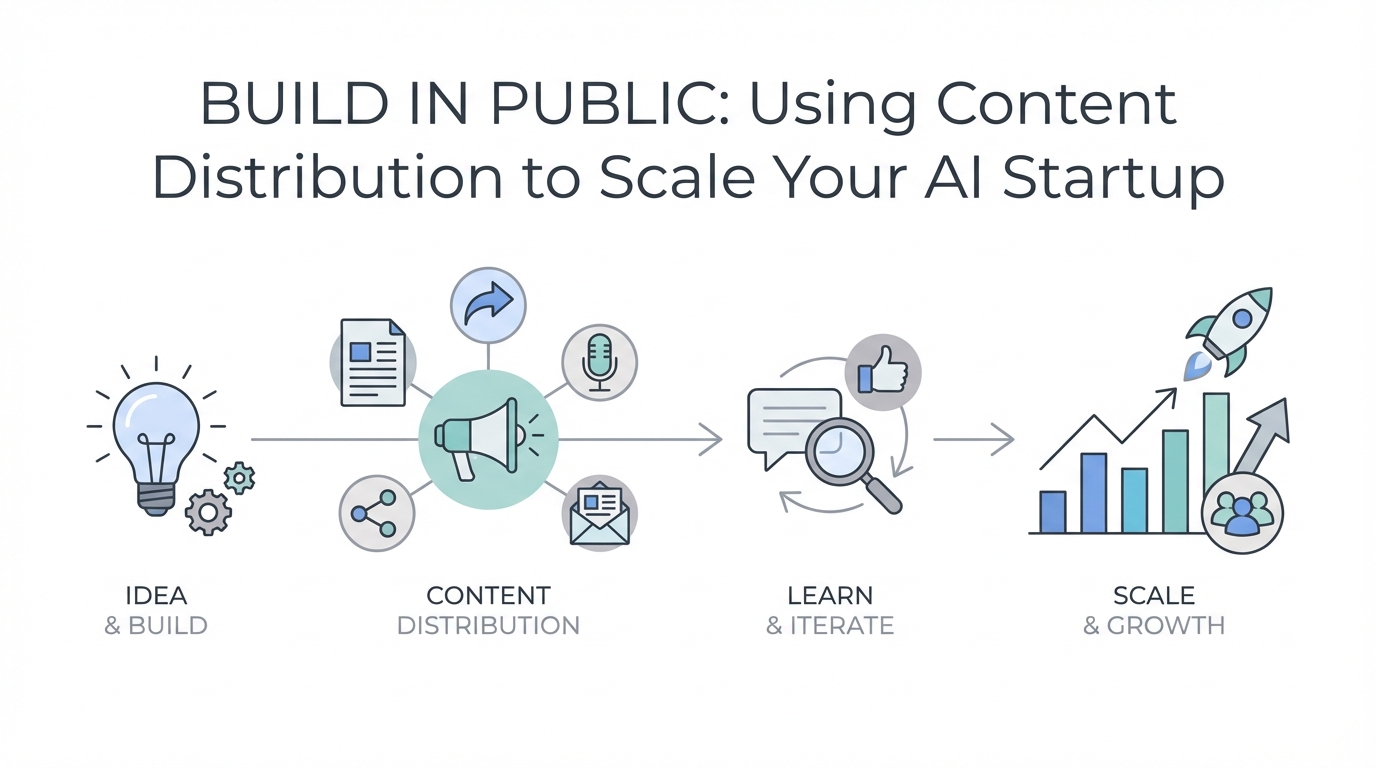
In the current gold rush of artificial intelligence, the standard advice is often to raise millions in venture capital, hire a massive team, and burn cash until you find product-market fit. But there is a quieter, more profitable path gaining traction among modern founders: the leveraged agency model. This approach involves identifying a boring, soul-crushing task, solving it manually first, and then using AI agents and a robust build in public strategy to scale to seven-figure revenue. By treating your startup journey as a content engine, you can drive customer acquisition costs toward zero while building a moat of transparency and trust that big-budget competitors can't easily replicate.
The Leveraged Agency Roadmap: From $1k to $5M ARR

The journey to a successful AI startup doesn't have to start with a complex neural network. In fact, it should start with manual labor. The goal is to move through three distinct phases that transition you from a service provider to a high-margin technology company. According to industry insights, starting with a non-AI business and gradually injecting intelligence is the highest-probability path to success in today's market.
Phase 1: Manual Labor ($1k – $5k Monthly Revenue). Begin by starting an agency focused on one painful, repetitive task. This could be Instagram management, invoice processing, or customs paperwork. The secret here is learning every single edge case. By doing the work manually for three to six months, you develop a deep, niche insight into the problem that no "AI-first" founder will ever have. You are building the Standard Operating Procedures (SOPs) that will eventually become your software's architecture.
Phase 2: Building the System ($5k – $25k Monthly Revenue). Once you understand the nuances, you replace human labor with AI agents. Tools like Gumloop or Lindy AI allow you to wire workflows that mirror your manual SOPs. In this phase, your margins should jump from 40% to 80%. You aren't necessarily raising your prices; you are increasing your efficiency. The outcome for the client remains the same, but your ability to handle 10x the client volume without 10x the headcount creates massive enterprise value.
Phase 3: The Multi-Tier Scale ($25k+ Monthly Revenue). At this stage, you expand your offering. You might have an Enterprise tier for white-glove service, a Self-Serve tier for lower-budget users, and an API tier for other developers to build on your data. This is how you move from a small agency to a $5 million ARR AI startup.
The Barbell Content Strategy: Quality vs. Velocity
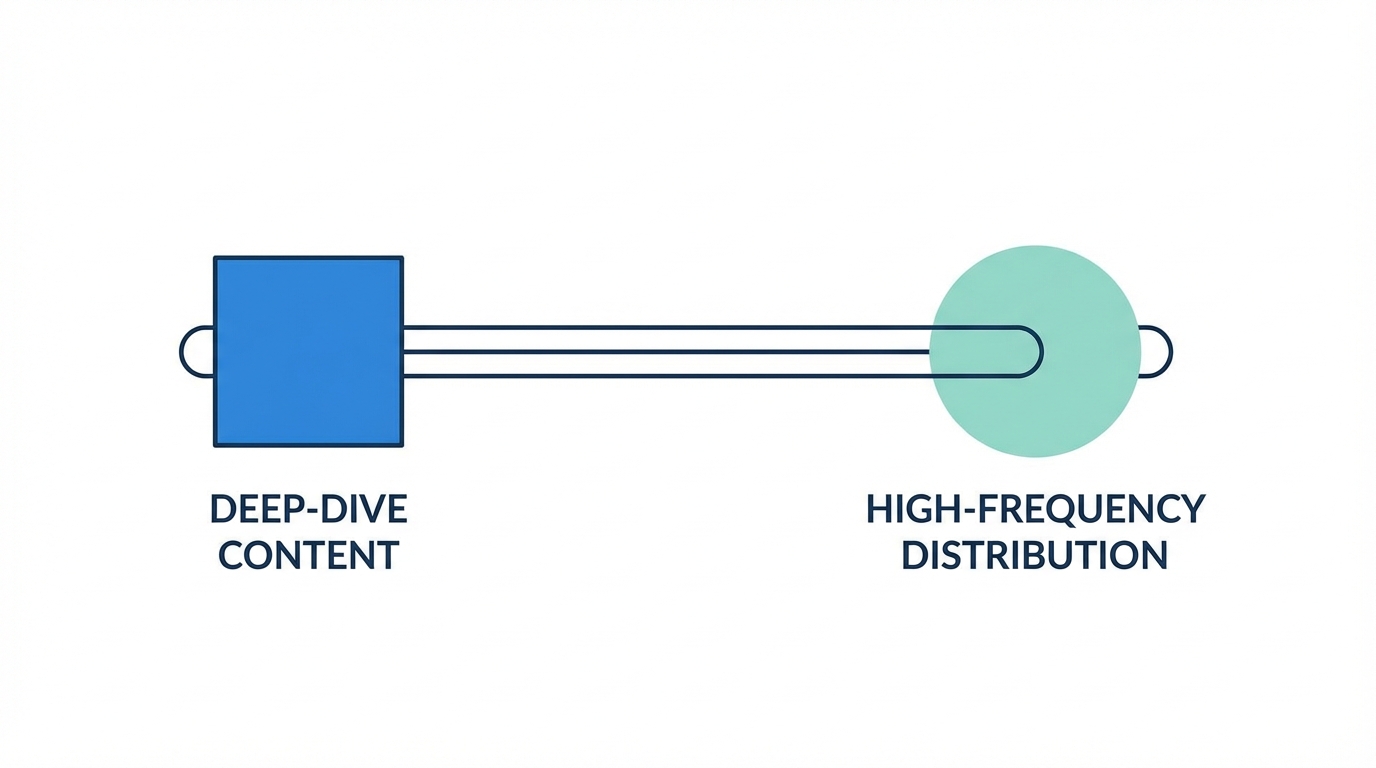
To fuel this growth, you need a content distribution for startups plan that doesn't rely on massive ad spend. Successful founders use what is known as the Barbell Content Strategy. This involves balancing two extremes of content production to maximize reach and authenticity.
On one side of the barbell, you have cinematic, high-quality content. These are your "hero" pieces—highly edited videos or deep-dive articles that establish your authority and brand aesthetic. On the other side is what founders call '10x low-fi' daily updates. This is raw, unpolished content recorded on a smartphone or a 90s-style camcorder. This low-fi approach is repeatable and scalable, allowing you to post every single day without the friction of a production crew.
This frequency is vital for startup audience building. By showing the "boring" parts of your day—debugging an agent in n8n or fixing a broken Zapier connection—you build a narrative that followers can root for. The goal is to be consistently visible. When people see you solving problems daily, they begin to view you as the expert in that niche task, whether it's PDF-to-Salesforce conversion or automated review responses.
Branding the 'Boring': Why Niche Branding Works
One of the biggest mistakes founders make is trying to sound too corporate. In the age of AI, boring is the new exciting. Look at successful accounts like Boring Marketer. The name itself is a hook because it promises practical, no-nonsense value in a world of hype. To win at social media for AI founders, you need a repeatable format and a brand name that clearly identifies the pain you solve.
If your startup helps people convert bank statements, don't call it 'FinTech AI Global.' Call it something like 'Bank Statement Converter.' It sounds simple, but a tool that does exactly what it says on the tin can generate $40,000 a month in revenue. People are screaming for solutions to soul-crushing tasks like managing insurance forms or processing customs paperwork. Sam Altman recently stated that we are in the 'era of the idea guy,' meaning the ability to identify and brand these boring pains is now more valuable than the technical ability to code them from scratch.
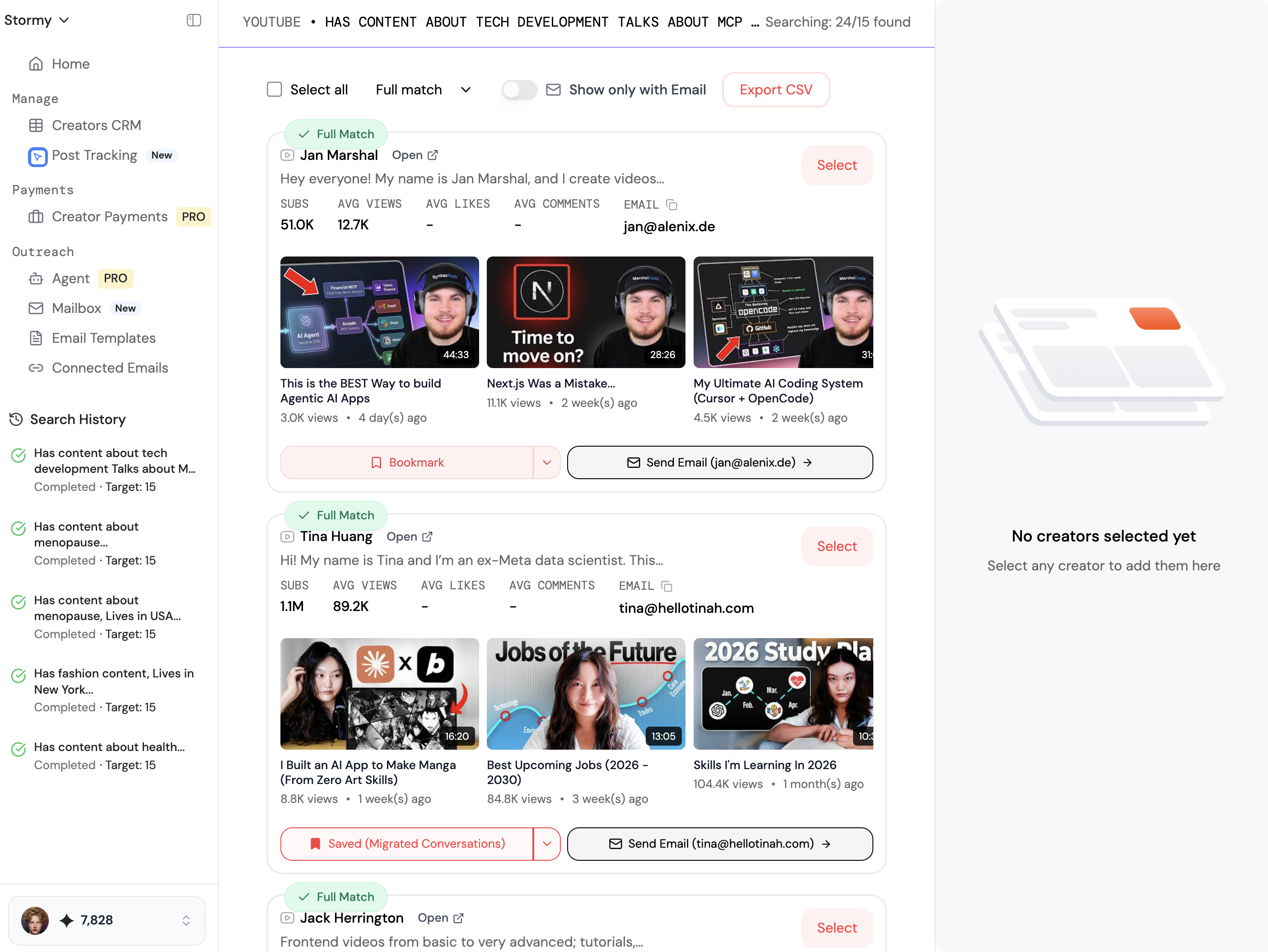
While executing this, tools like Stormy AI can help source and manage UGC creators at scale, allowing you to find influencers who specialize in the same 'boring' niches. By partnering with creators who already have the ear of your target audience, you can amplify your build in public strategy beyond your own following, creating a multi-channel presence that feels organic and trusted.
The Build-in-Public Flywheel: From Viewers to Users
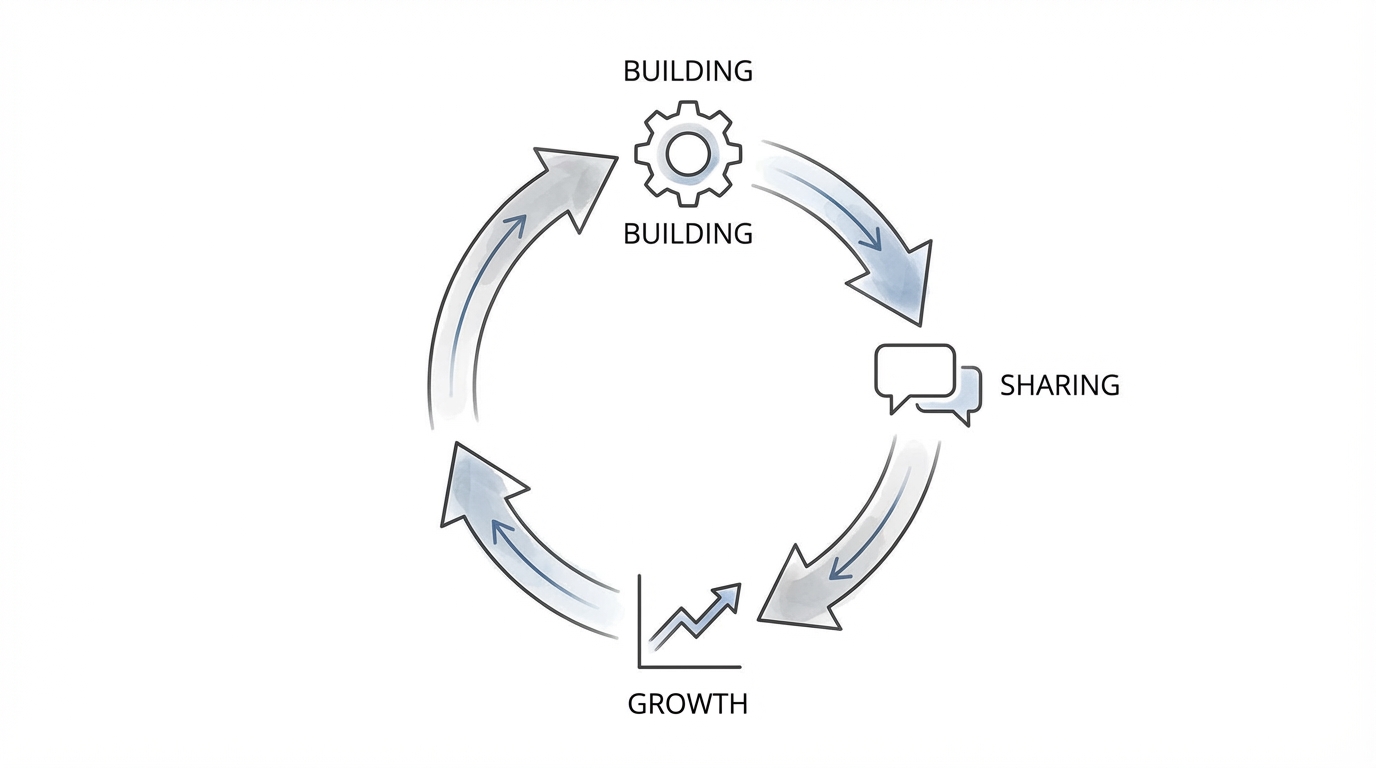
The core of a successful build in public strategy is a mathematical flywheel. When you solve one problem publicly, you trigger a sequence of events that leads to sustainable growth. The math usually looks like this: for every 1,000 people who see your process, roughly 100 will save it, 10 will actually try your product, and one will become a vocal advocate who tells everyone they know.
- Transparency: Show the exact process of how your AI agents work using tools like Claude or Cursor.
- Proof: Share the results of your manual-to-automated transition. If you doubled your margins from 40% to 80%, show the spreadsheet (with sensitive data redacted).
- Community Signals: Use platforms like GummySearch or IdeaBrowser to find what people are complaining about on Reddit or Facebook groups, and then solve those specific issues in your next public update.
This flywheel creates a compounding effect. As you gain more users, you get more edge cases to solve, which provides more content for your distribution engine. It’s a self-sustaining cycle that allows you to remain a multipreneur—owning multiple high-margin businesses without needing a massive staff.
Platform Selection: X, LinkedIn, or Instagram?

Choosing the right platform is critical for content distribution for startups. You shouldn't try to be everywhere at once; instead, pick the platform where your specific "boring" pain point is discussed most often.
X (formerly Twitter): Best for the builder community. If your goal is to show off technical workflows, AI agent setups, and connect with other founders, X is the place. It's the home of the "Build in Public" movement.
LinkedIn: The gold mine for B2B and enterprise. If you are solving tasks like invoice processing or legal document review, LinkedIn is where your buyers live. The content here should be slightly more professional but still retain the raw, 'low-fi' authenticity of the barbell strategy.
Instagram & TikTok: Ideal for visual SaaS and 'faceless' automation brands. If your tool has a strong visual output or solves a problem for creators—like automating video captions or managing DMs—these platforms are essential. Sourcing AI influencer marketing partners on these platforms is also easier, as the visual nature of the product makes for compelling UGC content. To manage these social efforts, using Stormy AI's post tracking and analytics can help founders monitor which content formats are driving the most app installs or site visits, ensuring you aren't shouting into a void.
Scaling with AI Agents and Distribution
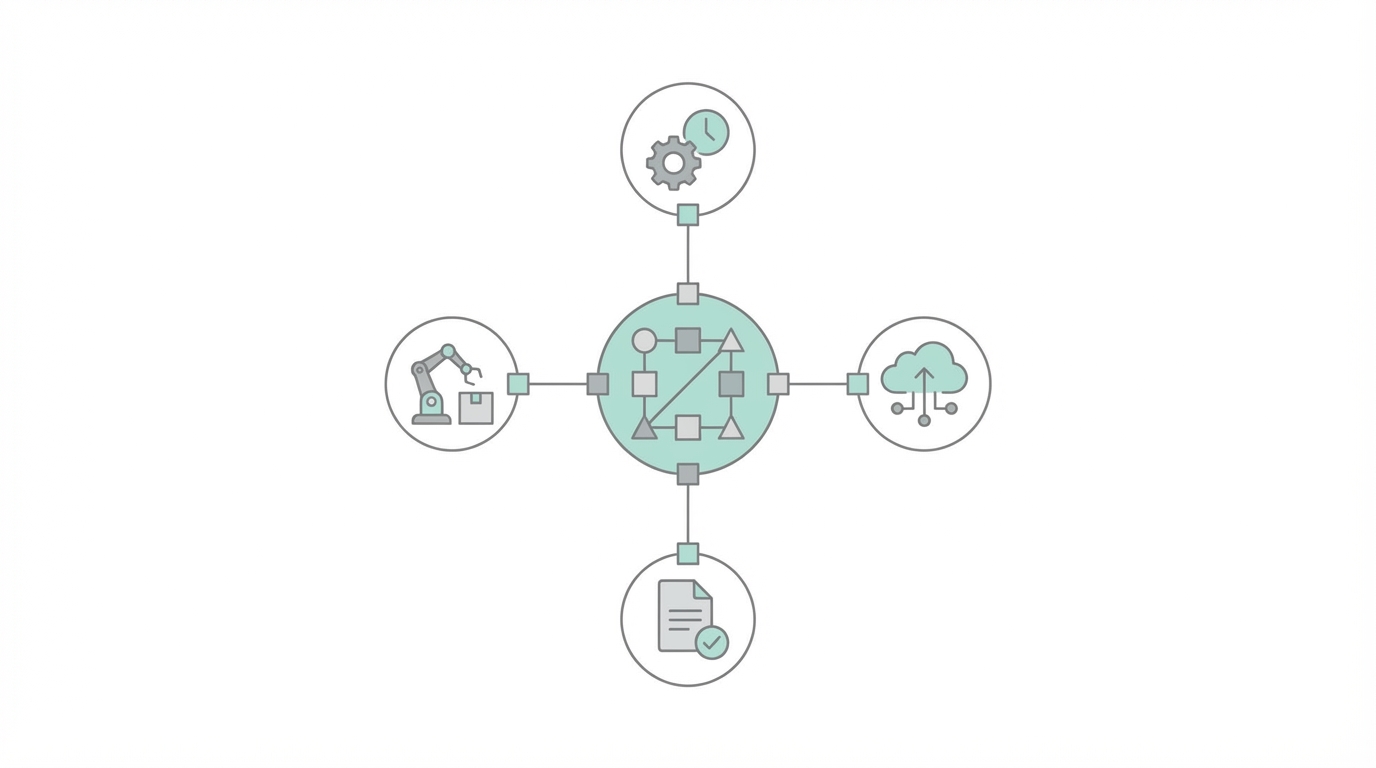
In the final stage of scaling, you become the orchestrator of a digital workforce. You aren't just using AI to provide the service; you're using it to handle your content distribution for startups as well. AI agents can be set up to monitor community signals, draft daily updates based on your recent git commits, and even respond to customer reviews. This level of automation is what allows a solopreneur to have the output of a 50-person company.
By reinvesting your agency profits back into distribution and better agent workflows, you create a moat. A VC-backed startup might burn $100,000 a month to find product-market fit over five years. A leveraged agency founder, however, is profitable from month one, owns 100% of their equity, and uses build-in-public content to ensure they never have to pay for a customer. Whether you eventually decide to raise venture capital or simply enjoy the dividends of a high-margin business, the build-in-public path provides the ultimate leverage.
Conclusion: Start Boring, Scale Fast
The era of the "move fast and break things" VC model isn't over, but it's no longer the only way. By focusing on boring tasks, documenting your progress daily, and using a barbell content strategy, you can build a resilient, profitable AI startup. Remember to start with manual labor, transition to AI agents to protect your margins, and use transparency as your primary marketing tool. The market is screaming for solutions to simple problems—go out there, find one, and build it in public.